Alice's Corner Bolivian Cuisine
Aurora's Bolivian food scene is thin on the ground, which makes Alice's Corner on West New York Street a notable address for anyone tracking how Andean cooking travels to the Midwest. The kitchen draws on a culinary tradition built around altitude-grown ingredients, stewed proteins, and slow preparation methods that don't translate easily to the American fast-casual format — and that resistance to shortcuts is worth paying attention to.
Pearl is the En Primeur Club membership app — saves, bookings, and concierge access live there. Same editors, same standards.
- Address
- 37 W New York St, Aurora, IL 60506
- Phone
- +16302993247
- Website
- alicescorner.com
- Directions
- Get directions
 Saves & bookings on Pearl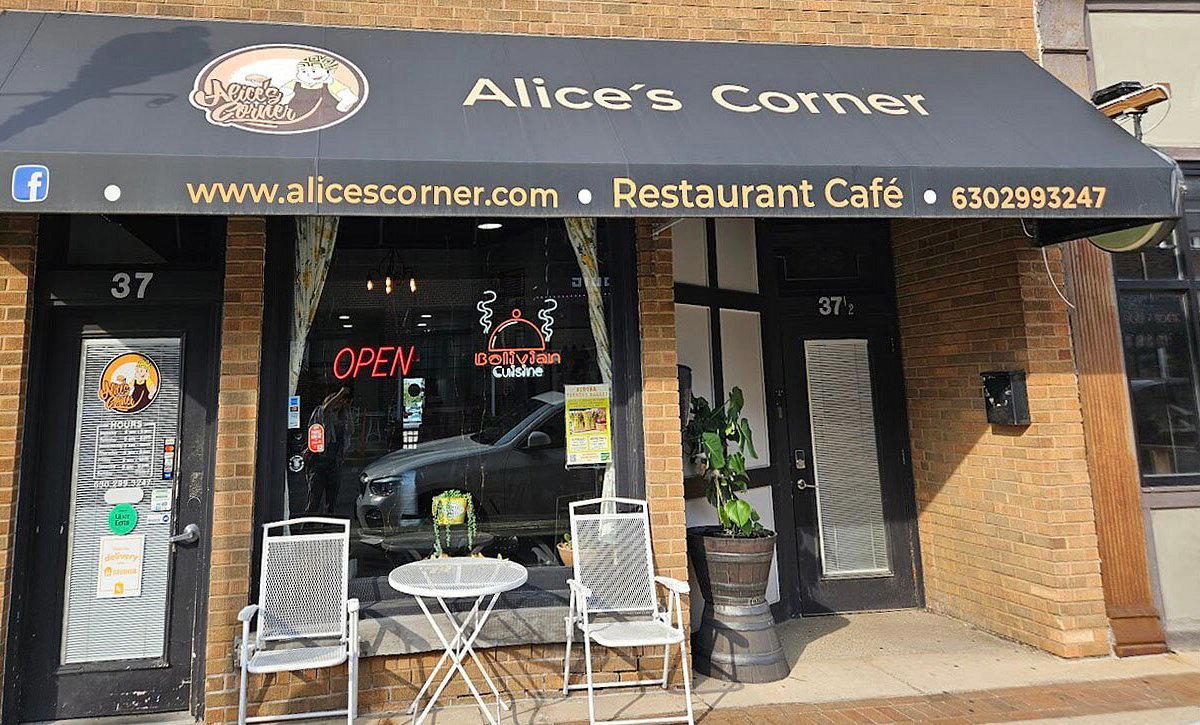
Where the Andes Meet the Illinois Prairie
West New York Street in Aurora runs through a commercial stretch that mixes Latin American grocers, family-run taquerias, and a handful of spots representing cuisines that rarely surface in Chicago's western suburbs. Step toward Alice's Corner and the surroundings tell you something useful: this is a neighborhood that shops, eats, and cooks seriously, without much interest in performing ethnicity for an outside audience. The dining room, at 37 W New York St, sits inside that context rather than apart from it.
Bolivian cooking is one of the least-represented Andean traditions in the United States. While Peruvian cuisine has accumulated a considerable following in major cities — partly through high-profile restaurant programs and partly through ingredients like quinoa and ceviche crossing into mainstream menus — Bolivian food has moved more quietly. That quietness has something to do with immigration patterns and something to do with the cuisine itself: it is built around staples that reward patience, not novelty. Potatoes in dozens of varieties, dried and rehydrated chiles, chuño (freeze-dried potato, a technique developed at altitude over centuries), braised and slow-cooked meats. These are not dishes that photograph easily or simplify for a trend cycle.
The Source Logic Behind Bolivian Cooking
The editorial angle that matters most when assessing a Bolivian kitchen in the American Midwest is ingredient provenance and substitution. Bolivia's food culture is shaped by geography in ways that are difficult to replicate outside the country. The high altiplano produces freeze-dried chuño and tunta that have no real domestic equivalent. The valleys yield specific pepper varieties, locotos, ajíes, that are distinct from Mexican or Caribbean chiles in heat profile and flavor. Llajwa, Bolivia's ubiquitous fresh salsa of locoto and quirquiña herb, relies on a tomato-chile balance and an herb that is almost impossible to source in Illinois.
What this means practically is that any Bolivian kitchen operating in Aurora is making sourcing decisions constantly: what to import, what to approximate, what to substitute without losing the dish's structural logic. This is not a problem unique to this address. It is the central challenge facing any diaspora kitchen working with a cuisine built around place-specific agriculture. The restaurants doing this work most credibly tend to invest in dried goods from South American importers, grow herbs in small plots or source through specialty distributors, and resist Americanizing proportions of spice and fat.
For comparison, Aurora already supports a range of diaspora kitchens navigating this same sourcing tension from different starting points. La Machaca De Mi Ama draws on northern Mexican traditions, while Megenagna represents East African cooking in the same city. Mikaku Ramen & Temaki and Tasty Chef add further range, and The Cabin anchors the more American side of the local spectrum. Aurora's dining scene, read together, is more diverse than its suburban positioning suggests, see the full Aurora restaurants guide for a broader map of what the city offers.
Bolivian Dishes and What to Look For
The canonical dishes of Bolivian cooking give a useful frame for what a kitchen at this level might produce. Silpancho, a breaded, flattened beef cutlet served over rice with a fried egg and a fresh tomato-onion relish, is one of the most telling indicators of kitchen discipline: the beef must be thin enough to cook through quickly without drying, the rice should be distinct-grained rather than clumped, and the relish needs acid balance that varies by region in Bolivia. Salteñas, the baked empanadas filled with a slightly sweet, saucy meat mixture, are a technical achievement in pastry: the dough must hold a liquid filling without bursting during baking, which requires both the right flour ratio and careful resting time.
Sopa de maní, peanut soup with beef and fried potato, represents the deeper Andean influence in Bolivian cooking, a dish that has no real parallel in the more familiar Latin American cuisines that American diners tend to reference. If Alice's Corner carries it, the soup is worth ordering as a marker of how far the kitchen's repertoire extends into less-traveled territory.
At the upper end of ingredient-sourced American dining, farms and sourcing chains are made explicit: Blue Hill at Stone Barns in Tarrytown and Single Thread Farm in Healdsburg build their entire identity around supply-chain transparency. Smyth in Chicago operates on similar principles closer to Aurora's own metropolitan orbit. Diaspora kitchens like Alice's Corner are doing a version of the same work, the sourcing is just less legible to an outside audience because the reference cuisine is less familiar. That asymmetry is worth naming.
Planning a Visit
Alice's Corner is located at 37 W New York St, Aurora, IL 60506, in a commercial block that is reachable by car from Chicago's western suburbs in under an hour and sits within Aurora's broader West Side neighborhood. With no online booking infrastructure confirmed in available data, the most practical approach is a direct visit or phone inquiry at the address. Hours are not confirmed in current records, so arriving during standard lunch or dinner service windows on weekdays or weekends is the logical approach. Aurora's public transit connections via Metra's BNSF line put the city within reach for those commuting from Chicago without a car, with the Aurora station a short distance from the West New York Street corridor.
The atmosphere, based on the neighborhood and the cuisine type, is almost certainly casual rather than formal.
Continue exploring
More in Aurora
Restaurants in Aurora
Browse all →
Bars in Aurora
Browse all →
Hotels in Aurora
Browse all →
At a Glance
- Cozy
- Casual
- Casual Hangout
- Family
- Group Dining
- Standalone
Current opening hours
- Monday
- 9 AM–9 PM
- Tuesday
- 9 AM–9 PM
- Wednesday
- 9 AM–9 PM
- Thursday
- 9 AM–9 PM
- Friday
- 9 AM–9 PM
- Saturday
- 9 AM–9 PM
- Sunday
- Closed
Hours can change for holidays and private events. Last verified .
Small, cozy space with casual, welcoming atmosphere and excellent hospitality from the owner-operator.
Know Before You Go
- Getting there
- 37 W New York St, Aurora, IL 60506