Alchemy Lynnfield
Alchemy Lynnfield occupies a telling position in the suburban Boston dining scene: a serious restaurant operating well beyond the expectations of its Market Street address in Lynnfield, MA. The kitchen draws on New England's deep larder of regional ingredients, placing it in a conversation that extends well past local bar-and-grill territory. For the north shore, it represents a meaningful step up in ambition and execution.
 Discover on Pearl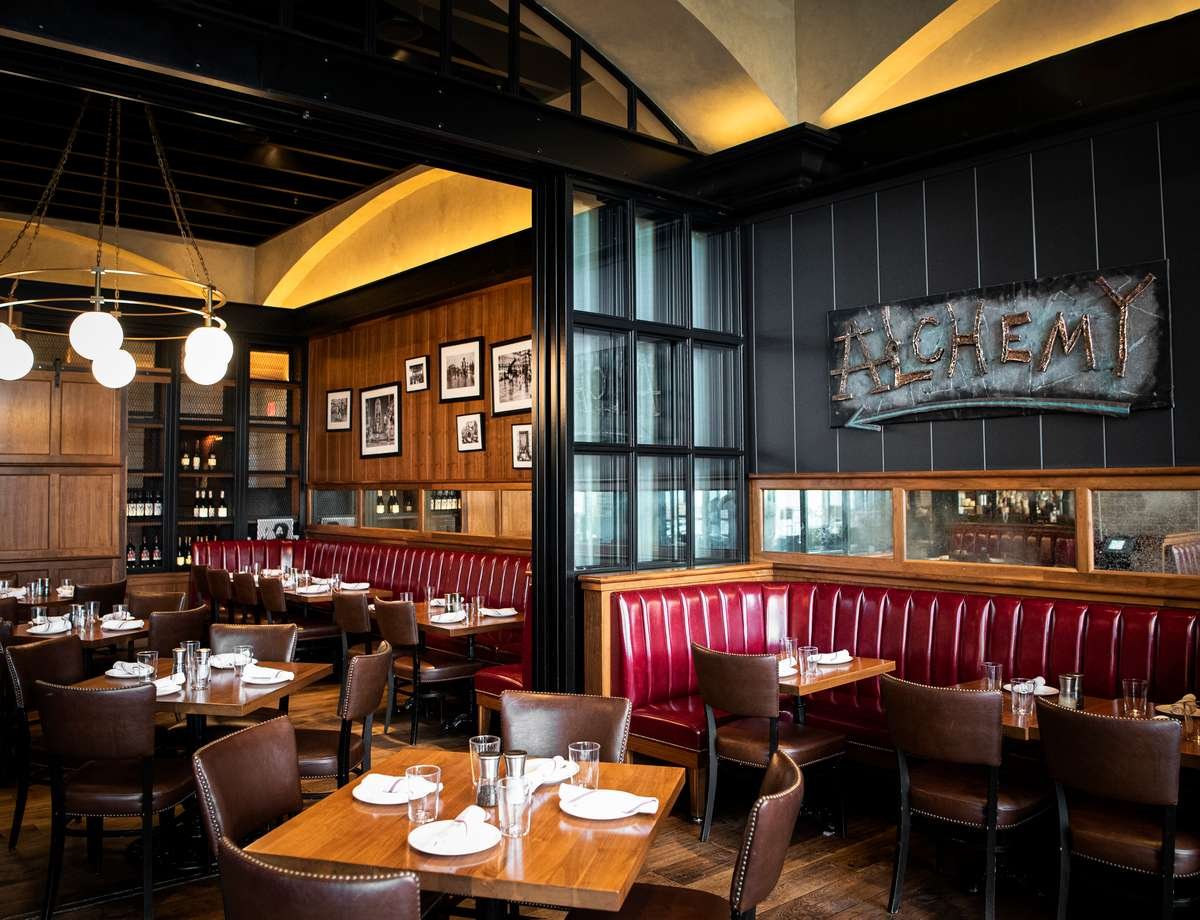
The North Shore Setting and What It Signals
Lynnfield sits roughly twelve miles north of Boston, close enough to draw from the city's professional dining culture but far enough that most serious restaurant energy still concentrates inside the 128 corridor or downtown. That geography shapes expectations in predictable ways: suburban addresses in this bracket typically anchor menus to crowd-pleasing formats, reliable proteins, and broad accessibility. Alchemy Lynnfield, at 1100 Market Street, operates in that physical context but appears to push against its constraints. The name itself — Alchemy — signals transformation, a kitchen that intends to do something with its ingredients rather than simply present them. In a suburban strip where most competition defaults to formula, that posture carries weight.
The north shore dining scene has developed steadily over the past decade, with pockets of ambition emerging in Gloucester, Salem, and along Route 1, but Lynnfield has historically functioned more as a bedroom community than a dining destination. Restaurants that succeed here do so by serving a local professional population with above-average disposable income and regular exposure to Boston's more competitive dining market. That audience tends to be demanding in a specific way: they know what a well-sourced dish looks like, and they notice when a kitchen cuts corners on provenance. For a venue with Alchemy's positioning, the sourcing story becomes the credibility story.
Ingredient Sourcing and the New England Larder
New England's agricultural and maritime supply chains are among the most compelling in the country for a restaurant that wants to build a sourcing-led identity. The Atlantic coastline from Gloucester to Chatham produces littleneck clams, oysters, day-boat cod, and haddock within a few hours' drive of Lynnfield. Vermont and western Massachusetts contribute dairy, heritage-breed pork, and seasonal produce through a network of small farms that has grown considerably since the farm-to-table movement formalized regional supply relationships in the early 2000s. Maine's berry season, Connecticut River valley vegetables, and Plymouth-area cranberry production round out a larder that serious kitchens in this region have been learning to use with greater sophistication.
The restaurants that have most successfully built identities around this regional supply chain share a few structural characteristics: menus that shift with the season rather than locking into year-round constants, kitchen relationships with specific named farms or fishing operations, and a willingness to serve ingredients that are less photogenic but more honest to the season. Blue Hill at Stone Barns in Tarrytown built its entire identity on this premise at a higher price tier. Single Thread Farm in Healdsburg takes the sourcing discipline further by operating its own farm. In New England, the tradition runs through less celebrated channels , the fishing shack with a lobsterman cousin, the Italian-American kitchen buying from the same produce guy for forty years , but the underlying logic is the same: provenance gives the cook something to say.
Alchemy's position in Lynnfield places it in the tier of suburban restaurants that can credibly claim this sourcing conversation without the infrastructure cost of a full farm partnership. The relevant peer set is not The French Laundry in Napa or Le Bernardin in New York City , those operate at a different scale of formality and investment. The more instructive comparisons are restaurants that have made sourcing central to their identity at the neighborhood and suburban level, translating farm and ocean relationships into menus that feel grounded rather than performed. Within the Lynnfield market, that ambition already differentiates the kitchen from most local competition. See Davio's - Lynnfield for how the Italian-American steakhouse format occupies an adjacent but distinct position in the same market.
Sourcing-Led Kitchens Across the Country: A Frame of Reference
The sourcing-first restaurant format has taken different shapes across American dining. Smyth in Chicago integrates a working kitchen garden directly into its tasting menu logic. Lazy Bear in San Francisco structures its progressive American format around a communal experience that foregrounds the sourcing narrative through the meal's pacing. Oyster Oyster in Washington, D.C. built a plant-forward program explicitly around regional procurement ethics. Providence in Los Angeles grounds its seafood focus in sustainable sourcing relationships with West Coast fisheries. Addison in San Diego draws on Southern California's year-round agricultural abundance. Each of these represents a different price tier and format, but they share a common premise: the supply chain is an editorial position, not just a logistical fact.
At the other end of the scale, Atelier Moessmer Norbert Niederkofler in Brunico has taken Alpine sourcing to its most rigorous conclusion, building a cuisine that acknowledges almost no ingredient from outside its mountain region. The Inn at Little Washington and Frasca Food and Wine in Boulder demonstrate how destination restaurants outside major cities can sustain a sourcing identity when the kitchen has deep roots in its specific region. The Wolf's Tailor in Denver, ITAMAE in Miami, and Atomix in New York City each demonstrate that sourcing discipline can coexist with tightly defined cuisine identity rather than requiring a vague farm-to-table umbrella. Emeril's in New Orleans helped establish the template for ingredient-forward American cooking in a regional-pride framework that still resonates in markets like Lynnfield.
Planning a Visit
Alchemy Lynnfield is located at 1100 Market Street in Lynnfield, MA 01940, within the Market Street lifestyle center , a mixed retail and restaurant development that draws from surrounding north shore towns including Peabody, Saugus, and Reading. The venue is accessible by car from Route 1 and I-95 (Route 128), making it practical for visitors arriving from Boston or the wider north shore. Parking at the Market Street complex is plentiful and free, which matters in a suburban context where street parking constraints can shape the dining experience before the meal begins. Visitors planning from Boston should allow approximately twenty-five to thirty minutes in normal traffic conditions. For reservations, hours, and current menu information, confirming directly with the venue before visiting is advisable, as specific operational details were not available at time of publication. Our full Lynnfield restaurants guide covers the broader dining options across the market.
Frequently Asked Questions
At-a-Glance Comparison
A fast peer set for context, pulled from similar venues in our database.
| Venue | Cuisine | Price | Awards | Notes |
|---|---|---|---|---|
| Alchemy Lynnfield | This venue | |||
| Le Bernardin | French, Seafood | $$$$ | Michelin 3 Star | French, Seafood, $$$$ |
| Lazy Bear | Progressive American, Contemporary | $$$$ | Michelin 2 Star | Progressive American, Contemporary, $$$$ |
| Atomix | Modern Korean, Korean | $$$$ | Michelin 2 Star | Modern Korean, Korean, $$$$ |
| Per Se | French, Contemporary | $$$$ | Michelin 3 Star | French, Contemporary, $$$$ |
| Masa | Sushi, Japanese | $$$$ | Michelin 3 Star | Sushi, Japanese, $$$$ |
Need a table?
Our members enjoy priority alerts and concierge-led booking support for the world's most difficult tables.
Get Exclusive Access