Alba

On Bremgartnerstrasse in Zurich's Aussersihl district, Alba occupies a part of the city where neighbourhood dining has steadily displaced the predictable. Against peers like IGNIV and The Counter, it operates with a lower profile and a local-leaning character that suits the quarter. For visitors oriented toward the Zurich dining scene rather than its trophy addresses, it warrants serious attention.
Pearl is the En Primeur Club membership app — saves, bookings, and concierge access live there. Same editors, same standards.
- Address
- Bremgartnerstrasse 70, 8003 Zürich, Switzerland
- Phone
- +41766512737
- Website
- alba.pizza
- Directions
- Get directions
 Saves & bookings on Pearl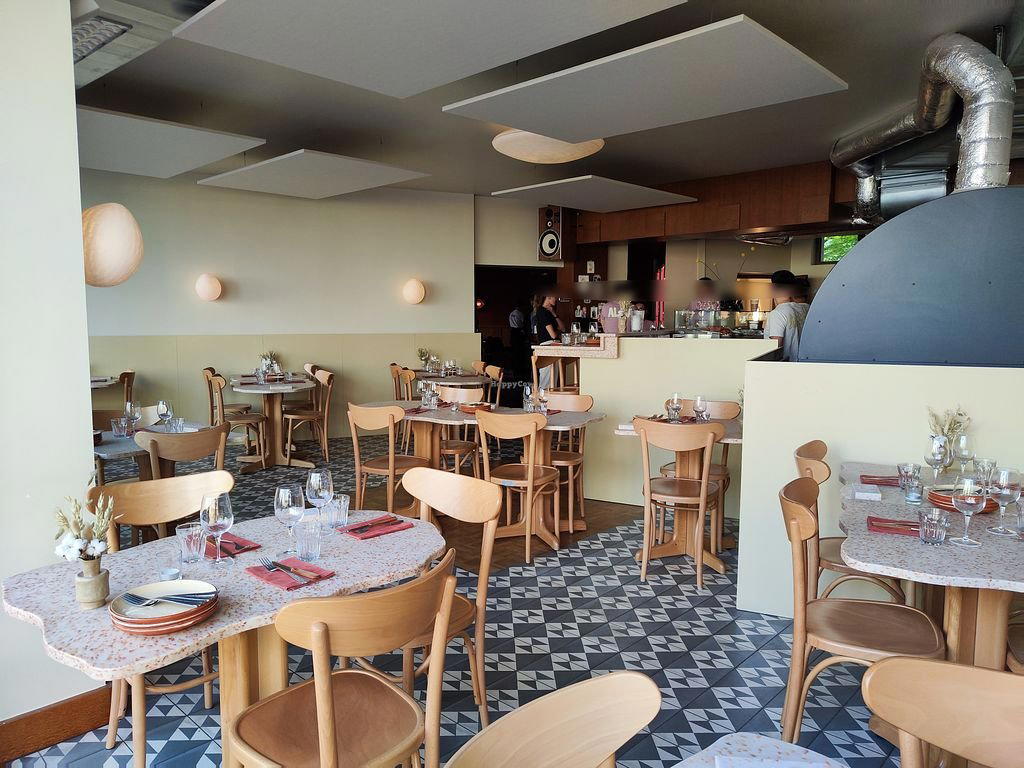
Aussersihl and the Quiet Shift in Zurich Dining
Zurich's dining reputation was built for decades on lakeside formality and the kind of room where the wine list arrives before the menu. That version of the city still exists: the grand bourgeois dining of Widder, the polished European ambition of The Restaurant, the sharing-format precision of IGNIV Zürich by Andreas Caminada. But a parallel track has been developing in the western districts, particularly in Aussersihl, where a different kind of seriousness has taken hold: quieter rooms, neighbourhood regulars, cooking that doesn't announce itself with architectural plating.
Alba sits on Bremgartnerstrasse 70, in the 8003 postal zone that covers much of Aussersihl. Approached from the street, it reads as the kind of address that earns its reputation through repetition rather than spectacle — the sort of room that improves with familiarity, where the context of the neighbourhood is part of what you're eating into. That dynamic, a restaurant growing into its surroundings rather than imposing on them, has become one of the more coherent ways to understand what's changed in Zurich's mid-to-upper dining tier over the past decade.
How the Category Has Shifted
The evolution of restaurant culture in Swiss cities like Zurich has tracked broader European movements but at a slightly compressed pace. The celebration of heritage institutions remained dominant longer here than in, say, Copenhagen or London. What replaced it wasn't a wholesale pivot to casual, but a more considered rebalancing: rooms with fewer theatrical elements, menus oriented around restraint rather than volume, pricing that sits inside the neighbourhood rather than above it.
Alba's Aussersihl address places it in a part of the city that has absorbed this shift most visibly. The 8003 district, once primarily working-class and commercial, now runs a corridor of restaurants and wine bars that function as a genuine alternative to the Altstadt circuit. For context on how that alternative circuit compares to Zurich's high-end tier, the gap is instructive: addresses like The Counter and Eden Kitchen & Bar operate in the €€€€ bracket with explicitly creative or imported-cuisine identities. The western neighbourhood restaurants, by contrast, tend to function with lower profiles and longer track records in their immediate communities.
Switzerland's fine dining tier, taken as a whole, remains one of Europe's most concentrated. Hotel de Ville Crissier and Schloss Schauenstein in Fürstenau anchor the national upper bracket; Memories in Bad Ragaz, Cheval Blanc by Peter Knogl in Basel, and Einstein Gourmet in Sankt Gallen each hold significant recognition in their respective cities. In that national frame, Zurich's neighbourhood tier operates with less institutional weight but often more flexibility — the kind that allows a restaurant to change direction without losing its audience.
The Reinvention Argument
A restaurant on a residential street in western Zurich that has persisted across the shifts in the local market makes a particular kind of argument. It isn't the argument of a new opening with a defined concept and a press strategy. It's the slower argument of a place that has revised itself in response to what the neighbourhood needed, or what it turned out the kitchen could sustain at the level required to keep seats filled.
That kind of reinvention is harder to document from the outside and rarely generates the attention that an award listing or a celebrity chef attachment would. But it's the pattern that explains most of Zurich's durable western-district addresses. The comparison points in this respect aren't purely local: restaurants like Lazy Bear in San Francisco made similar pivots, from informal pop-up formats to permanent structures with refined programming, and the credibility that came from that evolution was retrospectively more legible than it appeared in real time. In Zurich's case, the equivalent trajectory runs through smaller rooms and less documented transitions, but the underlying logic is the same.
Zurich in a Wider Swiss and International Frame
For visitors arriving with a Switzerland-wide itinerary, the positioning of Zurich's neighbourhood dining matters. The canonical Swiss fine dining circuit runs through the Romandy and Graubünden cantons as much as through the German-speaking north: Maison Wenger in Le Noirmont, Da Vittorio in St. Moritz, Mammertsberg in Freidorf, La Table du Valrose in Rougemont, and focus ATELIER in Vitznau each represent a different register of Swiss ambition. Within Zurich itself, that ambition tends to concentrate in the Seefeld and Altstadt zones.
The western districts function differently: they're where Zurich eats when it's not performing. That framing isn't a dismissal, it's a description of what those rooms are optimised for. A restaurant on Bremgartnerstrasse is calibrated to the rhythms of the neighbourhood, which means weekday covers, local wine knowledge, and a degree of informality that the city's more awarded addresses don't offer. For an international visitor who has already covered the trophy-tier, or who is deliberately routing around it, that calibration is exactly the point.
For the broader Zurich picture, including where Alba sits relative to the full range of the city's dining options, see our full Zurich restaurants guide. And for a sense of how Zurich's ambitions compare internationally, the gap between a room like this and a destination like Le Bernardin in New York City is instructive precisely because it isn't a gap in seriousness, it's a gap in format, scale, and what the respective dining cultures reward.
Planning Your Visit
Alba is at Bremgartnerstrasse 70 in the 8003 district, reachable on foot from the Helvetiaplatz tram hub or a short walk west from the main station. The Aussersihl neighbourhood rewards a longer exploration: the blocks around Bremgartnerstrasse carry enough wine bars and smaller dining rooms that an evening can be built around the area rather than anchored to a single reservation. Visitors with dietary restrictions should raise requirements at the time of contact, as the specifics of the kitchen's flexibility are best confirmed directly rather than assumed from menu descriptions alone.
How Alba Zürich compares with similar nearby venues.
| Venue | Cuisine | Price |
|---|---|---|
| Wirtschaft im FRANZ | Modern Cuisine | €€€ |
Recognition history
Dated appearances from independent guides and award organizations, with the underlying list record or original source where available.
50 Top Pizza Europe #43
50 Top Pizza
Continue exploring
More in Zürich
Restaurants in Zürich
Browse all →
Bars in Zürich
Browse all →

Hotels in Zürich
Browse all →

At a Glance
- Modern
- Trendy
- Cozy
- Casual Hangout
- Date Night
- Group Dining
- Open Kitchen
- Craft Cocktails
- Natural Wine
- Local Sourcing
Current opening hours
- Monday
- Closed
- Tuesday
- 5:30–11 PM
- Wednesday
- 5:30–11 PM
- Thursday
- 5:30–11 PM
- Friday
- 5:30 PM–12:30 AM
- Saturday
- 5:30 PM–12:30 AM
- Sunday
- 5:30–11 PM
Hours can change for holidays and private events. Last verified .
Stylish pastel design with a relaxing and experimental atmosphere.
Know Before You Go
- Getting there
- Bremgartnerstrasse 70, 8003 Zürich, Switzerland