ABSteak by Chef Akira Back
ABSteak by Chef Akira Back brings a Korean-American steakhouse sensibility to the Tenderloin edge of downtown San Francisco, where bold protein-forward cooking meets the precision associated with Akira Back's broader restaurant portfolio. The address at 124 Ellis St places it within walking distance of Union Square's dining corridor, making it a logical choice for visitors weighing serious beef against the city's more produce-driven fine dining scene.
Pearl is the En Primeur Club membership app — saves, bookings, and concierge access live there. Same editors, same standards.
- Address
- 124 Ellis St, San Francisco, CA 94102
- Phone
- +14154219014
- Website
- absteaksf.com
- Directions
- Get directions
 Saves & bookings on Pearl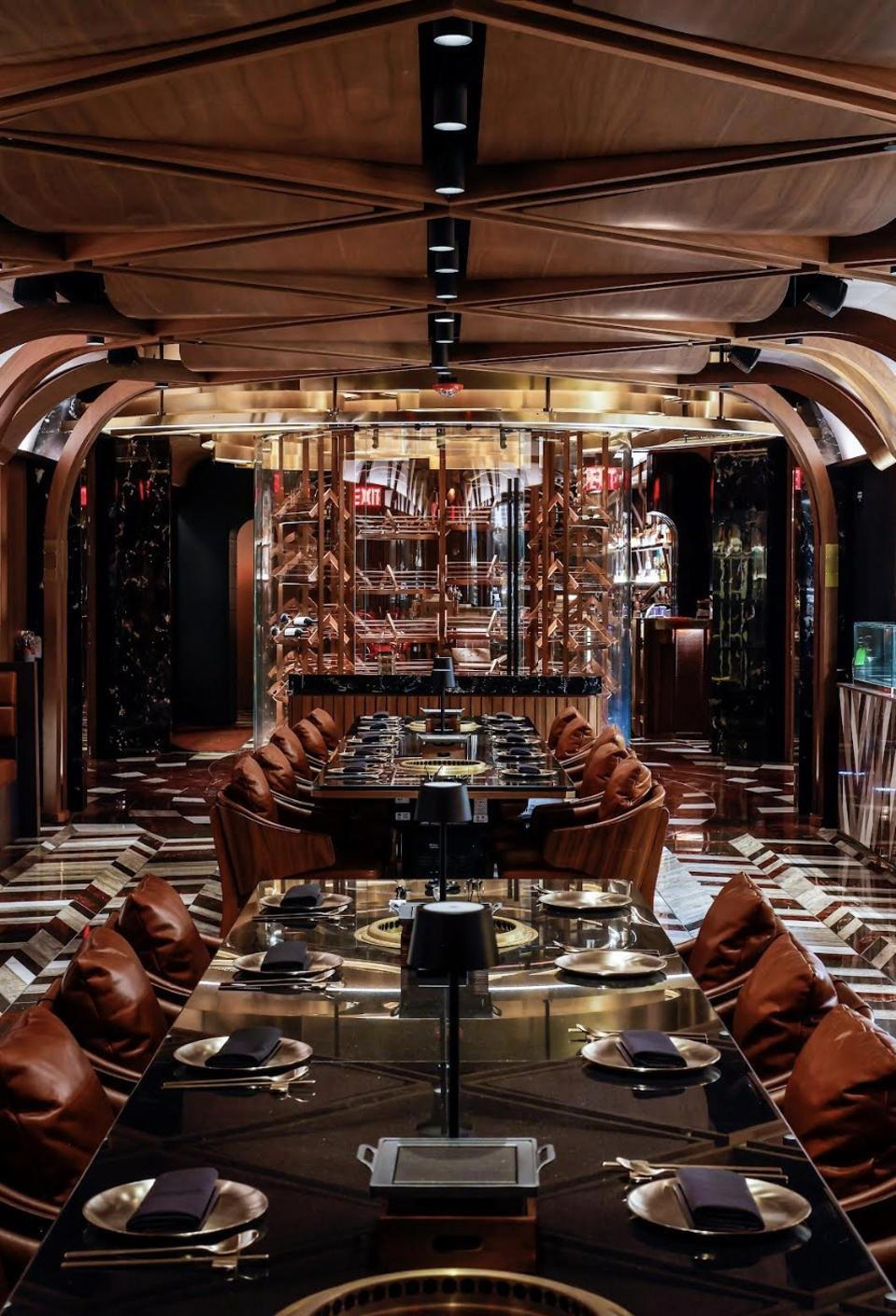
Where the Steakhouse Format Meets Korean-American Precision
San Francisco's upper dining tier has long organised itself around produce: the farmers' market sourcing that defines venues like Saison, the hyper-local ingredient narratives at Lazy Bear, and the ingredient-as-philosophy approach at Atelier Crenn. Protein-centric fine dining occupies a smaller slice of that tier. ABSteak by Chef Akira Back enters that gap — a Korean-American steakhouse format operating at a register where technique and sourcing carry the argument rather than theatrics.
The Ellis Street address sits at the southern edge of the Tenderloin, one block from Union Square's retail corridor. It is a part of the city that rarely anchors serious dining conversations, which means ABSteak is not trading on neighbourhood prestige. That positioning has its own logic: guests arrive for the concept, not the postcode, and the room has to carry its own weight from the moment you walk in.
The Room and What It Signals
Steakhouse design in American cities tends to follow one of two templates: dark wood and leather that nods to old-school chophouse tradition, or sleek minimalism signalling a break from it. The ABSteak format, drawn from Akira Back's broader restaurant group which operates across Las Vegas, Miami, and Seoul among other cities, leans toward the contemporary end. The physical environment at this San Francisco outpost reflects that international footprint: a room that reads as deliberate rather than accidental, where the materials and layout are doing editorial work about the kind of meal you're about to have.
That international consistency matters when assessing where ABSteak sits in the local competitive set. It is not positioned against Benu or Quince, where the tasting menu format and Michelin recognition define the experience architecture. It occupies a different axis: serious beef cookery with Korean inflection, an à la carte format accessible to guests who want a two-hour dinner rather than a four-hour progression.
Team Dynamic: How the Floor and Kitchen Converge
The editorial angle that matters most at a steakhouse operating in the Korean-American tradition is not the chef in isolation — it is the relationship between kitchen and floor. At the price point ABSteak targets, the front-of-house must carry enough knowledge to guide guests through cut selection, preparation, and the condiment and sauce vocabulary that Korean-American cooking brings to beef. That is a different skill set from the European fine dining server who recites sourcing provenance. It requires staff who can explain why a particular cut benefits from a Korean marinade preparation, when to let the beef speak on its own, and how the wine or cocktail program interacts with those flavours.
Akira Back's restaurants have built a reputation across their portfolio for marrying that culinary bilingualism at the table level. The sommelier or beverage lead at an operation like ABSteak faces a specific brief: pair against umami-forward preparations, work across a guest base that may include both wine-literate diners and guests more oriented toward cocktails, and do so in a city where the beverage conversation at comparable rooms, places like Saison in SoMa or the broader tasting-menu circuit, has set a high baseline expectation. Getting that three-way alignment between kitchen output, front-of-house explanation, and beverage direction is what separates a steakhouse with a Korean accent from a genuinely Korean-American fine dining concept.
Context Within San Francisco's Broader Dining Scene
For a city with San Francisco's dining density, the steakhouse category has historically punched below its weight relative to New York or Chicago. Visitors accustomed to the beef programs at, say, Le Bernardin in New York City (in terms of kitchen discipline, if not category) or the farm-integrated approach at Blue Hill at Stone Barns in Tarrytown will find ABSteak occupying a specific and underserved niche. The Korean-American steakhouse format has broader national precedent, Atomix in New York City demonstrates what Korean fine dining can achieve at the highest tier, and ABSteak applies a version of that ambition to the more democratised steakhouse format.
Regionally, the comparison set extends to other ambitious beef-and-technique concepts. Providence in Los Angeles and Addison in San Diego illustrate how California's fine dining scene at the leading end tends toward tasting menus and produce-driven frameworks. ABSteak's steakhouse structure sits at a slight angle to all of that, which is precisely its point of differentiation. Guests looking for the full San Francisco fine dining landscape should consult our full San Francisco restaurants guide, which maps the city's dining tiers across neighbourhoods and formats.
For travellers with a broader itinerary that includes wine country, Single Thread Farm in Healdsburg represents the farm-to-table extreme, while The French Laundry in Napa defines the classical tasting-menu benchmark in Northern California. ABSteak operates in neither of those registers, which makes it a complementary addition to an itinerary rather than a competing one.
Who This Is For
ABSteak makes most sense for guests who want serious protein cookery with Korean-American character, without committing to the long-form tasting menu format that dominates San Francisco's upper tier. It is a practical choice for business dinners, for visitors spending two or three nights in the city who have already planned a tasting-menu evening elsewhere, and for diners specifically interested in how Korean culinary technique maps onto the American steakhouse format. The Union Square adjacency makes logistics simple for hotel-based visitors in that part of downtown.
For those planning a deeper immersion in ambitious American dining beyond San Francisco, the same culinary curiosity that draws guests to ABSteak translates well to Smyth in Chicago, Emeril's in New Orleans, Frasca Food and Wine in Boulder, and The Inn at Little Washington in Washington. For European reference, Atelier Moessmer Norbert Niederkofler in Brunico shows how chef-led restaurant groups can build coherent identity across multiple concepts, a useful frame for understanding how the Akira Back portfolio positions ABSteak within a larger culinary strategy.
Know Before You Go
- Address: 124 Ellis St, San Francisco, CA 94102
- Neighbourhood: Tenderloin / Union Square boundary, downtown San Francisco
- Format: Korean-American steakhouse; à la carte format based on the broader ABSteak concept
- Price range: Not confirmed at time of publication; comparable Korean-American steakhouse concepts at this tier typically operate in the upper-mid to premium range
- Hours: Not confirmed at time of publication; verify directly before visiting
- Nearest transit: Powell Street BART/Muni station is approximately one block east on Market Street
Cuisine Lens
Comparable venues nearby, for context on price, style, and recognition.
| Venue | Cuisine | Price | Notes |
|---|---|---|---|
| ABSteak by Chef Akira BackThis venue — the venue you are viewing | Modern Korean Steakhouse | $$$$ | Not listed |
| Suragan | Modern Korean Historical Tasting Menu | $$$$ | Tenderloin |
| Buoy Bar | Modern Korean Bar & Small Plates | $$$ | Hayes Valley |
| Nob Hill Club | Contemporary American with Mediterranean Influences | $$$$ | Nob Hill |
| Sprouts Chef Training Gala - A Taste of Italy | Italian Gala Fine Dining | $$$$ | Financial District/South Beach |
| Roka Akor | Modern Japanese Robata Grill & Steakhouse | $$$$ | North Beach |
Continue exploring
More in San Francisco
Restaurants in San Francisco
Browse all →
Bars in San Francisco
Browse all →
Hotels in San Francisco
Browse all →
At a Glance
- Elegant
- Sophisticated
- Modern
- Date Night
- Business Dinner
- Group Dining
- Celebration
- Special Occasion
- Open Kitchen
- Private Dining
- Craft Cocktails
Current opening hours
- Monday
- Closed
- Tuesday
- 5:30–8:30 PM
- Wednesday
- 5:30–8:30 PM
- Thursday
- 5:30–8:30 PM
- Friday
- 5–9 PM
- Saturday
- 5–9 PM
- Sunday
- Closed
Hours can change for holidays and private events. Last verified .
Upscale and refined with table-side grilling experience; modern Korean steakhouse aesthetic with internationally prominent service.
Know Before You Go
- Getting there
- 124 Ellis St, San Francisco, CA 94102