A Tavola
Regulars return for solid antipasti and desserts
 Discover on Pearl
Pearl is the En Primeur Club membership app — saves, bookings, and concierge access live there. Same editors, same standards.
- Address
- 23 Rue d'Aguesseau, 92100 Boulogne-Billancourt, France
- Phone
- +33149090007
- Website
- atavola.fr
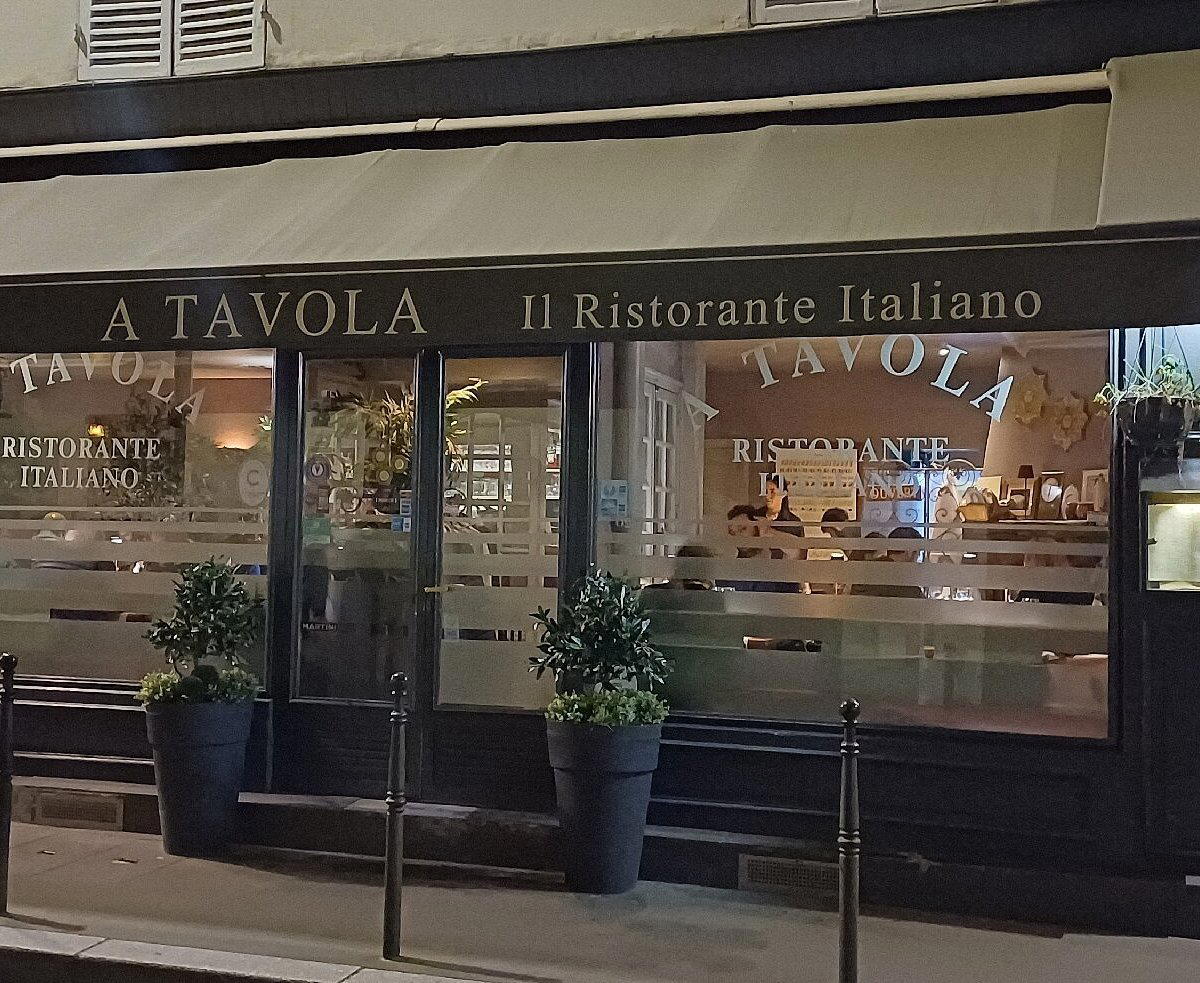
Italian Neighbourhood Dining on the Western Edge of Paris
Boulogne-Billancourt sits west of Paris and offers a calmer residential dining scene. Along streets like Rue d'Aguesseau, the local restaurant scene trends toward the neighbourhood staple rather than the destination restaurant: places where regulars eat twice a month, where the room is known before the menu, and where a kitchen's consistency matters more than its ambition. A Tavola is an Authentic Sicilian Italian restaurant in Boulogne-Billancourt.
Italian trattorias occupy a specific and well-understood niche in French suburban dining. At their leading, they function as a kind of imported local, translating the Italian model of daily, ingredient-driven cooking into a Parisian residential context. The format rewards producers over spectacle: where a bistrot might lean on sauce technique, the trattoria's credibility rests on the quality of the olive oil, the provenance of the charcuterie, the age of the parmigiano. That sourcing logic is what separates a serious Italian table from a generic one, and it is the right lens through which to read what A Tavola is attempting at its address in Boulogne-Billancourt.
Sourcing as the Central Argument
The name itself signals the register: a tavola, Italian for "to the table," is a call to sit down and eat rather than a branding exercise. It implies that what arrives at the table has been chosen, not engineered. In Italian culinary tradition, that choice begins far upstream: with which region's durum wheat produced the pasta, which DOP designation governs the cured meat, whether the burrata travelled overnight from Puglia or was made locally under Italian supervision. These distinctions are the difference between an Italian restaurant and an Italian-inflected one.
Boulogne-Billancourt's dining scene includes a range of neighbourhood options at different price points. Among Italian-leaning addresses, A Tavola's position on Rue d'Aguesseau places it in a residential pocket where the audience expects reliability above all. For the sourcing argument to hold, the kitchen has to maintain it across a full week of service, not just on Friday evenings when the room is full.
What Ingredient-Led Italian Cooking Demands From a Room Like This
The challenge for any neighbourhood Italian table in France is that French diners carry high baseline expectations around produce. A Paris-area audience that shops at good markets and knows the difference between good and indifferent produce is not easily impressed by the Italian label alone. The trattoria format earns trust through repetition: the same pasta arriving correctly textured on a Tuesday in February as it did on a Saturday in October. That consistency is harder to fake than a single showpiece dish.
In the broader French dining context, the country's most celebrated kitchens have built their reputations on exactly this logic of sourcing discipline. Mirazur in Menton has made its garden the structural foundation of the menu. Bras in Laguiole built a culinary identity around the specific flora of the Aubrac plateau. Flocons de Sel in Megève grounds its Alpine menu in the produce and producers of its immediate mountain environment. These are three-star operations, but the underlying logic, that the identity of the plate is determined before the cook touches it, applies equally at neighbourhood scale. A Tavola's credibility rests on whether it applies that same logic within its more modest frame.
The Boulogne-Billancourt Restaurant comparable set
A Tavola sits alongside a range of neighbourhood addresses that serve Boulogne-Billancourt's residential population. Adèle & Camille represents the French bistrot end of the local spectrum. Canaille takes a more market-driven French approach. BacCano occupies another point in the Italian-leaning category. Within that comparable set, the question for any Italian address is how it differentiates: through pasta-making, through a focused wine list weighted toward smaller Italian producers, through a charcuterie board sourced from specific regional suppliers. The generic version of Italian dining in this format relies on familiarity; the better version gives the diner something to learn about Italian regional specificity with each visit.
France's most serious Italian-influenced kitchens, and French fine dining more broadly, have long drawn on the principle that restraint in technique amplifies the quality of the raw material. The three-star logic demonstrated at Alléno Paris au Pavillon Ledoyen or the generational consistency of Auberge de l'Ill in Illhaeusern operates at a different scale, but the principle that the cook's job is to clarify rather than obscure what the ingredient already is translates down to neighbourhood dining. The trattoria format, at its most functional, is built around exactly that restraint.
Planning Your Visit
A Tavola is located at 23 Rue d'Aguesseau, 92100 Boulogne-Billancourt. Reservations are recommended.
For readers building a broader picture of French dining, the country's decorated rooms provide useful calibration points: Assiette Champenoise in Reims, Au Crocodile in Strasbourg, Auberge du Vieux Puits in Fontjoncouse, Christopher Coutanceau in La Rochelle, AM par Alexandre Mazzia in Marseille, Paul Bocuse - L'Auberge du Pont de Collonges in Collonges-au-Mont-d'Or, and Troisgros - Le Bois sans Feuilles in Ouches. For those crossing the Atlantic, Le Bernardin in New York City and Atomix in New York City offer useful comparison points for how ingredient provenance drives menu identity at the top of the market.
How It Stacks Up
Comparable venues nearby, for context on price, style, and recognition.
| Venue | Cuisine | Price | Awards | Notes |
|---|---|---|---|---|
| A TavolaThis venue — the venue you are viewing | Authentic Sicilian Italian | $$ | , | |
| Adèle & Camille | Seasonal French Bistro | $$ | , | Boulogne-Billancourt |
| Canaille | Modern French Wine Bar | $$$ | , | Prince–Marmottan |
| BacCano | Authentic Neapolitan Italian | $$ | , | Boulogne-Billancourt |
| Pane e Olio Taverna | Authentic Sicilian Taverna | $$ | , | 16th Arrondissement |
| Fellini | Authentic Italian Trattoria | $$ | , | Les Halles |
Continue exploring
More in Boulogne Billancourt
Restaurants in Boulogne Billancourt
Browse all →
Bars in Boulogne Billancourt
Browse all →
Hotels in Boulogne Billancourt
Browse all →
Wineries in Boulogne Billancourt
Browse all →
At a Glance
- Cozy
- Intimate
- Rustic
- Date Night
- Family
- Special Occasion
- Standalone
Warm and relaxing environment with a cozy, old-world feel featuring a crackling fireplace and quiet, hospitable atmosphere.