40 N Bragar
This listing is retired after a June 2026 status audit found the place inactive at its stored address.
- Address
- 40 N Bragar, Bragar, Isle of Lewis HS2 9DA, UK
- Directions
- Get directions
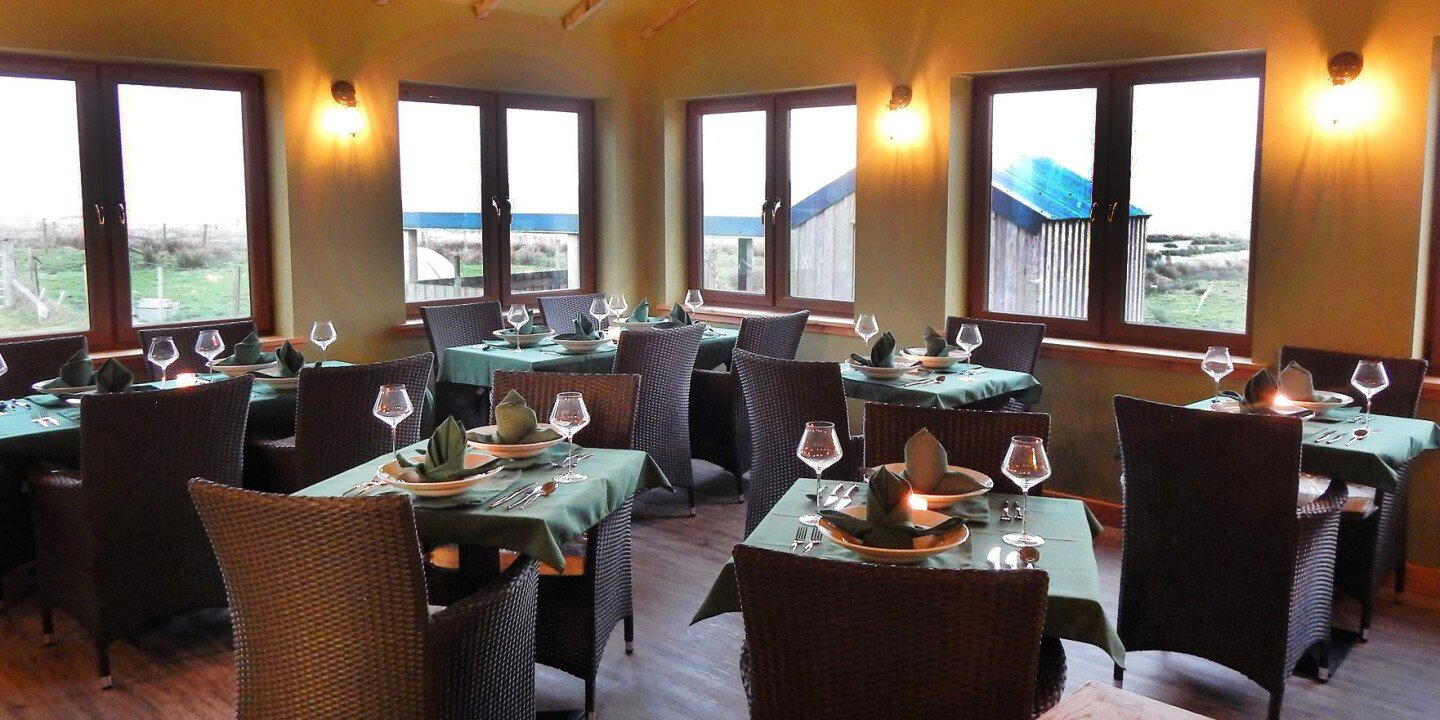
The Outer Hebrides as Ingredient: What the Isle of Lewis Puts on the Table
There is a category of dining destination in the British Isles where the provenance argument is almost geological. You are not choosing a restaurant because of a tasting menu format or a Michelin constellation; you are choosing a location because the food and the place are effectively the same thing. The Isle of Lewis, the northern half of the largest island in the Outer Hebrides, sits at the far end of that spectrum. Bragar, a township on the west coast of Lewis, is not a place you pass through on the way somewhere else. The Atlantic is at the door. The peat moor stretches east. Gaelic is spoken as a first language by a significant portion of the local population. This context shapes every meal eaten within miles of the address at 40 N Bragar.
The broader British fine dining conversation in 2024 is largely conducted from urban kitchens. CORE by Clare Smyth in London and venues like Le Manoir aux Quat'Saisons in Oxford or Waterside Inn in Bray operate from positions of relative accessibility, with supplier networks, press coverage, and footfall that function within an hour or two of London. Even the more remotely positioned restaurants that draw serious critical attention, such as L'Enclume in Cartmel or Moor Hall in Aughton, sit within the gravitational pull of England's infrastructure. The Outer Hebrides operates on different physics entirely.
Approaching Bragar: Logistics as Orientation
Getting to the Isle of Lewis from mainland Britain requires either a two-hour flight to Stornoway from Inverness, Glasgow, or Edinburgh, or a ferry crossing of roughly two hours and forty minutes from Ullapool on the CalMac service. Stornoway, the island's main town, is roughly eighteen kilometres east of Bragar along the A858. The road runs through moorland that makes the journey its own form of preparation. Seasons here are not subtle: the Atlantic dictates terms, and summer daylight extends past ten in the evening while winter narrows the day to a few useful hours. Timing a visit around the shoulder months of May or September gives the leading ratio of weather, light, and road conditions.
What Ingredient Sourcing Means at This Latitude
In most British restaurant contexts, sourcing language has become a performance: menus list farm names and postcode-level provenance as a signal of values rather than a description of logistics. On the Isle of Lewis, the relationship between kitchen and source is less rhetorical. The waters around Lewis produce langoustine, crab, lobster, and cod under fishing pressures and seasonal rhythms that are directly observable from the shoreline. Lamb grazed on the machair, the coastal grassland particular to the Hebrides and a few other Atlantic-facing landmasses, develops a flavour profile that has no equivalent in lowland farming. Salt-wind exposure, low-intensity grazing, and the mineral content of the soil produce something that chefs on the mainland spend considerable effort trying to source or replicate.
This is the ingredient argument that places like Digby Chick in Stornoway have built their identity around, and it is the same logic that runs through any serious cooking done in this part of Lewis. The sourcing story at this latitude is not curated for a menu card; it is simply what is available when you are this far from a central distribution network. Distance from the supply chain mainstream is, paradoxically, an argument for quality rather than against it.
Comparable arguments about extreme-geography provenance apply at other end-of-the-road British addresses. Gidleigh Park in Chagford draws on Dartmoor provenance; Ynyshir Hall in Machynlleth has made the argument that Welsh geography is itself a flavour system. In Scotland, Restaurant Andrew Fairlie in Auchterarder and The Glenturret Lalique in Crieff operate within Perthshire's comparatively well-serviced food economy. The Outer Hebrides is further out than any of them.
The Broader Lewis Dining Context
The dining scene across Lewis is small in number but specific in character. The island's Calvinist history meant Sunday closing was near-universal until relatively recently, and that social texture still marks how hospitality operates in the more traditional townships. Eating well on Lewis has historically meant self-catering with notable local produce, finding the few places in Stornoway that cook seriously, or accepting that remoteness is part of what you came for. Restaurants and hospitality operations further afield from Stornoway, in communities like Bragar, tend to be embedded in a local rather than visitor economy, which shapes both their availability and their relationship to the ingredient supply around them.
For context on what ambitious British cooking looks like when it commits to a regional identity at scale, Restaurant Sat Bains in Nottingham, Midsummer House in Cambridge, Hand and Flowers in Marlow, and hide and fox in Saltwood each represent a model of serious cooking embedded in a specific English locality. Opheem in Birmingham extends that argument into a different cultural register. None of them operate at the degree of geographic isolation that defines cooking in western Lewis.
For international comparison on the question of what extreme geography does to ingredient identity, the cold-water precision of Le Bernardin in New York City and the hyper-local fermentation logic at Atomix in New York City sit at the opposite end of the sourcing spectrum: deeply urban, supplier-rich, technically maximalist. The Hebrides works from the opposite direction.
Planning a Visit to 40 N Bragar
Given the island's infrastructure, building flexibility into any Lewis itinerary is standard practice: weather, ferry schedules, and local operating hours can all shift plans on short notice. The address at Bragar places this point on the west coast of Lewis, accessible by the A858 from Stornoway, running through the townships of the Barvas district.
A Quick Peer Check
Comparable venues nearby, for context on price, style, and recognition.
| Venue | Cuisine | Price | Notes |
|---|---|---|---|
| 40 N BragarThis venue — the venue you are viewing | Scottish Gastropub | $$ | Not listed |
| Digby Chick | Modern Scottish Seafood | $$$ | Stornoway |
| Glencoe Gathering | Traditional Scottish Pub Fare | $$ | Glencoe Village |
| BEAR by Carlo Scotto | Foraged British tasting menu chef’s counter | $$$$ | Old Town |
| The Yellow Bittern | Irish-influenced British set-menu lunch | $$$ | King's Cross |
| Bar Boulud London | Dining | Not listed | London |
Continue exploring
More in Na H Eileanan An Iar
Wineries in Na H Eileanan An Iar
Browse all →
At a Glance
- Intimate
- Cozy
- Rustic
- Date Night
- Special Occasion
- Standalone
- Local Sourcing