1906 at Longwood Gardens


Wine Spectator Best of Award of Excellence · World's Best Wine Lists Awards WBWL 2-Star
Our verdict
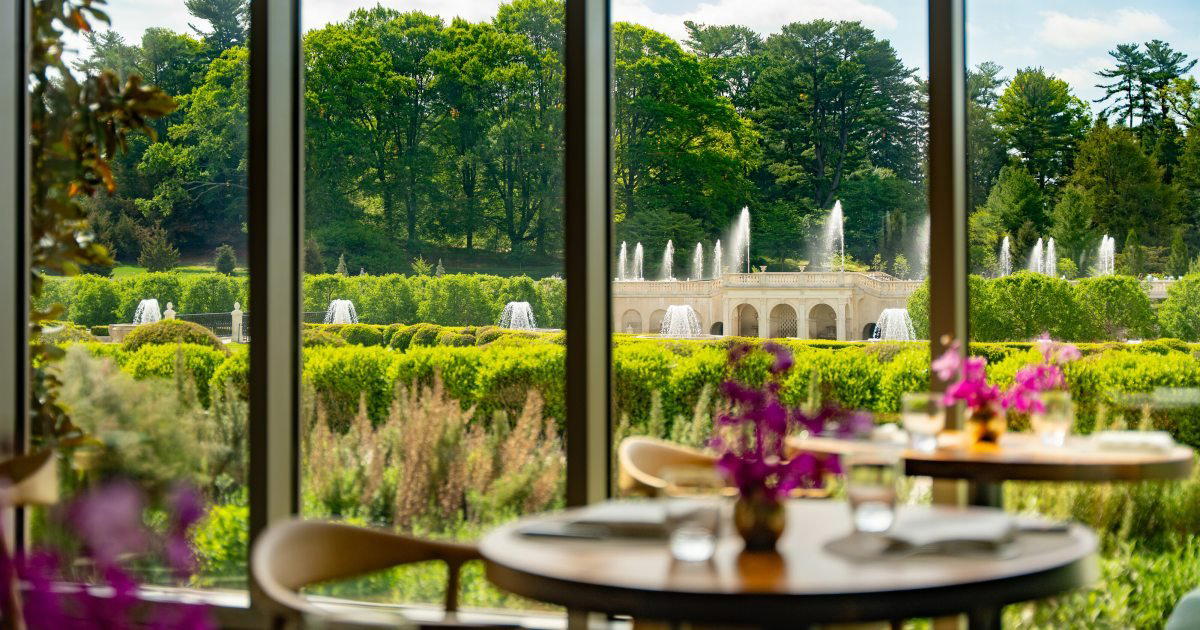
Located within the grounds of Longwood Gardens in Kennett Square, Pennsylvania, 1906 holds a 2-Star Accreditation from the World of Fine Wine & Food Awards, a credential that places it in serious company for a destination dining room outside a major metropolitan centre. The restaurant draws its identity as much from its extraordinary surroundings as from what arrives on the plate.

Pearl is the En Primeur Club membership app, where members save venues, book tables and use the concierge.
The menu
What to order
- Garden Risotto
- Mushroom Wellington
- Mushroom Pâté
Dining Inside a Living Garden: The Setting at 1906
There are very few dining rooms in the American Northeast where the architecture of the grounds competes with what's happening at the table. Longwood Gardens, a 1,100-acre horticultural estate in Chester County, Pennsylvania, has been drawing serious visitors since Pierre du Pont began shaping it in the early twentieth century. The restaurant that bears the year of its founding, 1906, sits inside that legacy. Approaching dinner here, the physical context does real work before a single dish arrives: glasshouse corridors, manicured water gardens, and a scale of green space that has no equivalent in the region. For the full scope of what Kennett Square offers beyond the plate, see our full Kennett Square experiences guide.
The proposition at 1906 is shaped by that setting in ways that matter practically. This is not a restaurant you stumble across or slot into a broader evening of bar-hopping. It functions as a destination in its own right, situated on grounds that charge separate admission, which means the decision to dine here is almost always a deliberate one. That self-selection produces a particular kind of room: guests who have planned ahead, who are aware of where they are, and who are, on the whole, willing to let the pace of a formal garden estate set the tempo for the meal.
What the 2-Star Accreditation Actually Signals
Accreditation from the World of Fine Wine and Food Awards operates on a different axis than restaurant star systems. Where Michelin evaluates the kitchen alone, the WBWL framework weights the wine program alongside the food, meaning a 2-Star result implies a beverage offering that has been taken seriously at an institutional level, not simply a serviceable list assembled from distributor defaults.
The broader American range of fine dining has increasingly split between two formats: large-city destination restaurants with celebrity-chef pedigree and price points to match, and smaller-market venues that build credibility through a specific angle, provenance sourcing, exceptional cellars, or deep local rootedness. Blue Hill at Stone Barns in Tarrytown is the most cited example of the latter model, where the land itself becomes the editorial frame for the menu. Single Thread Farm in Healdsburg operates on a similar farm-to-counter logic in Northern California. 1906's position, inside one of North America's most significant horticultural institutions, gives it a version of that same structural legitimacy, even if the garden's primary identity is botanical rather than agricultural.
Ingredient Sourcing and the Estate Context
The most compelling editorial question about any restaurant operating inside a large estate or institution is whether the kitchen uses the surroundings as genuine sourcing infrastructure or treats them purely as backdrop. Chester County sits within one of the mid-Atlantic's most productive agricultural zones, mushroom cultivation alone makes Kennett Square nationally significant, with the borough responsible for a substantial share of domestic supply. That geographic specificity is not incidental. Kitchens that draw seriously from the immediate region have access here to varieties and growing conditions that urban restaurants source at a premium and receive at a delay.
Estate grounds at Longwood include working kitchen gardens alongside the ornamental plantings, which creates the structural possibility, present at relatively few American restaurant sites, of sourcing herbs, edible flowers, and specialty produce from within walking distance of the kitchen. What the setting makes structurally available, however, is worth understanding as context for why the restaurant occupies the position it does in the regional dining conversation.
For readers mapping the broader farm-to-table tradition across American fine dining, the comparison set is instructive. The French Laundry in Napa maintains its own kitchen garden across the road from the restaurant. Single Thread runs a working farm in the hills above Healdsburg. These operations use proximity to supply as a genuine quality signal, not a branding exercise. The institutional weight of Longwood Gardens as a horticultural body gives 1906 a comparable structural relationship to the land, even if the estate's primary mission is preservation and education rather than food production.
Where 1906 Sits in the Regional Dining Picture
Kennett Square is not Philadelphia, and 1906 is not operating in a market where fine dining is expected or in abundant supply. Chester County's serious restaurant options thin out quickly once you move beyond the Philly suburbs, which makes the presence of a 2-Star WBWL-accredited dining room here genuinely notable for the region. The nearest equivalents in terms of award pedigree require either a city visit or a longer drive toward Washington, D.C. where The Inn at Little Washington has spent decades anchoring rural fine dining in Virginia's Rappahannock County. That comparison is worth sitting with: destination dining in smaller markets survives when it offers something the city cannot replicate. For The Inn at Little Washington, it's Patrick O'Connell's decades-long singular vision. For 1906, the differentiator is the grounds themselves.
For the broader picture of where 1906 sits relative to the American fine dining tier, the reference points span both coast and price bracket. Le Bernardin in New York City, Alinea in Chicago, Lazy Bear in San Francisco, Providence in Los Angeles, and Addison in San Diego all operate at the top of their respective city markets. 1906 earns its accreditation in a very different context, lower population density, a captured audience of estate visitors, and a program that must justify itself against lower ambient competition while holding up to a credentialing standard set by international peers. For globally framed comparisons, Alain Ducasse's Louis XV in Monte Carlo and 8½ Otto e Mezzo Bombana in Hong Kong represent what estate-adjacent or institution-adjacent fine dining can achieve at the highest level internationally.
For readers planning a broader Kennett Square visit, the restaurant makes most sense as the anchor of a full-day itinerary rather than a standalone evening. See our full Kennett Square restaurants guide, our Kennett Square hotels guide, our Kennett Square bars guide, and our Kennett Square wineries guide for the full picture of what the area sustains.
Planning a Visit to 1906
The logistics here are specific to its institutional setting. Access to 1906 runs through Longwood Gardens at 1001 Longwood Road, Kennett Square, PA 19348. As the restaurant sits within a ticketed horticultural estate, visitors should confirm current entry and reservation arrangements directly through the Longwood Gardens website, as garden admission and dining reservations may be linked or run on separate booking tracks. Spring and summer visits align with the garden's peak flowering calendar and carry the advantage of dining against a backdrop of maximum horticultural activity, practically, that also means peak visitor volume. Autumn visits offer the mushroom harvest season's regional produce angle, which is locally significant given Kennett Square's dominance of the domestic mushroom supply.
Frequently asked questions
Would 1906 at Longwood Gardens be comfortable with kids?
1906 operates inside Longwood Gardens at 1001 Longwood Road, Kennett Square, an estate where families regularly visit the grounds. The restaurant itself carries a 2-Star World of Fine Wine accreditation, which signals a formal dining standard more aligned with adult occasions than casual family meals. Families with older children who are comfortable in a structured dining environment will likely find it workable; those with younger children would do better saving 1906 for a separate visit without the kids.
Is 1906 at Longwood Gardens better for a quiet night or a lively one?
The setting inside Longwood Gardens, a botanical estate in Chester County, Pennsylvania, shapes the tone decisively. This is not a restaurant built around noise and momentum. The 2-Star World of Fine Wine accreditation places it in a tier where considered service and a measured pace are part of the proposition, making it a stronger choice for a quiet dinner, a serious conversation, or a celebratory meal that doesn't require a buzzing room to feel special.
Is 1906 at Longwood Gardens award-winning?
1906 at Longwood Gardens has received recognition including:
What's the best thing to order at 1906 at Longwood Gardens?
What the 2-Star World of Fine Wine accreditation does confirm is that the wine program is held to a rigorous editorial standard, so the beverage pairing is worth treating as seriously as the food. Checking directly with the restaurant at 1001 Longwood Road, Kennett Square before your visit is the most reliable way to get current menu information.
What's 1906 at Longwood Gardens's location?
1906 at Longwood Gardens is located at 1001 Longwood Rd, Kennett Square, PA 19348, Kennett Square.
At-a-Glance Comparison
Comparable venues nearby, for context on price, style, and recognition.
| Venue | Cuisine | Price | Awards | Notes |
|---|---|---|---|---|
| 1906 at Longwood GardensThis venue (the venue you are viewing) | Seasonal American Fine Dining | $100–150 | Wine Spectator Best of Award of Excellence · World's Best Wine Lists Awards WBWL 2-Star | Not listed |
| Pyramid Club | Contemporary American Fine Dining | $50–100 | Not listed | Logan Square |
| Moshulu | Contemporary American Seafood | Not listed | Not listed | Penn's Landing |
| Square 1682 | Modern American | $50–100 | Not listed | Rittenhouse Square |
| a.kitchen | Seasonal American Small Plates with French Influences | $30–50 | Wine Spectator Best of Award of Excellence | Rittenhouse Square |
| Harper's Garden | Seasonal New American | $50–100 | Not listed | Penn Center |
Recognition history
Dated appearances from independent guides and award organizations, with the underlying list record or original source where available.
Wine Spectator Best of Award of Excellence
Wine Spectator
World's Best Wine Lists Awards WBWL 2-Star
World's Best Wine Lists Awards
Continue exploring
More in Kennett Square
Restaurants in Kennett Square
All restaurants in Kennett Square →
Bars in Kennett Square
Browse all →
Hotels in Kennett Square
Browse all →
Wineries in Kennett Square
Browse all →
1906 at Longwood Gardens
The wine
1906 at Longwood Gardens holds the Wine Spectator Best of Award of Excellence, which Wine Spectator gives to lists of usually 350 or more selections.
- Wine Spectator
- Wine Spectator Best of Award of Excellence
Details
- Elegant
- Scenic
- Sophisticated
- Special Occasion
- Date Night
- Celebration
- Garden
- Historic Building
- Farm To Table
- Local Sourcing
- Garden
Current opening hours
- Monday
- 11 AM–2:30 PM
- Tuesday
- Closed
- Wednesday
- 11 AM–2:30 PM
- Thursday
- 11 AM–2:30 PM
- Friday
- 11 AM–3 PM
- Saturday
- 11 AM–2:30 PM
- Sunday
- 11 AM–2:30 PM
Hours can change for holidays and private events. Hours as of .
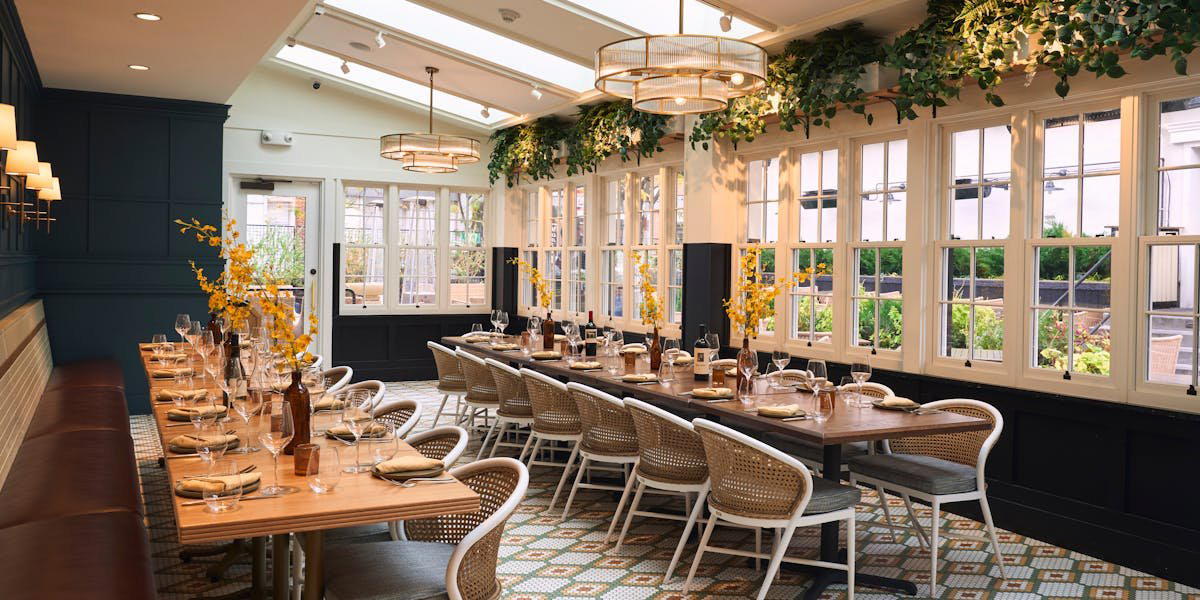
Elegant and refined with beautiful garden views, comfortable seating, and a sophisticated atmosphere.