
Michelin Plate
Our verdict
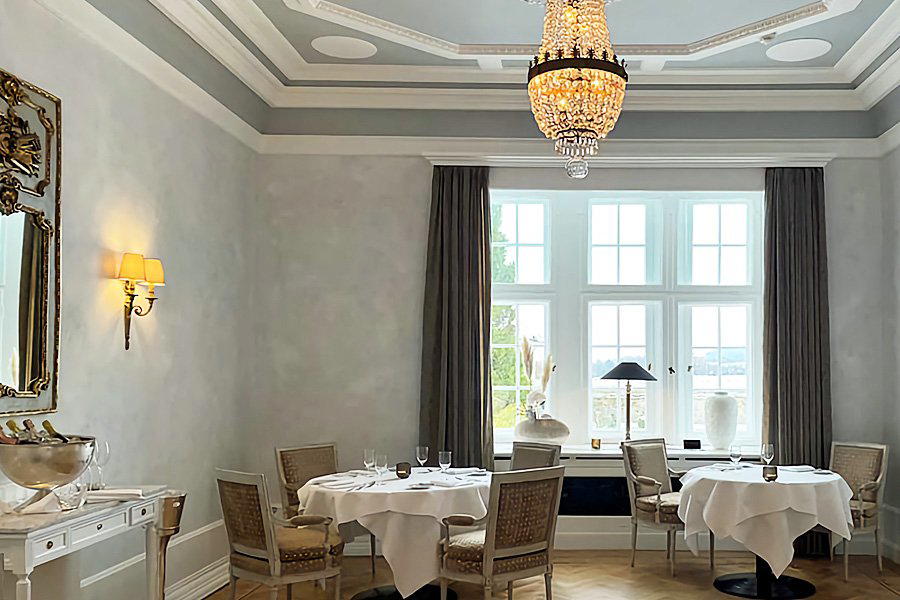
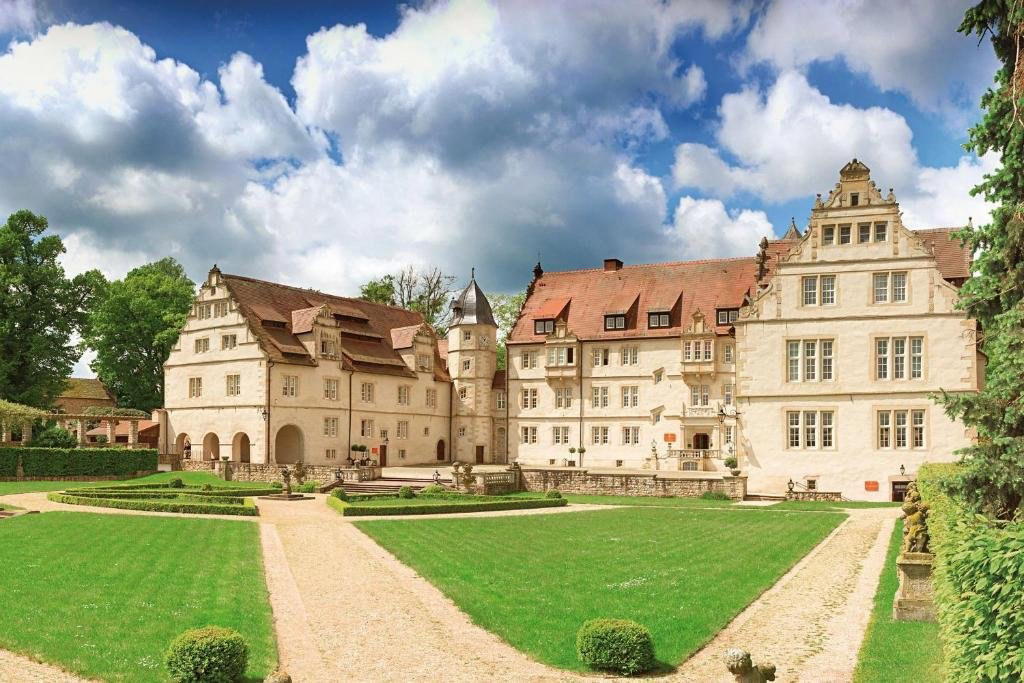
Set within Schlosshotel Münchhausen, a stately home dating to 1570 in the Lower Saxon countryside near Aerzen, this restaurant delivers modern French-inspired cooking as a five-course set menu beneath moulded ceilings and chandeliers. The format pairs the architectural weight of a historic estate with contemporary technique, placing it in the niche tier of German castle dining where surroundings and kitchen ambition reinforce each other.

Pearl is the En Primeur Club membership app, where members save venues, book tables and use the concierge.
The menu
What to order
- Breton-coast monkfish roasted on the bone
- Artichoke with sea bass and Norway lobster
A Castle Dining Room That Earns Its Setting
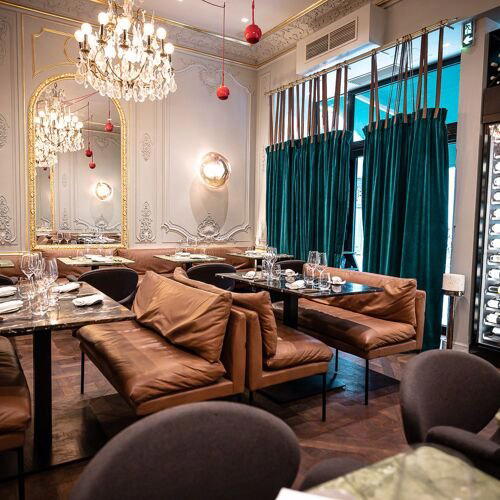
There is a particular challenge that faces any restaurant operating inside a historic estate: the architecture sets an expectation that the kitchen must meet, not merely shelter beneath. At Schlosshotel Münchhausen in Aerzen, a stately home whose foundations trace to 1570, the dining room known simply as 1570 occupies that position. Moulded ceilings, chandeliers, and hardwood floors establish a register that most restaurants spend years and considerable budgets trying to approximate. Here it is structural, original, unmoved, carrying the weight of four and a half centuries. The question, as with any serious castle-hotel restaurant in Germany, is whether the cooking holds its end of that arrangement.
The short answer is that it does. A five-course set menu anchored in French culinary tradition arrives with a sequence of delicate appetisers that signal kitchen confidence rather than ceremony for its own sake. The service is described as genial and highly adept, a combination that matters more in a formal historic setting than people often credit. Rigid formality in a room this weighted can calcify; service that stays warm without losing precision is harder to sustain than the menu itself.
French Tradition in a German Country House
The decision to orient the kitchen toward French culinary tradition rather than contemporary German regionalism places 1570 in a specific and well-established lineage. Germany's most decorated restaurants have long maintained a productive tension between the two traditions. Schwarzwaldstube in Baiersbronn operates at the intersection of classic French technique and Black Forest context. Vendôme in Bergisch Gladbach works within Modern European and creative frameworks that owe an acknowledged debt to French classical structure. At the higher end, Victor's Fine Dining by Christian Bau in Perl and Waldhotel Sonnora in Dreis demonstrate how deeply French classical training has shaped Germany's fine dining conversation over several decades.
Its designation as casual fine dining signals something more specific: a format where the architectural prestige and the set-menu structure do the heavy lifting on occasion-setting, while the kitchen delivers a version of French-inspired contemporary cooking calibrated for a country-house audience rather than a destination-tasting circuit. That is a coherent and legitimate editorial choice, and it is worth understanding on its own terms rather than judging against restaurants that have chosen differently.
The French culinary tradition that informs the menu carries its own sourcing logic. Classical French cooking at the country-house register has historically prioritised produce with clear provenance, game, dairy, root vegetables, and orchard fruit that speak to the immediate geography. The Weser Uplands, which frame this part of Niedersachsen, support exactly the kind of agricultural and foraging context that French country-house cooking has always recruited from.
What the Estate Adds to the Table
The Schlosshotel Münchhausen context extends beyond the dining room itself. A park and golf course adjoin the property, and the hotel's guestrooms are designed to a standard that encourages overnight stays rather than day visits. For guests arriving from outside the region, this is a meaningful practical detail: the restaurant works as a destination in its own right when combined with a night on the estate, but it also asks a different kind of commitment than a city reservation.
That model, the estate-stay as dining occasion, has deep roots in European hospitality and represents one of the more coherent rationales for serious country-house cooking. The most effective examples are restaurants where the kitchen, the grounds, and the accommodation reinforce a single proposition rather than operating as separate departments.
For readers assessing Aerzen's broader food and drink offer, the town's options are documented in our full Aerzen restaurants guide. The contemporary restaurant HILMAR represents a different register within the same small town, providing a point of comparison for visitors calibrating their expectations. Aerzen's hotel, bar, winery, and experience listings are also collected at our full Aerzen hotels guide, our full Aerzen bars guide, our full Aerzen wineries guide, and our full Aerzen experiences guide.
Where This Sits in Germany's Castle-Dining Tier
Germany has a well-populated castle and manor-hotel dining circuit that spans a wide quality range. At the serious end, properties like those housing Restaurant Haerlin in Hamburg or JAN in Munich demonstrate how architectural prestige and kitchen ambition can operate at the same level simultaneously. At the creative outer edge, CODA Dessert Dining in Berlin and ES:SENZ in Grassau show how German fine dining has expanded its formal vocabulary. Schanz in Piesport and Aqua in Wolfsburg operate at the decorated top end of the German fine dining spectrum.
1570 does not compete in that decorated tier. It occupies the country-house casual fine dining bracket, where the proposition is a composed evening in historic surroundings with a structured menu and attentive service. For international reference points, the estate-restaurant model has parallels in the French provincial tradition that produced institutions like those that informed Le Bernardin in New York City's classical lineage, or in the American South's tradition of occasion dining, as sustained by places like Emeril's in New Orleans. The common thread is that setting and format carry as much weight as the plate in shaping the dining experience.
Planning a Visit
Schwöbber 9 in Aerzen is the address for Schlosshotel Münchhausen, placing the property in Lower Saxony's Weser Uplands. The estate's combination of park, golf course, and hotel accommodation makes it most naturally suited to a planned overnight stay, particularly for visitors travelling from Hanover or further afield. The five-course set-menu format means arriving with time and appetite, rather than treating it as a quick dinner stop. Booking details, current pricing, and hours are best confirmed directly through the hotel, as these fall outside confirmed data available here.
Frequently asked questions
Is 1570 - CASUAL FINE DINING suitable for children?
The five-course set-menu format in a chandeliered castle dining room positions 1570 firmly as an occasion-dining destination, most suited to adults looking for a composed, unhurried evening. Families travelling together and staying at the hotel have access to the broader estate, including the park and golf course, which provides context beyond the dining room itself.
What kind of setting is 1570 - CASUAL FINE DINING?
The restaurant occupies Schlosshotel Münchhausen, a stately home in Aerzen, Lower Saxony, dating to 1570. The dining room features moulded ceilings, chandeliers, and hardwood floors, with a park and golf course adjoining the property. It is a composed, historically grounded space rather than a contemporary hotel restaurant.
What awards or recognition does 1570 - CASUAL FINE DINING have?
1570 - CASUAL FINE DINING has received recognition including: Dine like royalty in a castle setting! Could you ask for more splendid surroundings than those of the historical Schlosshotel Münchhausen, a stately home dating back to 1570, in which to savour modern dishes inspired by French culinary trad….
What do people recommend at 1570 - CASUAL FINE DINING?
The kitchen runs a single five-course set menu built around French culinary tradition, preceded by a sequence of delicate appetisers. There are no à la carte decisions to make; the format is fixed, which keeps the kitchen focused and the pacing deliberate. Service is noted for being both warm and technically adept.
Where is 1570 - CASUAL FINE DINING located?
1570 - CASUAL FINE DINING is located at Schwöbber 9, Aerzen.
Do they take walk-ins at 1570 - CASUAL FINE DINING?
A five-course set-menu restaurant inside a historic estate hotel in a small town like Aerzen almost certainly operates on a reservations basis, particularly on weekend evenings. Contacting Schlosshotel Münchhausen directly at Schwöbber 9, Aerzen, is the practical route to confirming availability and booking.
In Context: Similar Options
| Venue | Cuisine | Price | Awards | Notes |
|---|---|---|---|---|
| 1570 - CASUAL FINE DININGThis venue (the venue you are viewing) | Contemporary French Fine Dining | $150–200 | Michelin Plate | Not listed |
| Aqua | Contemporary German, Italian/Japanese, Creative | Not listed | Michelin 3 Star | Not listed |
| Schwarzwaldstube | Modern French Fine Dining | $150–200 | 3 Michelin Stars · World's 50 Best #47 | French, Classic French |
| CODA Dessert Dining | Dessert-Inspired Fine Dining | $200–300 | 2 Michelin Stars · World's 50 Best #79 | Creative |
| Vendôme | Modern German Haute Cuisine | $200–300 | 2 Michelin Stars · World's 50 Best #47 | Modern European, Creative |
| Tantris | Modern French, French Contemporary | Not listed | Michelin 2 Star | Not listed |
Recognition history
Dated appearances from independent guides and award organizations, with the underlying list record or original source where available.
Michelin Plate
Michelin
Continue exploring
More in Aerzen
Restaurants in Aerzen
All restaurants in Aerzen →
Wineries in Aerzen
Browse all →
Details
- Elegant
- Sophisticated
- Romantic
- Historic
- Intimate
- Special Occasion
- Date Night
- Celebration
- Historic Building
- Hotel Restaurant
- Extensive Wine List
- Sommelier Led
- Garden
- Tasting Menu
- Prix Fixe
- Vegetarian Friendly
Elegant historic ambiance blending Renaissance grandeur with modern design, featuring molded ceilings, chandeliers, parquet floors, and warm lighting.