Wilderness Little Makalolo

World Travel Awards
Zimbabwe's 2025 World Travel Awards winner for Leading Tented Safari Camp, Wilderness Little Makalolo sits inside Hwange National Park on a private concession within one of southern Africa's largest elephant habitats. The camp operates at low capacity, placing it firmly in the specialist-tier of southern African safari properties where proximity to wildlife, guiding depth, and spatial design do the heavy editorial work.

Pearl is the En Primeur Club membership app, where members save venues, book tables and use the concierge.
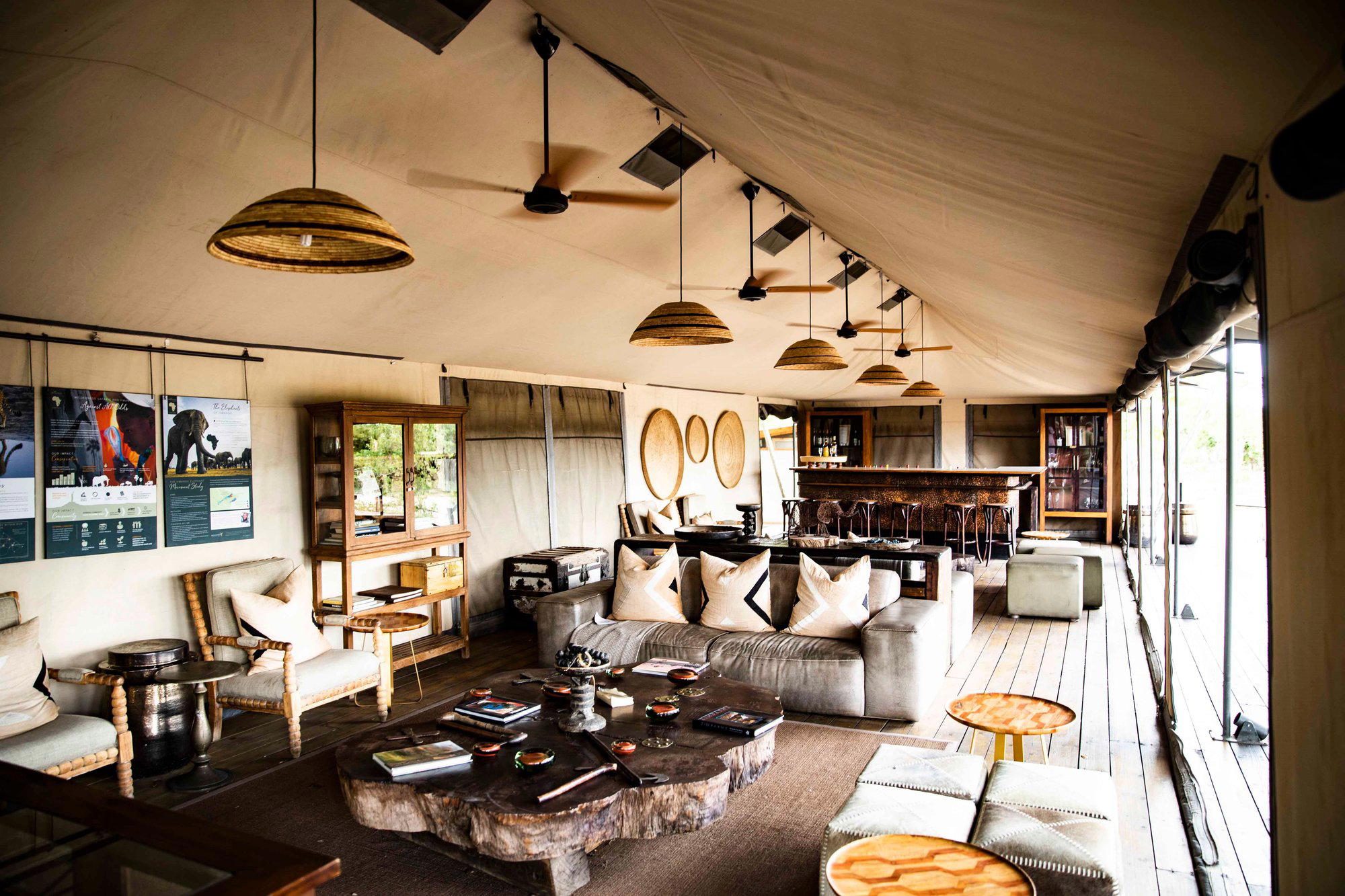
Canvas, Thatch, and the Grammar of the Bush
Tented safari camps occupy a specific architectural register that has no real equivalent elsewhere in premium hospitality. The leading examples do not compete with stone-and-glass lodges on their own terms; they argue instead that impermanence is a design philosophy. Wilderness Little Makalolo, set on a private concession inside Hwange National Park in western Zimbabwe, belongs to this tradition. The surrounding environment is semi-arid acacia and mopane woodland, and the camp's structures sit low within it, reading from a distance as extensions of the terrain rather than impositions on it. That restraint is deliberate and characteristic of how Hwange's more considered properties approach their footprint.
Hwange is Zimbabwe's largest national park, covering roughly 14,600 square kilometres, and its western concessions draw camps that want proximity to dense wildlife concentrations without the traffic patterns of the more visited eastern sections. The area around the Linkwasha Concession, where Little Makalolo operates, is elephant country in the most literal sense: dry-season concentrations here rank among the highest on the continent, with herds numbering in the hundreds drawn to the park's network of pumped waterholes. That ecological context shapes everything about how a camp of this type is designed and used.
The Architecture of Tented Luxury
The design vocabulary of a premium tented camp in southern Africa has evolved considerably since the early fly-camp era. What were once simple canvas shelters have been reframed as considered architecture, with the canvas itself retained not because it is cheap but because it creates a sensory relationship with the environment that solid construction breaks. At Little Makalolo, the tent structures are raised on timber platforms, a standard technique in the Hwange bush that addresses both flooding during the November-to-April wet season and the practical matter of keeping the camp's footprint reversible. The platforms also lift sleeping quarters to a sightline that, in flat mopane terrain, transforms the waterhole view into something closer to a diorama.
Among the design choices that distinguish the specialist tented tier from mid-market safari accommodation, lighting and spatial separation matter most. The arrangement of a camp like Little Makalolo follows what the industry calls a spoke-and-hub model: a central communal area for dining, briefings, and evening fire, with guest tents distributed at intervals along a path that maintains acoustic and visual privacy between units. That spatial logic reflects a broader trend in southern African luxury camping toward fewer, larger tents rather than the clustered configurations that sacrifice the sense of solitude the format promises.
For comparison, Somalisa Camp in Hwange operates on a similar concession-based model, and the two properties effectively define the specialist end of what Hwange offers. Elsewhere in Zimbabwe, Wilderness Ruckomechi in Mana Pools applies a comparable low-footprint design ethos to a very different riverine habitat, illustrating how the Wilderness portfolio calibrates its physical vocabulary to each ecosystem. The contrast with Singita Pamushana Lodge in Chiredzi, which commits fully to permanent stone construction and a more resort-oriented layout, is instructive: both operate at the premium end of Zimbabwean safari, but they represent divergent answers to the question of how a luxury property should sit within its landscape.
The Concession as the Real Amenity
In specialist safari hospitality, the physical camp is rarely the primary argument. The concession is. Little Makalolo's position inside a private wildlife area within Hwange means that game drives operate without the shared-road dynamics of national park zones open to multiple operators. Exclusive-use concessions of this kind, increasingly the default expectation at the upper end of the southern African safari market, allow for off-road vehicle movement, night drives, and walking safaris that general park access typically prohibits. The design implication is significant: a camp that controls its own game-drive territory can afford to be quieter and more spatially withdrawn, because the action takes place outside the camp perimeter rather than being staged within it.
The World Travel Awards named Little Makalolo Zimbabwe's Leading Tented Safari Camp for 2025, a recognition that places it at the head of a competitive national field that includes properties across Hwange, Mana Pools, and the Zambezi Valley. That award operates within a category defined by format specificity: it is not a general accommodation prize but one tied to the tented camp typology, which means the judging criteria weight canvas construction, low-impact design, and immersive wildlife access alongside the service and food quality measures that broader hospitality awards emphasise.
Seasonal Timing and the Hwange Logic
Hwange's wildlife calendar follows a clear pattern that directly affects how a camp like Little Makalolo should be timed. The dry season, running from May through October, concentrates wildlife at the park's artificial waterholes as natural water sources disappear. Elephant sightings in this period can be extraordinary in scale, with bulls, breeding herds, and multi-family aggregations sometimes visible simultaneously from a single waterhole hide. The camp's platform design and waterhole orientation are built around this dry-season spectacle. The wet season from November through April brings migratory birds, newborn animals, and a dramatically greened landscape, but also rain, mud, and dispersed wildlife that makes sightings less predictable.
For guests considering a multi-destination Zimbabwe itinerary, Little Makalolo pairs naturally with a Victoria Falls stay. The Anantara Stanley and Livingstone Victoria Falls Hotel and Tembo Plains Camp in Mana Pools represent the two logical extensions of a Zimbabwe circuit, one anchored at the country's most-visited landmark, the other in a very different but equally significant wildlife ecosystem along the Zambezi. Fly-in access to Hwange's airstrips is the standard transfer method for guests coming from Victoria Falls, with the flight taking under an hour on light aircraft operated through scheduled safari connections.
Booking for premium Hwange camps generally needs to be secured months in advance for peak dry-season dates, particularly July and August, when demand from international safari operators and direct bookings converges on a limited pool of high-quality inventory. Little Makalolo's low-capacity format makes this dynamic more acute than it would be at a larger property. Guests planning to travel in the peak dry-season window should treat early booking as a structural requirement rather than an optional precaution. Direct contact through the Wilderness portfolio's reservations system is the standard route, with rates typically offered on a fully-inclusive basis covering accommodation, meals, scheduled activities, and park fees.
For those cross-referencing this against the broader canon of design-led premium properties, the logic that applies at Little Makalolo is recognisable at very different scales: the deliberate restraint of Amangiri in Canyon Point or the material specificity of Castello di Reschio in Lisciano Niccone both reflect the same conviction that a property's physical relationship to its environment is not decoration but argument. In Little Makalolo's case, the argument is made in canvas and timber, against a backdrop of mopane and elephant dust, and it is, by the measure of Zimbabwe's 2025 travel awards, a compelling one. For further context on the full range of accommodation available in the region, see our full Hwange National Park restaurants guide.
Planning Details
Little Makalolo operates within Hwange National Park on a private concession, with fly-in access from Victoria Falls the standard arrival method. The camp is fully inclusive, covering accommodation, meals, game activities, and park fees within the quoted rate. Peak season runs May through October, with July and August commanding the highest demand and earliest booking lead times. The World Travel Awards 2025 recognition as Zimbabwe's Leading Tented Safari Camp provides a useful benchmark when comparing this property against regional alternatives.
Comparable Venues
Comparable venues nearby, for context on price, style, and recognition.
| Venue | Cuisine | Price | Awards | Notes |
|---|---|---|---|---|
| Wilderness Little MakaloloThis venue (the venue you are viewing) | Traditional tented safari camp with modern comforts in a private wilderness concession. | Not listed | World Travel Awards | Not listed |
| Tembo Plains Camp | luxury tented safari camp blending canvas and stone inspired by Zimbabwe Ruins | Not listed | Relais Chateaux Award | Sapi Private Reserve |
| Matetsi Victoria Falls | Luxury safari lodge with distinctly African design | Not listed | La Liste Top Hotels · Virtuoso Luxury Hotel Partner | historical district |
| Victoria Falls River Lodge | luxury safari tented camp | Not listed | Virtuoso Luxury Hotel Partner | Zambezi National Park |
| The Victoria Falls Hotel | Historic colonial resort | $300–500 | Michelin Selected | Victoria Falls |
| Anantara Stanley & Livingstone Victoria Falls Hotel - Virtuoso Preview | Victorian colonial boutique lodge in private game reserve | Not listed | Virtuoso Luxury Hotel Partner | Victoria Falls Private Game Reserve |
Recognition history
Dated appearances from independent guides and award organizations, with the underlying list record or original source where available.
World Travel Awards
World Travel Awards
Continue exploring
More in Hwange National Park
Hotels in Hwange National Park
All hotels in Hwange National Park →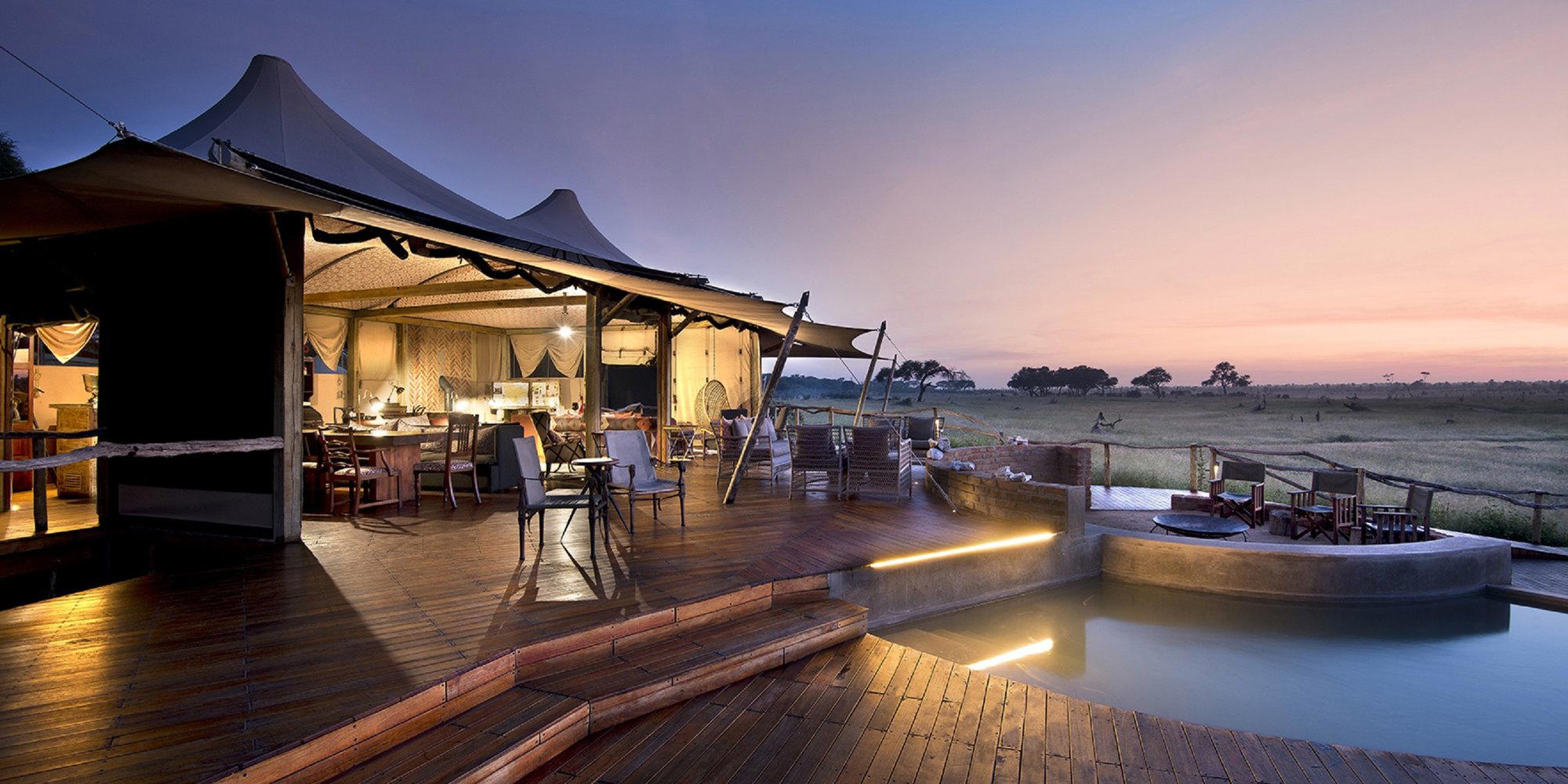
Details
- Intimate
- Scenic
- Rustic
- Elegant
- Romantic Getaway
- Honeymoon
- Family Vacation
- Panoramic View
- Private Dining
- Terrace
- Pool
- Wi Fi
- Room Service
- Concierge
Intimate and serene bush atmosphere with wildlife views from shaded tented areas, pool deck, and open communal spaces around a fire pit.