
Built in 1727 for Rajput royalty, The Raj Palace in Jaipur occupies a restored Maharaja's palace on Amer Road, placing it among the city's most historically grounded luxury stays. The property carries heritage-hotel credentials alongside two restaurants, a spa, and an exclusive cinema — a depth of amenity that few palace conversions in Rajasthan attempt. For travellers weighing Jaipur's palace hotel circuit, it anchors the older, more architecturally rooted end of the spectrum.
Pearl is the En Primeur Club membership app — saves, bookings, and concierge access live there. Same editors, same standards.
- Address
- The Raj Palace, Jorawar Singh Gate, Amer Rd, Chokdi Gangapol, Jaipur, Rajasthan 302002
- Phone
- +91 141 263 4077
- Website
- rajpalace.com
- Directions
- Get directions
 Saves & bookings on Pearl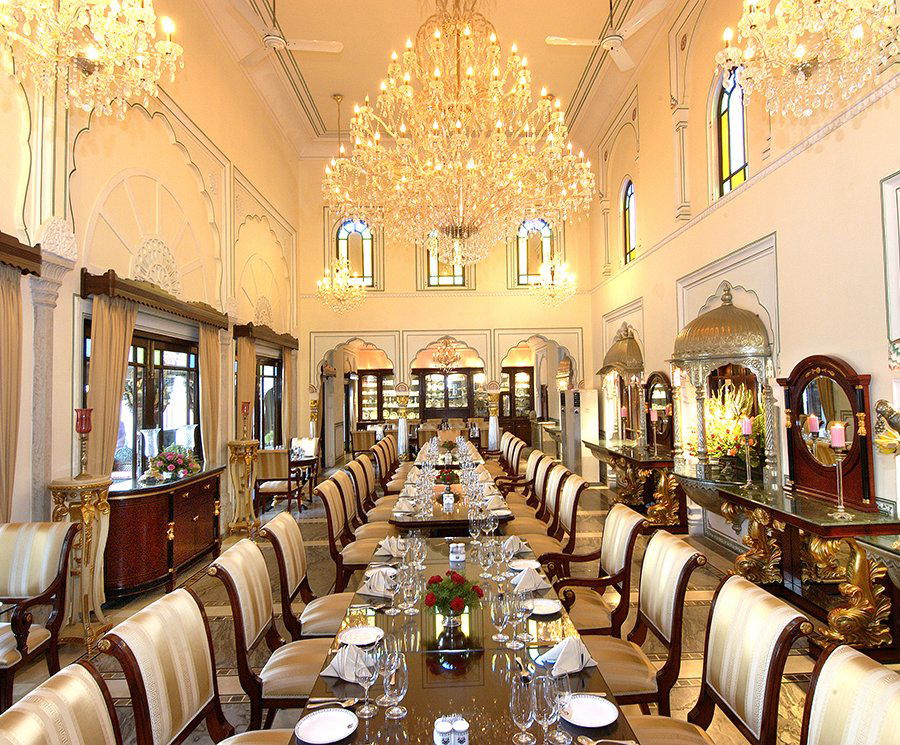
A Palace in the City's Ancient Fabric
Jaipur's identity as the Pink City was not invented by a tourism board. When Maharaja Sawai Jai Singh II laid out the city in 1727, he did so according to Vedic grid principles, with sandstone havelis and palace complexes forming the administrative and ceremonial spine of a planned capital. That year matters because it is also the year The Raj Palace was built, which places it among the city's early royal structures. The address on Amer Road, near Jorawar Singh Gate, positions the property close to the historic walled city and en route to the Amber Fort — geography that reinforces the architectural authenticity rather than working against it.
In a city where palace hotels have become a category unto themselves, the distinction between a restored royal residence and a hotel designed to evoke one is worth drawing carefully. The Raj Palace belongs to the former group. Its restoration was undertaken with the stated aim of reflecting the palace's original character, which in practical terms means that guests are arriving at a Rajput structure with nearly three centuries of layered history rather than a contemporary interpretation of what that might look like.
Where It Sits Among Jaipur's Palace Hotel Circuit
Jaipur carries more palace hotels per square kilometre than almost any city in India, and the segment has fragmented into distinct tiers. At the upper end, Rambagh Palace, Jaipur operates under the Taj Hotels banner with the full weight of that group's service infrastructure behind it. The Oberoi Rajvilas takes a different approach entirely — purpose-built in a palace idiom rather than a conversion, and set within extensive grounds outside the city core. Raffles Jaipur and The Leela Palace Jaipur represent the international branded end, while Rajmahal Palace RAAS Jaipur pitches at a design-conscious traveller who wants heritage without the formality of a large hotel operation.
The Raj Palace positions itself differently from all of these. Its heritage credentials are anchored in provenance, the 1727 build date and Maharaja lineage, rather than in brand affiliation or design language. Where The Johri, Jaipur focuses on boutique intimacy and Royal Heritage Haveli operates at a smaller, more personal scale, The Raj Palace occupies a mid-to-upper tier characterised by the breadth of its in-house offer: two restaurants, a spa, and an on-site cinema are not amenities typically associated with smaller heritage conversions. That combination makes it relevant to travellers who want the palace experience without leaving the property for meals, entertainment, or wellness.
The Cultural Weight of Rajput Architecture
To stay in a Rajput palace is to engage with a specific building tradition that evolved over several centuries across what is now Rajasthan. The architectural language is precise: jharokhas (cantilevered balconies), chhatris (domed pavilions), pietra dura inlay work, and inner courtyards arranged to regulate both temperature and social hierarchy. These were not decorative choices but structural and climatic responses to the desert environment and the demands of royal court life. When a property like The Raj Palace undergoes restoration, the quality of that work is ultimately measured by how faithfully those spatial relationships and material details are maintained rather than smoothed over for modern convenience.
This matters in a broader Rajasthan context because the state's heritage hotel sector is uneven. Some conversions preserve original structure while updating comfort infrastructure invisibly; others have altered floor plans and replaced original materials to the point where the heritage claim rests more on atmosphere than architecture. The hotel's award recognition and its stated restoration philosophy place it in the more committed category, though travellers with specific interests in architectural authenticity will benefit from researching individual suite configurations in advance.
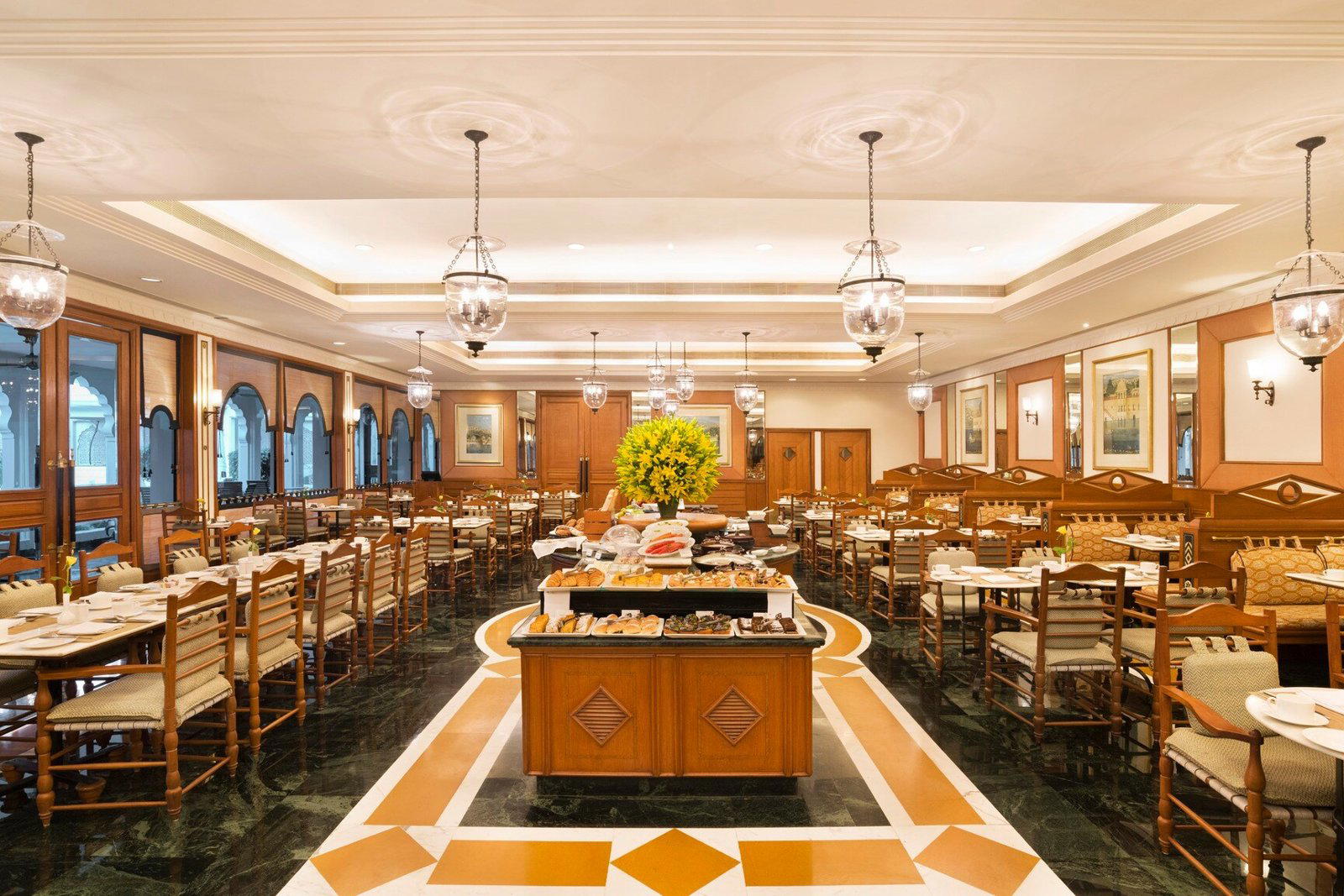
The Rajasthan palace hotel tradition also carries a dining culture worth noting. Rajput cuisine is distinct from the broader North Indian canon: it developed under conditions of geographic isolation and military culture, producing preparations like laal maas (a lamb preparation built around dried Mathania chillies) and dal baati churma (lentils served with baked wheat rounds) that rely on specific regional ingredients and techniques. Properties that take their kitchen programmes seriously use these traditions as a starting point rather than a backdrop. The hotel operates two restaurants, which suggests an intent to cover different dining registers within a single stay, a structure that gives guests the option of formal dining and more relaxed settings without the friction of going off-property.
Planning a Stay: What to Know Before Booking
Jaipur is accessible by air from Delhi in under an hour, and the city's Sanganer Airport receives direct flights from Mumbai, Delhi, and several regional hubs. Taj Devi Ratn Resort & Spa, Jaipur operates further from the centre, which illustrates how location within Jaipur shapes the experience significantly; the hotel's Amer Road address keeps guests close to the walled city and within reasonable reach of the major forts and bazaars.
Timing a Jaipur visit around the cooler months between October and March gives particularly comfortable conditions for exploring the city on foot. Summers in Rajasthan push well above 40°C, which shifts the calculus toward in-property amenities like the spa and the cinema. The hotel's range of internal facilities makes it more viable as a cooler-weather retreat than properties with limited indoor programming.
For travellers constructing a wider Rajasthan itinerary, the property connects logically to heritage stays elsewhere in the state. Amanbagh in Ajabgarh sits roughly 90 kilometres away in the Aravalli Hills, offering a rural counterpoint to Jaipur's urban palace density. Suján Jawai in Pali extends the circuit further west toward leopard territory. Across the broader India itinerary, pairings with The Oberoi Amarvilas in Agra or The Leela Palace New Delhi in New Delhi fit naturally within a Golden Triangle structure. Those travelling further afield can layer in The Taj Mahal Palace, Mumbai in Mumbai for a contrast between Rajput heritage and Bombay's colonial-era hotel tradition.
Booking is handled directly with the property.
At a Glance
Comparable venues nearby, for context on price, style, and recognition.
| Venue | Price | Notes |
|---|---|---|
| The Raj PalaceThis venue — the venue you are viewing | $$$$ | Not listed |
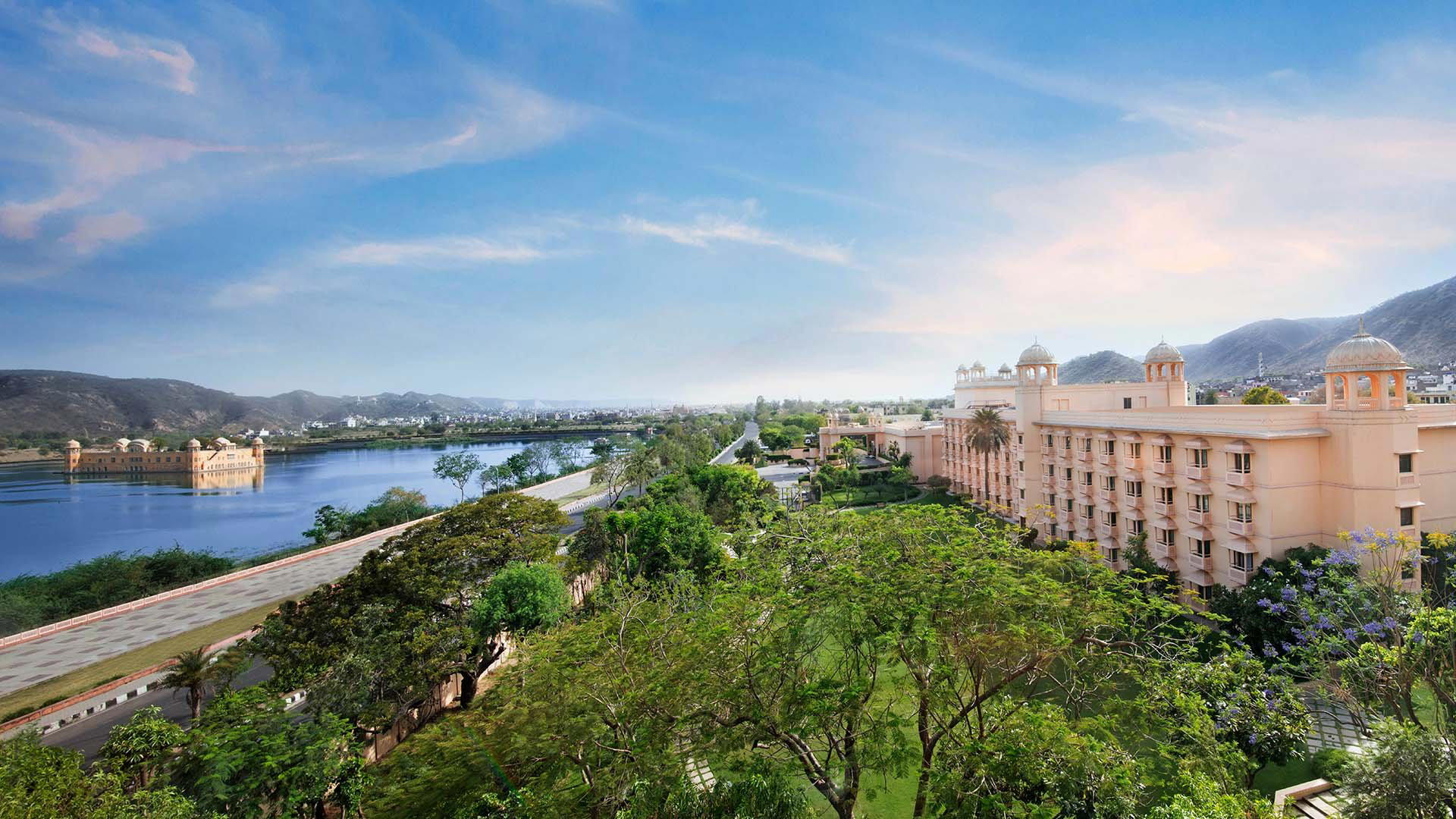
| Trident, Jaipur | $$$$ | near Jal Mahal, Traditional Rajasthani architecture with modern luxury |
| Villa Palladio Jaipur | $$$$ | Sumel, Restored Rajasthani haveli blending historic palace charm with contemporary maximalist design |
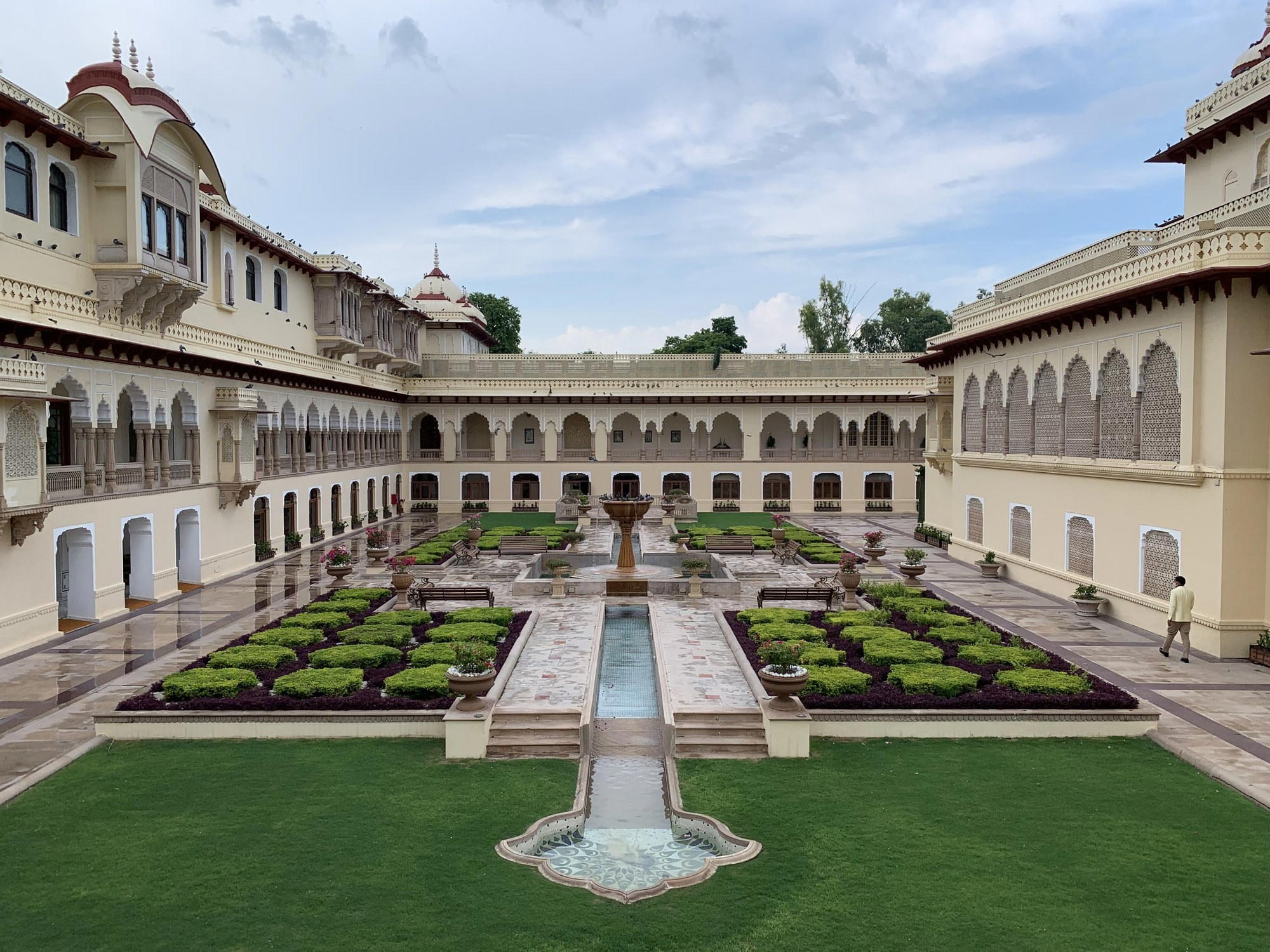
| Rambagh Palace, Jaipur | $$$$ | Rambagh, Former maharaja's residence transformed into a luxury heritage hotel |
| Jai Mahal Palace | $$$$ | Civil Lines, Heritage palace hotel blending 18th-century Rajasthani royal architecture with contemporary luxury and modern amenities. |
| 28 Kothi | $$$$ | Civil Lines, Boutique guesthouse with Jaipur heritage roots |
Recognition history
Dated appearances from independent guides and award organizations, with the underlying list record or original source where available.
Small Luxury Hotels of the World Member
Small Luxury Hotels of the World
At a Glance
- Elegant
- Romantic
- Quiet
- Ornate
- Classic
- Sophisticated
- Romantic Getaway
- Family Vacation
- Anniversary
- Wellness Retreat
- Celebration
- Historic Building
- Garden
- Terrace
- Private Dining
- Destination Spa
- Panoramic View
- Wi Fi
- Pool
- Spa
- Fitness Center
- Room Service
- Concierge
- Business Center
- Valet Parking
- Kids Club
- Restaurant
- Bar
- Golf Course
- Garden
- Wi Fi
- Pool
- Spa
- Fitness Center
- Room Service
- Concierge
- Business Center
- Valet Parking
- Kids Club
- Restaurant
- Bar
- Golf Course
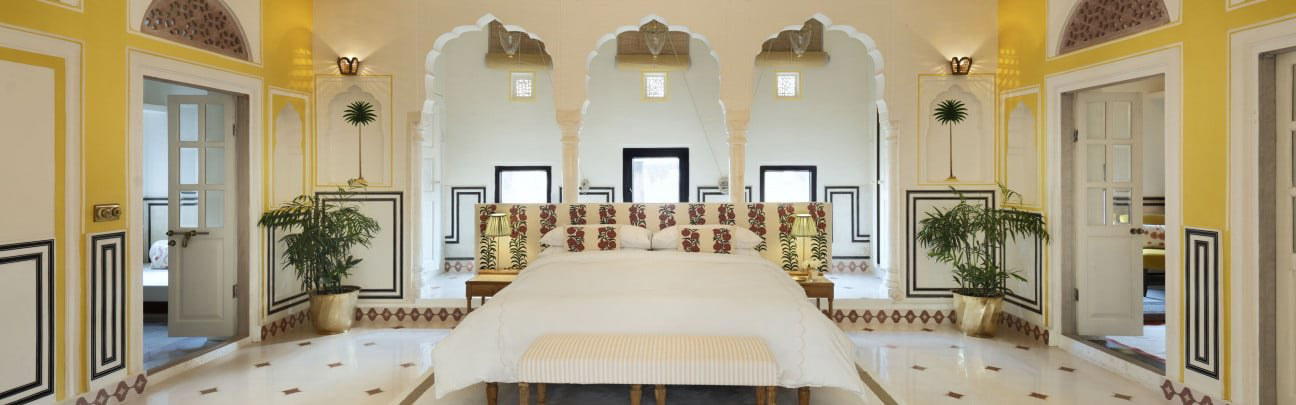
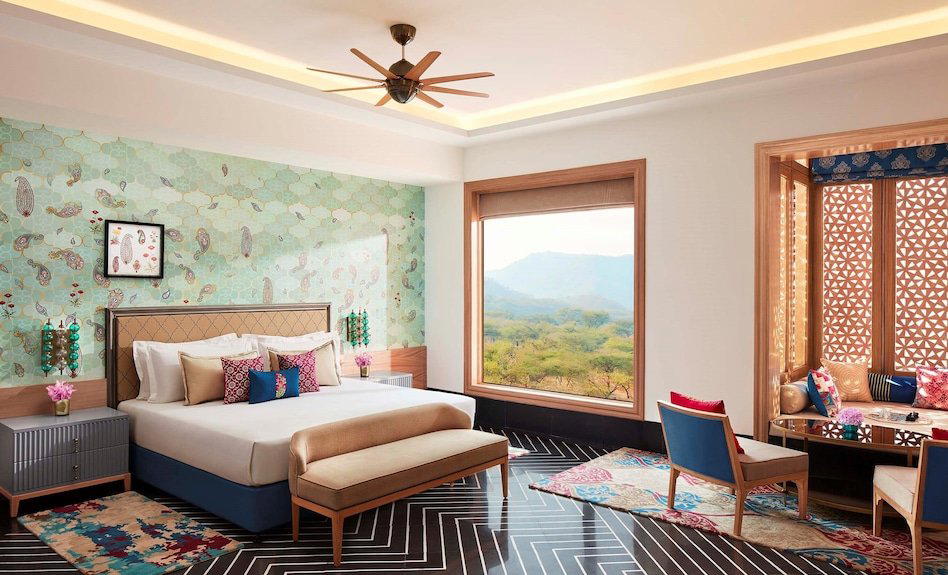
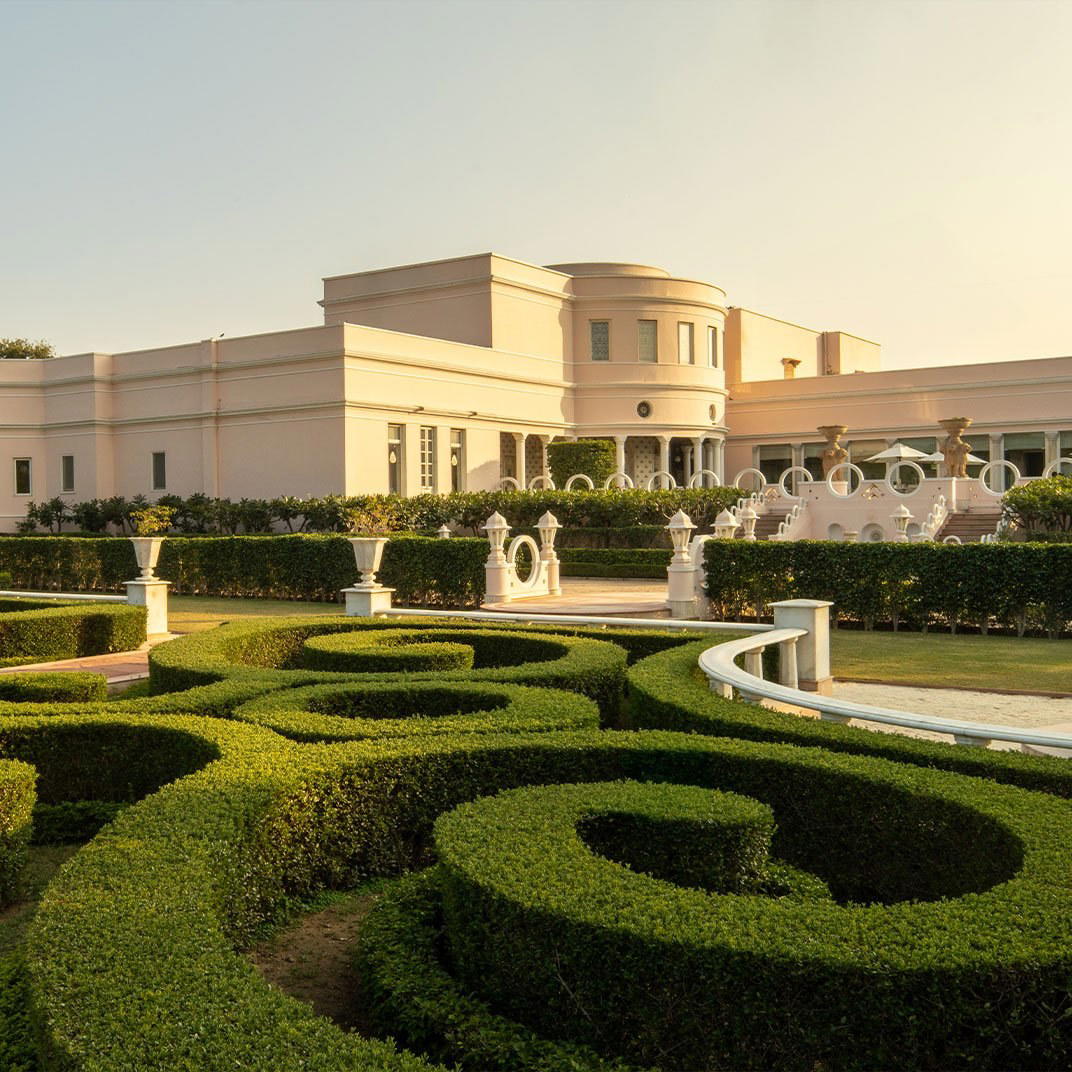
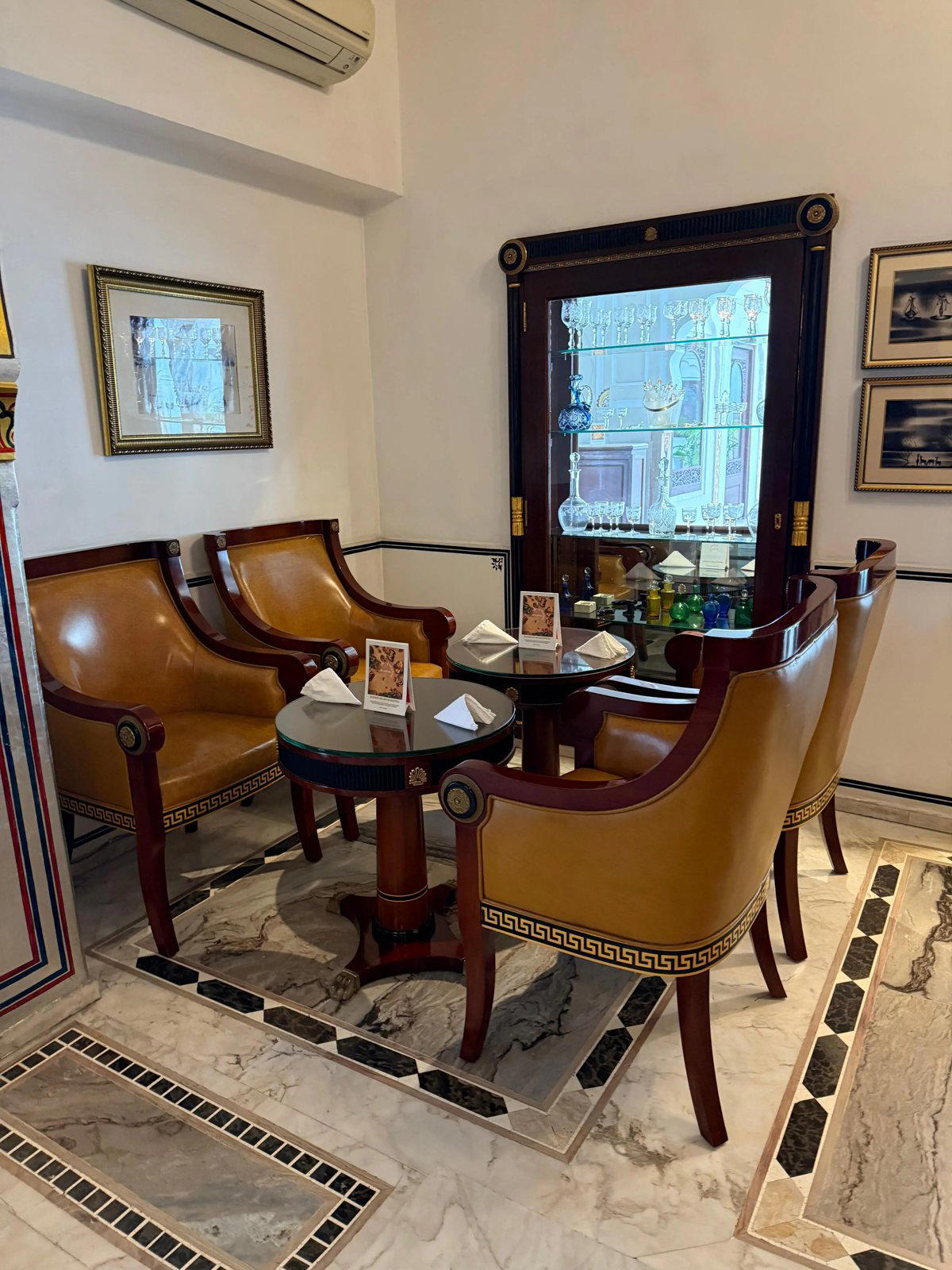
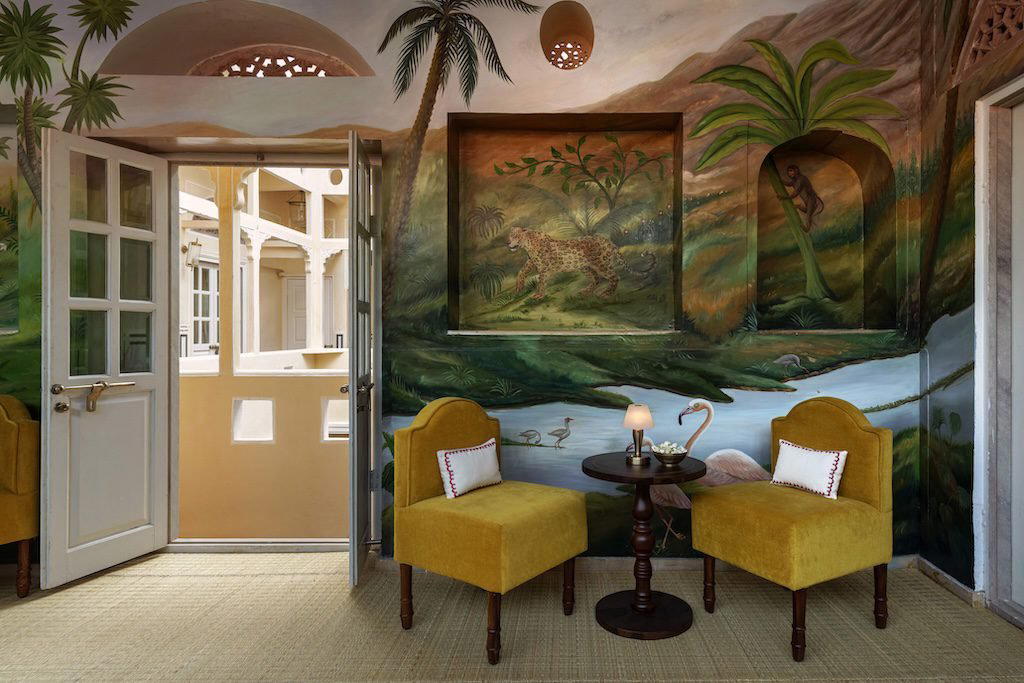
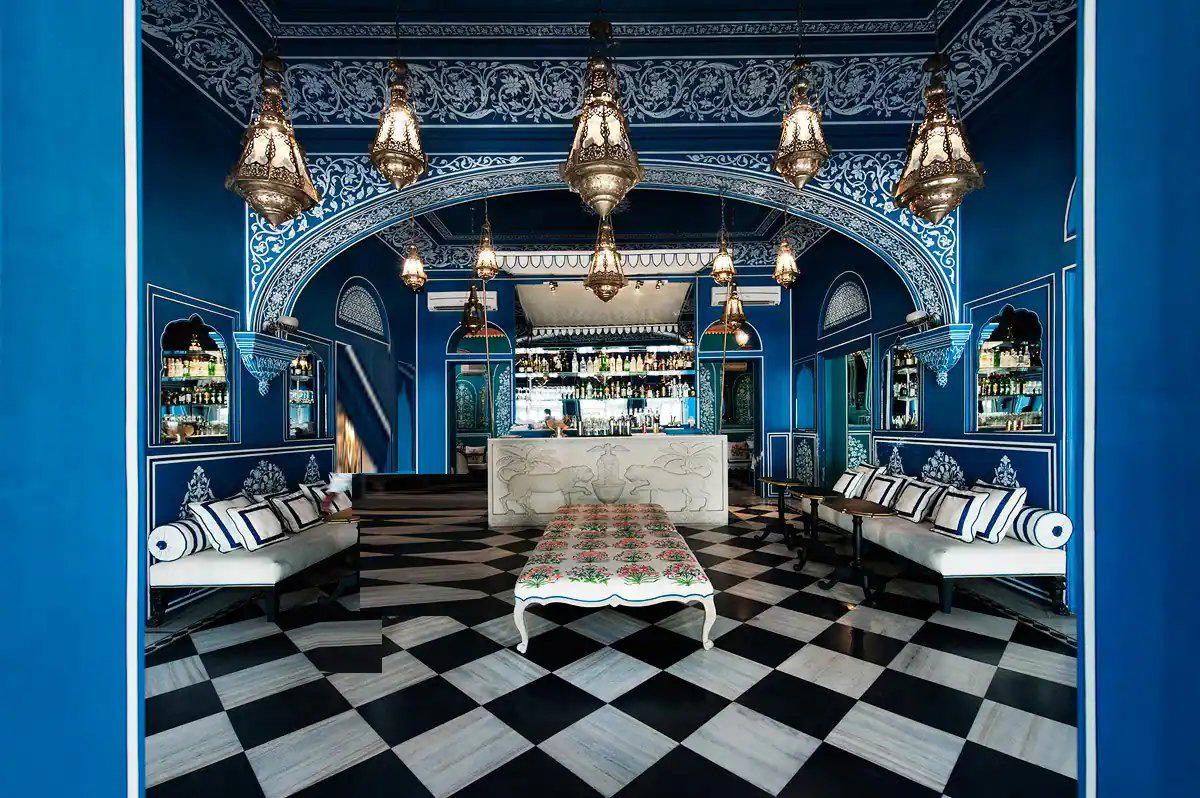
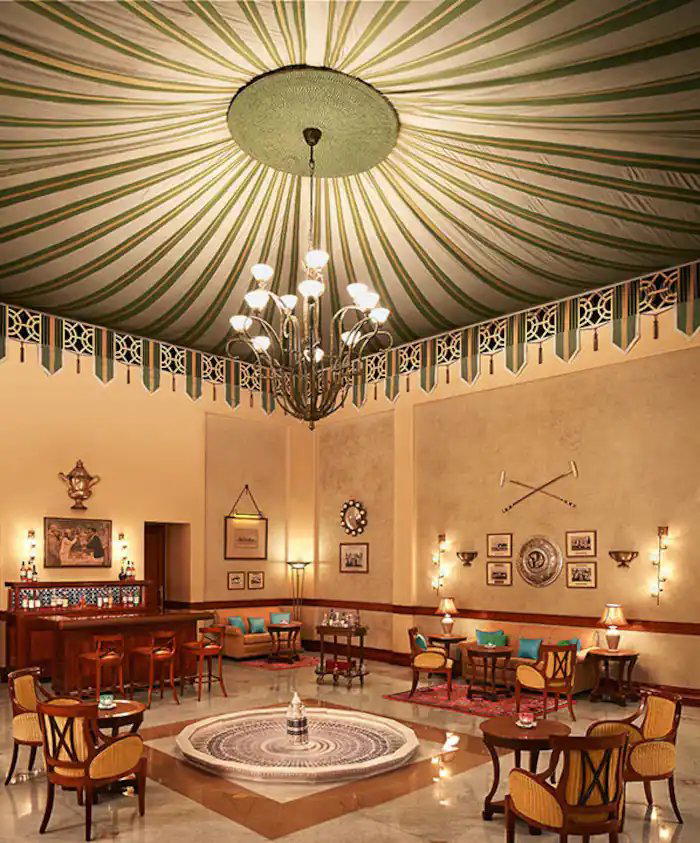
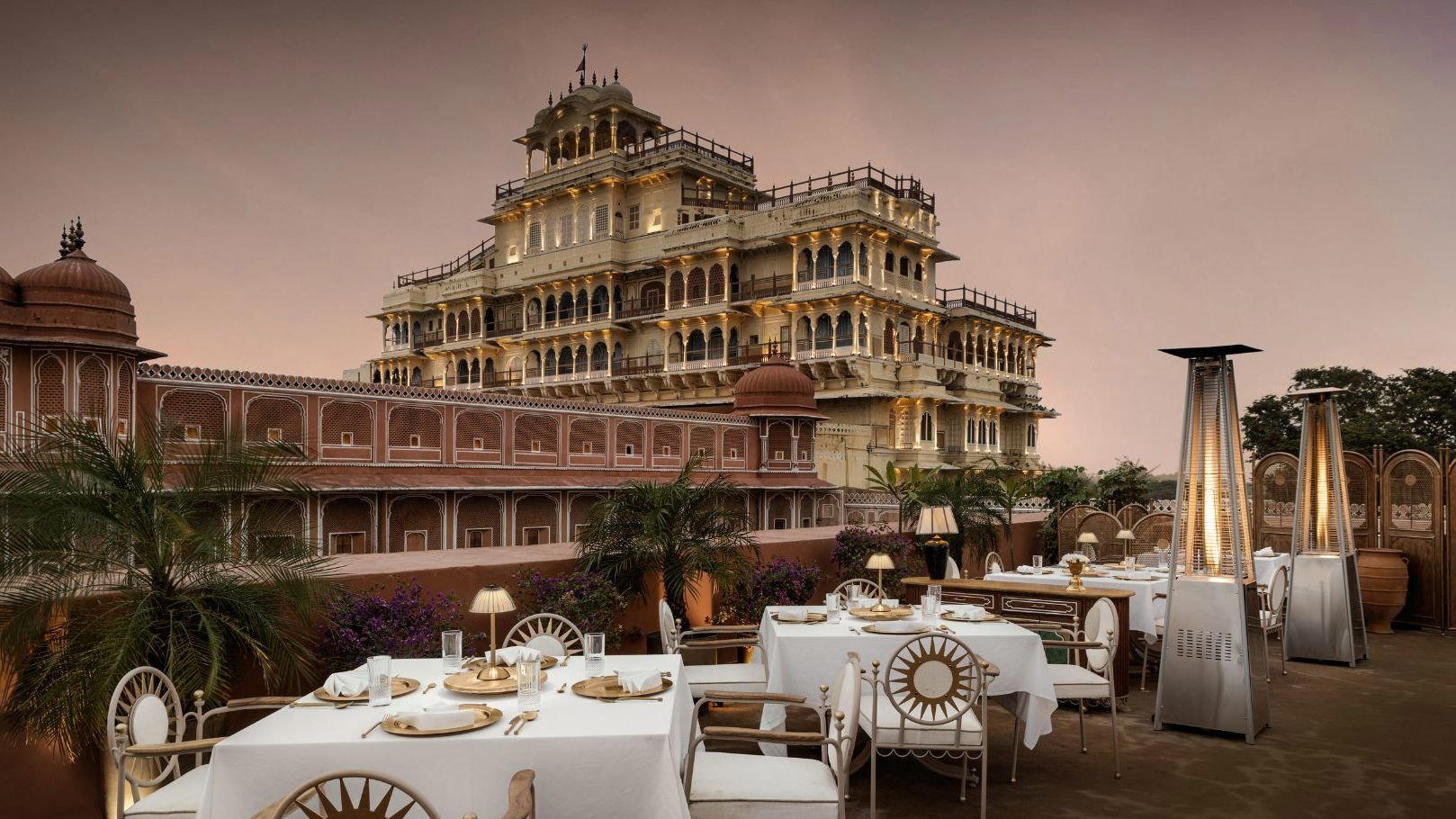
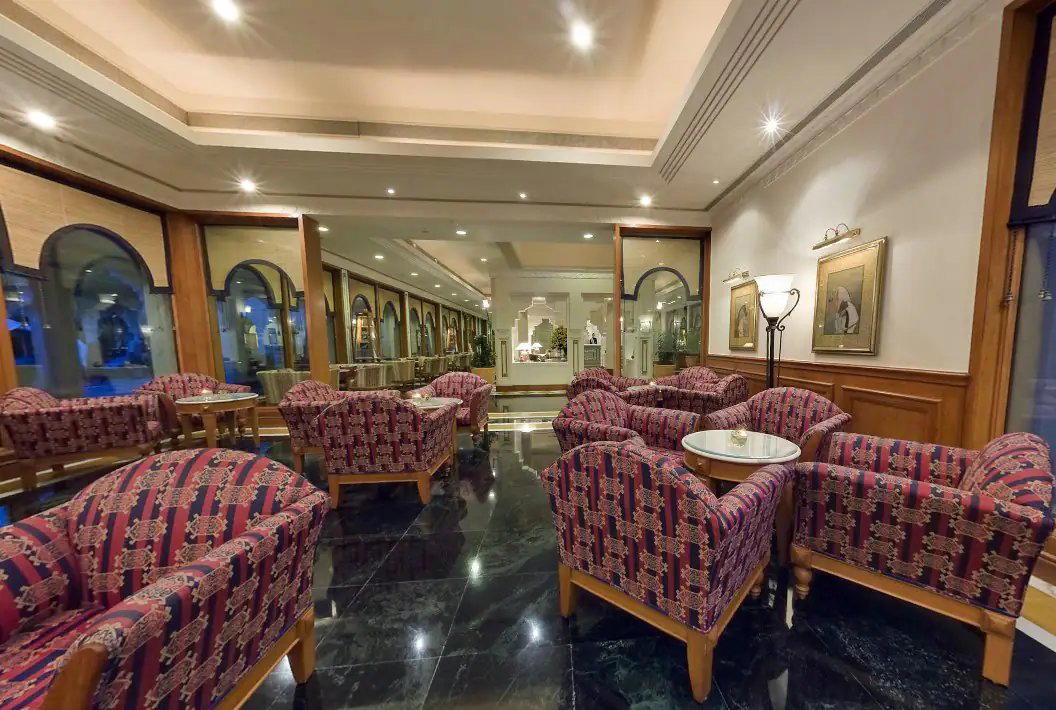
Luxurious and serene with frescoed walls, painted domed ceilings, heritage architecture, and peaceful gardens providing a quiet oasis from the bustling city.