The Crescent Hotel Fort Worth

Positioned at the intersection of downtown Fort Worth and the Cultural District, The Crescent Hotel earned the No. 1 Hotel in Texas ranking from Condé Nast Traveler's Readers' Choice Awards in 2024. The property pairs marble-appointed rooms with a Canyon Ranch Wellness Club and two distinct dining venues, placing it in the upper tier of Texas urban luxury.
Pearl is the En Primeur Club membership app — saves, bookings, and concierge access live there. Same editors, same standards.
- Address
- 3300 Camp Bowie Blvd
- Directions
- Get directions
 Saves & bookings on Pearl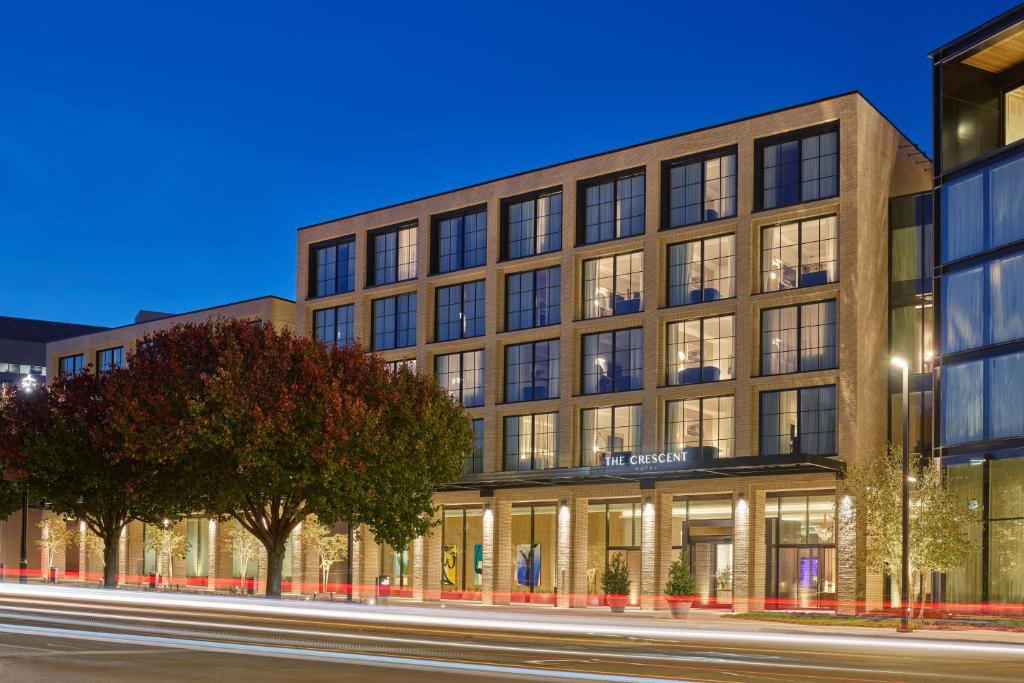
Where Fort Worth's Cultural Heart Meets Its Social Center
Camp Bowie Boulevard runs like a spine through the western edge of Fort Worth, connecting the glass towers of downtown to the limestone facades of the Kimbell Art Museum and the Amon Carter. The Crescent Hotel sits along this corridor, at 3300 Camp Bowie Blvd, occupying a position that is as much civic as commercial. In a city where the Cultural District functions as a genuine anchor rather than a tourist overlay, a hotel at this crossroads carries different expectations than one planted in a generic business district. The property reads that responsibility clearly. It is a 5-star hotel with 200 rooms and a smart-casual dress code, and reservations are recommended.
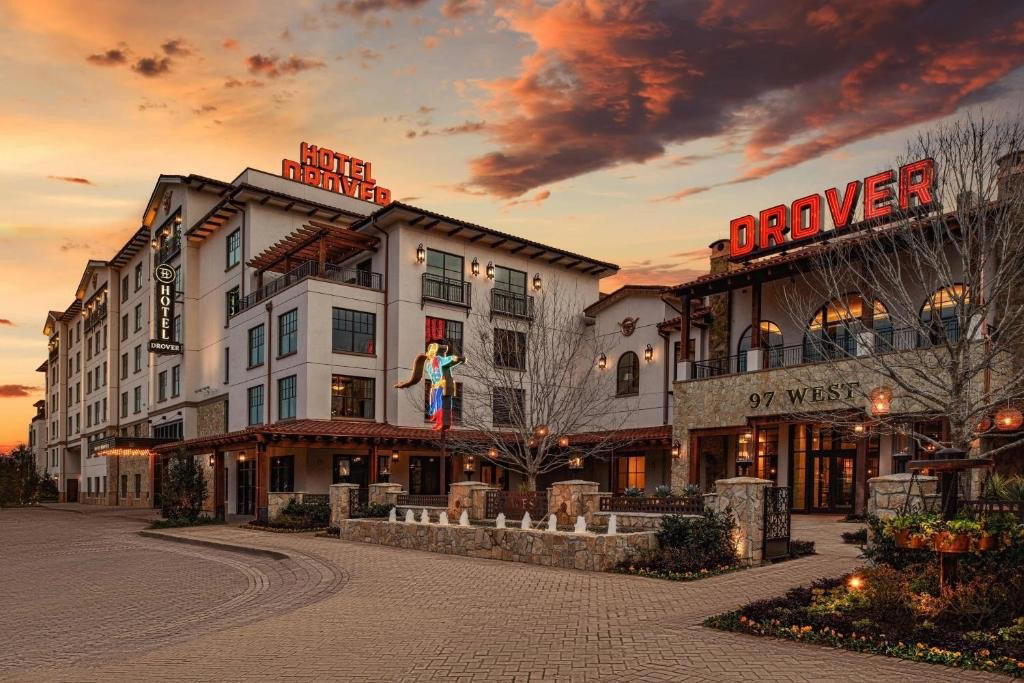
Fort Worth's premium hotel market has matured considerably over the past decade. Properties like Bowie House, Auberge Resorts Collection and Hotel Drover, Autograph Collection have staked claims on the Stockyards-adjacent and design-forward ends of the market. The Crescent plays a different hand: neighborhood institution over boutique novelty, cultural adjacency over themed identity. In 2024, Condé Nast Traveler's Readers' Choice Awards named it the No. 1 Hotel in Texas, a signal that the market has recognized the difference.
The Architecture of Arrival
First impressions in urban luxury hotels are won or lost at the threshold. Here, the approach telegraphs the property's allegiances before you reach the lobby: the surrounding streetscape shifts register as Camp Bowie transitions from commercial strip to museum row. The building's presence reflects the neighborhood's low-rise, high-seriousness character rather than attempting to overpower it. Inside, marble accents run through the rooms and suites, not as decorative shorthand but as a material commitment that holds up across repeated stays. Artwork throughout the property draws from the collections and curatorial logic of the Kimbell, the Modern, and the Amon Carter, three institutions that give Fort Worth a cultural credibility that routinely surprises first-time visitors. The Crescent Art Experience formalizes this connection, positioning the hotel's collection as an extension of the district rather than a separate amenity.
For context on how urban properties at this tier handle art programming elsewhere, consider the approach taken by Chicago Athletic Association in Chicago or The Fifth Avenue Hotel in New York City, where historical and cultural depth anchors the identity without tipping into pastiche. The Crescent operates within a similar logic, grounding its aesthetic in the specific institutions and history of its district.
Service as the Architecture You Don't See
The editorial angle that distinguishes the upper tier of urban luxury from its aspirants is rarely the thread count or the fitness center square footage. It is the degree to which service anticipates rather than reacts. At this price and positioning bracket, the 2024 Condé Nast Traveler recognition carries weight precisely because it derives from reader experience over time, not from a single inspectors' visit. Sustained reader endorsement at that level is a proxy for consistency, which is the hardest thing to manufacture in hospitality.
The Crescent frames its guest experience around what it calls a "connected atmosphere," a phrase that describes the integration of hotel amenities, wellness programming, and social spaces into a coherent whole rather than a list of features. The Canyon Ranch Wellness Club, which operates within the property and is complimentary to hotel guests, anchors this philosophy at its most tangible. Canyon Ranch as a brand carries its own credibility in the wellness tier: its Tucson flagship, reviewed separately at Canyon Ranch Tucson, operates as a destination in its own right. The integration of that brand into an urban hotel format is uncommon, and it shifts the wellness offering from optional add-on to structural component of the stay.
Rooms and suites are configured around bespoke furnishings, sumptuous robes and slippers, and Nespresso coffee makers, details that sit in the expected range for this tier but which the property positions as part of a holistic rather than transactional hospitality model. The distinction matters: transactional luxury delivers the list; holistic luxury delivers the sense that someone was thinking about the specific guest. Whether a property achieves the latter is what separates the nominees from the award-holders.
Dining in the Cultural District's Shadow
Texas urban dining has diversified substantially beyond its steakhouse identity, and the Cultural District in particular has attracted food programming that reflects the neighborhood's international museum audiences. The Crescent's culinary footprint covers two distinct registers. Emilia's operates as the property's Mediterranean-focused restaurant, offering a more formal dining setting that aligns with the neighborhood's evening character. Circle Bar provides a livelier alternative, functioning as a social hub for both guests and the broader Fort Worth professional community.
The Blue Room at Emilia's occupies a more focused niche: an intimate tasting format with an ocean-inspired menu, wine pairings, and a reserve wine list. In the current American fine dining context, ocean-influenced tasting menus with curated wine programs sit in a competitive set that includes some ambitious formats. For calibration, consider the tasting room approaches at properties like SingleThread Farm Inn in Healdsburg or Bernardus Lodge & Spa in Carmel Valley, where the in-house dining program functions as a primary reason to book, not a secondary amenity. The Blue Room positions itself in that aspirational direction within the Texas market.
The broader dining programming reflects the hotel's role as "the new social center of Fort Worth," a positioning that requires the food and beverage spaces to serve resident professionals and cultural-district visitors as much as overnight guests. This is a different operating challenge than resort dining, where the captive audience is given. For reference on how comparable urban properties handle that dual-audience challenge, Raffles Boston and Hotel Bel-Air in Los Angeles both operate dining programs where local credibility matters as much as guest satisfaction scores.
Weddings, Meetings, and the Event Economy
Premium urban hotels in the mid-market American South have leaned heavily into the event and wedding economy as a revenue stabilizer, and The Crescent is explicit about this positioning. The property frames its event spaces around the same holistic-integration language it uses for the guest experience: the "connected atmosphere" extends to corporate gatherings and social celebrations, with the wellness club and cultural programming functioning as contextual differentiators rather than generic add-ons. For wedding planners and corporate event buyers, the Cultural District location provides a backdrop that other Fort Worth hotels do not replicate.
How It Sits in the Broader Luxury Hotel Conversation
Placing The Crescent in its national comparable set requires some specificity. It is not a resort property on the scale of Amangiri in Canyon Point or Post Ranch Inn in Big Sur, nor a design-led boutique on the model of Troutbeck in Amenia or Ambiente, A Landscape Hotel in Sedona. It operates closer to the category occupied by Four Seasons at The Surf Club in Surfside or Auberge du Soleil in Napa: urban or destination luxury where the surrounding cultural context is as important as the property itself, and where service depth is the differentiating factor within a competitive tier of well-appointed rooms.
For those calibrating against international benchmarks, properties like Aman New York or Badrutt's Palace Hotel in St. Moritz operate at a different scale of investment and international profile. The Crescent's distinction is regional and specific: it holds the leading position in a state with a competitive luxury hotel market, in a city whose cultural infrastructure outpunches its national reputation. That is a credible claim, and the 2024 Condé Nast endorsement gives it external validation.
Planning Your Stay
The hotel sits at 3300 Camp Bowie Blvd, within walking distance of the Kimbell Art Museum, the Modern Art Museum of Fort Worth, and the Amon Carter Museum of American Art. The Cultural District location makes it a logical base for museum-focused visits, with the added convenience of the Canyon Ranch Wellness Club for guests who want structured recovery between gallery days. The Blue Room at Emilia's operates as a separate booking within the dining program, and given its tasting-format structure, advance reservations are advisable. The property also functions as a social venue for Fort Worth's professional community, so Circle Bar and Emilia's draw local traffic independent of hotel occupancy, which adds energy to the public spaces on weekday evenings. Guests comparing options in the Fort Worth market should weigh the Cultural District positioning against the Stockyards character of Hotel Drover and the intimate scale of Bowie House.
Category Peers
Comparable venues nearby, for context on price, style, and recognition.
| Venue | Cuisine | Price | Awards | Notes |
|---|---|---|---|---|
| The Crescent Hotel Fort WorthThis venue — the venue you are viewing | Modern luxury boutique in cultural district | $$$$ | 5-Star | Not listed |
| Kimpton Harper Hotel | Historic landmark reimagined as a boutique hotel blending 1920s architecture with contemporary luxury. | $$$$ | 4-Star | Downtown |
| Hotel Drover, Autograph Collection | rustic-luxe urban ranch | $$$$ | Michelin 1 Key | Fort Worth Stockyards National Historic District |
| Bowie House, Auberge Resorts Collection | Western-inspired luxury hotel with warm tones and classic detailing | $$$$ | Michelin 2 Key | Cultural District |
| Thompson Dallas | Midcentury modern luxury tower reborn as a design-forward urban retreat. | $$$$ | 5-Star | Downtown |
| The Joule | Neo-gothic landmark revitalized as luxury boutique hotel | $$$$ | 4-Star | Downtown |
Recognition history
Dated appearances from independent guides and award organizations, with the underlying list record or original source where available.
Virtuoso Luxury Hotel Partner
Virtuoso
Continue exploring
More in Fort Worth
Hotels in Fort Worth
Browse all →
Bars in Fort Worth
Browse all →
Restaurants in Fort Worth
Browse all →
Wineries in Fort Worth
Browse all →
At a Glance
- Elegant
- Sophisticated
- Modern
- Romantic
- Romantic Getaway
- Anniversary
- Business Trip
- Historic Building
- Wi Fi
- Fitness Center
- Spa
- Room Service
- Concierge
- Valet Parking
- Restaurant
- Wi Fi
- Fitness Center
- Spa
- Room Service
- Concierge
- Valet Parking
- Restaurant
Light-filled sanctuaries with modern elegant decor, refined lighting, and luxurious relaxing atmosphere.