The Collective at Woolsery

1 Michelin Key
The Collective at Woolsery reimagines what a North Devon village hotel can be, distributing four Shop Rooms, suites, and freestanding cottages across a working community that includes a pub, a chip shop, and a post office. Priced from around $246 per night, it operates on the Italian albergo diffuso model, where the accommodation and the place are inseparable. Few properties in rural England attempt anything quite like it.

Pearl is the En Primeur Club membership app — saves, bookings, and concierge access live there. Same editors, same standards.
- Address
- Chapel St, Woolfardisworthy, Bideford EX39 5QS
- Phone
- +44 1237 488480
- Website
- woolsery.com
- Directions
- Get directions
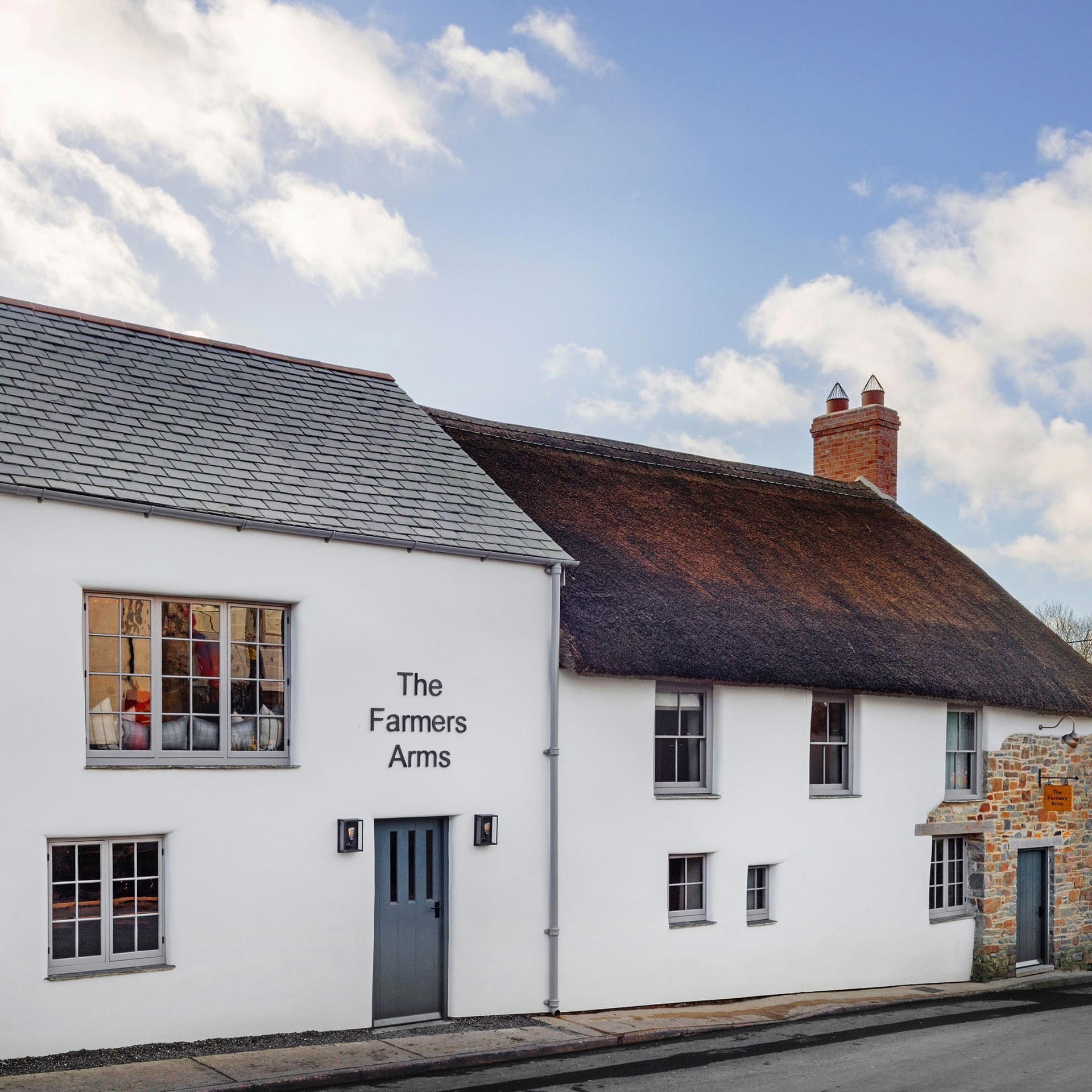
A Village Reinvented, Not Renovated
The albergo diffuso model — in which a hotel is not a single building but a distributed presence across an entire village — originated in rural Italy as a way of breathing life back into depopulated communities. The concept demands a particular kind of ambition: you are not fitting out a property, you are effectively curating a place. In North Devon, that idea has taken root in Woolsery, a village that most itineraries for the region would bypass entirely on the way to the Hartland coast. Our full Woolsery restaurants guide sets the wider scene, but the Collective is itself the scene, the Farmers Arms pub, the fish and chip shop next door, the J. Andrew Shop and Post Office, and Birch Farm together form the operational footprint of a single hospitality project.
This is a meaningfully different proposition from the design-led rural retreats that have multiplied across the British countryside over the past decade. Properties like Lime Wood in Lyndhurst or The Newt in Somerset situate luxury within grand estates, their boundaries clearly drawn. The Collective's boundaries are the village itself. That distinction changes the nature of the stay considerably: the experience is ambient rather than contained, and the guest relationship with the place is closer to inhabiting than visiting.
The Design Logic of the Shop Rooms
British boutique hotels have largely moved toward one of two aesthetic registers: reclaimed-industrial or heritage-pastoral. The Collective at Woolsery takes a less trafficked route. The four Shop Rooms and Suites are built around a 1940s retro sensibility, a period reference that acknowledges post-war rural England without sentimentalising it. The aesthetic is deliberate enough to feel like a point of view rather than a styling exercise, and specific enough to distinguish these rooms from the reclaimed-timber ruralism that dominates comparable properties across Devon and Cornwall.
The retro framing does not come at the cost of function. Underfloor heating and Sonos sound systems are standard across the rooms, placing the Collective in the same comfort tier as contemporary boutique operators elsewhere, properties like Babington House or Drakes Hotel in Brighton that treat considered interiors and practical amenity as equally non-negotiable. Each of the four rooms carries its own character rather than operating as a uniform set, a deliberate choice in an era when boutique properties increasingly default to the comfort of consistent theming.
The three freestanding cottages sit apart from the Shop Rooms in both format and scale. Sleeping between two and eight guests, they function more as private accommodation within the village than as conventional hotel rooms, and their positioning in the luxury tier is explicit. For groups or families who want the Collective experience with greater independence and space, the cottages represent the cleaner choice. A further project, a self-contained small hotel called Wulfheard Manor, is in development, which suggests the Collective's footprint is still expanding.
What the Pub and the Chip Shop Actually Signal
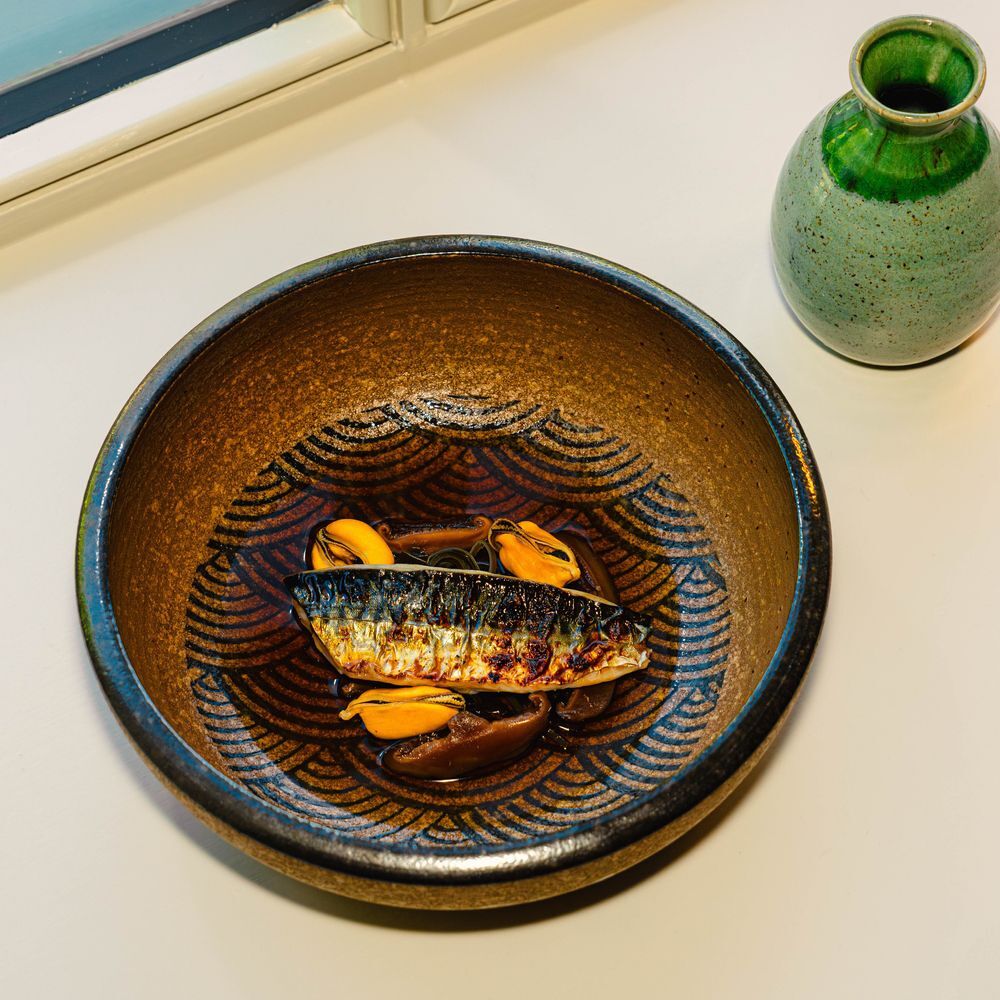
Including a pub and a fish and chip shop within a hotel project could read as gimmickry. At the Collective, it reads as editorial intent. The Farmers Arms operates a pub-format menu that is grounded in local sourcing and seasonal supply, a discipline that has become common language among serious rural gastropubs across the West Country, but which here functions as part of a broader argument about what the village is and does. The chip shop adjacent to the pub applies a similar philosophy: the offer is recognisably familiar, but the sourcing logic is not casual.
The J. Andrew Shop and Post Office, stocking artisanal goods from local independent producers, completes a picture of a project that is invested in the economic and social fabric of Woolsery rather than simply occupying it. This is where the albergo diffuso model carries its most interesting implication: the hotel is not extracting value from a picturesque location but participating in its continued life. That is a harder thing to design than a good room, and arguably more durable as a hospitality proposition.
Positioning Within the Rural Luxury Field
At around $246 per night, the Collective sits in a pricing tier that requires some context. Rural boutique properties across the UK occupy a wide band: at the lower end, converted farmhouses and inn-style hotels; at the upper end, estate properties like Estelle Manor in North Leigh or Gleneagles in Auchterarder operating at significantly higher price points. The Collective's entry price positions it in the serious middle ground, above the inn tier, below the trophy-estate tier, and the albergo diffuso format differentiates it from direct competitors at similar price points.
The comparison set for the Collective is genuinely unusual. It shares a commitment to place-rooted design with properties like Langass Lodge in the Outer Hebrides or Monachyle Mhor in Stirling, both of which prioritise deep local integration over scale. But the Collective's multi-venue, village-scale model puts it closer to a concept than a category. The nearest international reference points would be the albergo diffuso operators of Basilicata or Calabria, which are not the usual benchmarks for a North Devon stay.
For travellers calibrated to urban luxury, the Claridge's or Aman New York end of the spectrum, the Collective will require a recalibration of expectations. The amenity set is genuinely different: no spa, no large-scale F&B; operation, no concierge desk managing a portfolio of experiences. What replaces all of that is the village itself, and whether that trades as equivalent value depends heavily on the traveller.
Planning a Stay
Woolsery sits in North Devon, placing it within reach of the Hartland Peninsula and the wider Devon and Cornwall coastline. The village is not served by rail, so arriving by car is the practical default. The four Shop Rooms and Suites provide the core hotel experience, while the cottages, sleeping up to eight, suit groups seeking more autonomous arrangements within the same project. Given that the Collective spans multiple village buildings, guests should expect their experience to move between venues, pub, shop, farm, rather than concentrating in a single property. For comparable distributed or design-led properties elsewhere in the UK, the Hell Bay Hotel on Bryher and Lifeboat Inn in St Ives offer points of reference for similarly remote, place-committed stays in the South West.
Comparison Snapshot
Comparable venues nearby, for context on price, style, and recognition.
| Venue | Cuisine | Price | Awards | Notes |
|---|---|---|---|---|
| The Collective at WoolseryThis venue — the venue you are viewing | Restored historic village properties blending nostalgic charm with modern luxury | $300–500 | 1 Michelin Key | Not listed |
| The Lowry Hotel | Contemporary luxury hotel blending Manchester's industrial heritage with Scandinavian minimalism, positioned as the city's premier five-star destination. | $200–300 | Michelin Selected | Chapel Wharf, Salford |
| St Martins Lane Hotel | Urban resort with Philippe Starck's irreverent design updated by Tim Andreas. | Not listed | Michelin Selected | Covent Garden |
| The Nici | Laid-back luxury resort inspired by global hotspots like Miami. | $200–300 | Michelin Selected · Mr & Mrs Smith Seal of Approval | West Cliff |
| The Scott | Luxury boutique hotel housed in a restored 18th-century baronial mansion, part of the University of Edinburgh Hospitality Collection. | $300–500 | Michelin Selected | Southside |
| Wood Hall | luxury country house retreat | Not listed | Michelin Guide New Hotels New Hotel · Michelin Selected | Wetherby |
Recognition history
Dated appearances from independent guides and award organizations, with the underlying list record or original source where available.
Michelin 1 Key
Michelin
Full recognition history (2 entries)
Michelin 1 Key
Michelin

Details
- Rustic
- Cozy
- Scenic
- Romantic
- Elegant
- Romantic Getaway
- Weekend Escape
- Group Retreat
- Garden
- Historic Building
- Wi Fi
- Parking
- Restaurant
- Bar
- Garden
- Garden
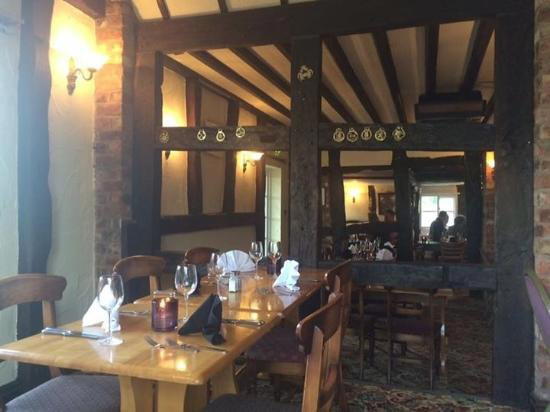
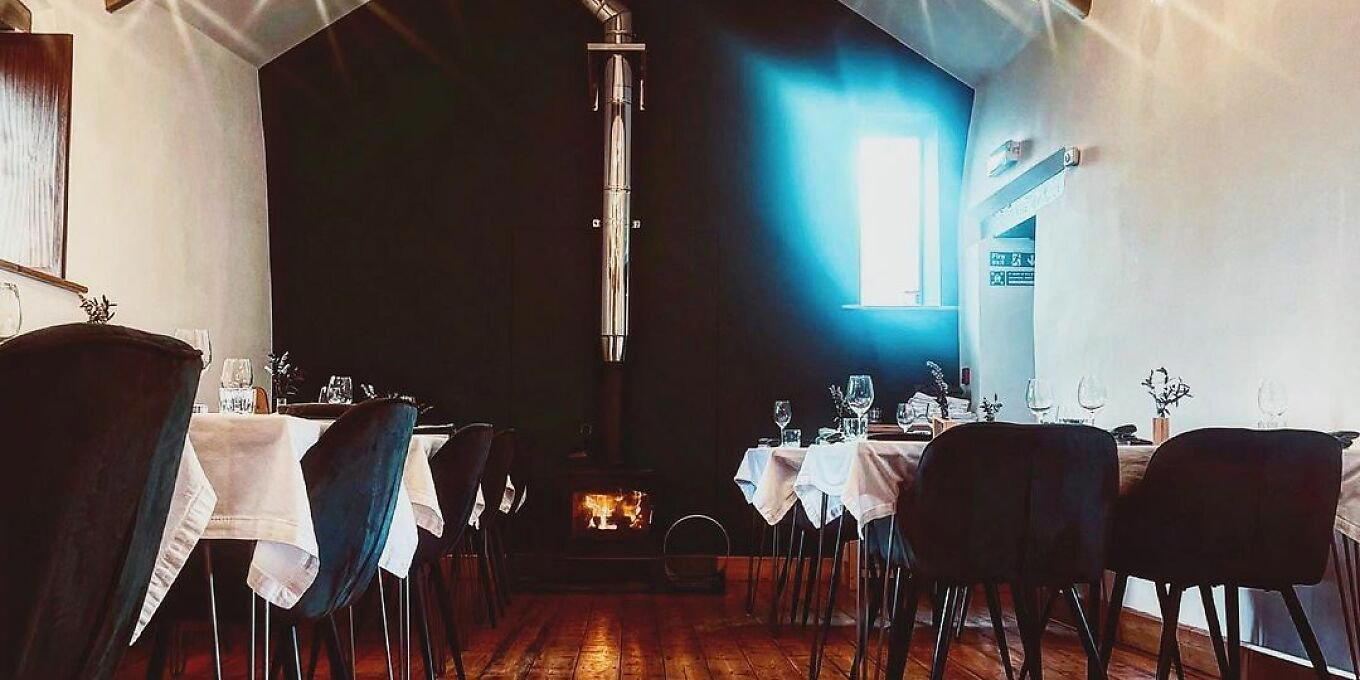
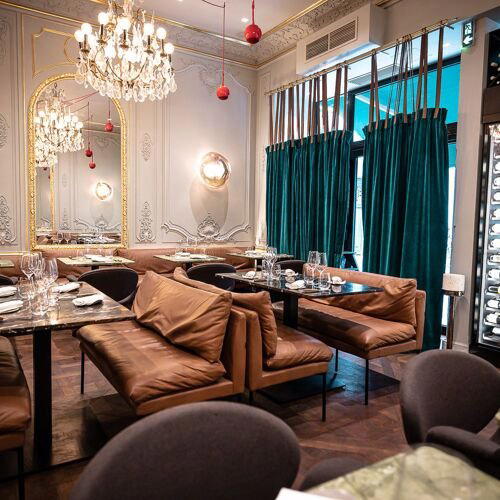
Warm and intimate with playful, nostalgic interiors featuring rich tones, ornate furnishings, wood burners, and thoughtful lighting for a cosy, relaxing atmosphere.