Tántalo Hotel / Kitchen / Roofbar
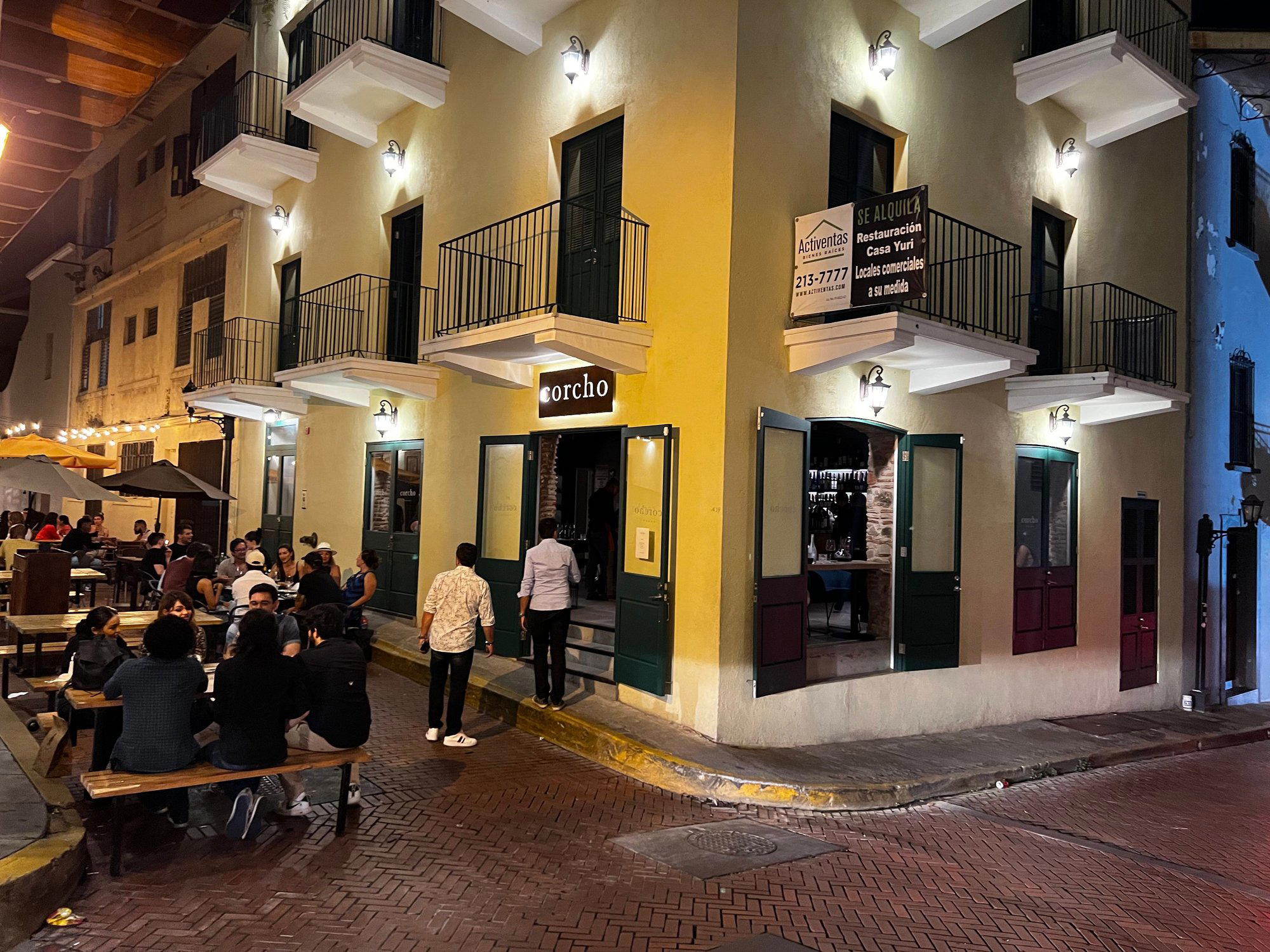
Tántalo occupies a converted colonial building in Casco Viejo, Panama City's UNESCO-listed old quarter, operating as a hotel, ground-floor kitchen, and rooftop bar across three distinct registers. The property sits in a neighbourhood where adaptive reuse of Spanish-era architecture has become the defining development pattern, placing it in the same conversation as larger flag-bearing properties without replicating their scale or formula.
Pearl is the En Primeur Club membership app — saves, bookings, and concierge access live there. Same editors, same standards.
- Address
- XF37+7M5, Calle 8 Este, Panamá, Provincia de Panamá, Panama
- Phone
- +507 6616 5079
- Website
- tantalohotel.com
- Directions
- Get directions
 Saves & bookings on Pearl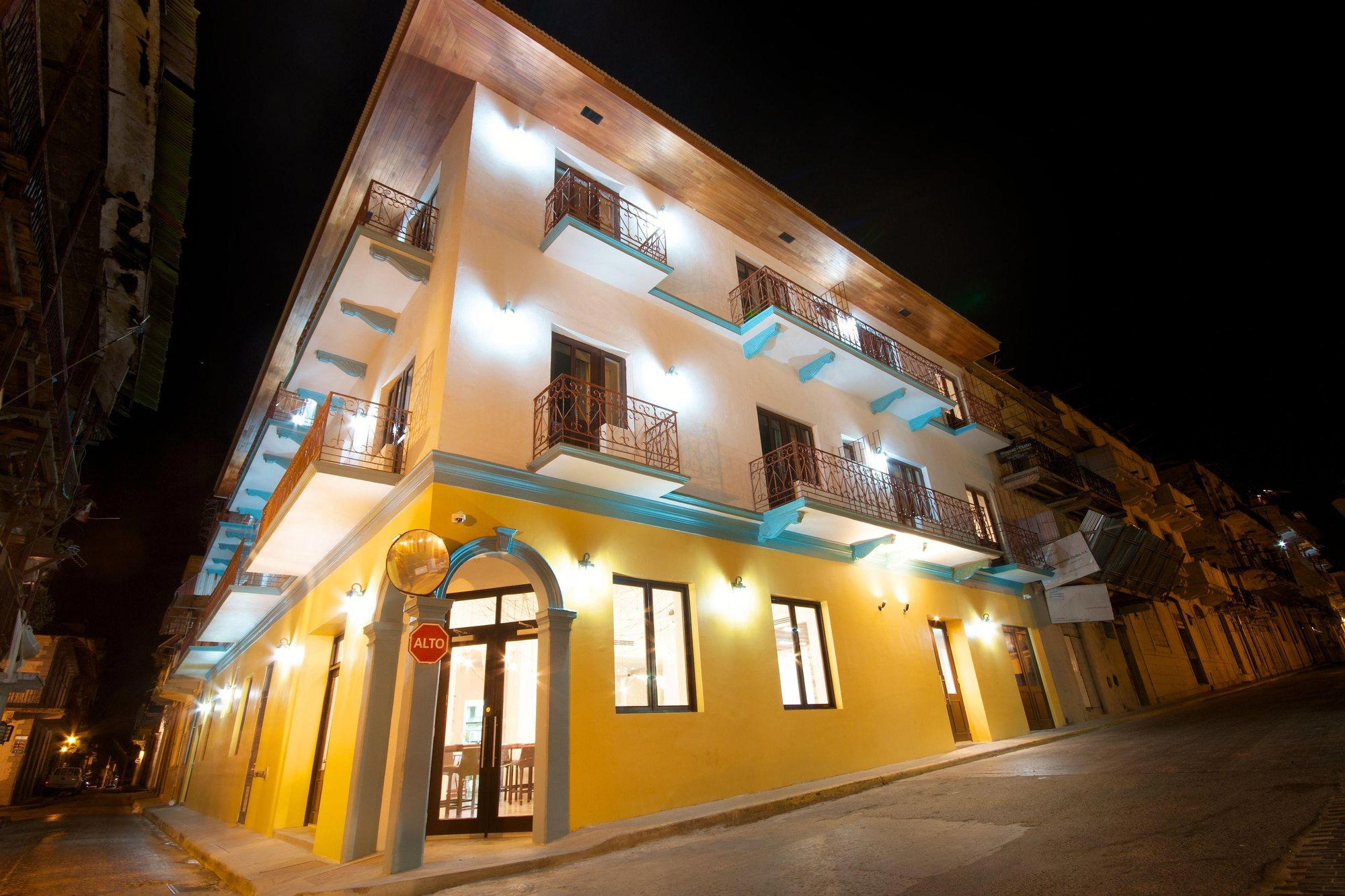
Casco Viejo and the Architecture of Reinvention
Panama City's old quarter operates under a different set of rules from the glass-tower district across the bay. Casco Viejo, a UNESCO World Heritage Site since 1997, has spent the past two decades absorbing investment that must, by preservation mandate, work within existing colonial-era shells. The result is a neighbourhood where the quality of a property is often measured less by square footage and more by how intelligently a developer has read the bones of a nineteenth-century building. Tántalo Hotel / Kitchen / Roofbar sits squarely inside that logic, running a hotel, a ground-floor restaurant, and a rooftop bar out of a single converted structure on Calle 8 Este. The address, XF37+7M5, places it in the heart of the pedestrian-priority zone where most of the neighbourhood's serious hospitality investment has concentrated.
For travellers comparing Casco options, the field ranges from the full-service grandeur of the Sofitel Legend Casco Viejo, Panama to the design-conscious intimacy of the American Trade Hotel and the boutique positioning of Hotel La Compañia. Tántalo operates at the smaller, more programmatic end of that range, where the three-part format (rooms, kitchen, roofbar) is itself the offer, rather than amenity breadth or room count.
Three Floors, Three Registers
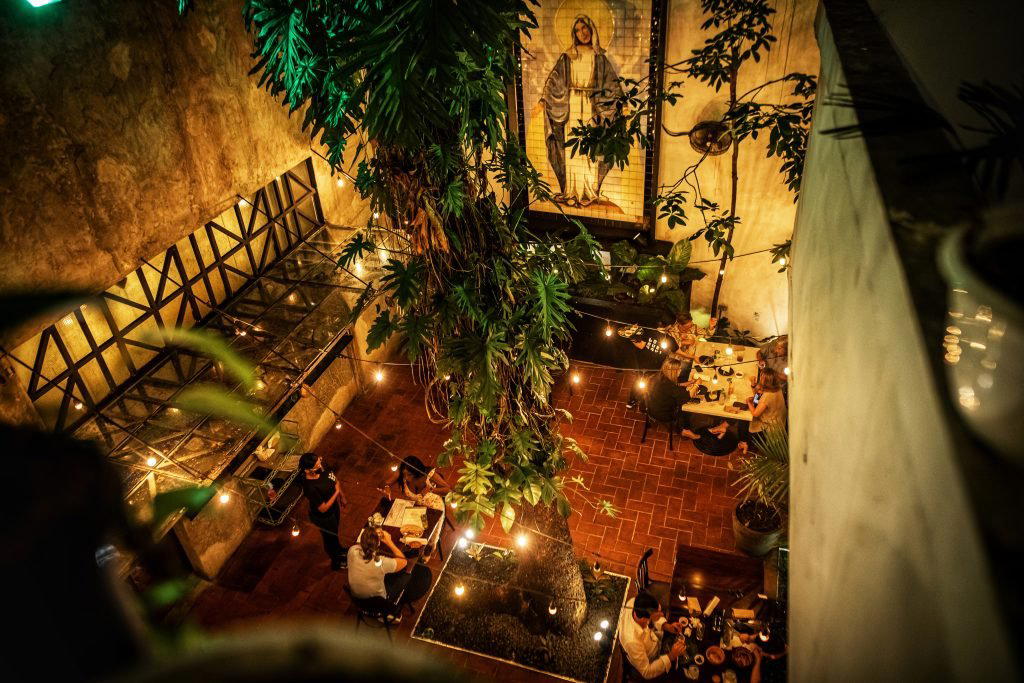
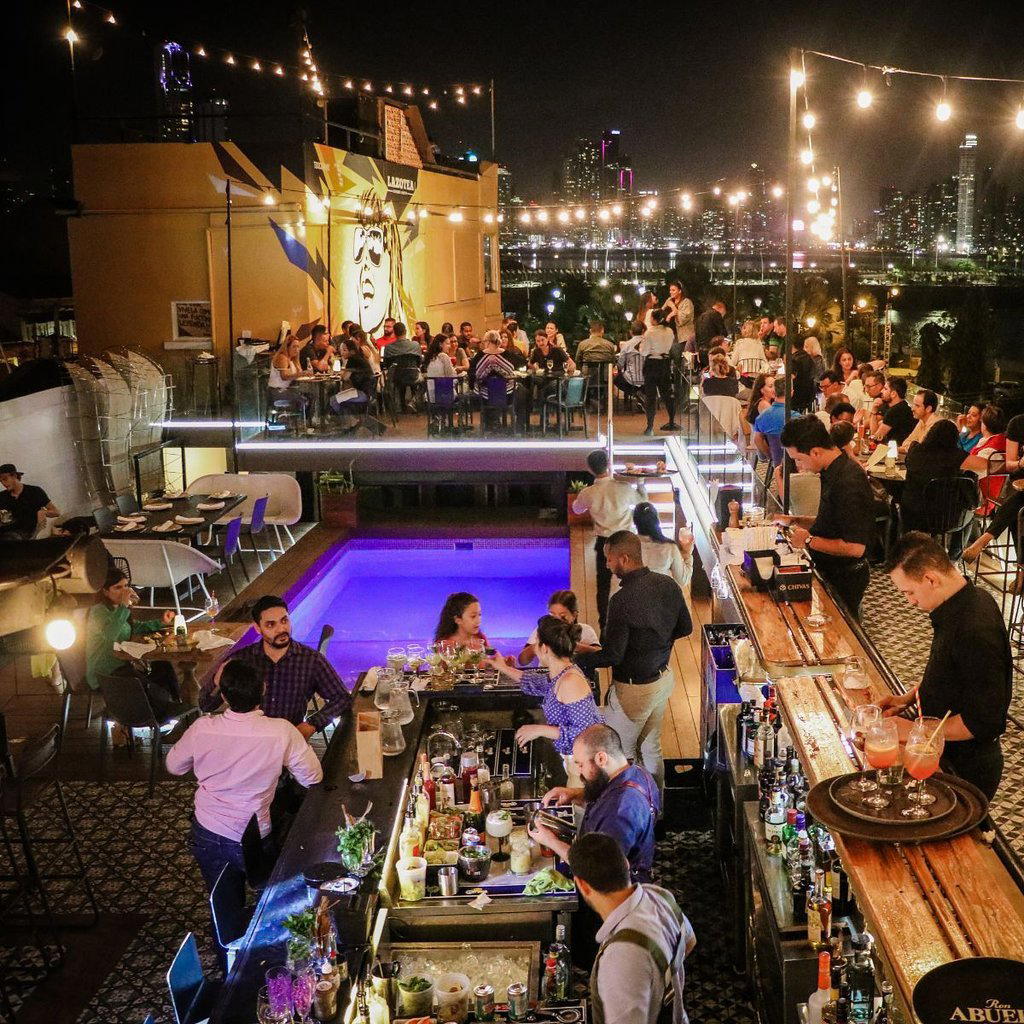
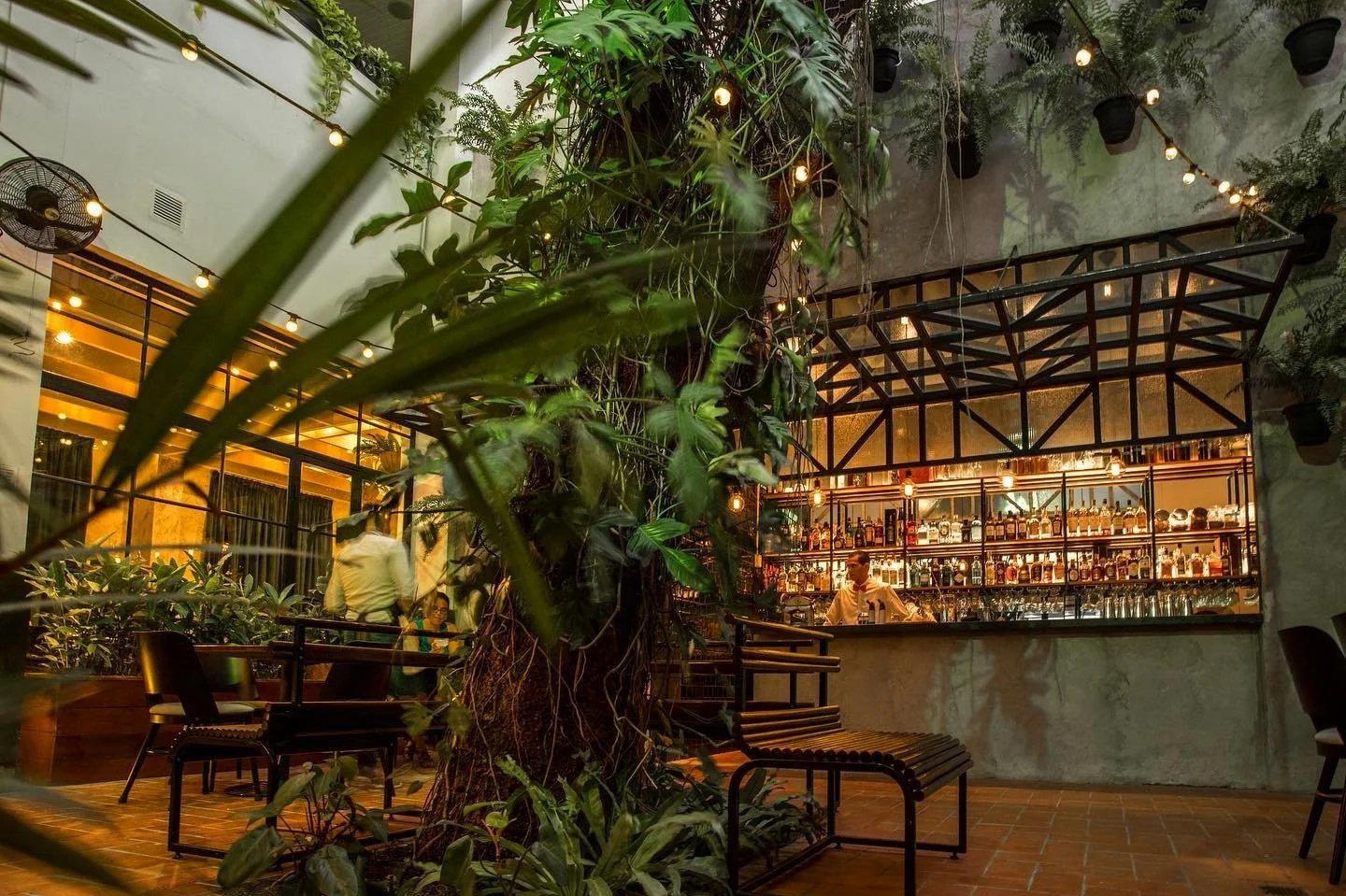
The stacked format that Tántalo represents has become one of the more coherent models for boutique hospitality in dense urban heritage zones globally. Rather than dedicating a building to a single use, the property treats each level as a distinct social layer. The ground floor kitchen functions as a restaurant accessible to non-guests, which means the property generates street-level activity and anchors itself to the neighbourhood's food scene rather than retreating behind a hotel-only threshold. The roofbar occupies the upper floor, where Casco Viejo's low-rise roofscape and proximity to the bay create the kind of refined vantage point that, in this neighbourhood, tends to become the reference point by which other rooftop options are measured. Compared to the convention-hotel rooftop bars you find at the Waldorf Astoria Panama or Le Méridien Panama in the banking district, a Casco roofbar operates against a completely different visual backdrop: terracotta tiles, church towers, and the canal approach rather than the Pacific-facing skyline.
This vertical programming model asks something of the guest that larger, more compartmentalised properties do not. Movement between floors is part of the experience, and the building's colonial envelope, with its original proportions, means the spaces carry a physical memory that a purpose-built hotel room cannot manufacture. Properties working in this register, whether in Panama City, Cartagena, or Havana, tend to attract a guest who reads that distinction as value rather than limitation.
Sustainability as Structural Logic
The adaptive reuse model that characterises Casco Viejo development is, at its core, a form of embodied sustainability. Retaining an existing structure avoids the carbon and material cost of demolition and new construction, a calculation that urban heritage zones enforce by law but that the better operators in these districts treat as a design asset rather than a constraint. In Panama City specifically, where the construction pace in the banking district has been aggressive for decades, the decision to work within a colonial shell rather than build new carries a different weight than it might in a city without that contrast. Tántalo's position in Casco places it in a neighbourhood where that choice is made visible every day by the streetscape itself.
Community integration follows from the same logic. A hotel that opens its kitchen to the street and its roofbar to the public is, structurally, more embedded in local economic circulation than one that routes all spending through in-house facilities. This pattern is increasingly what separates the more considered boutique properties from the self-contained resort model, and it maps onto how travellers in this tier are increasingly thinking about where their spending lands. For wider context on how Panama's more remote properties handle the sustainability question, the approach taken at Islas Secas in Boca Chica or El Otro Lado in Portobelo offers a useful counterpoint: where Tántalo's sustainability argument is urban and architectural, those properties are making it through off-grid infrastructure and ecological reserve management.
Panama's ecotourism infrastructure is sophisticated enough that properties like Canopy Tower and Selva Terra Island Resort in San Lorenzo have built entire operating models around it. The urban equivalent, which Tántalo represents, is less frequently articulated but no less coherent as a position.
Neighbourhood Character and What It Demands of a Visitor
Casco Viejo rewards visitors who are willing to move on foot, accept that certain streets are works in progress, and treat the neighbourhood's mix of restoration and decay as part of its character rather than a deficiency. The quarter has been genuinely transformed since its UNESCO listing, but it has not been sanitised. That means the experience of arriving at a property like Tántalo is different from arriving at the Bristol Panama in Marbella or the Sortis Hotel, Spa and Casino in the financial district. There is no sealed perimeter or porte-cochère buffer. The street is immediate.
For some travellers, that immediacy is exactly the point. For others, it is a reason to base themselves in the banking district and visit Casco for an evening. Either approach is coherent, and both are well-served by Panama City's hotel range. The full range across both districts is covered elsewhere in our Panama City guide. Those looking for comparable boutique properties in the region with a similar design-forward, low-key-luxury positioning might look at Bocas Bali Luxury Water Villas in Isla Frangipani or Los Brezos Boutique Hotel in Volcán for the national context, and at Castello di Reschio in Lisciano Niccone or Cheval Blanc Paris for the international one, where the adaptive reuse of historic structures has reached a different scale of investment.
Planning a Stay
Booking through the property's own channels is the standard approach for Casco boutique hotels. Casco Viejo is best explored on foot once you are inside the historic perimeter, and taxis or ride-share services are the practical option from Tocumen International Airport, which sits roughly 25 kilometres to the east. The dry season, running from approximately December through April, delivers reliable weather and is peak travel period; the wet season from May to November brings afternoon rains but significantly lower hotel rates and a less crowded neighbourhood. For travellers arriving from North America using Panama City as a transit hub before onward travel to the islands or highlands, the geography of Casco places it closer to the Pacific entrance of the canal and to the domestic-flight terminals than the banking district does.
Price and Positioning
Comparable venues nearby, for context on price, style, and recognition.
| Venue | Price | Awards | Notes |
|---|---|---|---|
| Tántalo Hotel / Kitchen / RoofbarThis venue — the venue you are viewing | $$$ | 3-Star | Not listed |
| Las Clementinas | $$$ | 3-Star | Casco Viejo, Restored colonial apartment-style boutique hotel blending historic architecture with contemporary design in a UNESCO World Heritage district. |
| Le Méridien Panama | $$$ | 5-Star | Bella Vista, Modern upscale tower hotel with striking architectural design |
| Canopy Tower | $$$ | Not listed | Soberanía National Park, Repurposed radar tower eco-lodge in rainforest |
| American Trade Hotel & Hall | $$$$ | 5-Star | Casco Viejo, Boutique luxury hotel in historic Art Deco building combining old-world elegance with clean modern design. |
| Sortis Hotel, Spa & Casino | $$$$ | 4-Star | Obarrio, Contemporary luxury mixed-use complex with five-star amenities, casino, and business center integrated into urban high-rise design. |
Continue exploring
More in Panama City
Hotels in Panama City
Browse all →
Bars in Panama City
Browse all →
At a Glance
- Trendy
- Lively
- Modern
- Romantic Getaway
- Weekend Escape
- Rooftop Pool
- Panoramic View
- Terrace
- Design Destination
- Wi Fi
- Room Service
- Concierge
- Elevator
- Restaurant
- Skyline
- Wi Fi
- Room Service
- Concierge
- Elevator
- Restaurant
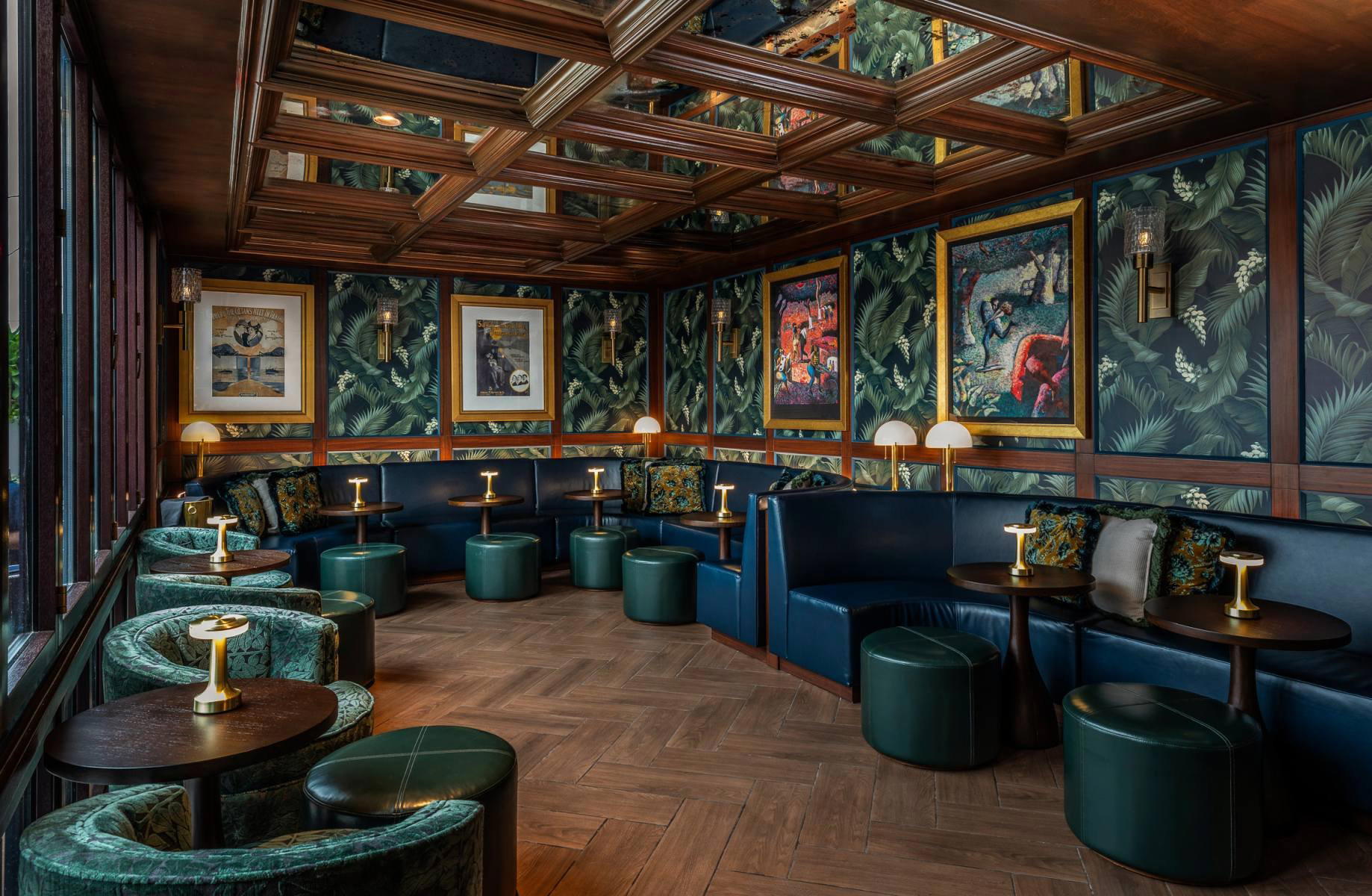
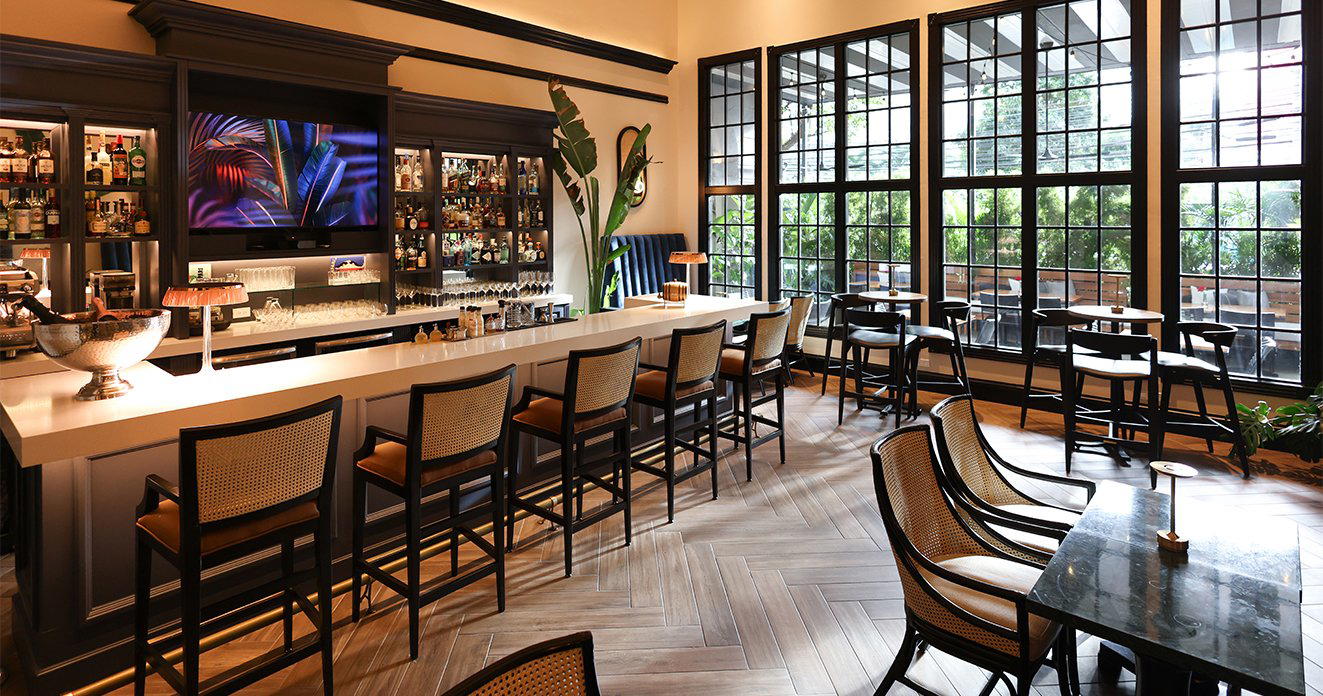
Eclectic and artistic atmosphere with urban artwork, dangling light fixtures, and a pulsating rooftop bar featuring music and cocktails under the sparkling Panama City skyline.