Islas Secas


Virtuoso Luxury Hotel Partner
Fourteen islands, nine casitas, a maximum of eighteen guests: Islas Secas operates at a capacity that makes most private-island resorts look crowded. Set within a 50,000-acre marine reserve in Panama's Gulf of Chiriquí, roughly twenty miles from the nearest town, this all-inclusive property positions itself at the intersection of serious conservation work and open-air luxury design, with sport fishing, diving, and wildlife access built into the architecture of every stay.

Pearl is the En Primeur Club membership app, where members save venues, book tables and use the concierge.
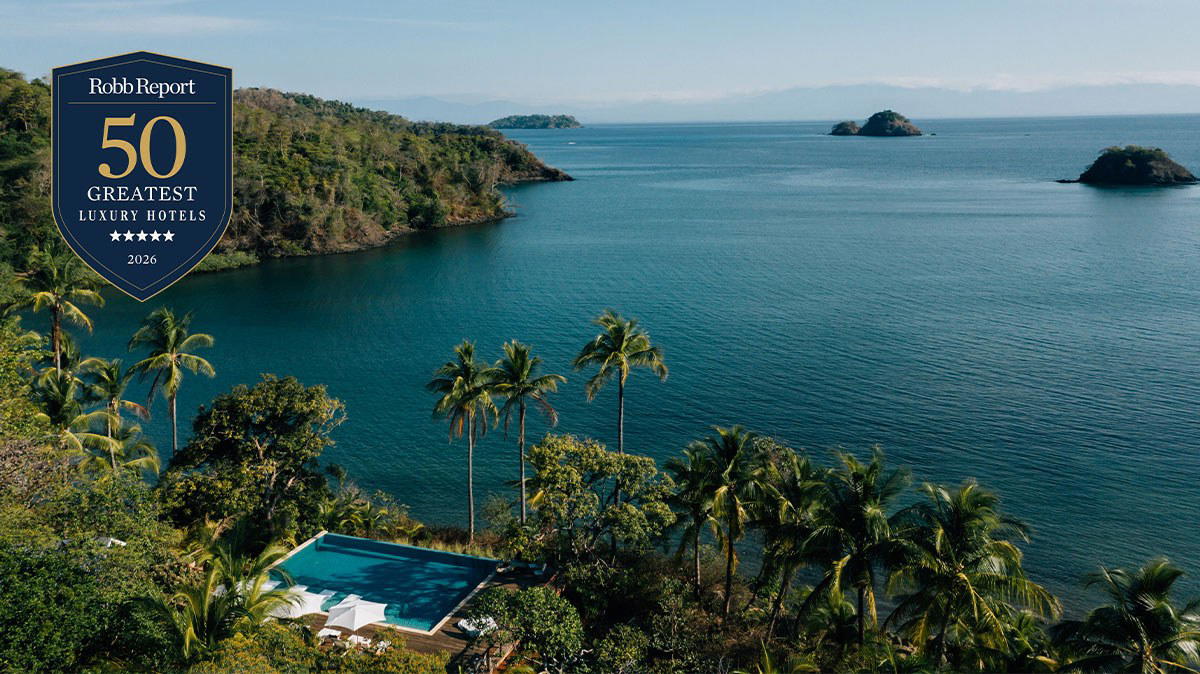
Twenty Miles Out: The Physical Logic of Islas Secas
The Gulf of Chiriquí operates on a different scale from Panama's better-known Pacific coastline. The water here sits inside a protected marine reserve of roughly 50,000 acres, and the fourteen islands that make up the Islas Secas archipelago account for only a fraction of that surface. Getting here requires a flight into David, the capital of Chiriquí Province, followed by a boat transfer that takes you progressively further from infrastructure and closer to a horizon defined entirely by ocean and forest canopy. The twenty-mile separation from the nearest town is not a selling point layered on top of the experience, it is the structural premise of it. Remoteness at Islas Secas is load-bearing.
This positioning places Islas Secas in a specific and growing tier of ultra-low-density island resorts that have deliberately limited capacity as both a conservation tool and a market signal. With nine individual casitas accommodating a maximum of eighteen guests at any time, the property operates at a ratio that most resort developers would consider commercially irresponsible. Comparable properties pursuing the same low-headcount model include Isla Palenque in San Lorenzo District and Selva Terra Island Resort in San Lorenzo, both operating within Panama's broader network of private-island experiences. Internationally, the format connects to properties like Amangiri in Canyon Point, where the designed scarcity of guests is itself the primary amenity.
Casita Design: Open-Air Architecture as Environmental Argument
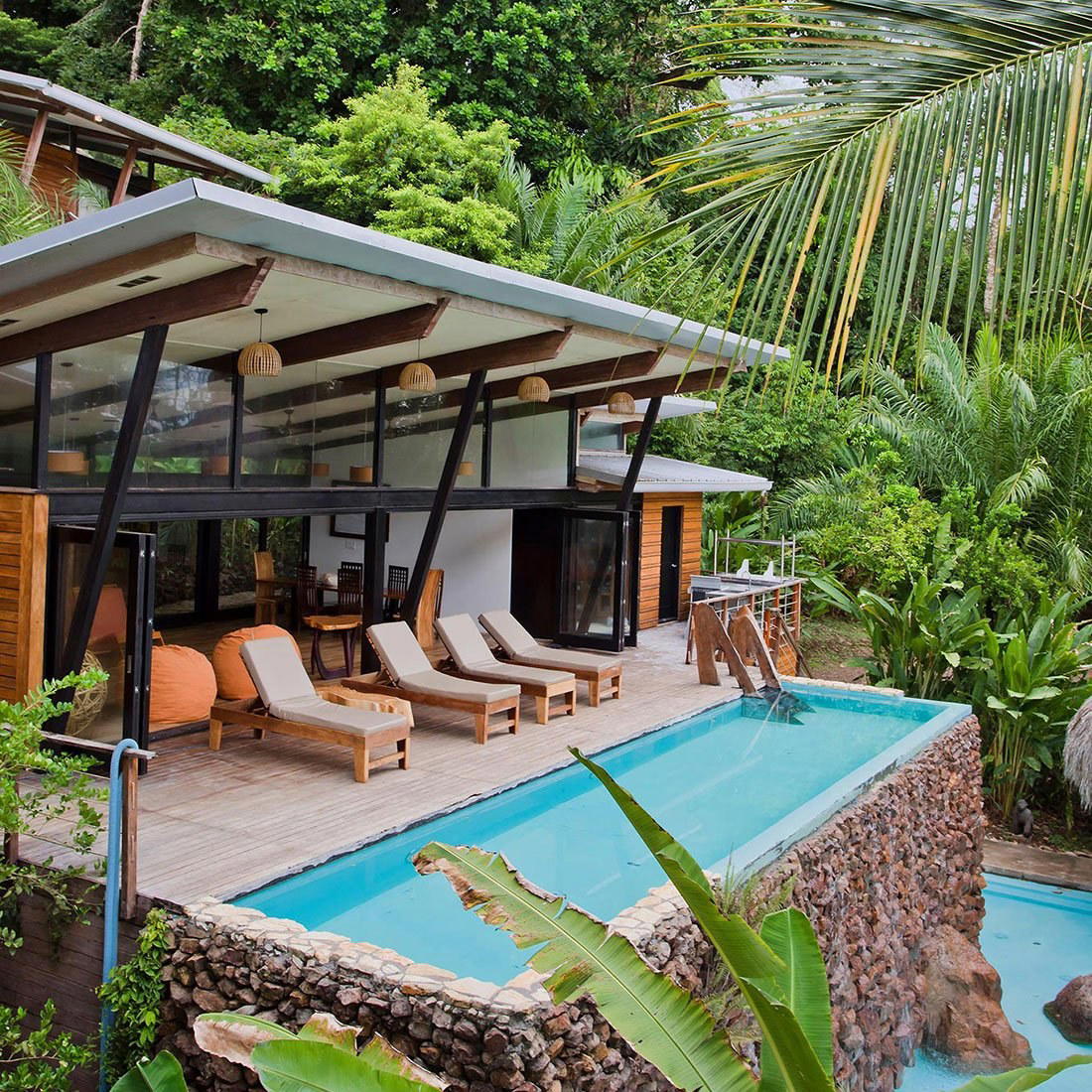
The editorial angle on private-island casita design has shifted considerably over the past decade. Early iterations of the format tended toward sealed, climate-controlled rooms with a view, luxury that kept the environment at arm's length behind glass. The more recent wave, which Islas Secas represents, inverts that relationship. Here, each of the seven casitas on the main island is configured to dissolve the boundary between interior and exterior. The thatch-roof bohío structure is a deliberate reference to vernacular tropical building, and the inclusion of an outdoor shower and open-air dining area within each private footprint means that the jungle's sounds, temperatures, and light cycles are not filtered out but routed through the daily routine of the stay.
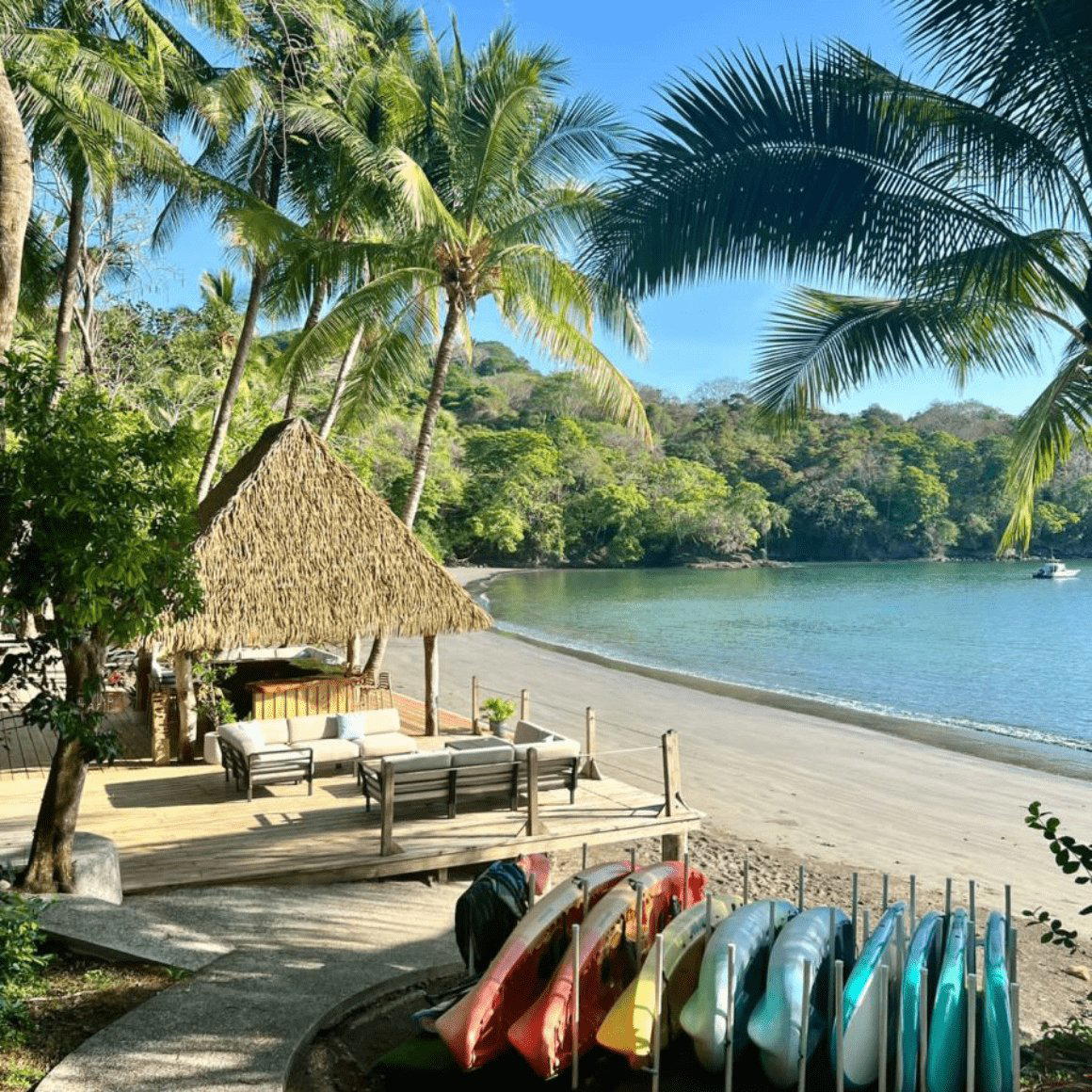
Each casita includes a private plunge pool, which in this context functions less as a luxury amenity than as a design decision about how guests interact with heat and water between excursions. The configuration, plunge pool, outdoor dining, private beach access, creates a self-contained unit that reduces the social pressure of communal resort life while still tethering the guest to the natural environment. The positioning of each casita in a separate, secluded section of the main island means that even at full occupancy, eighteen guests across nine casitas, the property does not feel crowded. This is architecture working directly in service of the conservation and isolation proposition.
The open-air design philosophy connects Islas Secas to a broader movement in premium tropical hospitality that treats climate as material rather than obstacle. Properties like Bocas Bali Luxury Water Villas in Isla Frangipani and El Otro Lado in Portobelo work in adjacent registers within Panama, while internationally, the conversation extends to design-led properties such as Hotel Esencia in Tulum, where structural openness to the surrounding environment is the defining aesthetic commitment. At the higher end of the luxury spectrum, properties like Castello di Reschio in Lisciano Niccone pursue a similar logic of design responding to landscape, albeit through radically different architectural vocabulary.
The Marine Reserve as Amenity Infrastructure
Islas Secas's access to the Gulf of Chiriquí's marine ecosystem is not incidental to the property's identity, it functions as the primary activity infrastructure. The 50,000-acre marine reserve surrounding the archipelago supports one of the Eastern Pacific's more diverse marine populations, including humpback whales, sea turtles, and sport fish species including marlin, tuna, and dorado. The Pacific fishing grounds here are part of a migratory corridor that draws serious anglers in a way that the Caribbean side of Panama does not replicate.
The resort's conservation program runs alongside the recreational access rather than in tension with it. Marine research partnerships and endangered species protection work, particularly around humpback whale and sea turtle populations, are structured as part of the property's operating model rather than as a corporate social responsibility add-on. This dual-use relationship between conservation and guest experience is increasingly the framework through which high-end island properties justify their footprint, and Islas Secas applies it with consistency across land and sea programming.
Inland, trails through the tropical forest on the main island provide access to wildlife viewing that complements the marine programming. The result is a property where the activity roster is determined almost entirely by what the surrounding ecosystem produces on any given day, which is a different guest relationship than properties that layer programmed experiences over a neutral physical setting. For the reader comparing Panama's private-island options, Canopy Tower in Panama offers a useful contrast: it pursues a similar depth-of-nature proposition but from a forest-first rather than ocean-first position.
Planning a Stay: Logistics, Access, and the All-Inclusive Framework
Access to Islas Secas routes through David, Chiriquí's main city and home to Enrique Malek International Airport, which handles connections from Panama City's Tocumen International. The boat transfer from the coast to the archipelago covers approximately twenty miles of open water. Given the resort's maximum capacity of eighteen guests, advance booking is the operational norm rather than the exception, this is not a property where availability is easily found on short notice.
The all-inclusive format at Islas Secas covers meals prepared with fresh seafood and tropical ingredients, served across different locations throughout the islands rather than from a fixed dining room. This mobile dining model is an extension of the design philosophy: meals follow the terrain and the hour rather than a fixed restaurant schedule. Water sports, sport fishing, diving, snorkeling, and inland excursions are structured into the all-inclusive framework, which simplifies trip planning but also sets a price point that positions the property firmly in the ultra-premium segment of Panama's tourism market.
Travellers building a broader Panama itinerary sometimes combine Islas Secas with time in Panama City, where properties like Le Méridien Panama provide a sharply different urban register after time in the archipelago. For those focused on Chiriquí Province specifically, Los Brezos Boutique Hotel in Volcán covers the province's highland interior. Our full Boca Chica guide maps the broader context of this coastal area for travellers arriving by way of the Chiriquí coastline.
Quick Comparison
Comparable venues nearby, for context on price, style, and recognition.
| Venue | Cuisine | Price | Awards | Notes |
|---|---|---|---|---|
| Islas SecasThis venue (the venue you are viewing) | Traditional Panamanian-inspired luxury treehouse villas on a private island reserve | $2,500+ | Virtuoso Luxury Hotel Partner | Not listed |
| American Trade Hotel & Hall | Boutique luxury hotel in historic Art Deco building combining old-world elegance with clean modern design. | $200–300 | Michelin Selected · Mr & Mrs Smith Seal of Approval | Casco Viejo |
| Waldorf Astoria Panama | Contemporary luxury hotel blending opulence with family comfort in Panama City's business district. | $200–300 | Virtuoso Luxury Hotel Partner · Forbes Recommended | Panama City Centre |
| Bristol Panama | European-style boutique with Georgian architecture and Panamanian art. | Not listed | Forbes Recommended · Virtuoso Luxury Hotel Partner | Marbella |
| Hotel La Compañia | Historic luxury boutique in restored architectural wings | Not listed | Virtuoso Luxury Hotel Partner | Casco Antiguo |
| Los Brezos Boutique Hotel | Modern boutique with personalized attention and high-end finishes | $100–200 | World Travel Awards | Brisas del Norte Volcan |
Recognition history
Dated appearances from independent guides and award organizations, with the underlying list record or original source where available.
Robb Report The 50 Greatest Luxury Hotels on Earth #9 · No. 9
Robb Report · 2026 Robb Report The 50 Greatest Luxury Hotels on Earth
Virtuoso Luxury Hotel Partner
Virtuoso
Full recognition history (3 entries)
Robb Report The 50 Greatest Luxury Hotels on Earth #23
Robb Report
Continue exploring
More in Boca Chica
Details
- Romantic
- Quiet
- Scenic
- Elegant
- Rustic
- Intimate
- Sophisticated
- Honeymoon
- Romantic Getaway
- Family Vacation
- Wellness Retreat
- Anniversary
- Group Retreat
- Beachfront
- Infinity Pool
- Private Villa
- Waterfront
- Panoramic View
- Wi Fi
- Pool
- Spa
- Fitness Center
- Room Service
- Concierge
- Laundry Service
- Beach Access
- Waterfront
Relaxed and serene tropical island atmosphere with natural beauty, ocean views, and peaceful settings enhanced by attentive service and outdoor elements.