
Occupying a Victorian palace on Luxor's Nile corniche since 1886, Sofitel Winter Palace operates in a tier of Egyptian hotel history that has no modern equivalent. Its 92 rooms span the original building and a contemporary pavilion, with gardens shaded by century-old trees and dining that moves between French technique and Egyptian tradition. The Valley of the Kings and Luxor Temple are within reach on foot or by arrangement.
 Discover on Pearl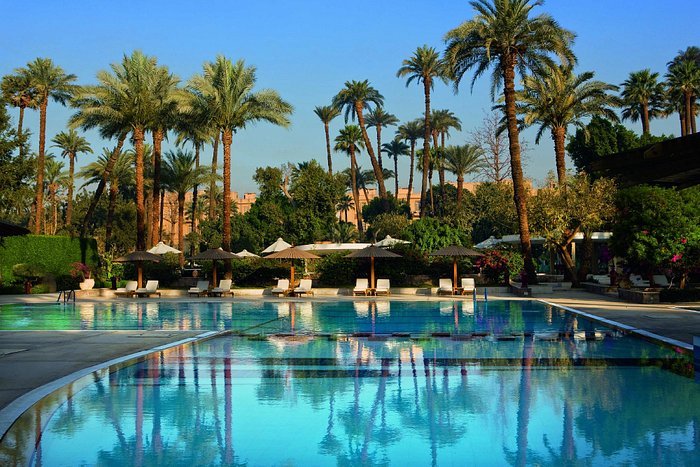
Where the Nile Corniche Meets a Century of Hospitality
Arriving at the Winter Palace from Luxor's corniche road, the scale of the Victorian facade registers before anything else: a cream-coloured palace set behind gardens thick with palms and century-old trees, the Nile moving quietly beyond. This is not a heritage hotel that gestures at history through decorative choices. The building itself is the history — constructed in 1886, a period when Luxor was the operational centre of Egyptology and the hotels that served it were expected to match the ambition of what was being discovered in the surrounding desert. That context shapes everything about the experience of staying here, from the pace at which staff move through the corridors to the museum-quality photographs and artifacts displayed throughout the property.
Egypt's luxury hotel market has, over the past two decades, bifurcated between contemporary resort properties concentrated along the Red Sea coast and a smaller group of historic city properties whose value is inseparable from their location in relation to archaeological sites. The Winter Palace occupies the latter category almost by definition. Properties like the Sofitel Legend Old Cataract Aswan occupy a comparable niche on the Nile further south, where colonial-era architecture and direct proximity to monuments justify a different kind of guest expectation than the resort format. In Luxor specifically, the competitive conversation includes properties like the Hilton Luxor Resort and Spa and the design-led Al Moudira Hotel on the West Bank, but neither operates from a Victorian original building with this depth of institutional history.
The shortlist, unlocked.
Hard-to-book tables, cellar releases, and concierge-planned trips.
Get Exclusive Access →The Guest Experience as Institutional Practice
The service culture at a hotel that has been receiving archaeologists, heads of state, and royalty since the late nineteenth century operates on a different register than properties built around contemporary hospitality training programmes. Anticipatory service — recognising returning guests, understanding what a traveller arriving from a long desert excursion requires before they ask , is less a branded philosophy here than an accumulated practice. The hotel's guest list across its 138-year history reads as a catalogue of twentieth-century exploration and political history, and the staff's awareness of that institutional weight informs the formality and attentiveness of the delivery.
The 92 rooms and suites are distributed between the original Victorian building and a contemporary pavilion, and the choice between them matters. Rooms in the original palace carry the higher heritage quotient: higher ceilings, period architectural detail, and a directness of connection to the building's history. The pavilion rooms deliver a more contemporary finish while retaining Nile views and the garden setting. Both categories share access to the grounds, which function as a genuine buffer between the property and the activity of the corniche , the century-old trees and tropical planting create a density of shade and quiet that is unusual for a city-centre hotel position anywhere, let alone on one of Egypt's busiest tourist thoroughfares.
Dining Between Two Traditions
Luxor's dining scene for independent travellers is thin relative to what the volume of international visitors might suggest. The city's restaurant offer has historically been captured by hotel properties, and the Winter Palace's multiple dining venues sit within that pattern. The kitchen runs French technique alongside Egyptian specialties , a combination that reflects the hotel's colonial origins rather than a contemporary fusion ambition. For a property of this age and European guest history, the presence of classical French cooking alongside local dishes is the expected position, not a point of novelty.
The historic bar deserves particular attention as a separate category of experience. A room that has served explorers and archaeologists returning from the Valley of the Kings for more than a century accumulates a specific character that no amount of designed atmosphere can replicate. The photographs and artifacts on display throughout the property give the bar its context; it functions as an extension of the hotel's role in archaeological history rather than as a standalone hospitality venue.
Archaeological Access as Core Infrastructure
The hotel's address on the corniche places Luxor Temple within walking distance, a logistical fact that changes the rhythm of a stay in ways that guests arriving by cruise or staying at resort properties further from the centre do not experience. Karnak Temple, the Valley of the Kings, and the wider complex of West Bank archaeological sites are accessible by arrangement through the hotel. For travellers whose primary purpose is serious engagement with the pharaonic sites , rather than archaeological tourism as a component of a broader Egypt itinerary , the Winter Palace's position rationalises the stay in a way that a river property like The Oberoi Zahra Luxury Nile Cruise or an alternative format like Storia the Dahabeya does not.
Private archaeological site visits, Nile cruise excursions, and access to UNESCO World Heritage sites are all coordinated through the hotel, which functions as a genuine logistical base rather than simply a place to sleep between excursions. The spa, running treatments informed by ancient Egyptian wellness traditions and using indigenous ingredients, completes an in-property offer that a guest could reasonably use as a framework for an entire Luxor stay without needing to source services externally.
Placing the Winter Palace in Egypt's Wider Hotel Context
For travellers building an Egypt itinerary across multiple cities and property types, the Winter Palace occupies a clear position in the sequence. Red Sea properties like the Four Seasons Resort Sharm El Sheikh or coast-facing addresses like the Address Beach Resort Marassi deliver resort infrastructure and beach access. Cairo properties such as the Dusit Thani LakeView Cairo and Mediterranean options like the Four Seasons Hotel Alexandria at San Stefano serve different geographic priorities. The Winter Palace's function is specific: it is a historically grounded base for engagement with Upper Egypt's archaeological concentration, and it performs that function with the authority of an institution that has been doing so since the nineteenth century.
Internationally, the category of Victorian colonial palace hotels operating in proximity to world-heritage archaeological sites is a small one. Properties like Badrutt's Palace Hotel in St. Moritz or Castello di Reschio in Umbria occupy analogous positions in their own contexts , historic built fabric, accumulated institutional character, and a guest experience shaped more by place and continuity than by contemporary hospitality programming. The comparison is useful because it frames the Winter Palace not as a heritage novelty but as a peer within a legitimate category of historically significant luxury accommodation.
Planning a Stay
The hotel is operated under the Accor Sofitel banner, which means loyalty programme compatibility and reservation access through Accor's standard booking infrastructure. The property sits at 17 Cornish El Nile Street, directly on Luxor's riverside corniche road. The winter months, running broadly from October through March, are the conventional high season for Upper Egypt: temperatures are manageable for extended time at open archaeological sites, and the concentration of international visitors peaks accordingly. Summer visits require heat management that shifts the logistical calculus considerably, with early-morning site visits becoming the operating norm. For a broader view of what Luxor offers across property types and dining, see our full Luxor guide.
The shortlist, unlocked.
Hard-to-book tables, cellar releases, and concierge-planned trips.
Get Exclusive Access →Frequently Asked Questions
Cuisine and Awards Snapshot
A quick look at comparable venues, using the data we have on file.
| Venue | Cuisine | Awards | Notes |
|---|---|---|---|
| Sofitel Winter Palace Luxor | This venue | ||
| Al Moudira Hotel | |||
| Hilton Luxor Resort & Spa | |||
| Storia the Dahabeya | |||
| The Oberoi Zahra, Luxury Nile Cruise |
Preferential Rates?
Our members enjoy concierge-led booking support and priority upgrades at the world's finest hotels.
Get Exclusive AccessThe shortlist, unlocked.
Hard-to-book tables, cellar releases, and concierge-planned trips.
Get Exclusive Access →