
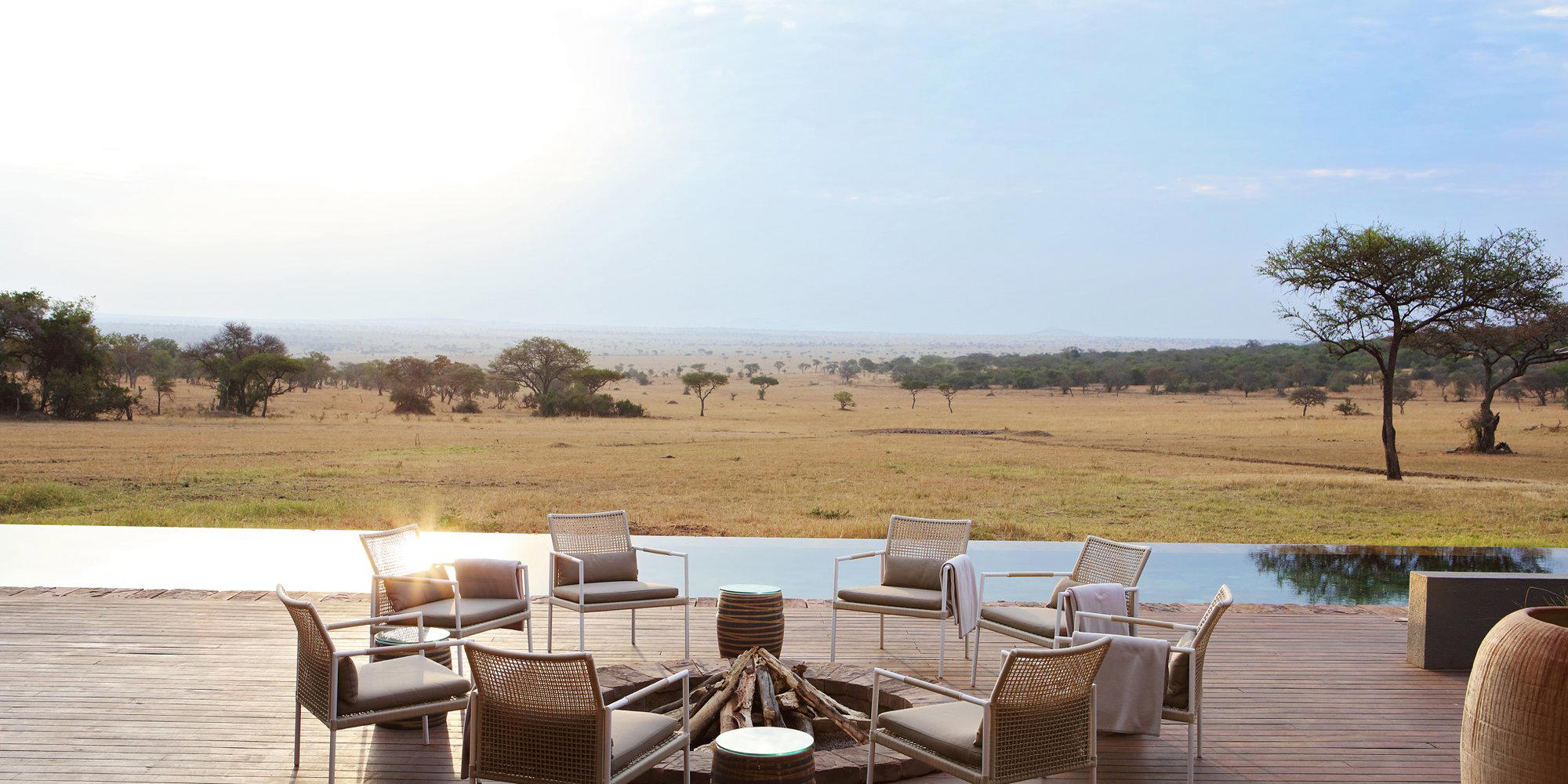
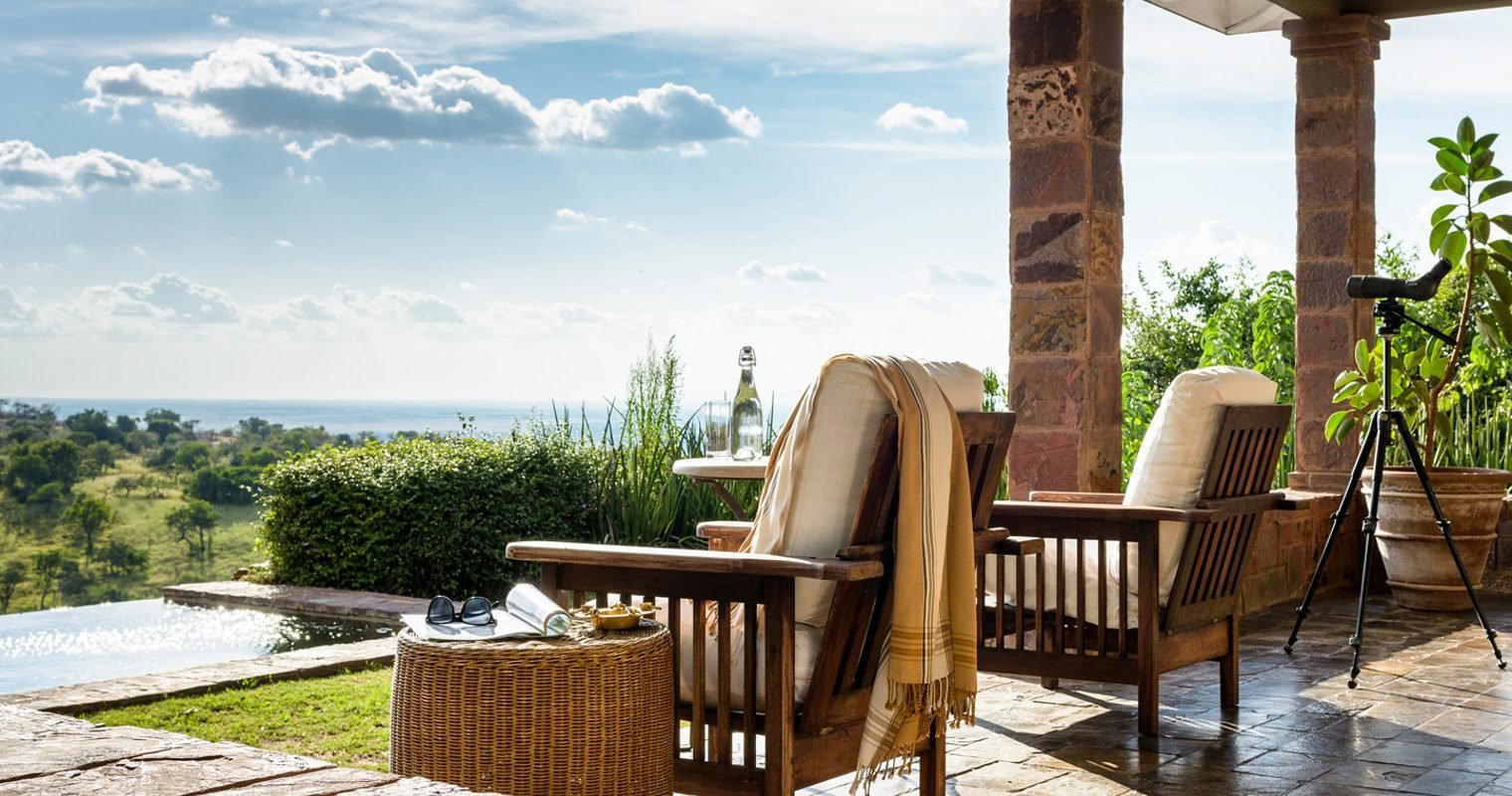
Siringit Migration Camp repositions itself across the Serengeti in step with the Great Wildebeest Migration, placing guests at the river crossing points that define one of nature's most dramatic annual cycles. An eco-conscious mobile camp, it trades fixed infrastructure for proximity to the action, offering a form of temporary luxury that follows the herds rather than waiting for them.
Pearl is the En Primeur Club membership app — saves, bookings, and concierge access live there. Same editors, same standards.
- Address
- GVV6+F7Q, Seronera
- Directions
- Get directions
 Saves & bookings on Pearl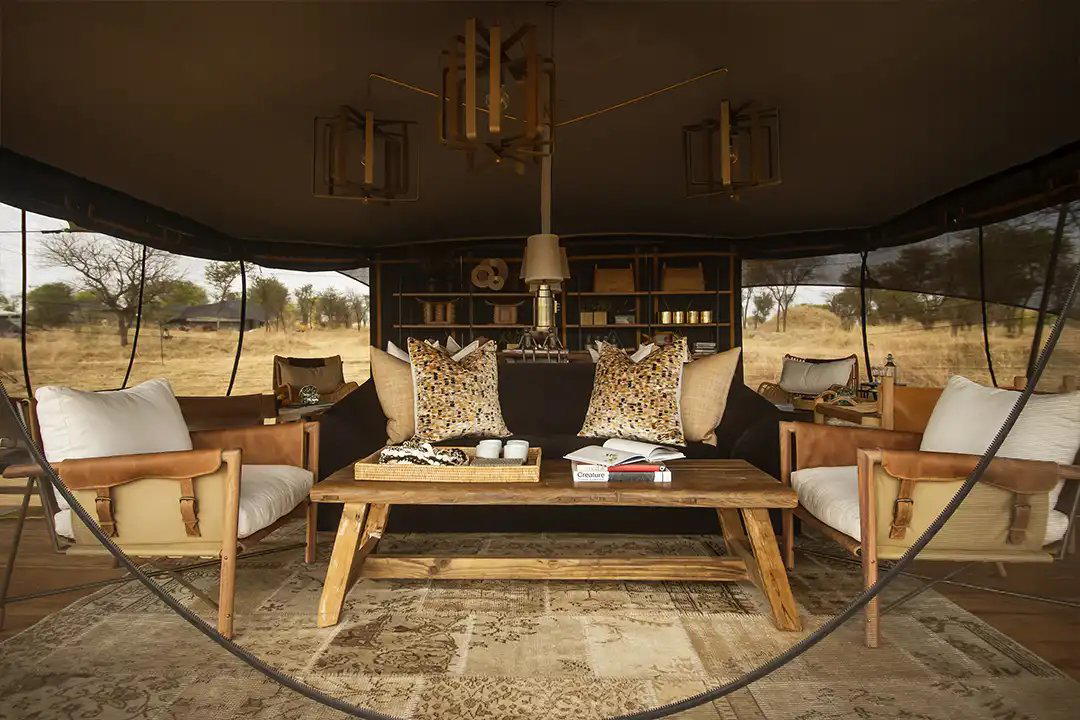
A Camp That Moves With the Herds
In the Kogatende sector of Tanzania's northern Serengeti, the Mara River marks more than a geographic boundary. From July through October, it becomes the central stage for the Great Wildebeest Migration, when more than a million wildebeest, accompanied by zebra and gazelle, press southward from Kenya's Masai Mara and back again in a cycle driven by rainfall and grass. The crossings themselves are violent, chaotic, and brief, lasting minutes but concentrated into weeks of sustained pressure. Where a camp sits relative to that movement is not a design detail; it is the entire strategic question.
Siringit Migration Camp addresses that question by refusing a fixed position. The camp relocates seasonally in alignment with the herds, placing guests at active crossing points rather than within reach of them. This positions it within a specific and now well-established tier of East African safari hospitality: the mobile or semi-permanent luxury camp, designed around ecological precision rather than architectural permanence.
The Architecture of Impermanence
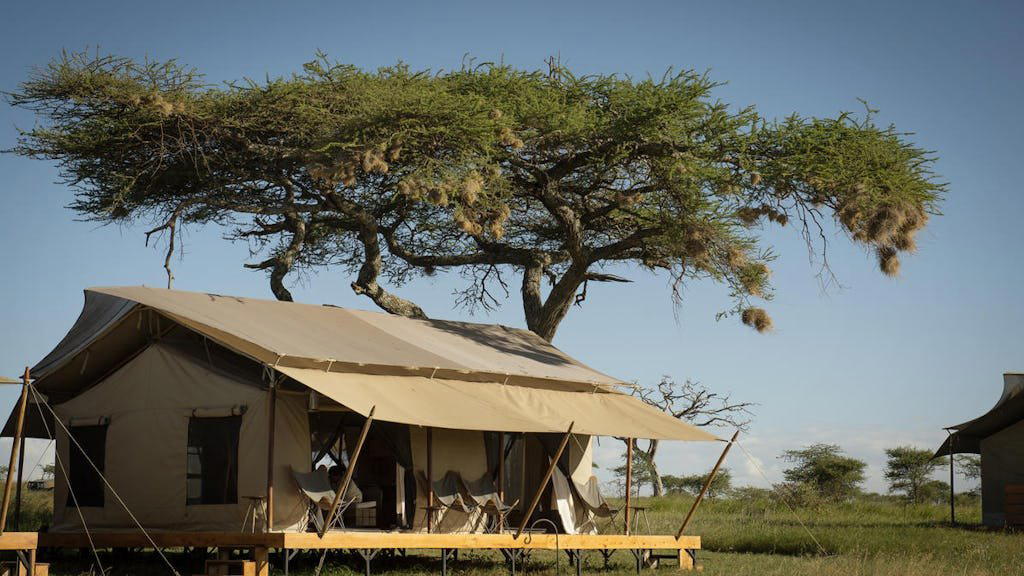
Mobile camps in the Serengeti sit in an interesting design tradition. They are required to be functional, transportable, and, at the premium end, genuinely comfortable without mimicking a permanent lodge. The canvas tent has been the format's structural foundation for decades, but its interior execution has evolved considerably. At the premium tier where Siringit operates, the expectation now includes real beds, private en-suite facilities, and some form of sheltered communal dining, all assembled and dismantled multiple times per season. The design challenge is maintaining spatial coherence and material quality under those constraints.
The camp's eco-conscious orientation further defines its physical footprint. Low-impact construction, minimal ground disturbance, reduced power infrastructure, careful waste management, is not simply a marketing category here; it is operationally necessary when a camp moves through protected national park land where permanent structures are not permitted. The absence of fixed architecture becomes, in this context, both a regulatory requirement and an aesthetic identity. The camp exists as a light imprint on the landscape rather than a defined place within it.
Kogatende and the Northern Serengeti Context
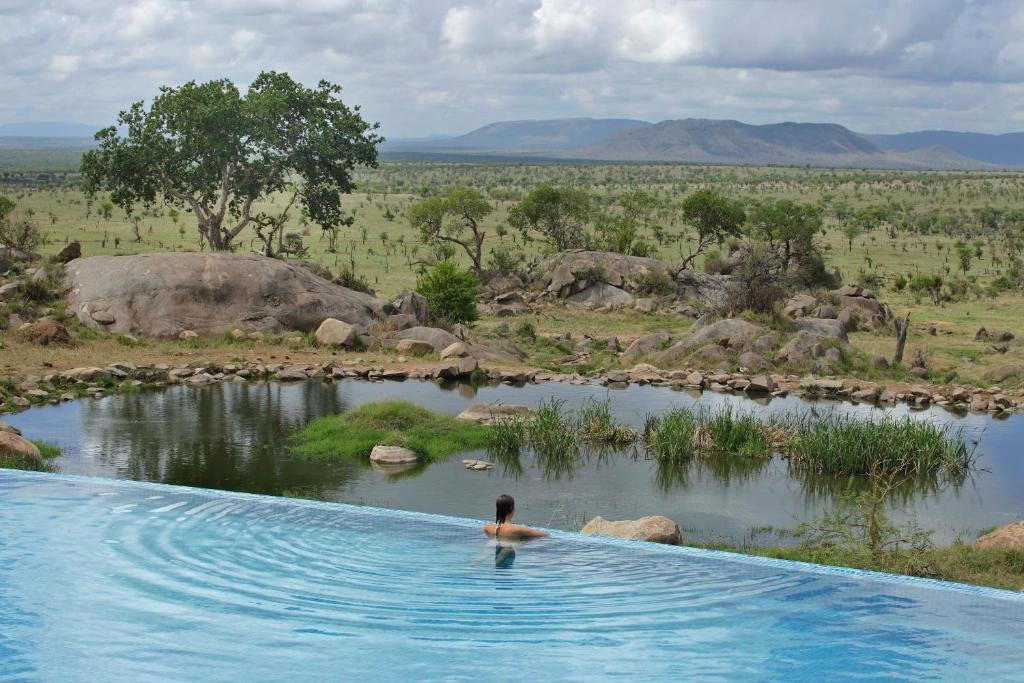
Kogatende sits in the far north of the Serengeti National Park, adjacent to the Kenyan border and the Masai Mara ecosystem. Its position makes it the primary Tanzanian location for witnessing the northward migration crossings, typically peaking between July and September. The terrain here differs from the central Serengeti's open plains: the Mara River corridor is lined with dense riverine forest, fig trees, and rocky outcrops, creating a more compressed visual environment than the classic savannah panorama. That density is part of what makes crossings dramatic, the herds have limited entry points, which concentrates the action.
Compared to the central Serengeti options such as andBeyond Serengeti Under Canvas or the Four Seasons Safari Lodge Serengeti in Banagi, northern camps carry a more specialist character. They draw guests specifically for the Migration rather than year-round game viewing across a broader plains circuit. That specificity shapes the experience: the camp's purpose is narrow and well-defined, which has implications for how it positions itself relative to multi-destination Tanzania itineraries that might also include the Ngorongoro Conservation Area, Tarangire, or a coastal conclusion in Zanzibar.
Placing Siringit in the Tanzania Safari Tier
Tanzania's premium safari market has developed a clear structure. At one end sit the large, architecturally ambitious fixed lodges with year-round programming, restaurants, and significant physical infrastructure. At the other end are the true mobile camps, smaller, lighter, more focused. Siringit occupies the latter category with an eco-conscious overlay that aligns it with camps prioritising conservation credentials alongside comfort. Its comparable set within the Serengeti region includes operations from groups like Sayari Lodge in Muhalala and ENVI Sisini Serengeti in Nyabogati, both of which position in the northern Serengeti with similar seasonal logic.
For travellers building broader Tanzania circuits, the camp pairs naturally with fixed-property phases. Arusha Coffee Lodge serves as a logical staging point before entering the northern safari circuit. Properties in the Tarangire corridor, including Kuro Tarangire and Chem Chem Lodge in Vilima Vitatu, offer complementary game environments without migration dependency. A coastal close at Park Hyatt Zanzibar in Stone Town, ENVI Paje, or Amani Boutique Hotel in Zanzibar follows a pattern established across the premium Tanzania market. For those extending westward, Greystoke Mahale in Mahale Mountains National Park represents the logical premium conclusion.
Planning and Access
Access to Kogatende is primarily by light aircraft from Arusha or Seronera, with charter flights serving the northern Serengeti airstrips. The camp's seasonal movement means booking windows are tied to the migration calendar, the northern crossing phase running broadly from July through October represents peak demand, and availability in this category of camp is structurally limited. Because the physical camp size is small by design, early booking within that window is advisable. Specific pricing and contact details are not provided here.
The migration-dependent positioning and mobile format reward travellers who understand the seasonal logic and are prepared to accept that crossings, however probable, cannot be guaranteed on any specific day. The format suits guests who view that uncertainty as part of the experience rather than a variable to be managed away.
Other Tanzania Properties Worth Comparing
The premium Tanzania accommodation market extends well beyond the Serengeti circuit. JABALI RIDGE in Ruaha National Park represents the southern Tanzania alternative for guests seeking a less trafficked game area. andBeyond Lake Manyara Tree Lodge in Magara brings a canopy-level forest experience that contrasts sharply with the open plains of Kogatende. andBeyond Klein's Camp in Sedeco occupies a private concession at the northeastern edge of the Serengeti with its own distinct game-viewing character. Each represents a different answer to the same broad question: how to position a Tanzania safari experience when the market offers both architectural ambition and ecological precision as competing values. Siringit's answer is clear: move with the animals and let the terrain make the case.
At-a-Glance Comparison
Comparable venues nearby, for context on price, style, and recognition.
| Venue | Cuisine | Price | Awards | Notes |
|---|---|---|---|---|
| Siringit Migration CampThis venue — the venue you are viewing | Mobile luxury tented camp following the Great Migration | $$$$ | 5-Star | Not listed |
| Singita Sasakwa Lodge | Turn-of-the-century manor house with East African influences | $$$$ | 5-Star | Grumeti Reserves |
| Elewana the Manor at Ngorongoro | Old-world Cape Dutch manor house blending East African hospitality with Afro-European architecture, positioned as an elegant upscale safari lodge. | $$$$ | 5-Star | Karatu |
| Tulia Zanzibar Resort | Oceanfront boutique resort with tropical gardens and private villas | $$$$ | 5-Star | Pongwe |
| Ycona Luxury Resort Zanzibar | Eco-luxury boutique beach resort | $$$$ | 5-Star | Uroa |
| NgoroNgoro Lodge | Modern luxury lodge blending seamlessly with the Ngorongoro Crater rim environment. | $$$$ | 5-Star | Lerai Ranger Post |
Recognition history
Dated appearances from independent guides and award organizations, with the underlying list record or original source where available.
Small Luxury Hotels of the World Member
Small Luxury Hotels of the World
Continue exploring
More in Kogatende
At a Glance
- Scenic
- Rustic
- Elegant
- Intimate
- Quiet
- Romantic Getaway
- Honeymoon
- Family Vacation
- Group Retreat
- Panoramic View
- Wi Fi
- Restaurant
- Bar
- Laundry Service
- Room Service
- Concierge
- Airport Transfer
- Wi Fi
- Restaurant
- Bar
- Laundry Service
- Room Service
- Concierge
- Airport Transfer
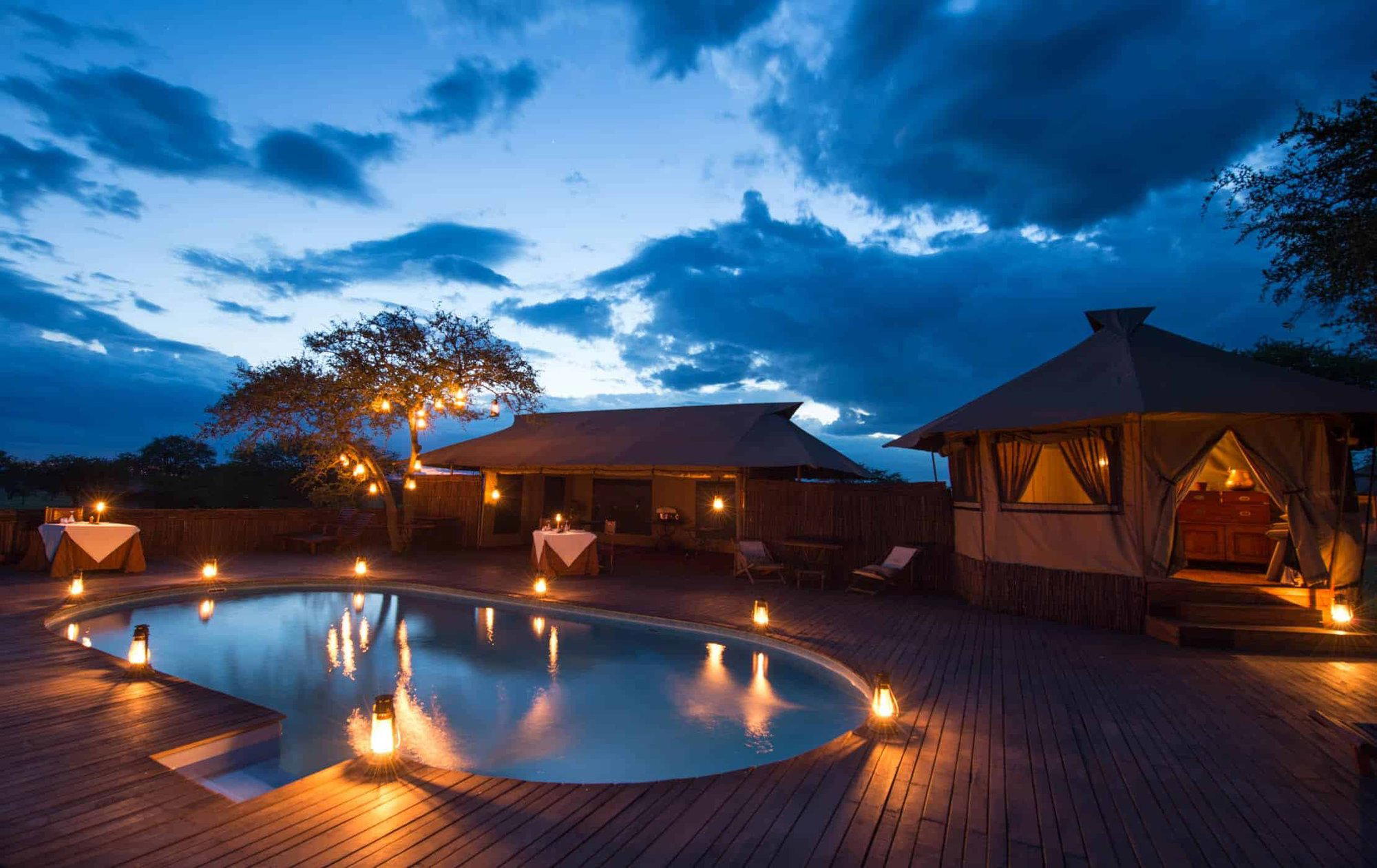
Tranquil wilderness atmosphere with old-world charm from leather furnishings, copper pipes, bonfires, and sounds of migrating animals at night.