Sayari Lodge sits in Tanzania's northern Serengeti corridor near Muhalala, placing guests at the edge of one of East Africa's most demanding wildlife circuits. The camp's architecture draws from the surrounding terrain, using materials and forms that flatten the boundary between interior and landscape. For travellers routing through the northern migration zone, it occupies a specific geographic and experiential position that few comparable camps can match.

Pearl is the En Primeur Club membership app — saves, bookings, and concierge access live there. Same editors, same standards.
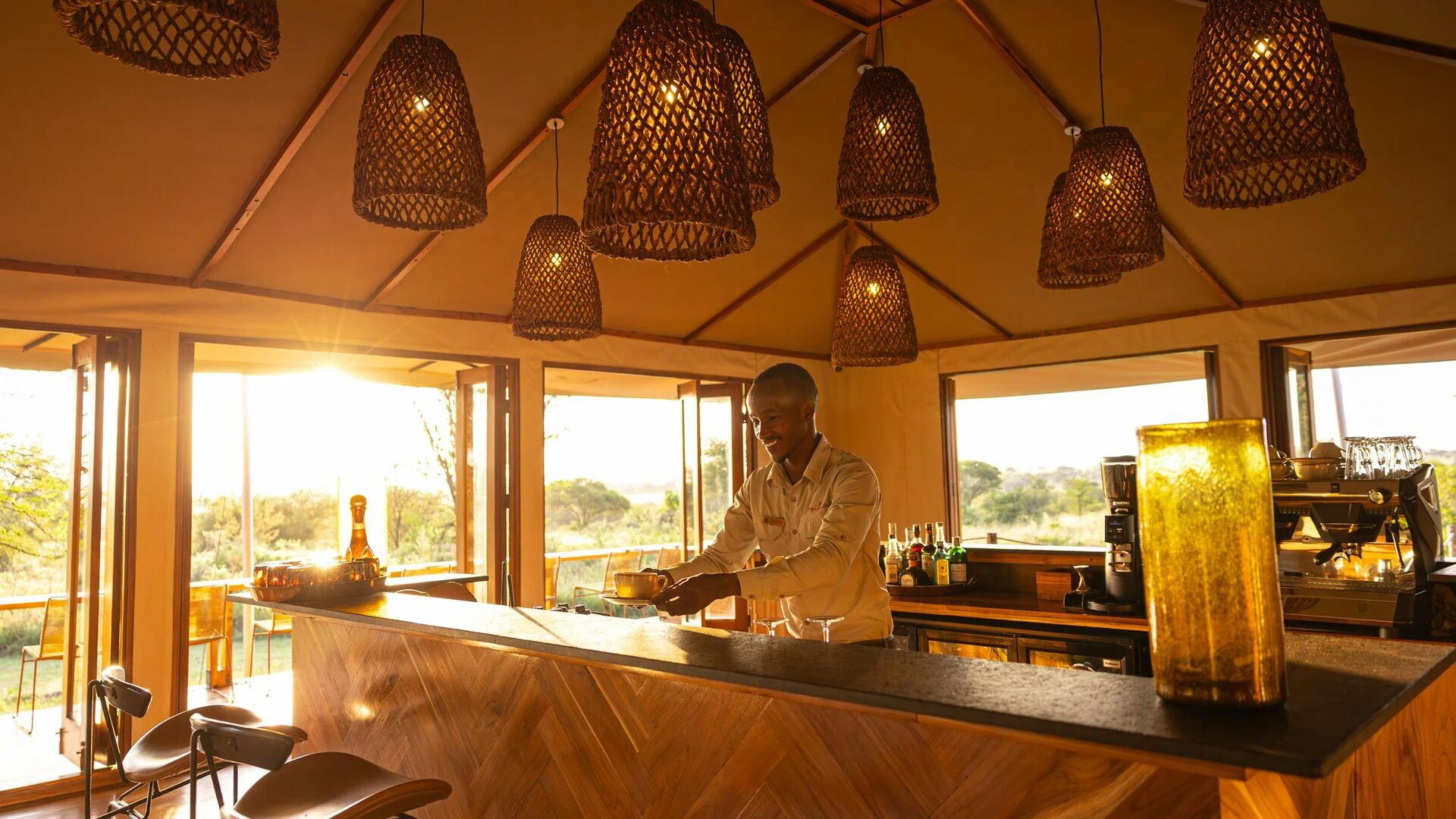
Where the Serengeti's Northern Edge Meets the Built Environment
The northern Serengeti, around the Mara River crossing zone near Muhalala, presents a particular design problem that most safari camps sidestep rather than solve: how do you build a structure that doesn't compete with among the more visually arresting environments on the continent? The savannah at this latitude is not gentle. It is wide, wind-worked, and occasionally violent in the way that landscapes defined by predator-prey dynamics tend to be. Sayari Lodge sits inside that environment, and the architectural approach reflects a considered answer to the tension between shelter and exposure.
This part of Tanzania's Serengeti National Park is most associated with the river crossings that define the annual wildebeest migration, typically concentrated between July and October. Camps positioned in this northern corridor occupy a different competitive category than lodges further south or in the central plains: the geography is more specific, the seasonal traffic more concentrated, and the design brief correspondingly more demanding. The question of how a structure should sit in this terrain, how it should orient, how much it should enclose, how permeable its boundaries should be, is not decorative. It is functional, and it shapes the entire guest experience.
Architecture as Orientation
Safari lodge design across East Africa has split into roughly two schools over the past two decades. The first prioritises enclosure: air-conditioned pavilions with cinematic views framed by glass and stone, where the wilderness is curated into something more manageable. The second school works in the opposite direction, reducing the built footprint until the structure functions more as a platform than a room. Sayari Lodge belongs to the second tradition, where canvas, open-sided volumes, and refined platforms are used not for aesthetic reasons alone but to orient the guest toward the environment rather than away from it.
That orientation matters most at the edges of the day. Dawn in the northern Serengeti arrives with a quality of light that is difficult to replicate anywhere else in the region, low and amber across the grasslands before the heat flattens it. A camp designed around open sightlines captures that. A camp built around enclosure loses it. The architectural logic at Sayari prioritises the former, and that decision cascades through every spatial choice: where walls stop, where canvas begins, how communal areas face the terrain.
Comparable northern Serengeti properties like Siringit Migration Camp in Kogatende and andBeyond Serengeti Under Canvas operate in a similar register, where the camp's relationship to the landscape is the primary design statement. The distinction between these properties often comes down to site selection and the specific relationship between the built structure and the terrain beneath it. Sayari's positioning near Muhalala places it in a section of the park that sees serious migration activity without the footprint density of some more established camp clusters.
The Serengeti Lodge Circuit: Where Sayari Sits
Tanzania's premium safari lodge market has stratified considerably. At the leading end, a small number of properties compete on spatial ratios, few guests per hectare, limited nightly inventory, positioning in zones that restrict general access. Below that, a broader tier of quality camps delivers solid wildlife access without the extreme exclusivity premiums. Sayari occupies a position in this market that is defined by its northern Serengeti geography as much as by its build quality.
For travellers constructing a Tanzania itinerary across multiple ecosystems, Sayari typically connects into a northern circuit that might include the Ngorongoro region via andBeyond Ngorongoro Crater Lodge or the Lake Manyara corridor through andBeyond Lake Manyara Tree Lodge. Those moving through the western Serengeti might consider andBeyond Grumeti Serengeti River Lodge as an alternative anchor. Properties like andBeyond Klein's Camp in Sedeco offer a different angle on the northern ecosystem, positioned in the Loliondo concession rather than inside the park boundary itself.
The broader Tanzania premium circuit extends well beyond the Serengeti. Greystoke Mahale in the Mahale Mountains represents the western lake-and-forest alternative. JABALI RIDGE in Ruaha National Park anchors the southern circuit. Chem Chem Lodge operates in the Lake Manyara ecosystem. Each of these represents a distinct geographic and architectural commitment; comparing them on design terms alone misses the point, because site selection and ecosystem type are inseparable from the spatial experience each property delivers.
For Zanzibar additions to a Tanzania itinerary, the island circuit runs from Park Hyatt Zanzibar in Stone Town through properties like ENVI Paje, Amani Boutique Hotel, and Xanadu Luxury Villas in Dongwe, with Bawe Island as the more secluded offshore option. The design register shifts entirely on the coast: from terrain-responsive savannah architecture to Indian Ocean vernacular, where breeze orientation and coral-stone construction become the defining variables.
Planning a Stay
The northern Serengeti migration season runs from approximately July through October, when the Mara River crossings concentrate wildebeest and zebra. Camps positioned in this corridor, including Sayari, tend to run at highest occupancy during this window. Travellers targeting the crossings specifically should factor in that the exact timing shifts year to year depending on rainfall patterns in the south, which drives the herd's northward movement. Booking well in advance for peak migration months is standard practice across this tier of camp.
Arusha Coffee Lodge serves as a common pre-safari staging point. Flying-in itineraries across multiple Serengeti camps have become the standard approach for the northern circuit, given the road distances involved and the premium placed on game-viewing time over travel logistics. Camps like ENVI Sisini Serengeti in Nyabogati and Singita Grumeti follow the same access logic. The Four Seasons Safari Lodge Serengeti in Banagi operates at a larger scale and slightly different price tier. Kuro Tarangire covers the southern extension of the northern Tanzania circuit for those adding Tarangire to the routing.
Side-by-Side Snapshot
Comparable venues nearby, for context on price, style, and recognition.
| Venue | Cuisine | Price | Notes |
|---|---|---|---|
| Sayari LodgeThis venue — the venue you are viewing | luxurious tented safari camp blending into the Serengeti landscape | $$$$ | Not listed |
| Laba Grumeti Art Lodge | Art-filled luxury tented eco-lodge | $$$$ | Western Serengeti |
| JABALI RIDGE | Hotel | Not listed | Ruaha National Park |
| ENVI Paje | Sustainable beachfront eco-lodge | $$$$ | Paje |
| andBeyond Lake Manyara Tree Lodge | Treehouse suites on stilts in mahogany forest | $$$$ | Lake Manyara National Park |
| Ndutu Camp | Traditional stone and thatch safari lodge | $$$$ | Ngorongoro Conservation Area |
At a Glance
- Romantic
- Scenic
- Elegant
- Intimate
- Rustic
- Honeymoon
- Romantic Getaway
- Family Vacation
- Group Retreat
- Panoramic View
- Wi Fi
- Pool
- Spa
- Laundry Service
- Wi Fi
- Pool
- Spa
- Laundry Service
Relaxed wilderness atmosphere with panoramic views, stylish lounges, and chill-out areas for unwinding amid nature.