
Michelin Selected
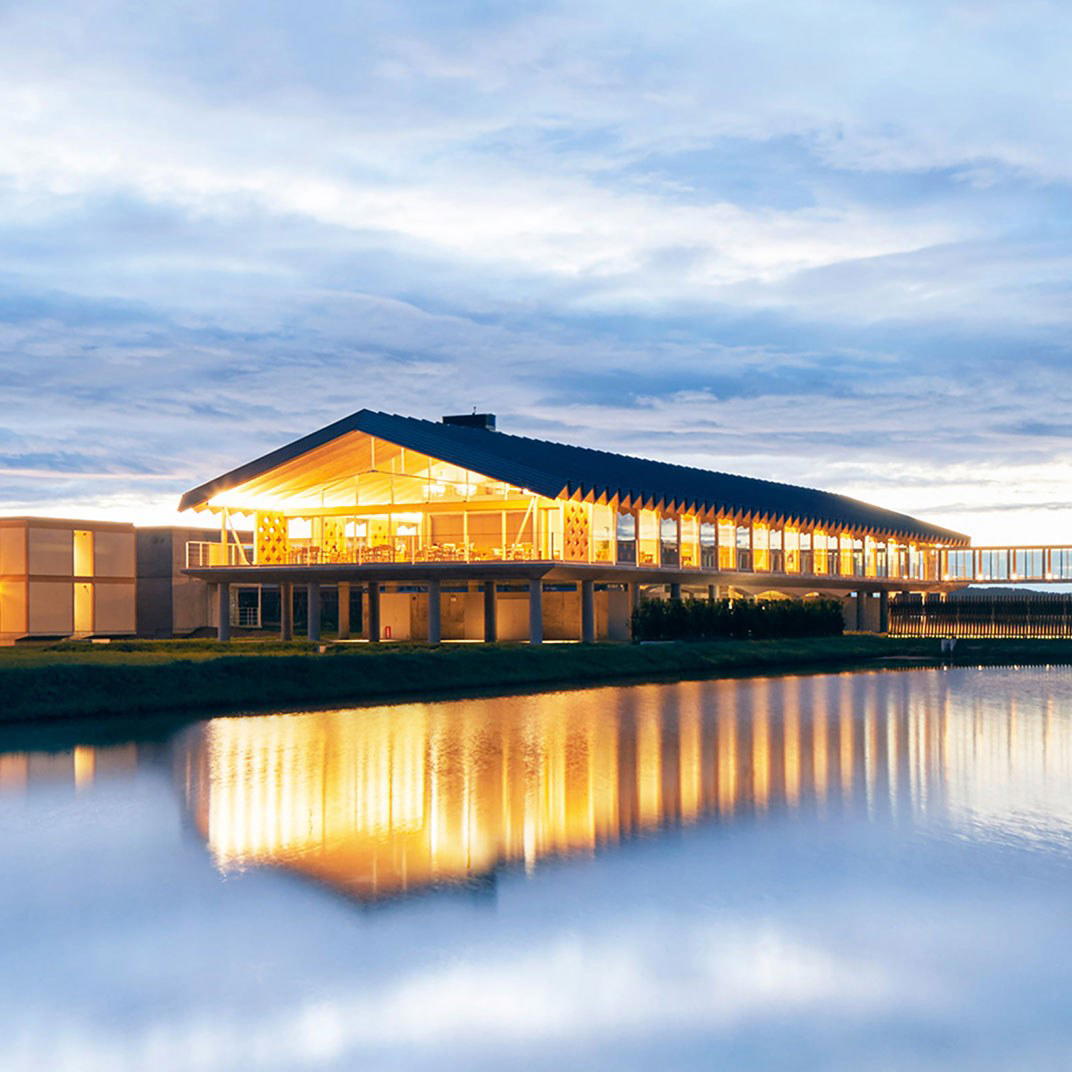
A Michelin Selected hotel in Tsuruoka, Shonai Hotel Suiden Terrasse sits amid the rice paddies of the Shonai Plain, where architecture dissolves into agricultural landscape. The property anchors itself to the food culture of Yamagata Prefecture, a region that has quietly become one of Japan's most serious dining destinations outside the major cities.

Pearl is the En Primeur Club membership app, where members save venues, book tables and use the concierge.
Rice Paddies, Rough Winters, and One of Japan's Most Serious Regional Hotels
There is a particular quality to the light over the Shonai Plain in the early morning: low, diffuse, filtered through paddy mist and the wide Yamagata sky. Shonai Hotel Suiden Terrasse sits directly within that agricultural frame, its architecture positioned so that the surrounding rice fields are not backdrop but primary view. The building reads as a long horizontal form, glass, timber, and water, dissolving the line between structure and terrain in a way that few resort hotels achieve without slipping into contrivance. This is architecture as editorial argument, and the argument is that Tsuruoka's food culture is serious enough to anchor a destination property.
That argument has been made with increasing force over the past decade. Tsuruoka holds a UNESCO Creative City of Gastronomy designation, one of only a handful of Japanese cities to carry it, and the region's identity rests on specific agricultural conditions: volcanic soil from Mount Chokai, cold winters that concentrate flavour in root vegetables and mountain greens, and centuries of Buddhist shojin ryori practice from Dewa Sanzan that built a culinary vocabulary out of restraint and wild ingredients. Suiden Terrasse sits inside that tradition while translating it for international-calibre guests. For broader context on the city's dining and hotel options, see our full Tsuruoka restaurants guide.
The Dining Programme: Where the Property Makes Its Case
Japan's Michelin Selected hotel category rewards consistency of experience rather than individual star turns, and the dining offer at Suiden Terrasse is where that consistency is most legible. The property orients its food programme around Shonai's specific ingredient ecology: the local rice varieties, the river fish, the mountain vegetables that define Yamagata table culture. This is not a hotel that imports a name chef to run a menu with no geographical tether. The relationship between kitchen and surrounding farmland is structural rather than decorative.
This approach places Suiden Terrasse inside a recognisable cohort of Japanese regional properties where the dining programme functions as the primary reason to travel rather than as a supporting amenity. Properties like Satoyama-Jujo in Niigata operate on comparable logic: the hotel exists to deliver deep access to a food culture that cannot be replicated in Tokyo. Suiden Terrasse makes the same case from a different agricultural base. The comparison with Amanemu in Mie is also instructive, both properties use local food culture as a differentiating argument, though Amanemu operates at a different price tier and scale.
For guests arriving from the major Japanese hotel circuit, the shift in register is deliberate. Properties like Bvlgari Hotel Tokyo or HOTEL THE MITSUI KYOTO operate in cities where dining culture is dense and plural. Suiden Terrasse asks a different question: what happens when you remove the city entirely and replace it with a single, specific agricultural landscape? The answer is a more concentrated version of Japanese seasonal cooking, where the sourcing story is measurable in kilometres rather than prefectures.
Design, Water, and the Logic of the Setting
The hotel's name announces its formal concept: suiden means rice paddy. The terrasse is the structural conceit that turns this into architecture. The building sits above shallow reflecting pools that mirror the surrounding fields, creating a visual grammar of repetition and flood, an echo of the paddy flooding cycles that govern the agricultural year in Shonai. This is not coincidental theming. Tsuruoka's identity as a food city is inseparable from its relationship to water: the Mogami River system, the snowmelt from Chokai and the Dewa mountains, the flat basin topography that makes intensive rice cultivation possible.
Within the Japanese regional luxury segment, design-led properties have multiplied significantly since the mid-2010s. Zaborin in Kutchan and Benesse House in Naoshima represent the more art-focused pole of that movement. Suiden Terrasse sits closer to the agricultural-vernacular register, alongside properties such as Nasu Mukunone in Nasu and Fufu Kawaguchiko in Fujikawaguchiko, where landscape is a deliberate programme element rather than a scenic amenity.
Tsuruoka in Context: Why This Region, Why Now
Tsuruoka sits in Yamagata Prefecture on the Sea of Japan coast, roughly four hours from Tokyo by shinkansen to Tsuruoka station via Niigata. The city has a population under 120,000 and receives a fraction of the international hotel traffic that flows through Kyoto, Hakone, or Niseko. That relative obscurity is partly demographic and partly infrastructural, but it is also a function of how Japanese food culture has been narrated internationally. The Dewa Sanzan pilgrimage temples, the shojin ryori tradition, and the specific agricultural conditions of the Shonai Plain are not yet legible to the broad international market in the way that Kyoto kaiseki or Tokyo omakase are.
That gap is closing. The UNESCO gastronomy designation has increased editorial coverage, and properties like Suiden Terrasse have given the city a hotel product capable of competing on the terms that matter to the international premium traveller. The comparison set worth holding in mind includes not just Japanese regional properties but globally distributed nature-integrated hotels where the food programme is inseparable from the landscape: Gora Kadan in Hakone and Asaba in Izu offer analogous models of tradition-rooted Japanese hospitality, while Nishimuraya Honkan in Kinosaki-cho represents the longer-established regional ryokan register that Suiden Terrasse partially inherits and partially reframes for a contemporary audience.
The closest comparison within Tsuruoka itself is Kameya Hotel, which operates in a more traditional ryokan format and draws a different guest profile. Suiden Terrasse occupies the design-hotel tier in a city where that category has almost no local competition, which makes the Michelin Selected recognition a meaningful signal about the property's position relative to its regional peers rather than merely a marker of general adequacy.
Planning Your Stay
The hotel is located at 23-1 Shimotorinosu, Kitakyoden, in Tsuruoka. The most practical access from Tokyo is the shinkansen to Niigata, then a limited express to Tsuruoka, with total journey times typically in the four-to-five-hour range. Seasonal timing matters here in a way that it does not for city hotels: spring brings the satoyama wild greens that are central to Shonai cooking, while autumn concentrates the harvest produce that defines the region's table. Winter access requires planning given Yamagata's heavy snowfall, but the landscape transformation from paddy green to snow-covered plain is itself a reason some guests time their visit for January or February. Room categories vary, and the reflecting-pool-facing orientations deliver the full architectural effect of the suiden concept. Guests arriving from the international hotel circuit who want to calibrate expectations should note that this is a design-forward property in a regional city rather than a full-service urban resort: the experience is concentrated and landscape-specific by design. Other Japan properties in a similar premium regional register include Fufu Nikko in Nikko, Kamenoi Besso in Yufu, Sekitei in Hatsukaichi-shi, Halekulani Okinawa, Jusandi in Ishigaki, Atami Izusan Karaku, Fufu Kyu-Karuizawa Restful Forest, The Hiramatsu Hotels & Resorts Ginoza, and GOTO RETREAT by Onko Chishin. For guests comparing against Europe's premier hotel tier, Badrutt's Palace Hotel in St. Moritz and Hôtel de Paris Monte-Carlo represent the opposite end of the urban-versus-landscape spectrum, while The Fifth Avenue Hotel in New York City illustrates how the Michelin Selected designation spans entirely different hospitality registers across the globe.
Price Lens
| Venue | Awards |
|---|---|
| Shonai Hotel Suiden TerrasseThis venue (the venue you are viewing) | Michelin Selected |
| Bvlgari Hotel Tokyo | 3 Michelin Keys · World's 50 Best #24 |
| Aman Kyoto | 2 Michelin Keys · World's 50 Best #74 |
| Aman Tokyo | 2 Michelin Keys · World's 50 Best #11 |
| Palace Hotel Tokyo | 3 Michelin Keys · World's 50 Best #73 |
| Amanemu | 3 Michelin Keys · La Liste Top Hotels |
Recognition history
Dated appearances from independent guides and award organizations, with the underlying list record or original source where available.
Michelin Selected
Michelin
Continue exploring
More in Tsuruoka
Hotels in Tsuruoka
All hotels in Tsuruoka →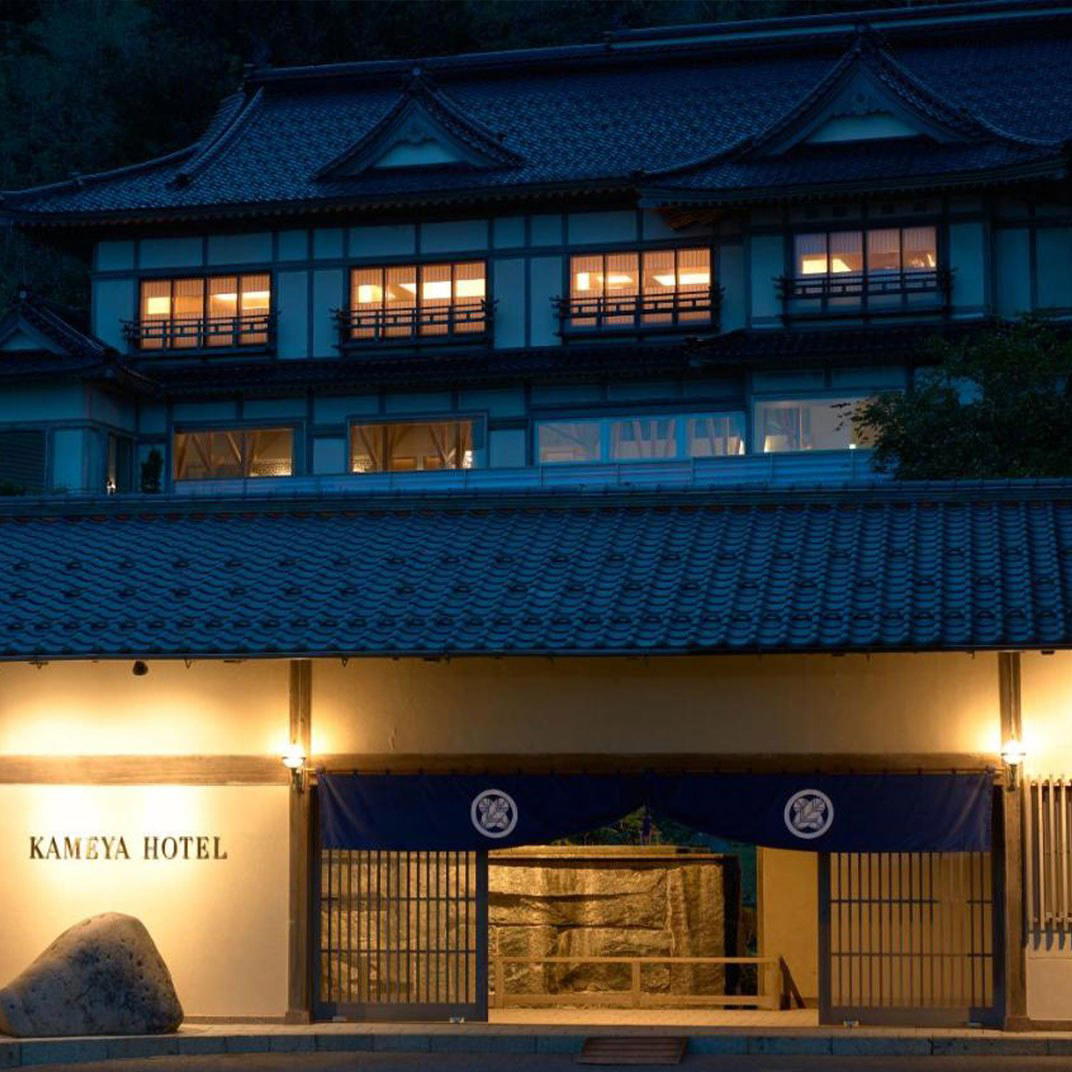
Details
- Scenic
- Modern
- Quiet
- Minimalist
- Romantic Getaway
- Family Vacation
- Weekend Escape
- Panoramic View
- Terrace
- Wi Fi
- Spa
- Pool
- Fitness Center
- Sauna
- Massage
- Restaurant
- Bar
- Mountain
- Garden
Bright, minimalist interiors with natural light, serene rice field surroundings, and a peaceful retreat atmosphere.