Shebara Resort




On a private Red Sea island off Umluj, Shebara Resort distinguishes itself as the first ultra-luxury property built entirely under Saudi ownership, placing 73 villa-style rooms across a setting where mirrored architectural orbs rise above the waterline. Recognised with 97.5 points on the 2026 La Liste Top Hotels ranking and Tatler Asia's 2025 Best Design award for the Middle East, it operates in a tier defined by low capacity and high design intention.
Pearl is the En Primeur Club membership app — saves, bookings, and concierge access live there. Same editors, same standards.
- Address
- Shebara Island, Umluj, Saudi Arabia
- Phone
- +966920011099
- Website
- shebara.sa
- Directions
- Get directions
 Saves & bookings on Pearl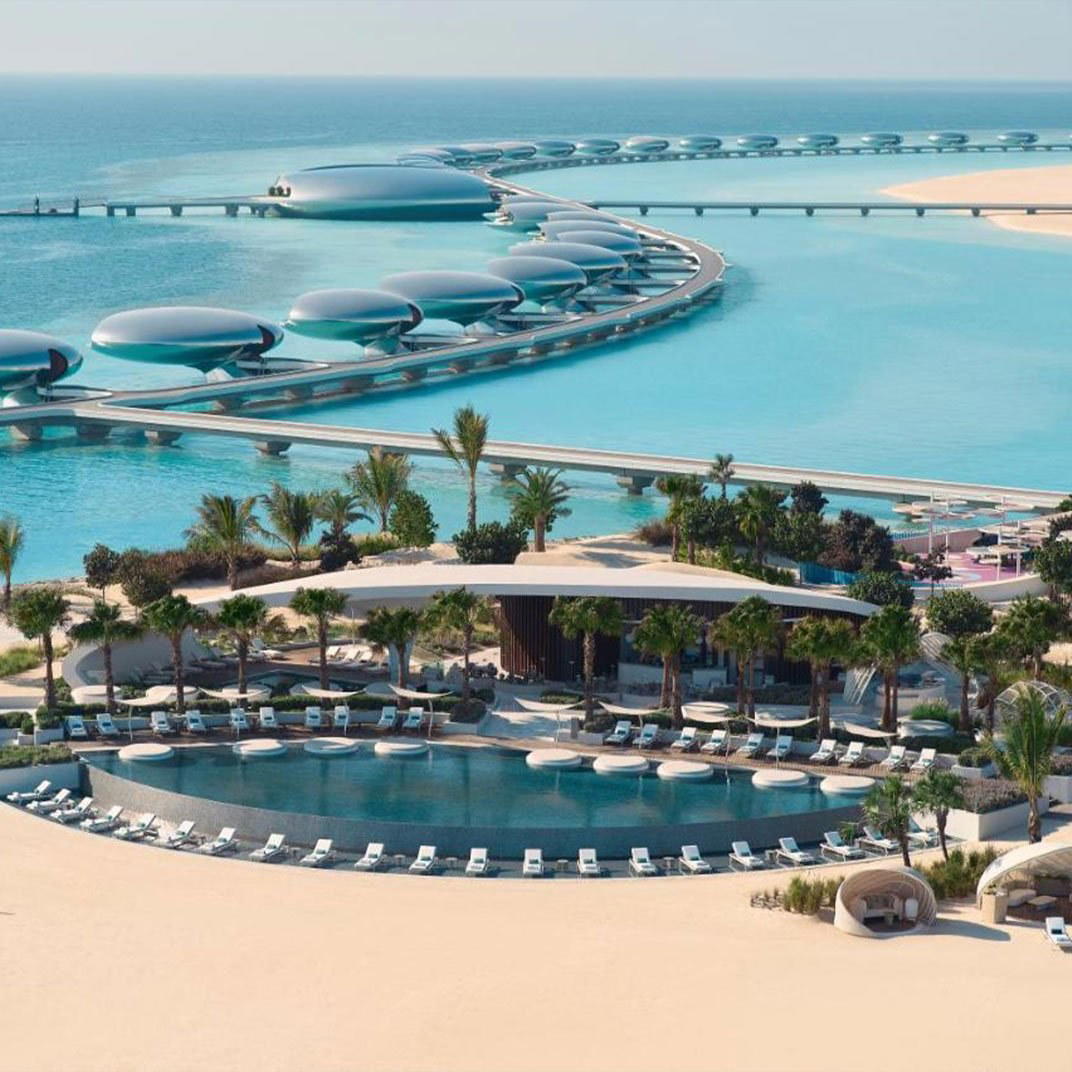
A Private Island in the Red Sea, Before the Crowds Arrive
Saudi Arabia's Red Sea coast is in the early stages of a transformation that has few regional precedents. Development is moving fast, international brands are arriving, and the infrastructure around Umluj is catching up to the ambition of the projects launching there. Shebara Resort arrived in that context as something distinct: a 73-room property on a private island, built and owned entirely by Saudi principals, without an international chain affixed to its name. That fact alone positions it differently from the wave of branded properties entering the market. Where properties like the InterContinental The Red Sea Resort and Six Senses Southern Dunes, The Red Sea carry the weight of global hospitality lineages, Shebara is operating without that scaffolding, and competing on design and setting.
What the Address Provides
The location is the argument. Shebara sits on a private island in the Red Sea, accessible from Umluj, a coastal town roughly 200 kilometres north of Jeddah on the Hejaz coast. The reefs in this stretch of the Red Sea remain among the least disturbed in the region: low commercial traffic, minimal coastal development until recently, and water conditions that have preserved marine ecosystems that more heavily visited sites further south have lost. For a resort where diving and water activities form a central part of the offer, that geography is a structural advantage, not a marketing claim.
The island setting also changes the arithmetic of privacy. At 73 rooms, the property is not a micro-resort, but island-bound capacity creates an effective ceiling on density that a mainland resort of the same size cannot replicate. Guests arriving by boat from Umluj are physically separated from the wider region's tourism flow in a way that properties like Desert Rock Resort, however compelling their own setting, cannot provide. The Red Sea as address, rather than backdrop, is what Shebara has built its proposition around.
The Design Recognition and What It Signals
In 2025, Tatler Asia awarded Shebara its Leading Design badge within the Leading Hotels Middle East list, a recognition that sits in the Tier B-to-C range for trust signals but is directionally useful. Design awards in the hospitality space typically track properties that are doing something architecturally or materially coherent enough to be discussed in those terms. Shebara's mirrored-orb structures, positioned above the waterline, are the image that has circulated most widely in coverage of the property: spherical, reflective, they register the sea and sky back at themselves in a way that photographs well but also, by most accounts, functions as a low-impact design approach that leaves the reef environment largely undisturbed beneath.
The La Liste Top Hotels ranking for 2026 placed the property at 97.5 points. La Liste draws on a broad aggregation of critical and consumer sources, so a high placement there reflects performance across multiple evaluative frames, not just one editorial perspective. For context, Saudi Arabia's luxury hotel sector is represented on that index across a growing number of properties, and Shebara's placement alongside the broader Saudi portfolio, which includes properties like Red Sea Shura Island (Four Seasons property) and AMAALA (Four Seasons property), indicates that independent Saudi ownership does not translate to a rankings disadvantage.
The Rate and What It Implies
At $2,480 per night, Shebara is pricing against the upper tier of Red Sea luxury rather than against regional mid-market supply. That figure places it in the same conversation as international-brand island resorts in the Maldives and Southeast Asia rather than against mainland Saudi properties. Comparisons to Maldivian overwater villa formats are not accidental: the orb-above-water visual language invites exactly that reference, and the pricing confirms it. Properties like Nammos Resort AMAALA in nearby Al Wajh are targeting similar international travellers, and the Red Sea as a luxury destination is increasingly being positioned against those established Indian Ocean circuits rather than within the regional Saudi hospitality market.
For the rate, guests receive villa-format accommodation with infinity pools and sea views in a self-contained setup. The activity offer runs from e-foiling to reef diving, consistent with what a private-island format at this price point requires. For broader reference on how Aman-style pricing without chain overhead operates, the approach has international precedents at properties like Aman New York and Aman Venice, where the no-chain logic runs alongside a deep archive of critical recognition to provide that assurance.
The Broader Saudi Context
Shebara does not sit in isolation. Saudi Arabia's hospitality sector is expanding across multiple formats and price points simultaneously, and the full picture of what is being built requires looking across the country. In Riyadh, Edge Riyadh Al Rabie represents the urban end of the new Saudi luxury portfolio. In AlUla, Banyan Tree AlUla operates in the heritage-landscape register. In Jeddah, Assila, A Luxury Collection Hotel anchors the more established coastal-city market. What Shebara adds to this picture is the private-island format, previously absent from the Saudi offering, and the proof of concept that a domestically owned property can compete for international travellers willing to spend at this level.
The Miraval The Red Sea to the north in Ḩanak and the broader Red Sea Project infrastructure extending down toward Umluj suggest that Shebara's early-mover position on the island format will face more competition as that development pipeline matures. For now, the relative scarcity of comparable private-island options on the Saudi Red Sea coast gives it a positional advantage that is worth weighing against the premium rate.
Planning a Stay
Umluj is accessible by road from Jeddah, with the drive taking roughly two to three hours depending on traffic and route conditions. Onward transfer to the island is by boat from the Umluj coast. One practical approach for international travellers is to fly into Jeddah and arrange ground transfer from there. Given the rate and the format, pre-booking activities, particularly diving access to the surrounding reefs, is advisable rather than assumed upon arrival. Guests with a longer Saudi itinerary in mind might also consider pairing a Red Sea stay with the mountain resort offer at Braira Abha or the pilgrimage-adjacent accommodation at Al Manakha Rotana Madinah.
The Essentials
Comparable venues nearby, for context on price, style, and recognition.
| Venue | Price | Notes |
|---|---|---|
| Shebara ResortThis venue — the venue you are viewing | $$$$ | Not listed |
| Six Senses Southern Dunes, The Red Sea | $$$$ | Southern Dunes, Sustainable luxury resort inspired by Nabataean heritage and desert architecture. |
| Desert Rock Resort | $$$$ | Desert Rock Mountain, Cliffside villas integrated into natural rocky landscapes |
| Waves Hotel | $$$$ | Umluj, Beachfront luxury resort with contemporary Arabic fusion. |
| InterContinental The Red Sea Resort - A Virtuoso Preview Property | $$$$ | Shura Island, Luxury beach resort on private island |
| Nujuma, a Ritz-Carlton Reserve | $$$$ | Ḩanak, Solar-powered private villas inspired by seashells and coral, blending futuristic and natural design on a private island. |
Recognition history
Dated appearances from independent guides and award organizations, with the underlying list record or original source where available.
Architizer A+Awards Popular Winner
Architizer A+Awards
La Liste Top Hotels
La Liste
Michelin 2 Keys
Michelin
Tatler Best Middle East: Best Design
Tatler
Tatler Best Design
Tatler
Tatler Listed in Best Hotels Middle East
Tatler
At a Glance
- Romantic
- Modern
- Scenic
- Sophisticated
- Elegant
- Minimalist
- Honeymoon
- Romantic Getaway
- Wellness Retreat
- Destination Wedding
- Celebration
- Beachfront
- Private Villa
- Infinity Pool
- Destination Spa
- Waterfront
- Panoramic View
- Private Dining
- Design Destination
- Wi Fi
- Pool
- Spa
- Fitness Center
- Room Service
- Concierge
- Business Center
- Kids Club
- Beach Access
- Massage
- Restaurant
- Bar
- Tennis Court
- Waterfront
- Wi Fi
- Pool
- Spa
- Fitness Center
- Room Service
- Concierge
- Business Center
- Kids Club
- Beach Access
- Massage
- Restaurant
- Bar
- Tennis Court
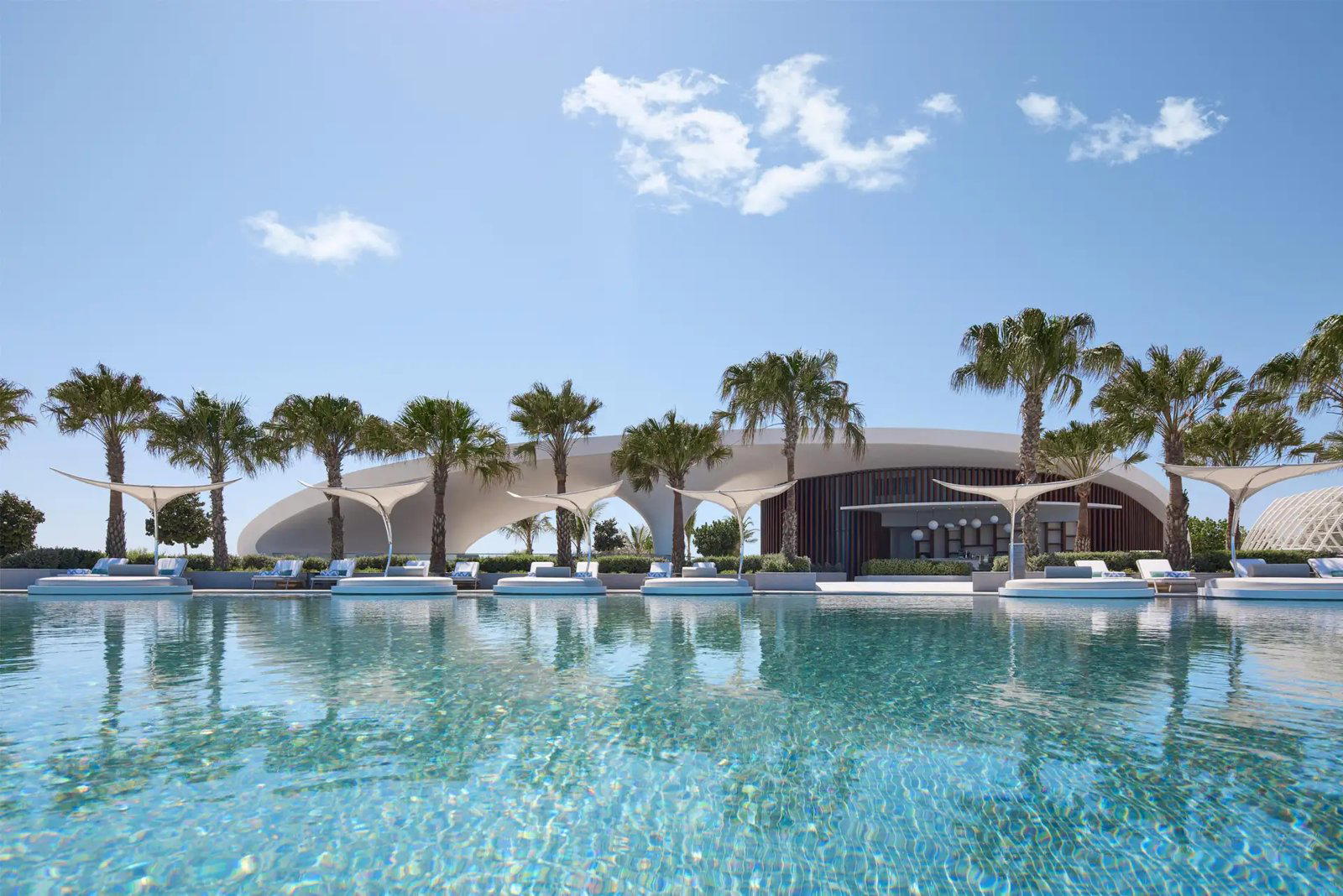
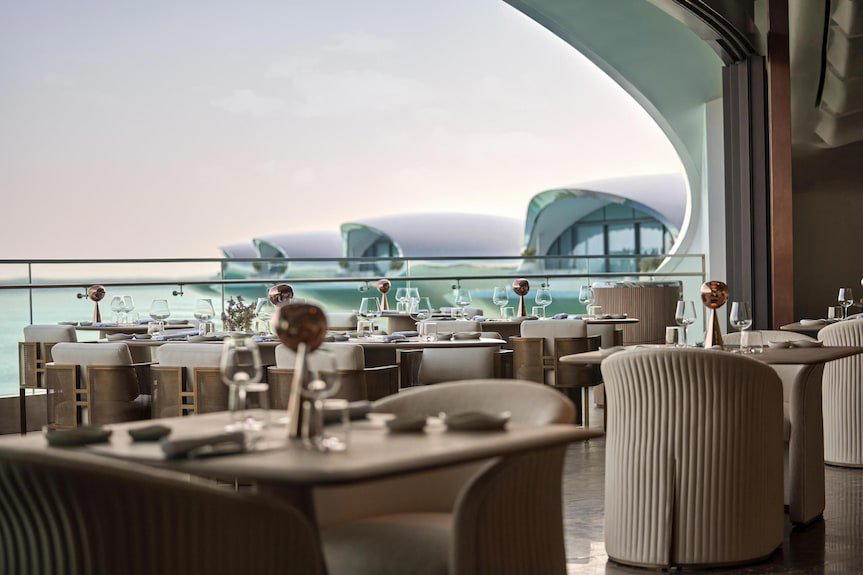
Serene and ethereal with curved architectural elements reflecting sky and sea; minimalist interiors with soft natural light; quiet, contemplative atmosphere punctuated by lively reef views and sunset moments at adults-only pools.