
Occupying a storied address on Teatro Street in Klaipėda's Old Town, Reja has become one of the city's most discussed gathering points for the creative community. The space bridges the city's Germanic architectural heritage with a contemporary cultural programme, functioning as both a social hub and a window into Lithuania's evolving cultural identity. For visitors exploring the Baltic coast, it offers a grounded sense of place that few venues in the city match.
Pearl is the En Primeur Club membership app — saves, bookings, and concierge access live there. Same editors, same standards.
- Address
- Teatro St. 1, Klaipėda 91247, Lithuania
- Website
- marriott.com
- Directions
- Get directions
 Saves & bookings on Pearl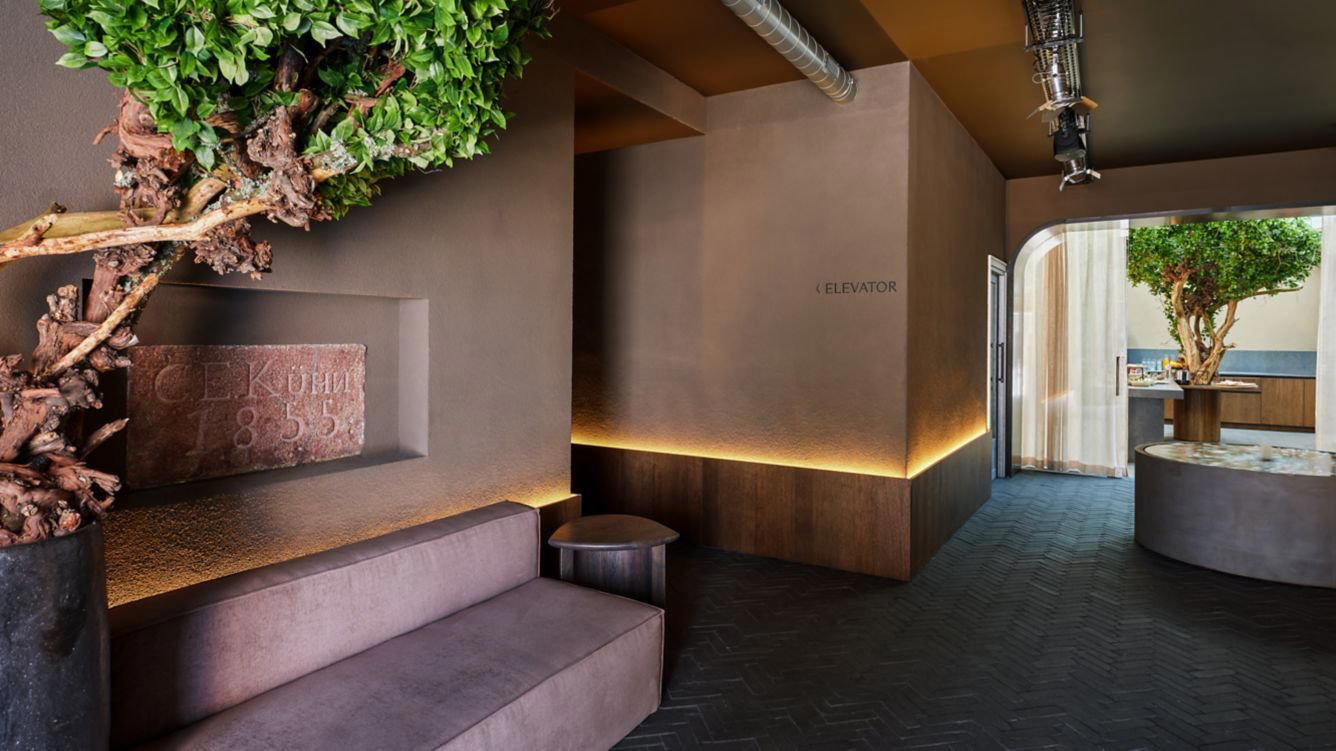
Old Town Atmosphere, New Civic Energy
Klaipėda's Old Town carries an architectural grammar unlike anywhere else in Lithuania. The half-timbered facades, cobbled lanes, and the persistent shadow of the city's Hanseatic and Prussian past give this quarter a texture that Vilnius, with its Baroque weight, simply cannot replicate. It is in this context that Teatro Street operates as one of the neighbourhood's more charged addresses: a short run of buildings where the city's cultural life has historically condensed. Reja sits at number one, a position that is less a coincidence than a statement about the role the space has chosen to play.
The building's Old Town setting means guests arrive through a streetscape shaped by centuries of German, Lithuanian, and Soviet-era intervention. What makes the neighbourhood's architecture particularly interesting is the layering: restorations carried out since Lithuanian independence in 1990 have been uneven, leaving some facades in careful period condition and others in various states of interpretation. Venues that occupy these spaces inherit that complexity, and how they respond to it tends to define their character more than any interior design decision made from scratch.
Design as Cultural Argument
In the Baltic states, the question of how to occupy historical space is never purely aesthetic. It is political, in the quiet sense: a decision about which version of a city's past to foreground and which to let recede. Tallinn's Old Town has largely resolved this through heavy tourism infrastructure. Riga's Art Nouveau district frames it through architectural conservation. Klaipėda, smaller and less internationally trafficked, has more room for ambiguity, and venues like Reja appear to occupy that ambiguity deliberately.
The description attached to Reja positions it as a hub for cultural exchange and a gathering point for the creative community, language that in many cities would read as promotional shorthand. In Klaipėda, it carries more weight. The city has a relatively compact arts and intellectual scene concentrated around the Klaipėda Drama Theatre, the university quarter, and a cluster of independent spaces in and around the Old Town. A venue on Teatro Street that functions as a genuine connector within that network occupies a specific and earned position, not a generic one. The building's physical address, directly in the theatre district, makes that role architecturally legible before anyone walks through the door.
For points of comparison within Lithuania's premium hospitality register, the renovation logic at Hotel Pacai in Vilnius offers useful contrast: that property reactivated a seventeenth-century Dominican monastery through high-specification restoration, anchoring its identity in Baroque heritage while accommodating a contemporary programme. Reja's Old Town context is less grand in scale but operates on a similar principle, that the physical envelope of a space pre-loads its cultural meaning, and that a thoughtful operator works with that inheritance rather than against it. Elsewhere in the EP Club portfolio, properties like Castello di Reschio in Lisciano Niccone and Cipriani, A Belmond Hotel, Venice illustrate how heritage architecture can be reframed for contemporary use without losing historical legibility.
The Creative Community as Guest Profile
Spaces that describe themselves as hubs for creative communities in mid-sized European cities tend to bifurcate quickly: they either develop a genuine, locally rooted programme with recurring participants, or they settle into a visual identity that borrows the language without the substance. The distinction is usually visible in the room. A genuine creative hub has uneven energy, purposeful conversation, and a sense that something is being worked out rather than performed. The description of Reja as an inspiring gateway to the past and a touchstone to Lithuania's future is ambitious framing, but it points toward the kind of dual temporal function that spaces at this intersection of heritage and contemporary culture can genuinely serve.
Klaipėda is worth understanding as a city in transition. As Lithuania's only seaport, it has an economic identity distinct from Vilnius and Kaunas, and its cultural self-understanding has historically been shaped by that difference. The city's German-speaking past, its post-war Soviet character, and its post-independence Lithuanian reclamation are all live threads in the fabric of public life here. A venue that takes those threads seriously, rather than simply aestheticising the Old Town streetscape, has the potential to function as something more substantive than a coffee shop with exposed brick.
Planning a Visit
Reja is located at Teatro Street 1, Klaipėda 91247, placing it at the centre of the Old Town and within easy walking distance of the Klaipėda Drama Theatre and the main pedestrian routes through the historic quarter. For those combining a visit to Klaipėda with wider Lithuanian travel, Esperanza Lake Resort in Trakai offers a well-regarded lakeside base further inland, and Vilnius provides the country's broadest accommodation range, including Hotel Pacai for those who want to stay within a heritage-restored property consistent in spirit with Klaipėda's Old Town character.
Klaipėda's summer season, which runs roughly from June through August, brings significantly higher visitor numbers and a more active cultural calendar, making that window the period when Reja's role as a gathering point is likely to be most animated. The shoulder months of May and September offer a quieter version of the same city with most venues and attractions still operating.
For those who arrange travel around cultural programming rather than accommodation alone, it is worth checking the Klaipėda Drama Theatre's schedule in parallel, as the two institutions share both a neighbourhood and, based on Reja's positioning, an overlapping audience. Our full Klaipėda restaurants guide covers the wider Old Town dining and drinking scene for those building a longer itinerary around the city. Internationally, EP Club members planning culturally anchored travel in this register may also find reference points in Casa Maria Luigia in Modena, Hotel Sacher Wien in Vienna, and HOTEL THE MITSUI KYOTO in Kyoto, each of which uses historical architecture and cultural positioning in ways that illuminate what Reja is attempting at a smaller civic scale.
How Reja Klaipėda compares with similar nearby venues.
| Venue | Awards |
|---|---|
| Reja | 2026 Design Hotels Member - Reja |
Recognition history
Dated appearances from independent guides and award organizations, with the underlying list record or original source where available.
Design Hotels Member
Design Hotels
At a Glance
- Classic
- Elegant
- Romantic
- Sophisticated
- Romantic Getaway
- Weekend Escape
- Business Trip
- Waterfront
- Historic Building
- Design Destination
- Terrace
- Golf Course
- Wi Fi
- Restaurant
- Bar
- Business Center
- Room Service
- Concierge
- Laundry Service
- Golf Course
- Waterfront
- Street Scene
- Wi Fi
- Restaurant
- Bar
- Business Center
- Room Service
- Concierge
- Laundry Service
- Golf Course
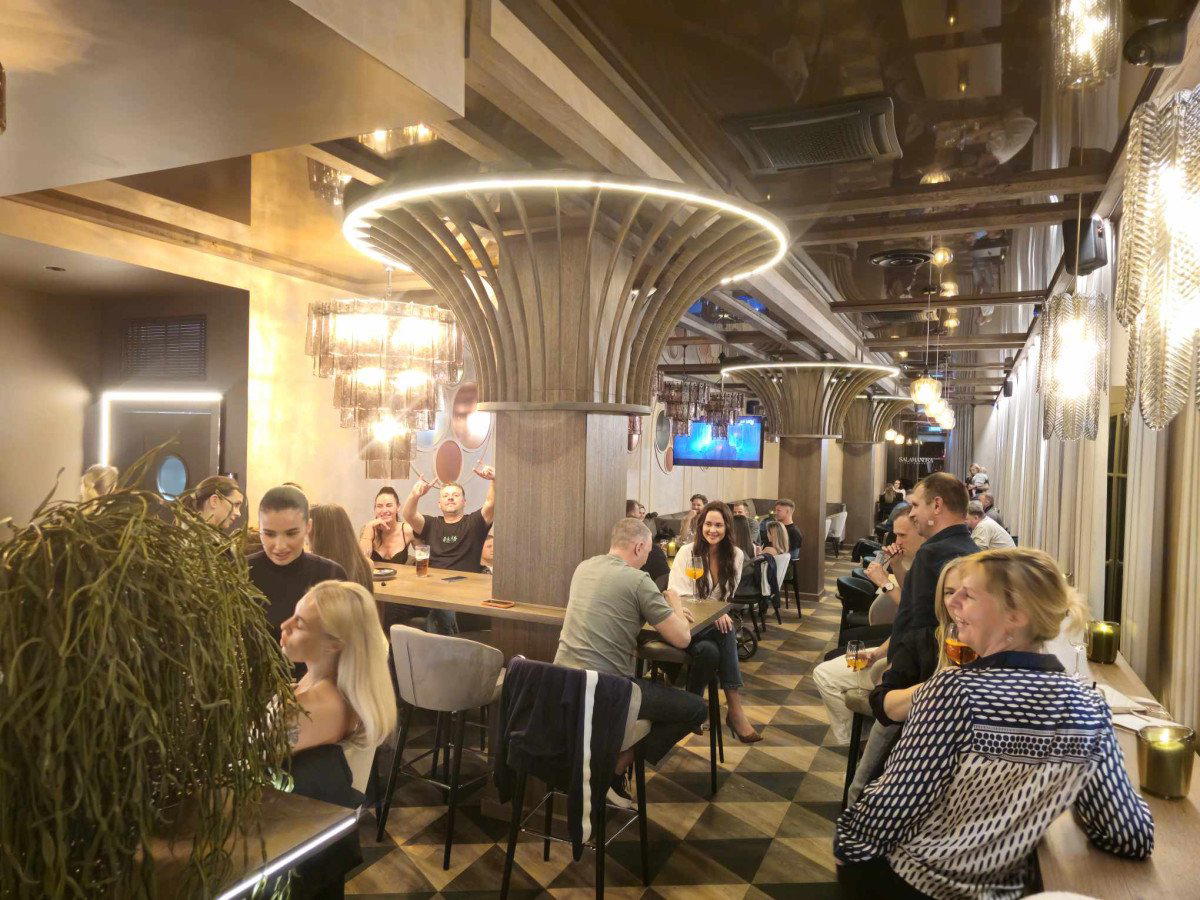
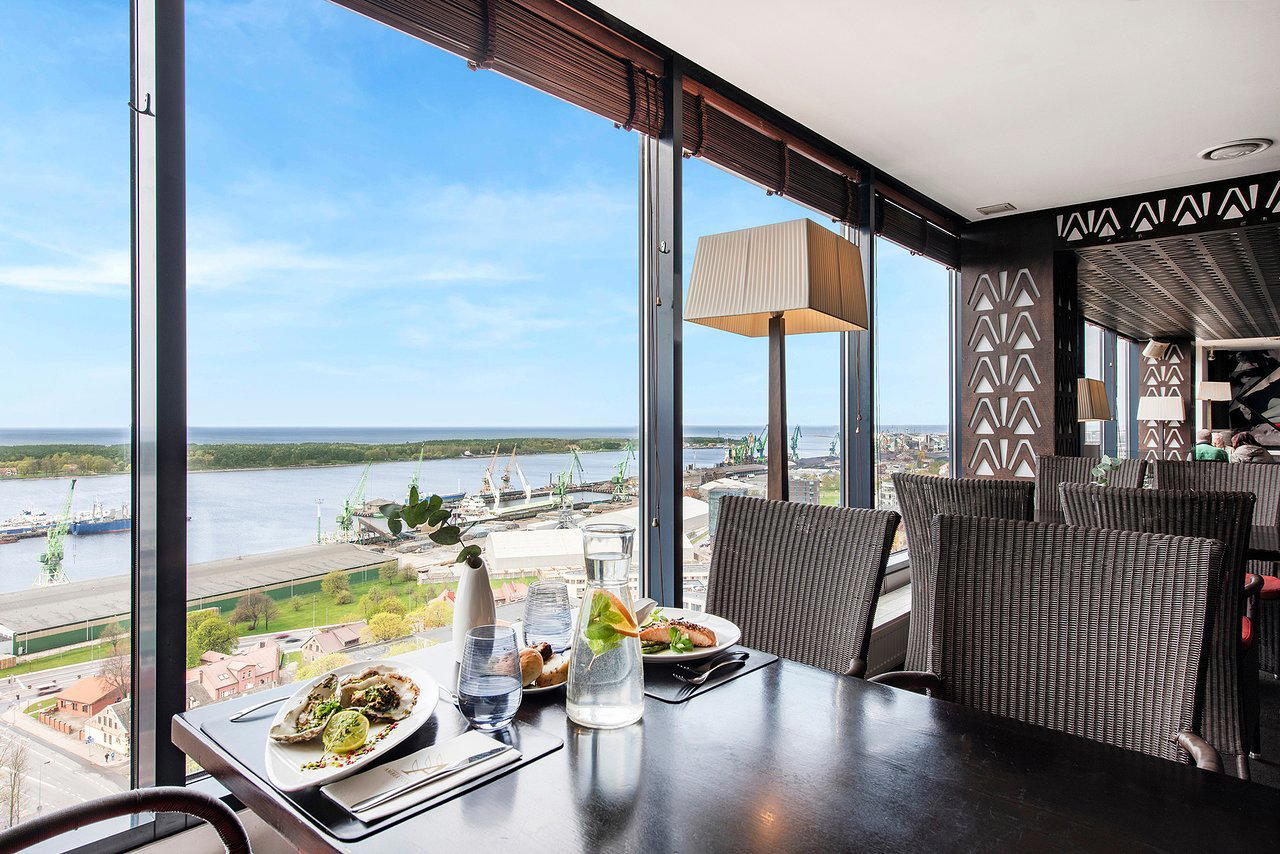
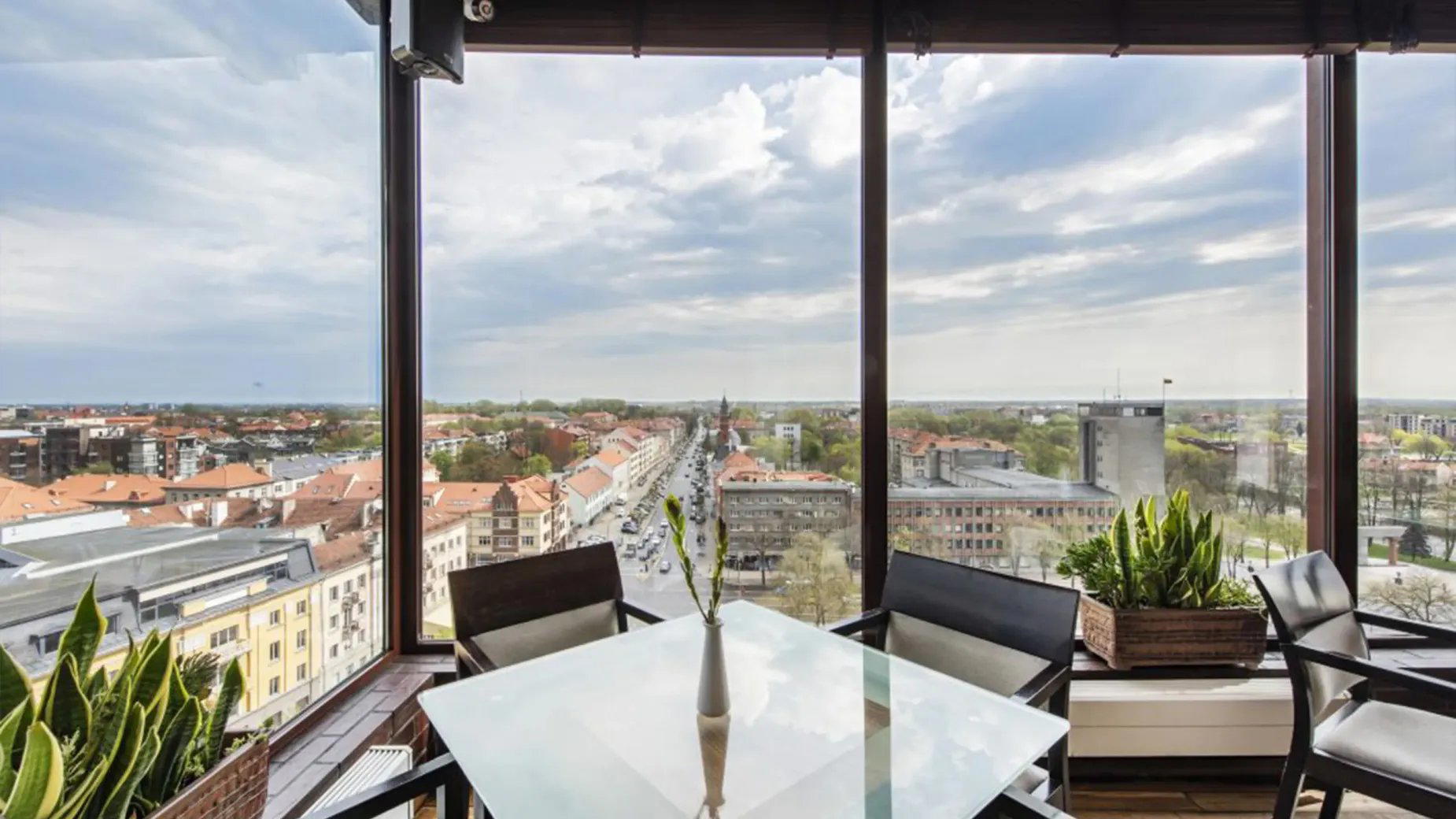
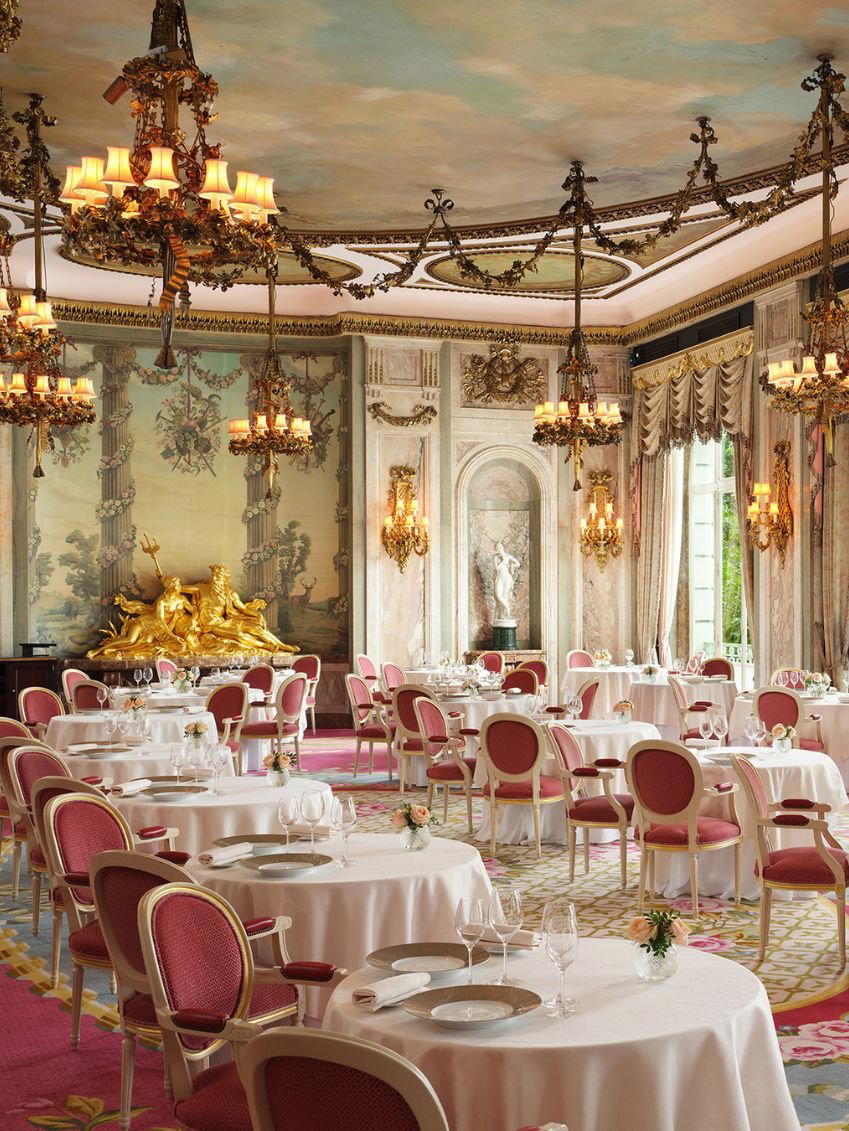
Warm and inviting with theatrical lighting, exposed wooden beams echoing 18th-century architecture, and a blend of romantic soft details with modern industrial elements including authentic brick walls and metal accents from the city's port heritage.
Know Before You Go
- Getting there
- Teatro St. 1, Klaipėda 91247, Lithuania