Refugium Lunz

Michelin Selected · Mr & Mrs Smith Seal of Approval
Michelin Selected and rooted in the quiet alpine rhythms of Lower Austria's Lunz am See, Refugium Lunz operates as a season-led basecamp where sauna sessions, lake swims, and wildflower hikes frame the day as much as the table does. Regional cuisine and fresh-baked goods anchor the food offering, while a terrace position above the river keeps the setting grounded in its landscape.

Pearl is the En Primeur Club membership app — saves, bookings, and concierge access live there. Same editors, same standards.
Where the Ybbstal Alps Set the Tempo
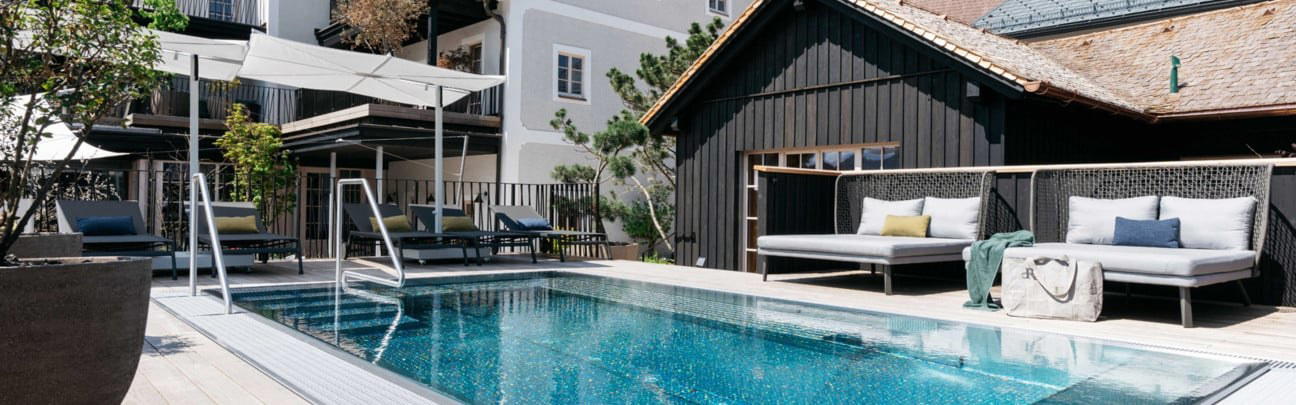
There is a particular type of alpine property that resists the language of resort programming. No waterslide towers, no conference suites, no branded wellness circuits delivered on a laminated schedule. Refugium Lunz, in the village of Lunz am See at the eastern edge of the Ybbstal Alps, belongs to that quieter cohort: properties where the surrounding landscape does most of the curating, and the building's role is to give you somewhere composed to return to. The Michelin Guide selected it in 2025, placing it among a category of Austrian addresses recognised less for scale than for coherence between place, food, and experience.
Lunz am See is not a famous resort town. It sits in Lower Austria's Eisenwurzen, a region of forested ridges and clear-water lakes that has never competed for the same attention as the Salzkammergut or the Arlberg. That relative obscurity shapes what you find here. The lake, the Lunzer See, is glacially formed and largely undeveloped, and the village around it has remained small enough that the rhythm of arrival still registers as a decompression rather than a transfer between urban densities. Kirchenplatz 3, the address of Refugium Lunz, sits at the centre of that village fabric, within the historic square.
The Physical Argument for This Kind of Place
The design conversation in Austrian alpine hospitality has moved in two broad directions over the past decade. One route follows the high-specification spa-resort model, with contemporary concrete-and-glass architecture, treatment menus calibrated to international wellness trends, and a visual language assembled more from global luxury benchmarks than from local material culture. The other route insists on the existing building, the existing landscape, and a more selective intervention. Refugium Lunz sits in the second camp. The property's physical presence on the Kirchenplatz implies integration with the village rather than separation from it, a choice that carries architectural weight in a region where the temptation to build a self-contained compound is real.
The hygge-inflected character described by the Michelin entry is not incidental to the experience; it is the design philosophy made domestic. In alpine hospitality, hygge as an operational principle means reducing the distance between the guest and the immediate sensory environment: a sauna oriented toward the mountain view, a terrace where the river is audible and visible, baked goods available without ceremony. These are spatial and service decisions as much as aesthetic ones, and they produce a property whose comfort is tactile rather than declarative. Compare this with the more theatrical approaches at properties like Rosewood Schloss Fuschl or the urban grandeur of Hotel Sacher Wien, and the difference in register becomes clear: Refugium Lunz is not competing for spectacle.
Seasons as the Structural Spine
Austrian alpine properties in this category live and die by their relationship to the calendar, and Refugium Lunz makes that relationship explicit. Winter positions the property around ski access and thermal recovery: days on snow, sauna sessions facing the peaks, the cold-warm oscillation that defines high-altitude winter tourism in this part of Europe. Summer inverts the agenda entirely. The Lunzer See, known for its clarity and low water temperatures, offers lake swimming of a kind that has largely disappeared from more developed resort lakes. Wildflower hiking through the surrounding meadows fills the hours that skiing occupies in January.
What distinguishes this from a venue that simply operates across both seasons is the specificity of what each season enables. The sauna with a mountain view is not a summer amenity repurposed for winter; the lake swim is not a token gesture toward nature tourism. These are the activities the geography actually supports at their respective times of year, and the property's value proposition follows that rather than creating a synthetic year-round program. For the Austrian alpine hotel category broadly, this kind of seasonal specificity sits closer to the approach taken by smaller, owner-managed properties than to the major resort groups. It is worth comparing with how seasonal programming works at addresses like Naturhotel Waldklause in Längenfeld or Alpen-Wellness Resort Hochfirst in Obergurgl, both of which operate within the same regional hospitality tradition but in more heavily touristed valleys.
The Table as Region
Regional cuisine in Lower Austria draws from a larder defined by freshwater fish, orchard fruit, game, and the dairy production of its upland pastures. The Michelin entry for Refugium Lunz calls out regional cuisine specifically, alongside fresh-baked cakes available for guests to help themselves to and a terrace setting above the river where a glass of Riesling marks the end of an afternoon. These are not incidental details. In the Austrian context, Riesling from the Wachau or the Kamptal, both within reasonable distance of this part of Lower Austria, carries a regional identity as precise as the landscape that produces it. Placing that glass on a terrace above the Ybbs river is an editorial decision about where the property sits in relation to its surroundings.
The self-service cake culture described in the Michelin notes is a design choice with implications for the room. Properties that make food available without a transactional moment, without a waiter, a menu, a cover charge, are making a statement about the kind of domesticity they intend to provide. It is a detail more common in smaller, family-run Austrian houses than in the broader luxury hotel category, and it places Refugium Lunz firmly within a tradition of generous, low-ceremony hospitality that the region has historically done well.
Planning a Stay
Lunz am See is reachable from Vienna in roughly two hours by car via the B25 through the Ybbstal, making it a viable long weekend from the capital without requiring a flight. The village has limited accommodation options overall, which means Refugium Lunz operates without the competitive noise that surrounds properties in Zell am See, St. Anton, or the Salzkammergut towns. Booking directly through the property is advisable given its scale; the Michelin Selected designation for 2025 has brought it additional visibility, and availability in peak summer and winter weeks is leading secured well in advance. For guests exploring the broader Austrian alpine hotel scene, the contrasts with higher-profile addresses, from the Hotel Schloss Seefels on the Wörthersee to Grand Tirolia Kitzbühel in the Tyrol, help clarify what Refugium Lunz is actually offering: access to a less-trafficked alpine region, season-specific activities, and a physical environment calibrated for recovery rather than performance.
Other Austrian alpine properties worth considering in context include Hotel Almhof Schneider in Lech, LEADING Hotel Hochgurgl, Aktiv & Wellnesshotel Bergfried in Tux, and SPA-HOTEL Jagdhof in Neustift. For a broader view of regional options, our full Lunz am See guide covers the wider area. Further afield in the Austrian and Alpine context, Schloss Mönchstein in Salzburg, Nidum Hotel in Seefeld, Das Central in Sölden, Falkensteiner Schlosshotel Velden, Bergblick in Grän, Sportresidenz Zillertal, Hotel Kontor in Hall in Tirol, Grand Resort Zürserhof, Family Nature Resort Moar Gut, Chalet Untersberg, and Hotel Das Weitzer in Graz each represent distinct positions within the regional hospitality range. For those extending travel beyond the Alps, Badrutt's Palace Hotel in St. Moritz and Hôtel de Paris Monte-Carlo offer instructive contrasts in how European alpine and coastal luxury operate at very different scales, as does The Fifth Avenue Hotel for transatlantic reference.
Comparable Venues
Comparable venues nearby, for context on price, style, and recognition.
| Venue | Cuisine | Price | Awards | Notes |
|---|---|---|---|---|
| Refugium LunzThis venue — the venue you are viewing | Historic boutique hotel harmoniously blending centuries-old architecture with contemporary design. | $200–300 | Michelin Selected · Mr & Mrs Smith Seal of Approval | Not listed |
| Hotel Das Weitzer | Contemporary classic grand hotel with family-run heritage. | $100–200 | Michelin Selected | Gries |
| Gut Sonnberghof | Contemporary classic nature hotel with organic farm integration | $300–500 | Michelin Selected | Mittersill |
| SOULSISTERS' Hotel | Modern alpine design hotel combining chic style with relaxed vibes | $200–300 | Michelin Selected | Kaprun center |
| Chalet Untersberg | Traditional Austrian chalet-style hotel | Not listed | Not listed | Groedig |
| Naturresort PURADIES | Alpine nature resort blending traditional farmhouse with modern chalets and wellness facilities. | $300–500 | Michelin Selected | Leogang |
Recognition history
Dated appearances from independent guides and award organizations, with the underlying list record or original source where available.
Michelin Selected
Michelin
Mr & Mrs Smith Seal of Approval
Mr & Mrs Smith
Continue exploring
More in Lunz Am See
Restaurants in Lunz Am See
All restaurants in Lunz Am See →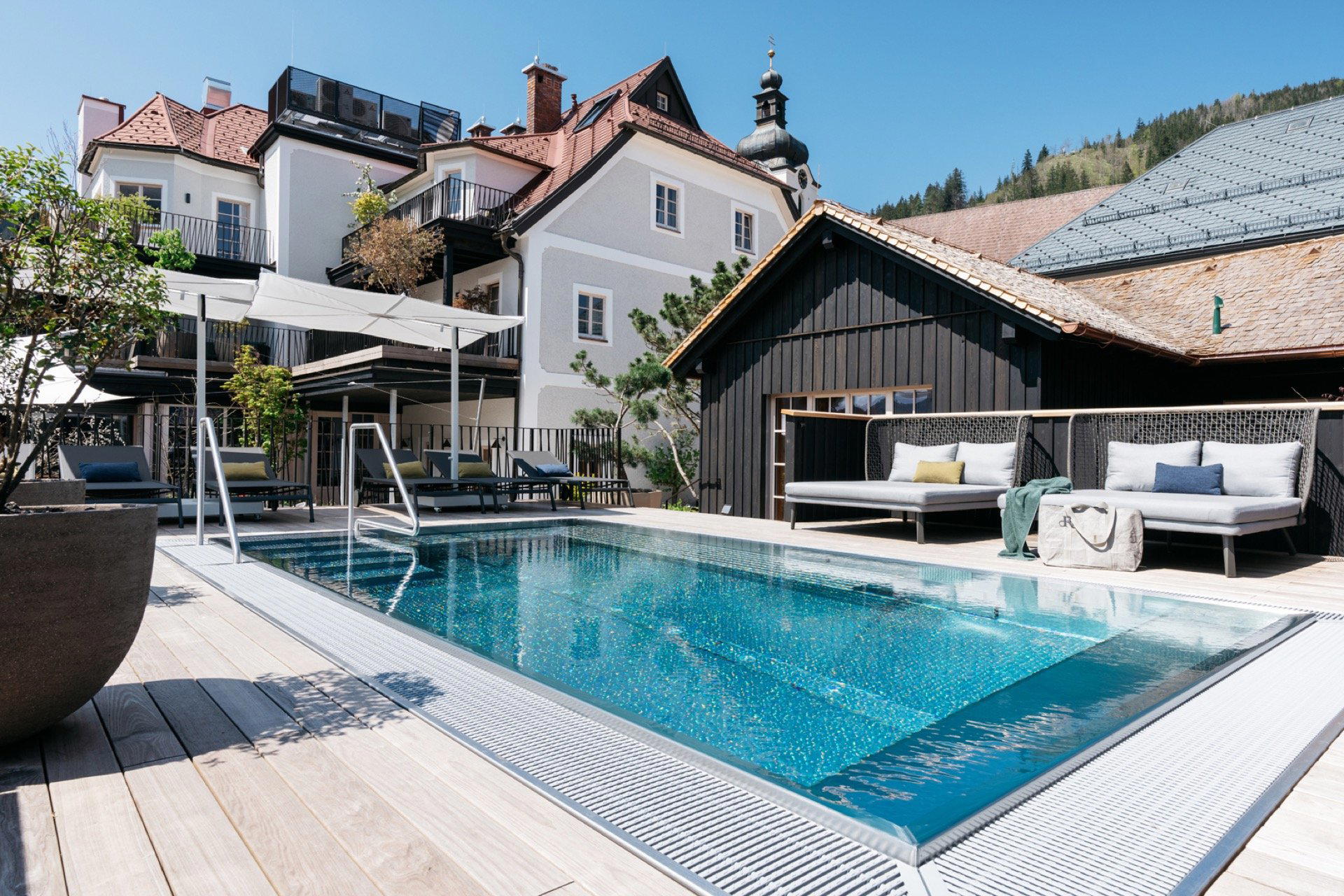
Details
- Quiet
- Scenic
- Cozy
- Rustic
- Intimate
- Romantic Getaway
- Wellness Retreat
- Weekend Escape
- Panoramic View
- Terrace
- Historic Building
- Wi Fi
- Pool
- Sauna
- Fitness Center
- Spa
- Restaurant
- Garden
- Room Service
- Waterfront
- Mountain
Warmly lit common spaces with vaulted arches, pale wood floors, crisp white bedding, and natural light creating a contemplative and cozy historic atmosphere.