Rancho do Peixe

A Michelin Selected property on the beach in Jericoacoara, Rancho do Peixe operates within the small tier of design-conscious pousadas that define the village's accommodation identity. The architecture leans into raw local materials and open-air structure, placing it alongside properties like Vila Kalango and Casa Na Praia as part of Jeri's low-key, high-craft hospitality scene.
 Discover on Pearl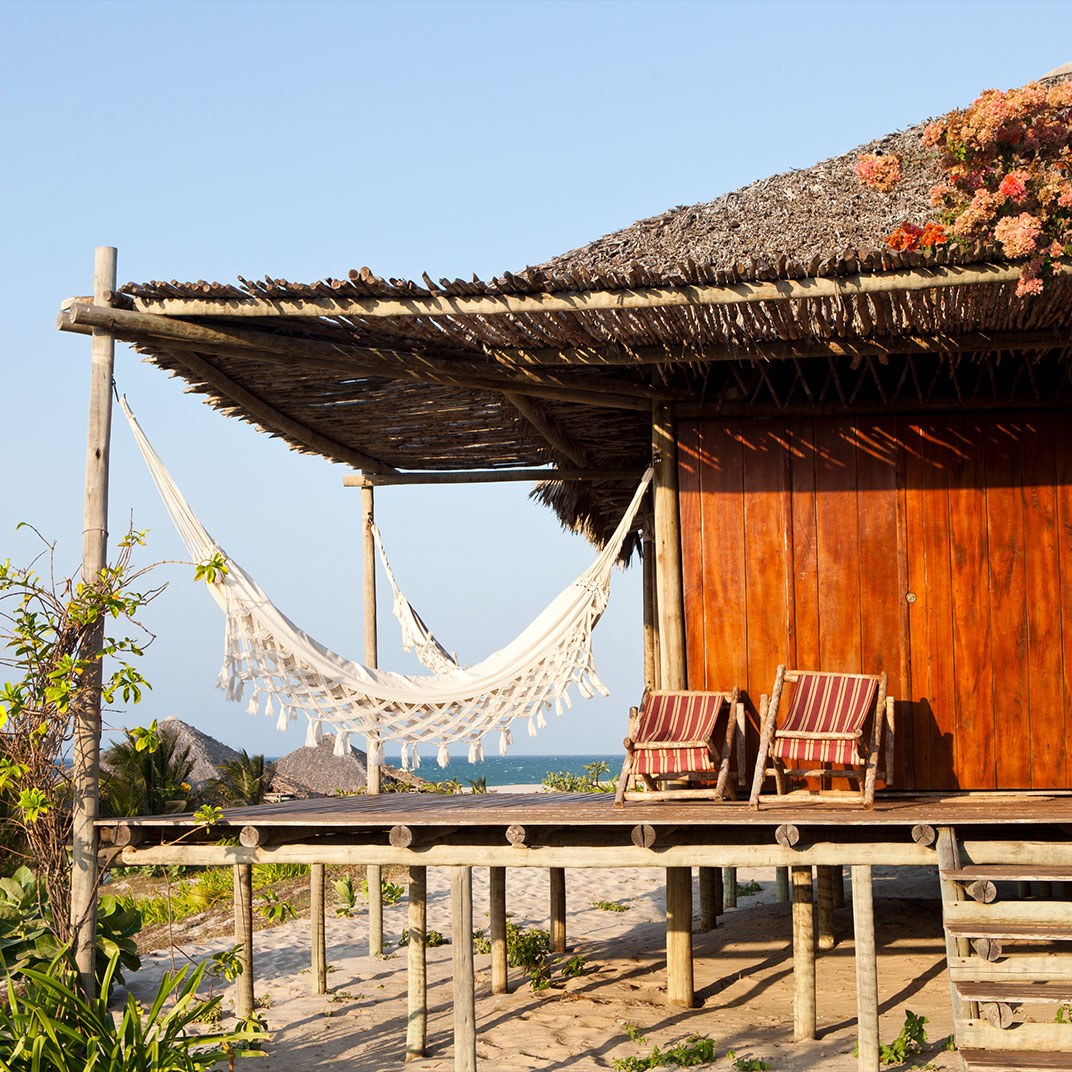
Where Jericoacoara's Architecture Meets the Shore
Brazil's northeast coast has developed a distinct hospitality grammar over the past two decades, one built on barefoot informality, wind-sculpted dunes, and an aesthetic that deliberately resists the conventions of resort design. Jericoacoara sits at the centre of that grammar. The village, accessible only by 4x4 across sand tracks, has no paved roads and enforces a low-rise building code that keeps its skyline at tree height. Within that constraint, properties have had to find their identity through material choices, spatial arrangement, and the relationship between built structure and open sky — not through scale or amenity accumulation.
Rancho do Peixe, recognised in the Michelin Selected Hotels 2025 list, occupies a position on the beach at R. da Praia that immediately signals its design logic. The name translates loosely to 'fish ranch,' and the vocabulary of the working vernacular — timber, thatch, open corridors , runs through the property's physical character. This is architecture that reads as belonging rather than intervention, which in Jericoacoara is less a stylistic choice than a structural requirement of the village's identity.
The shortlist, unlocked.
Hard-to-book tables, cellar releases, and concierge-planned trips.
Get Exclusive Access →The Design Tradition Behind the Structure
Across Ceará and the broader northeast coast, pousada design has evolved away from the whitewashed colonial block that defines much of Bahia toward something rawer: carnaúba palm thatch, exposed timber framing, rough-hewn stone, and open-sided communal spaces that treat the wind as a design element rather than a problem to be sealed out. This is not rusticity for its own sake. The region's thermal logic demands cross-ventilation, and the material choices reflect what the local environment actually produces. The carnaúba palm, Ceará's state symbol, is a building material of genuine structural and cultural significance here, and properties that use it authentically are operating in a different register from those that deploy it decoratively.
Rancho do Peixe's beachfront position reinforces this spatial logic. In a village where the dunes are the main landmark and the beach is the main thoroughfare, a property that sits directly on R. da Praia has an immediate relationship with the public space of Jericoacoara that more inland properties lack. The architecture has to mediate between private guest space and the semi-public character of the beach, and the most successful pousadas in Jeri do this through graduated thresholds: open lounges, hammock spaces, and semi-covered areas that belong ambiguously to both worlds rather than drawing a hard line between resort and village.
Jericoacoara's Accommodation Tier and Where Rancho do Peixe Sits
Jericoacoara's accommodation market splits into three rough bands. At the bottom, basic pousadas serve the kitesurf crowd and budget travellers passing through on the Ceará circuit. In the middle, a larger cluster of mid-range properties offers reasonable comfort without strong design identity. At the upper end, a small number of properties compete on design, service quality, and position , and it is here that Michelin's selection process operates most usefully as a sorting mechanism.
The Michelin Selected designation, applied to hotels rather than restaurants, recognises properties that meet a quality threshold across comfort, maintenance, and character without assigning star tiers. In a village like Jericoacoara, where the accommodation category is dominated by informal pousadas rather than branded hotels, the designation is a meaningful signal. It places Rancho do Peixe in the same quality conversation as recognised properties in the northeast's broader coastal circuit, including Zorah Beach Hotel in Trairi and Txai Resort Itacaré in Itacaré, both of which have built reputations on design-led, site-specific approaches to coastal hospitality.
Within Jericoacoara itself, the peer set includes Vila Kalango and Casa Na Praia, properties that occupy the same upper band and compete on similar terms. The choice between them turns on specific design preferences and position within the village rather than meaningful quality differentials , all three operate at the level where Jericoacoara's design-conscious traveller makes their decision.
For travellers building a longer Brazil itinerary that includes urban anchors, Rancho do Peixe represents a deliberate step away from the polished infrastructure of properties like Rosewood São Paulo or Copacabana Palace in Rio de Janeiro. That contrast is part of the point. Jericoacoara does not try to replicate urban luxury; its properties work within the village's constraints and produce something categorically different. The same logic applies to nature-led properties elsewhere in Brazil, such as Cristalino Lodge in Alta Floresta or Caiman in the Pantanal, where the physical environment dictates the architectural approach more than brand standards or category conventions.
The Beach Position and What It Delivers
In Jericoacoara, position is the variable that shapes a stay more than any other single factor. The village is small enough that distances between properties are minor on a map but significant in experience. A beachfront address means the evening dune , the large dune at the western edge of the village where most of the population gathers at sunset , is accessible on foot within minutes. The beach itself runs in both directions, with kitesurf zones to the east and calmer water to the west near the sunset point. Properties on R. da Praia sit inside this geography rather than adjacent to it.
This matters for planning. Jericoacoara's peak season runs from July through early September, when the Ceará trade winds are strongest and the kite and windsurf crowd fills the village. Shoulder months, particularly May and October, offer lower occupancy and wind that is present but not punishing. Reaching the village requires a 4x4 transfer from Jijoca de Jericoacoara, roughly 25 kilometres of sand track, and the practical reality of this access filters Jericoacoara's visitors in a way that keeps the atmosphere consistent regardless of season. Booking at Rancho do Peixe during peak months warrants significant lead time.
For a broader view of eating and drinking in the village, our full Jericoacoara guide covers the restaurant and bar scene alongside the accommodation context. And for travellers who want to extend along the northeast coast before or after Jericoacoara, Pousada do Toque in São Miguel dos Milagres and Hotel Jaguarindia Village in Fortim are recognisable reference points in the same coastal design conversation. Further afield, properties like Etnia Casa Hotel in Trancoso and Campo Bahia in Santo André demonstrate how the same vernacular architecture tradition extends south into Bahia with its own regional inflection.
Frequently Asked Questions
- What is the atmosphere like at Rancho do Peixe?
- Rancho do Peixe sits on the beach in Jericoacoara, a village with no paved roads and strict low-rise building codes. The atmosphere follows directly from that context: open-air, wind-facing, and built around communal outdoor spaces rather than enclosed amenity zones. Michelin Selected in 2025, it operates in the upper tier of Jericoacoara's pousada market, where design character and beach position matter more than scale or branded infrastructure.
- What room should I choose at Rancho do Peixe?
- Specific room categories are not available in current records. As a general principle for Jericoacoara properties in this tier, rooms with direct or close beach-facing orientation deliver the most from the location, given that the transition between interior space and beach is a central feature of how these properties are designed to function. Confirming room position and orientation directly with the property before booking is advisable.
- What is the main draw of Rancho do Peixe?
- The combination of beachfront position and Michelin Selected recognition within a village that has only a handful of properties at this quality level. Jericoacoara's remoteness and access constraints mean that properties here are competing on very different terms from coastal resorts elsewhere in Brazil. Rancho do Peixe's address on R. da Praia places it directly inside the village's primary social and natural geography rather than at its edges.
Fast Comparison
These are the closest comparables we have in our database for quick context.
| Venue | Cuisine | Price | Awards | Notes |
|---|---|---|---|---|
| Rancho do Peixe | This venue | |||
| Rosewood São Paulo | World's 50 Best | |||
| Copacabana Palace, A Belmond Hotel, Rio de Janeiro | World's 50 Best | |||
| Hotel das Cataratas, A Belmond Hotel, Iguassu Falls | World's 50 Best | |||
| JW Marriott Hotel São Paulo | ||||
| Fairmont Rio de Janeiro Copacabana |
Preferential Rates?
Our members enjoy concierge-led booking support and priority upgrades at the world's finest hotels.
Get Exclusive AccessThe shortlist, unlocked.
Hard-to-book tables, cellar releases, and concierge-planned trips.
Get Exclusive Access →