
Michelin Selected
A MICHELIN Selected hotel occupying a medieval castle within the walled town of Óbidos, Pousada do Castelo de Óbidos is one of Portugal's most historically charged places to stay. The property forms part of the national Pousadas network, which converts heritage buildings into working hotels. Its address at Paço Real places guests inside the castle walls, with the town's cobbled lanes and whitewashed houses directly accessible on foot.

Pearl is the En Primeur Club membership app — saves, bookings, and concierge access live there. Same editors, same standards.
- Address
- Paço Real, Óbidos, Portugal
- Directions
- Get directions
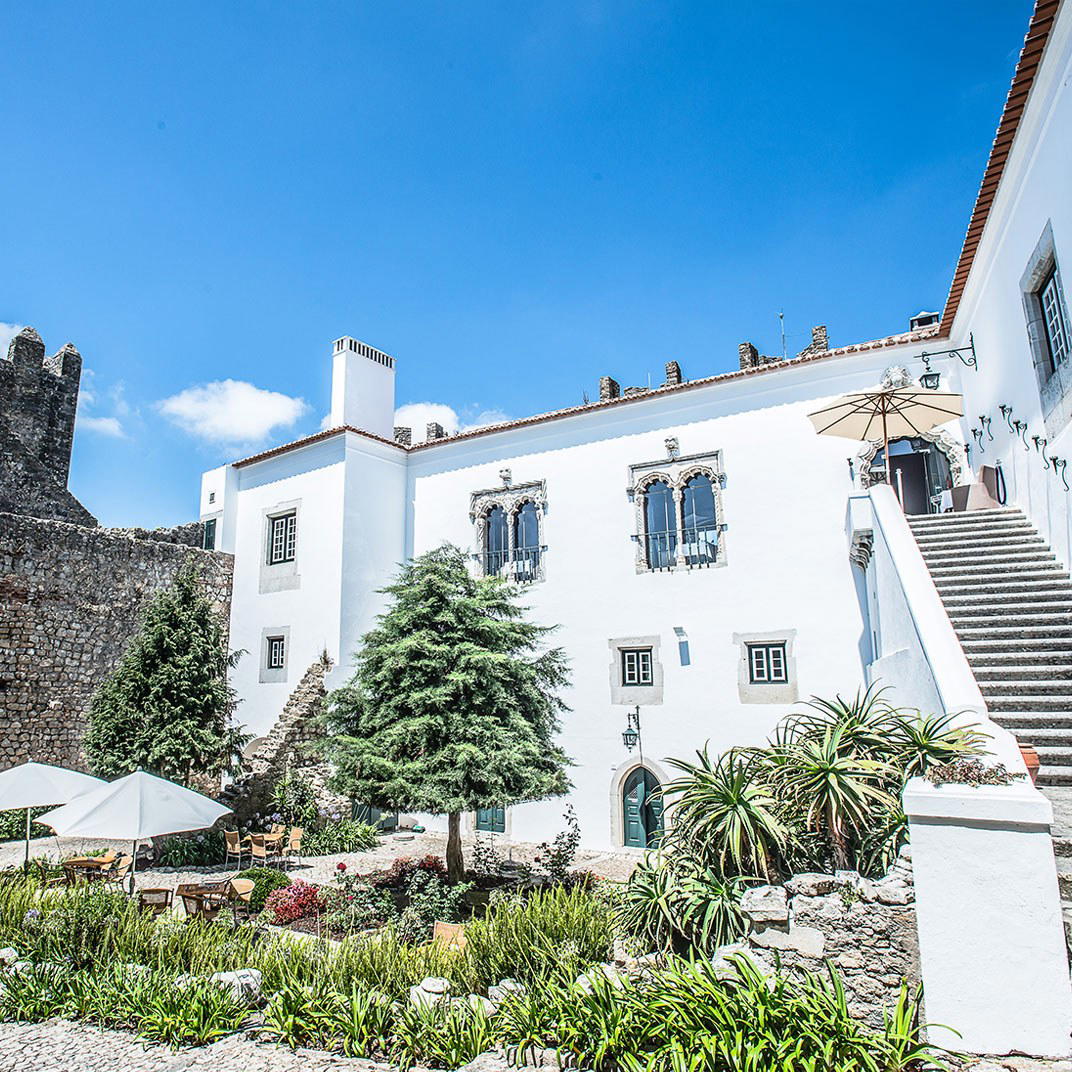
Sleeping Inside the Walls
Portugal's walled towns have developed two broad hospitality models: hotels positioned at the perimeter that trade on views of the fortifications, and properties that sit within them. Óbidos, a medieval hilltop town roughly 80 kilometres north of Lisbon, contains one of the country's clearest examples of the latter. The Pousada do Castelo de Óbidos occupies Paço Real, the royal palace embedded in the castle complex itself, making the walk from room to rampart a matter of seconds rather than minutes.
This distinction matters more than it might sound. The experience of staying inside a functioning fortified enclosure — stone walls on three sides, the town's terracotta rooflines below, the Atlantic plain visible beyond — is structurally different from proximity to heritage. The architecture is not backdrop; it is the building you are sleeping in. That physical reality shapes everything from room proportions to ambient sound, and it is why the property occupies a different competitive position from resort hotels elsewhere in the Silver Coast corridor. For context on the broader range of options in the region, see Royal Obidos Scenic Resort, which represents the golf-and-spa end of the local market.
The Pousadas Framework and What It Means for Guests
Understanding Pousada do Castelo de Óbidos requires understanding the network it belongs to. The Pousadas de Portugal programme, established in the mid-twentieth century, was designed to convert classified heritage buildings, convents, castles, manor houses, into hotels while keeping them accessible as working cultural sites. The result is a tier of properties that sit outside the conventional luxury hotel competitive set. They are not boutique hotels in the design-led sense, nor are they international flagships with standardised service programmes. They occupy their own category: institutionally maintained heritage stays, where the primary credential is the building's historical significance rather than the amenities package.
At Óbidos specifically, that credential is substantial. The castle dates to Moorish construction, was reconquered by Afonso Henriques in 1148, and became a favoured royal residence through the medieval period. Portuguese queens received the town as a wedding gift across several centuries, a tradition that has shaped how Óbidos presents itself culturally to this day. The MICHELIN Selected designation for 2025 places the property within a recognised quality band, though the selection criteria for hotels in that framework weight character and setting alongside conventional service metrics. Comparable Portuguese heritage properties that have attracted similar attention include Palácio de Tavira in Tavira and MS Collection Aveiro - Palacete Valdemouro in Aveiro, both of which move through the same tension between preserved fabric and modern guest expectations.
Dining Within a Medieval Shell
Castle hotels in Portugal occupy a specific position within the country's hotel dining conversation. The kitchen is constrained by the same walls that make the property compelling: supply logistics, limited prep space, and the expectation from guests that the food should match the gravitas of the surroundings. Across the Pousadas network, this challenge has historically produced dining that leans on regional recipes and local produce rather than modernist technique, a practical decision that aligns well with the wider movement in Portuguese hospitality toward ingredient-forward regional cooking.
In the case of Óbidos, the town itself sits within a food-productive corridor. The region's ginjinha, a sour cherry liqueur for which Óbidos is specifically known, appears across the local hospitality scene, including at properties within the walls. The Silver Coast, running from Peniche south toward Lisbon, provides seafood that anchors much of the regional menu tradition. Dishes built around caldeirada, bacalhau preparations, and shellfish from the nearby coast carry more contextual weight in this setting than anything imported from an international hotel group's standard F&B; playbook.
The dining at a property of this type functions less as a destination programme and more as an extension of the stay's overall character. Guests who approach the food as an expression of regional tradition rather than a fine-dining statement tend to find the alignment more satisfying. For properties where the dining programme itself is the primary reason to visit, the Portuguese portfolio offers distinct alternatives: Vidago Palace in Norte and Ventozelo Hotel & Quinta in Ervedosa do Douro both carry stronger F&B-led; identities. At the luxury end nationally, Conrad Algarve represents the international resort approach to hotel dining in Portugal.
The Town as Extension of the Property
One of the functional advantages of staying within the walls rather than adjacent to them is that the town's pedestrian main street, Rua Direita, is immediately walkable. The street runs from the castle entrance to the southern gate and is lined with ceramic shops, wine merchants stocking regional whites and the local ginjinha, and small restaurants operating outside any hotel group's framework. In high season, July through September, and during the Óbidos Medieval Market in July, the town fills considerably. Guests who prefer quieter access to the rampart walks and castle views should consider shoulder-season stays, particularly late October through November, when the surrounding agricultural land shifts to harvest tones and visitor density drops sharply.
The town's calendar of events, which includes a Chocolate Festival in spring and a Christmas Village programme running from late November, creates distinct seasonal atmospheres that change the character of a stay materially. These events draw visitors specifically to the walled enclosure, meaning the property's immediate environs become more animated during those periods. For guests travelling from Lisbon, the drive takes roughly an hour on the A8 motorway, with the town visible from the road as a fortified silhouette above the plain. For further context on what the wider area offers, see our full Óbidos restaurants guide.
Room Considerations and Planning
The castle structure dictates room configurations in ways that no renovation can fully resolve. Walls of medieval thickness mean some rooms receive limited natural light through narrow window apertures, while others, particularly those with rampart-facing outlooks, offer a degree of spatial drama that purpose-built hotels cannot replicate. Guests with specific requirements around light levels or accessibility should address these directly at booking, as the heritage constraints are genuine and the variability between rooms is meaningful.
Booking through the Pousadas network directly typically provides the most accurate room-level information, though availability for peak season and event weekends moves quickly. The property's size is limited by the palace footprint, which keeps guest numbers low by design. That compression is part of what distinguishes the stay from larger resort operations. Portuguese design-led heritage properties at a comparable scale include Hotel Casa Palmela in Setúbal and Carmo's Boutique Hotel in Ponte de Lima. For those travelling across Portugal and weighing multiple MICHELIN-recognised stays, Palacete Severo in Porto, Hotel Britania Art Deco in Lisbon, and The Lince Braga in Braga offer different points along the heritage-versus-contemporary spectrum.
Price and Recognition
Comparable venues nearby, for context on price, style, and recognition.
| Venue | Price | Awards | Notes |
|---|---|---|---|
| Pousada do Castelo de ÓbidosThis venue — the venue you are viewing | $200–300 | Michelin Selected | Not listed |
| Royal Obidos Scenic Resort | Not listed | Michelin Selected | Cabeço da Serra, Contemporary coastal resort blending natural elements with luxury amenities |
| M Maison Particulière Porto | Not listed | Not listed | Vitória, Owner-managed luxury boutique hotel blending historical authenticity with contemporary comfort in a UNESCO-listed heritage district. |
| Canto de Luz | Not listed | Michelin Selected · Mr & Mrs Smith Seal of Approval | Cedofeita, Restored historic townhouse with modern extensions including garden villas. |
| Pátio do Tijolo | Not listed | Michelin Selected · Mr & Mrs Smith Seal of Approval | Bairro Alto, Contemporary minimalist boutique hotel embedded in historical Lisbon context with emphasis on shared communal spaces and slow living philosophy. |
| Memmo Alfama Hotel Lisboa | $200–300 | Michelin Selected · Mr & Mrs Smith Seal of Approval | Castelo, Contemporary boutique seamlessly integrated into historic Alfama. |
Recognition history
Dated appearances from independent guides and award organizations, with the underlying list record or original source where available.
Michelin Selected
Michelin
Continue exploring
More in Obidos
Hotels in Obidos
Browse all →
Bars in Obidos
Browse all →
Restaurants in Obidos
Browse all →

Details
- Romantic
- Historic
- Elegant
- Cozy
- Scenic
- Romantic Getaway
- Honeymoon
- Anniversary
- Weekend Escape
- Historic Building
- Wi Fi
- Room Service
- Restaurant
- Air Conditioning
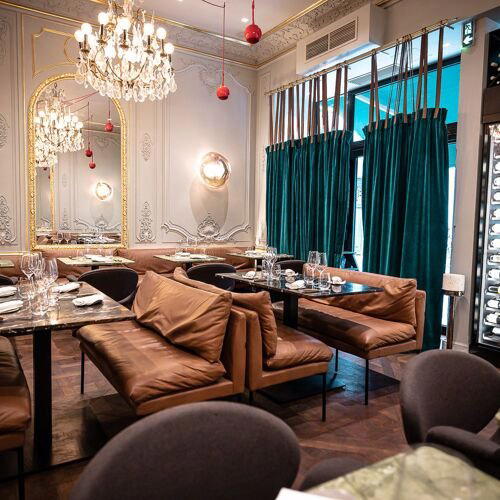
Romantic medieval atmosphere with stone walls, chandeliers, four-poster beds, and views through Manueline arched windows.