Pacuare Lodge


2 Michelin Keys · Virtuoso Luxury Hotel Partner
Pacuare Lodge occupies a remote stretch of Costa Rica's Pacuare River, where 20 suites built on Cabécar-inspired design principles sit inside primary rainforest without a single felled tree. Arriving by inflatable raft rather than road sets the tone: this is luxury calibrated to the environment around it, with farm-to-table dining, limited electricity, and a treetop dinner venue accessible only by zip line. Rates from $803 per night.

Pearl is the En Primeur Club membership app, where members save venues, book tables and use the concierge.
Where the Architecture Defers to the Rainforest
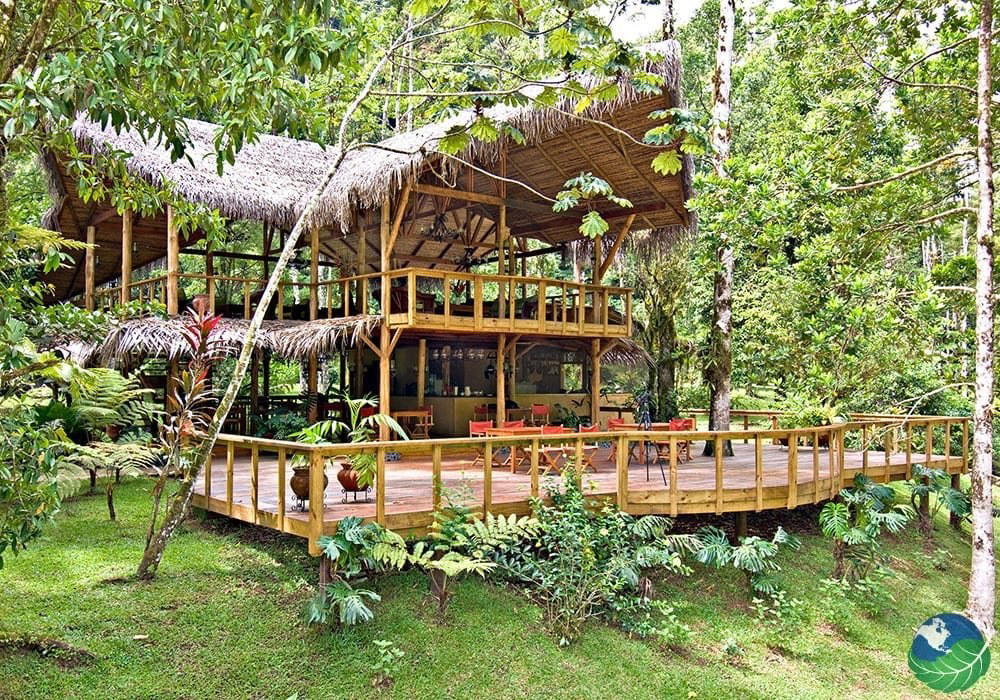
Costa Rica's premium lodge market has split into two broadly readable camps: resort-scaled properties on the Pacific coast, such as the Andaz Costa Rica Resort at Peninsula Papagayo in Guanacaste and the JW Marriott Guanacaste Resort & Spa in Santa Cruz, which offer beach access and full-service amenities at scale, and a smaller tier of remote, ecologically anchored lodges where the design proposition is precisely the absence of resort infrastructure. Pacuare Lodge sits firmly in the second camp, and its physical philosophy is more radical than most. The 20 suites and villas were constructed without cutting a single standing tree. Structural timber was sourced from a sustainable reforestation project run by small-scale farmers in the region. The palm-thatched roofs were built by members of the native Cabécar community, whose architectural traditions directly informed the bungalow forms throughout the property.
The result is a built environment that reads as genuinely embedded in primary rainforest rather than placed beside it. Canopy cover is dense enough that the lodge operates with limited electricity, a constraint that, depending on your disposition, is either the point or the disclaimer. Wi-Fi reaches only the lobby. The trade-off is a level of sensory immersion, toucans and howler monkeys overhead, the river audible from every terrace, that purpose-built eco-resorts often describe but rarely achieve structurally.
The Spatial Logic of the Property
The 18 accommodation units are distributed across the rainforest at distances calculated to maintain privacy without disorientation. Each bungalow is separated enough from its neighbours that the surrounding forest reads as uninterrupted, while remaining close enough to the central restaurant and reception that night navigation does not require a guide. It is a spatial calibration that sounds simple but is architecturally demanding: too close and you have a cluster; too far and operations become unworkable in a remote rainforest setting.
At the upper end of the accommodation hierarchy, the Jaguar Villa and the Canopy Suite sit apart from the main bungalow cluster and are accessible only via private suspension bridges high in the tree canopy. The Jaguar Villa adds a spring-fed swimming pool and outdoor shower. Standard suites across the property include canopied king beds dressed in Egyptian cotton, bathrooms tiled with river-adjacent aesthetics and framed by jungle views, and private terraces with hammocks positioned over the river. The architecture throughout draws on Cabécar design sensibility without costuming itself as indigenous pastiche, the forms are functional and the materials are regional, but the comfort level is calibrated for guests paying from $803 per night.
Properties that pursue a similar remote-lodge position in Costa Rica, such as Lapa Rios in Puerto Jimenez and Hacienda AltaGracia, Auberge Resorts Collection in Pérez Zeledón, share the low-density model but occupy different ecological zones and architectural registers. Pacuare's riverine setting and suspension-bridge access routes place it in a distinct physical category within that peer group. See our full Río Pacuare restaurants guide for broader regional context.
Arrival and Access
The logistics of reaching Pacuare Lodge are not incidental to the experience, they are the opening act. A chauffeured overland transfer is available from the Limón region, but the lodge's signature approach is by inflatable raft down the Pacuare River itself. The whitewater section of that journey is graded suitable for novices, so the raft arrival is not a gatekeeping activity for experienced paddlers only. Luggage travels in waterproof dry bags alongside guests. You arrive wet, at a river-level entrance, having moved through a section of primary rainforest that no road reaches. The contrast with checking into a coastal resort or an urban hotel in San José is total.
This arrival format does more architectural work than it might initially seem. It establishes the river as the lodge's primary axis before a guest has seen a single bungalow. Every subsequent design decision, the orientation of terraces, the positioning of hammocks, the dinner service choices, makes more sense once the river is understood as the organizing principle of the entire property.
Dining and the Treetop Table
Farm-to-table sourcing in Costa Rica's remote lodges has become the baseline expectation rather than a distinguishing feature, and Pacuare operates within that norm. The kitchen draws on local produce and is staffed by young people from surrounding communities, which connects the dining program to the lodge's broader community partnership model rather than positioning cuisine as a headline attraction. There are no named chefs to reference here, which is consistent with the lodge's design approach: the food program is subordinate to context.
What does distinguish the dining provision is a single structural detail: The Nest, an intimate treetop venue accessible only by zip line. Dinner there is available on request, which means it functions as a private experience for individual tables rather than a theatrical set-piece run for multiple groups simultaneously. The 400-foot cable descent to dinner is, by any measure, an unconventional approach to restaurant access, and it reinforces the property's recurring design logic, that movement through the environment should itself carry meaning.
Sustainability as Structural Commitment
The conservation and community programs at Pacuare are more embedded than the standard lodge sustainability statement. The property operates wildlife research partnerships with Costa Rican universities and nonprofit organizations. Local community investment covers basic services and livelihood support in the surrounding area. These programs are not peripherally attached to the guest experience, they are the institutional context within which the lodge exists and within which the no-tree-felling construction principle and the Cabécar-built roofs make coherent sense.
For context across Costa Rica's wider eco-lodge category, properties such as El Silencio Lodge & Spa in Bajos del Toro, Hotel Belmar in Monteverde, and Finca Rosa Blanca Coffee Farm and Inn in Jesús de Santa Bárbara each occupy distinct ecological niches with their own sustainability frameworks. Pacuare's riverine isolation and active research partnerships place it at a particular end of that spectrum. Other Costa Rica lodges worth comparing against include Arenas Del Mar Beachfront & Rainforest Resort in Aguirre, Kura Boutique Hotel in Uvita De Osa, and Drake Bay Getaway Resort in Drake Bay.
Planning Your Stay
Rates begin at $803 per night across 18 rooms. The property's remoteness means planning requires more lead time than a standard hotel booking, access by raft requires coordinating with the lodge's transfer operation, and the limited-electricity environment means charging schedules and connectivity expectations should be settled before arrival rather than on check-in. The lodge sits within the Limón province of central Costa Rica, reachable from San José via either the overland route through Turrialba or the raft approach along the river itself. Guests combining Pacuare with broader Costa Rica itineraries might consider the Costa Rica Marriott Hotel Hacienda Belen in Belen or the Residence Inn by Marriott San Jose Alajuela El Coyol in Alajuela as transit-night options near the airport. For Pacific coast extensions, Hotel Nantipa in Santa Teresa de Cobano, Azura Resort in Sámara, Esh Hotel & Spa in Nosara, and Casa Chameleon at Las Catalinas in Potrero offer design-led alternatives in their respective coastal settings. For those travelling from or to North America with a city night factored in, The Fifth Avenue Hotel in New York City and Aman New York in New York City provide reference points at the upper end of urban luxury, while Aman Venice in Venice illustrates how the Aman model handles a heritage building context, a useful comparison when thinking about how different property types approach the tension between comfort and environment.
Comparable Venues
Comparable venues nearby, for context on price, style, and recognition.
| Venue | Cuisine | Price | Awards | Notes |
|---|---|---|---|---|
| Pacuare LodgeThis venue (the venue you are viewing) | Eco-friendly rainforest lodge with Caribbean-inspired architecture using sustainable materials | Not listed | 2 Michelin Keys · Virtuoso Luxury Hotel Partner | Not listed |
| Lapa Rios | Luxury eco-lodge blending high-end amenities with environmental stewardship and immersive nature experience. | $300–500 | 1 Michelin Key · Mr & Mrs Smith Seal of Approval | Osa Peninsula |
| Silvestre Nosara Hotel & Residences | Contemporary tropical residences blending hotel luxury with home privacy | $750–1,000 | 1 Michelin Key · Mr & Mrs Smith Seal of Approval | Playa Guiones |
| Andaz Costa Rica Resort at Peninsula Papagayo | Contemporary resort seamlessly integrated into tropical rainforest with treehouse-like structures. | $500–750 | 1 Michelin Key · Virtuoso Luxury Hotel Partner | Peninsula Papagayo |
| Kura Boutique Hotel | Exclusive adults-only boutique resort set in rainforest with panoramic Pacific views. | $500–750 | 1 Michelin Key · Virtuoso Luxury Hotel Partner | Uvita |
| Hacienda AltaGracia, Auberge Resorts Collection | rustic hacienda with modern luxury | Not listed | 5-Star | Santa Teresa de Cajon |
Recognition history
Dated appearances from independent guides and award organizations, with the underlying list record or original source where available.
Michelin 2 Keys
Michelin
Virtuoso Luxury Hotel Partner
Virtuoso
Full recognition history (3 entries)
Michelin 2 Keys
Michelin
Continue exploring
More in Río Pacuare
Restaurants in Río Pacuare
Browse all →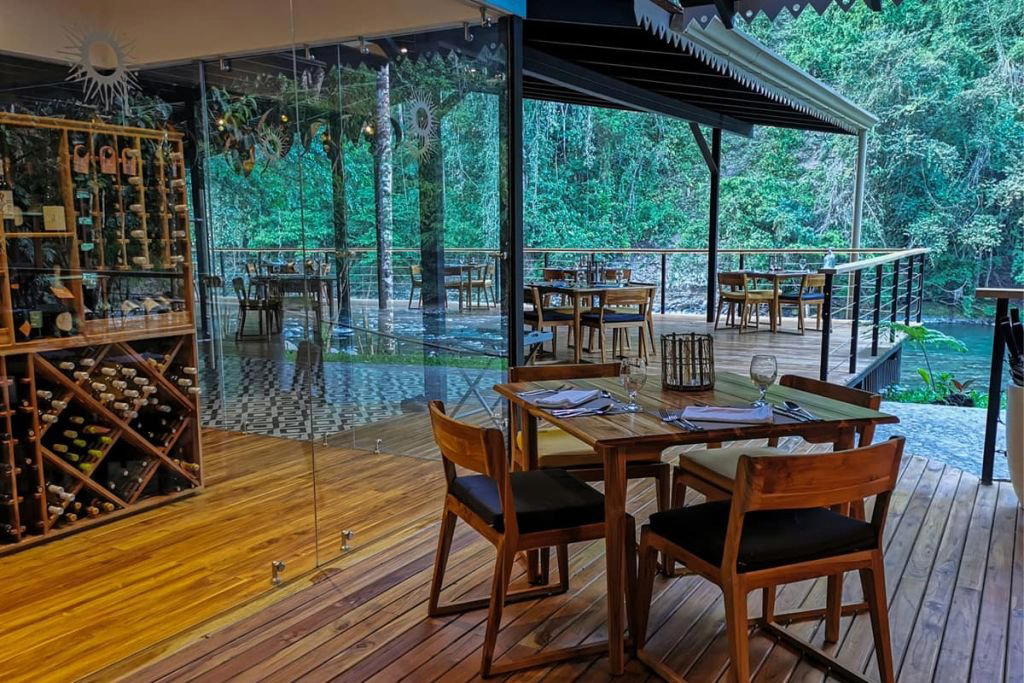

Details
- Scenic
- Romantic
- Rustic
- Elegant
- Intimate
- Romantic Getaway
- Honeymoon
- Wellness Retreat
- Group Retreat
- Waterfront
- Infinity Pool
- Panoramic View
- Private Villa
- Wi Fi
- Pool
- Spa
- Concierge
- Waterfront
- Mountain
- Garden
- Wheelchair Accessible
Romantic and tranquil rainforest ambiance lit by lanterns and candles, blending natural elegance with sophisticated comfort amid jungle sounds and river breezes.