Moor Hall

Moor Hall holds two MICHELIN Keys (2025), placing it among a small cohort of UK country-house hotels that Michelin formally recognises for hospitality as well as cuisine. Set on a rural Lancashire estate outside Aughton, the property combines a restored historic house with considered design to create a stay that earns its place in any comparison with the country's leading destination properties.
Pearl is the En Primeur Club membership app — saves, bookings, and concierge access live there. Same editors, same standards.
- Address
- Moor Hall, Prescot Rd, Aughton, Ormskirk L39 6RT, United Kingdom
- Phone
- +44 1695 572511
- Website
- moorhall.com
- Directions
- Get directions
 Saves & bookings on Pearl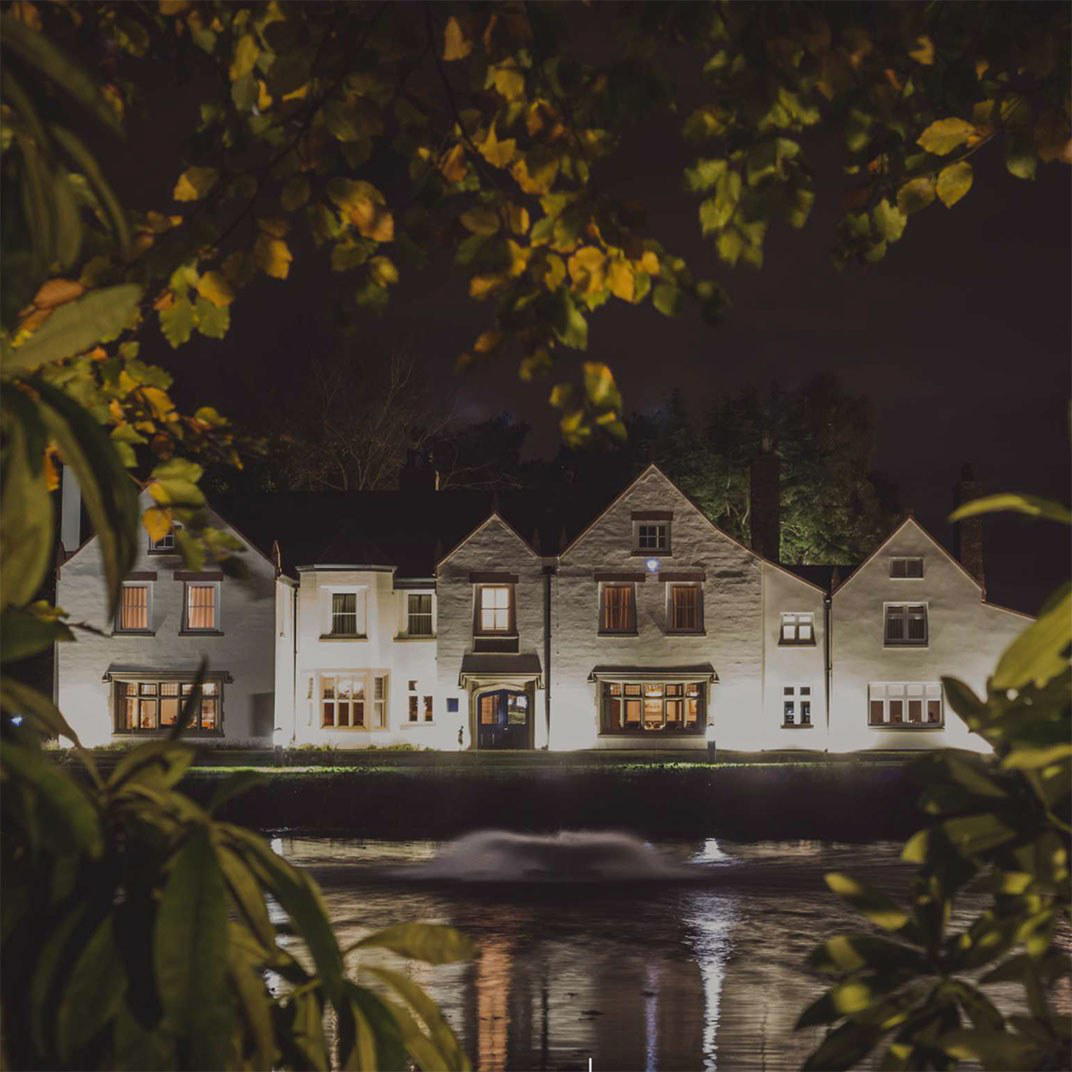
A Lancashire Estate in a Particular Tier
The road into Aughton from the M58 does not announce itself dramatically. Lancashire's western plain is flat, agricultural, and largely unremarked upon by travellers more interested in the Lake District an hour north or the Peak District to the east. That geographical understatement is part of what makes arriving at Moor Hall, a restored sandstone manor on Prescot Road, feel like a recalibration. Country-house hotels in Britain occupy a wide spectrum, from converted shooting lodges to grand-scale Edwardian piles turned conference venues. Moor Hall operates in a different register: the small, architecture-conscious tier where the building itself functions as the primary design statement and the grounds as its extension.
The 2025 Michelin Hotels guide awarded Moor Hall two MICHELIN Keys. That credential places it in the same formal comparable set as properties that have earned Michelin recognition not just for food but for the quality of the hospitality experience as a whole, the integration of space, comfort, and service into something coherent enough to warrant independent distinction from the restaurant stars. For context on what Two Keys implies across the wider UK picture, compare the hotel's positioning against properties like Lime Wood in Lyndhurst or Estelle Manor in North Leigh.
The Architecture as the Argument
Britain's country-house hotel category has a persistent tension between preservation and legibility. Many historic properties lean so hard into period authenticity that the result feels more museum than hotel; others strip interiors so thoroughly in pursuit of contemporary neutrality that the building's history becomes merely a marketing note. The hotel has taken a more considered line. The sandstone core of the house, a 16th-century structure with later additions, provides the structural argument, while the interior approach avoids both museification and wholesale reinvention.
This is a broader design philosophy gaining traction in the upper tier of British hospitality. Rather than choosing between heritage and modernity, particularly accomplished properties use the existing fabric as a frame within which contemporary material choices and spatial thinking can operate. The result, when executed well, is a building that reads as genuinely inhabited rather than staged. Among northern English properties, few have navigated that balance at hotel scale. The hotel's restoration is precise enough to suggest serious architectural oversight rather than the incremental improvisation common to many country-house conversions.
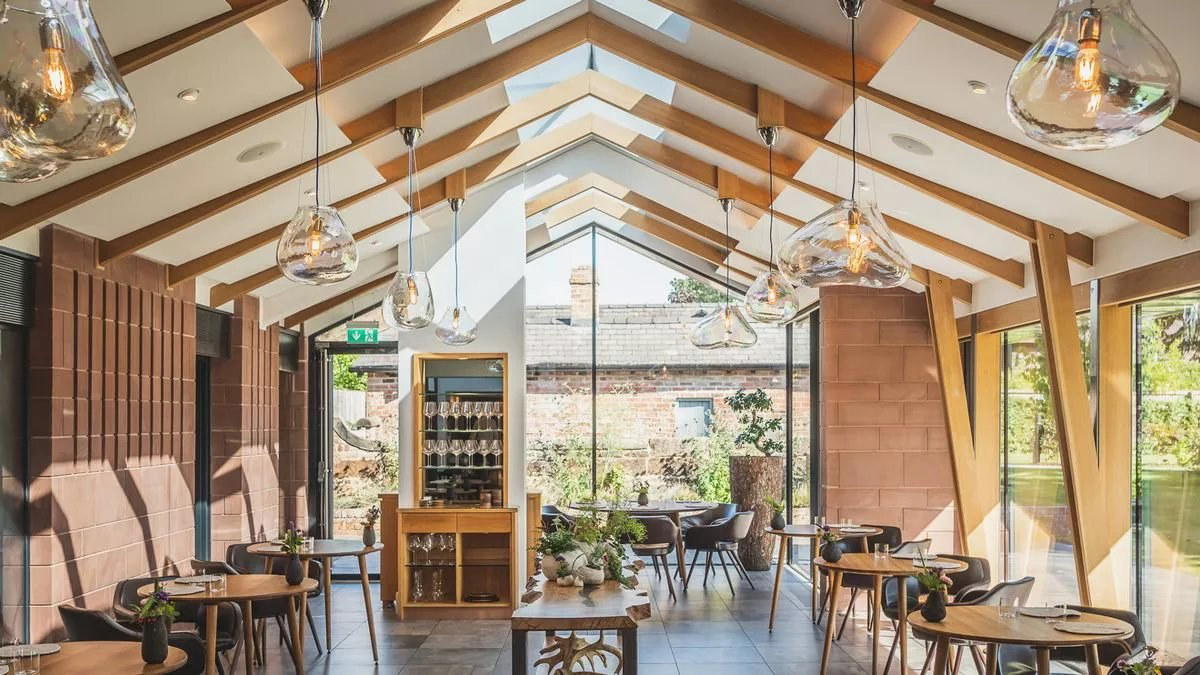
The grounds follow the same logic. Formal kitchen gardens, lake views, and the interplay between cultivated and natural landscape are features common to the British estate tradition, but at the hotel they function as a designed sequence rather than inherited backdrop. The relationship between interior space and the landscape beyond the glass is legible throughout the property, a quality that distinguishes purposefully designed hospitality from houses that happen to have been converted.
Where It Sits in the Northern England Conversation
Northern England's premium hospitality offer has expanded meaningfully in the past decade. Manchester has developed a serious city-hotel tier, see Oddfellows on the Park as one marker of that shift, while Leeds has attracted design-forward operators including Dakota Leeds. But destination stays with serious culinary programmes built into the fabric of the property remain rarer. Farlam Hall in the Lake District operates in a comparable tradition, though at a different scale and register. Thornton Hall in Heswall sits within the same broader Northwest England hospitality geography.
What separates the hotel from that cluster is the Michelin Keys distinction, which signals a level of formal recognition specific to the total guest experience rather than any single element. Two Keys in the 2025 guide is not widespread: the list is short, and the properties on it tend to share a commitment to space, craft, and service that operates across the entire visit rather than concentrating excellence in one department. That integration is harder to achieve in a country-house context than in a purpose-built urban hotel, where design consistency is more easily controlled from the ground up.
The Wider Reference Set
For travellers building a considered itinerary around UK destination hotels, the hotel belongs in a comparison set with properties that have earned formal recognition for hospitality quality, not merely for their postcode or price point. The Newt in Somerset represents the estate-as-total-environment model in the southwest. Gleneagles in Auchterarder anchors the Scottish end of the destination-estate category. At the urban end, The Savoy in London and comparably recognised city properties operate in a different but formally peer-adjacent tier.
Internationally, the Two Keys designation puts the hotel in conversation with properties like Badrutt's Palace in St. Moritz or Hôtel de Paris Monte-Carlo, which hold equivalent Michelin hospitality recognition in their respective markets. The comparison is not about scale or price alignment, but about what the Keys credential implies: Michelin inspectors found the hospitality experience coherent and well-executed enough to warrant formal, public distinction.
Planning a Stay
The hotel sits on Prescot Road in Aughton, accessed most directly via the M58 from Liverpool (approximately 12 miles) or the M6 from Manchester (around 25 miles). The property's setting outside any major urban centre means a car is the practical choice for most visitors; Ormskirk has a rail connection to Liverpool Lime Street for those arriving by train who then want to arrange onward transfer. Given its small scale, lead time matters, particularly for weekend stays that incorporate the restaurant.
For travellers whose itineraries span further into Scotland or across to the coast, the following properties offer useful staging points in the regional picture: Crossbasket Castle in High Blantyre, Dunluce Lodge in Portrush, and Kilchoan Estate in Inverie for those moving into more remote Highland territory. In the Channel Islands and further afield, Longueville Manor in Jersey holds a comparable country-house-with-serious-food profile.
Comparable Spots, Quickly
Comparable venues nearby, for context on price, style, and recognition.
| Venue | Cuisine | Price | Awards | Notes |
|---|---|---|---|---|
| Moor HallThis venue — the venue you are viewing | Historic country manor with modern luxury | $$$$ | 5-Star | Not listed |
| Rusacks St Andrews | Historic Victorian golf hotel with modern renovation | $$$$ | 5-Star | Pilmour Links |
| The Peat Inn | Historic restaurant with luxury suites | $$$$ | 5-Star | Peat Inn |
| The Whiteley | Mixed-use luxury development in restored historic building | $$$$ | 5-Star | Bayswater |
| The Lowry Hotel | Contemporary luxury hotel blending Manchester's industrial heritage with Scandinavian minimalism, positioned as the city's premier five-star destination. | $$$$ | 5-Star | Chapel Wharf, Salford |
| Swinney Wood Log Cabins | luxurious rustic log cabins | $$$$ | 5-Star | Belper |
Recognition history
Dated appearances from independent guides and award organizations, with the underlying list record or original source where available.
Michelin 2 Keys
Michelin
Continue exploring
More in Aughton
Hotels in Aughton
Browse all →
Bars in Aughton
Browse all →
Restaurants in Aughton
Browse all →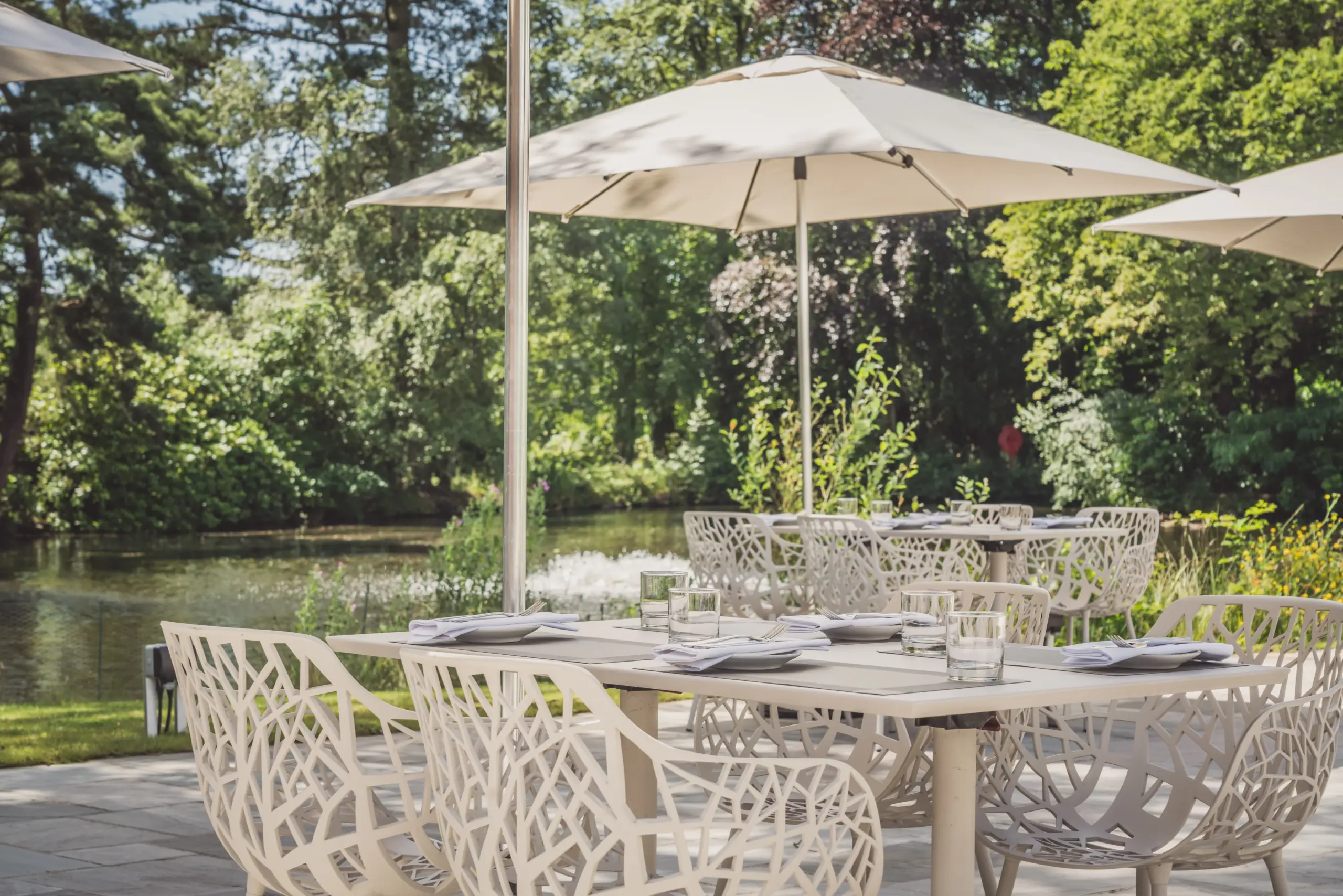
Wineries in Aughton
Browse all →
At a Glance
- Romantic
- Elegant
- Classic
- Scenic
- Sophisticated
- Romantic Getaway
- Anniversary
- Celebration
- Historic Building
- Garden
- Room Service
- Garden
- Room Service
Stylish blend of historic beams, panelled walls, and contemporary decor with tranquil garden and lake views.