Monterey Peninsula Country Club
Monterey Peninsula Country Club occupies one of the most coveted addresses in American private golf, set within Pebble Beach's Del Monte Forest along the Monterey Bay coastline. The club's courses and facilities operate at the upper tier of California private membership, where access, architecture, and natural setting converge in ways that few comparable properties can match. Membership here is generational in character and tightly controlled by design.

Pearl is the En Primeur Club membership app, where members save venues, book tables and use the concierge.
Where the Monterey Cypress Meets the Fairway
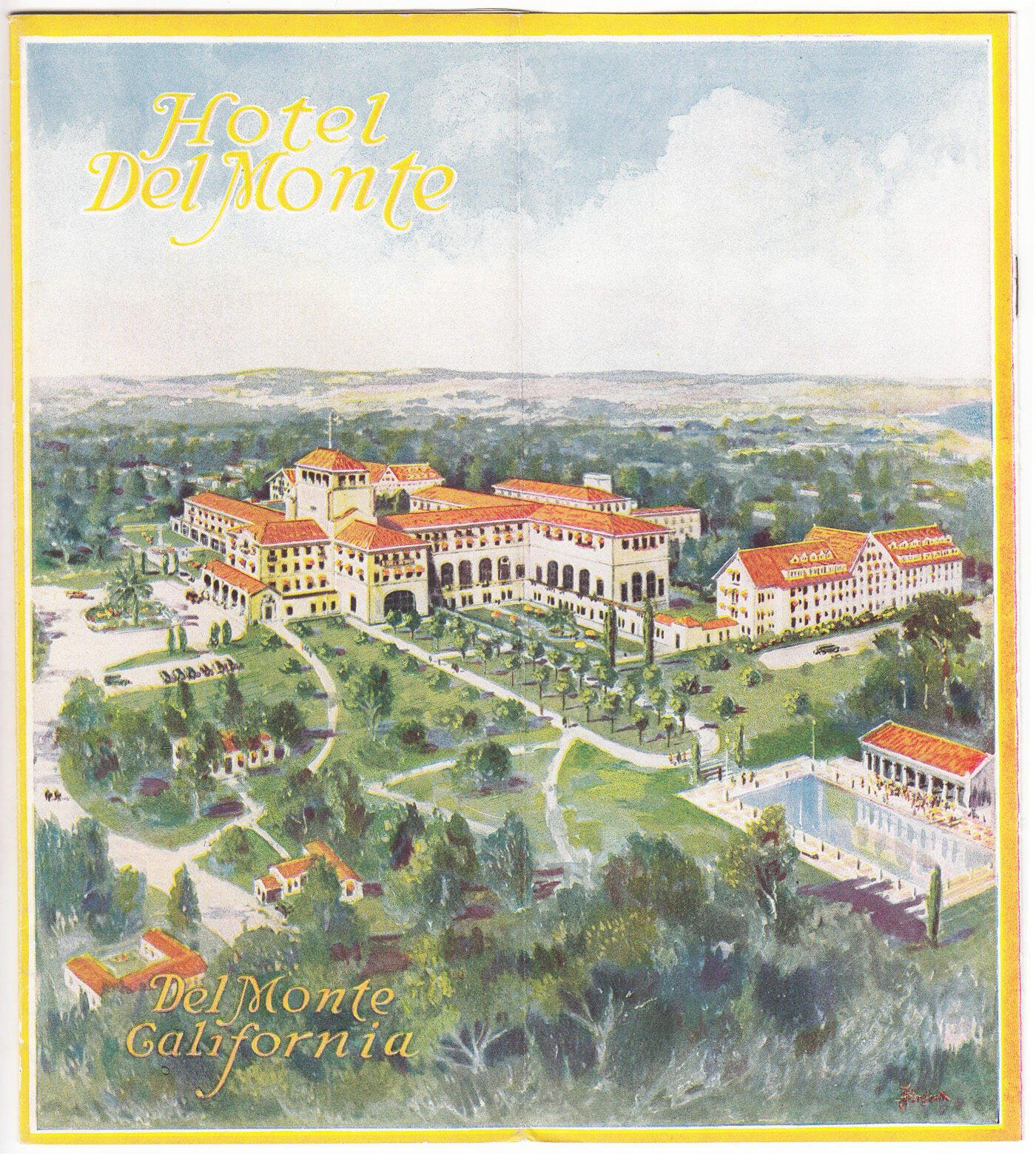
Approaching 3000 Club Road in Pebble Beach, the transition from Highway 1 to Del Monte Forest feels deliberate rather than gradual. The Monterey cypress canopy closes overhead, the ocean light shifts to something cooler and more diffuse, and the architecture that eventually comes into view belongs to a tradition of American club design that favors permanence over novelty. Monterey Peninsula Country Club occupies a position inside this landscape that no amount of renovation can manufacture: it was built into the coastal headlands at a moment when Pebble Beach was still defining itself as a destination, and the bones of the place reflect that founding confidence. The physical fabric of the club, from its low-pitched rooflines to the way the structures orient toward the Pacific, reflects a design logic that privileges the site over the building. That relationship between structure and terrain is the defining architectural fact of any serious coastal California property, and MPCC earns its place in that conversation.
The Architecture of Access and Enclosure
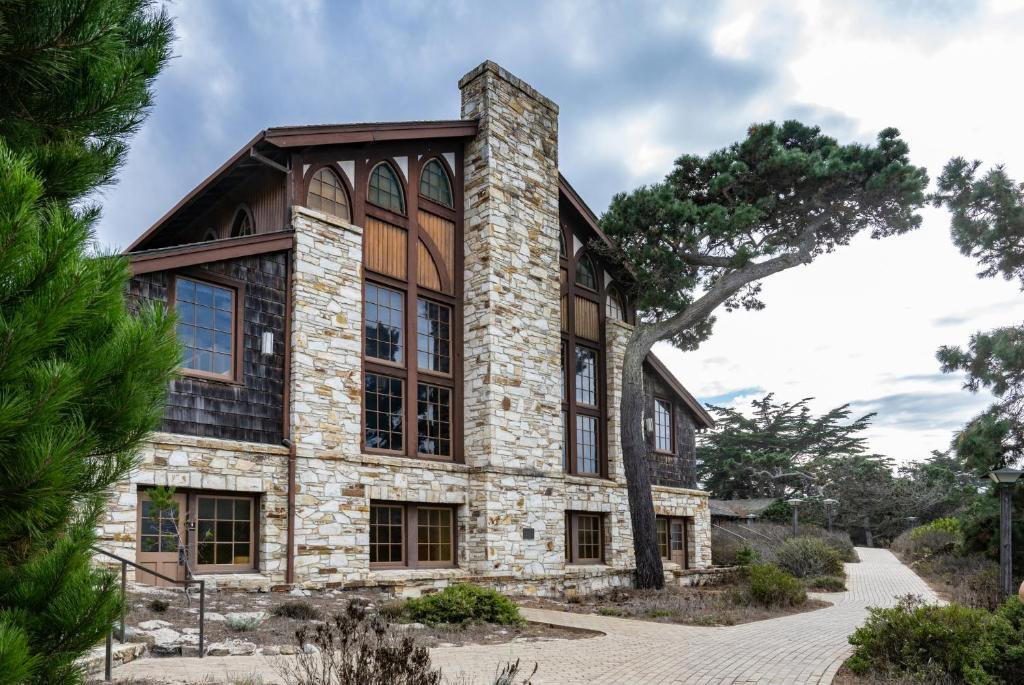
Private clubs on the Monterey Peninsula occupy a narrow architectural register: they must project enough formality to justify membership, while avoiding the stiffness that reads as institutional rather than residential. MPCC sits comfortably inside that register. The clubhouse retains the proportions and materials vocabulary of early California resort architecture, a lineage that runs through the Del Monte Hotel tradition and into the broader Pacific Grove and Carmel aesthetic of the early twentieth century. Stone, timber, and vernacular detailing mark the palette. Windows are placed to frame the Dunes Course and Shore Course layouts rather than to manage interior light alone, which means the building behaves as a viewing platform as much as an enclosure. That intentionality in fenestration is a hallmark of serious golf club architecture and separates purpose-built facilities from those that happened to acquire a view.
The Shore Course, designed by Robert Trent Jones Sr. and later refined to its current form by Rees Jones in 2004, runs along Stillwater Cove and around the perimeter of the peninsula with water visible on nearly every hole. The Dunes Course, laid out across the sand ridges and ice plant bluffs of the interior, plays differently: firmer, faster, more exposed to the prevailing northwest wind. These two distinct playing environments, each with its own architectural and agronomic character, are rare within a single club. Most facilities with oceanfront exposure concentrate resources on one design statement; MPCC sustains two.
Situating MPCC Within the Pebble Beach Ecosystem
Del Monte Forest contains a concentration of golf and hospitality assets without close parallel in California: Pebble Beach Golf Links, Spyglass Hill, Cypress Point Club, and MPCC all sit within a few miles of each other. The public and private divide within that group is absolute. Pebble Beach Golf Links charges green fees well above $500 per round and accepts outside play by reservation; Cypress Point and MPCC do not. That binary structures the entire visitor experience of the peninsula. Guests staying at properties like Bernardus Lodge and Spa in Carmel Valley or arriving from further afield, perhaps from Post Ranch Inn in Big Sur, may gain access to the public layouts, but MPCC remains within the private tier that governs access through membership and sponsorship alone. For context on how comparable private enclaves structure access and design identity elsewhere in the American West, the model at Amangiri in Canyon Point and Amangani in Jackson Hole applies a similar logic of controlled access tied to physical remoteness.
The AT&T; Pebble Beach Pro-Am has historically involved MPCC's Shore Course as a rotation venue alongside Pebble Beach and Spyglass Hill, which means the club has appeared in broadcast coverage reaching audiences far beyond the membership. That recurring professional event exposure gives the Shore Course a verifiable public profile unusual for a club of its access restrictions, and it anchors the club's reputation in something documentable rather than merely inherited.
Del Monte Forest in the Broader California Context
California's premium private club geography divides roughly between the desert compounds of the Coachella Valley, the Napa wine country estates, and the coastal peninsula clubs of Monterey. MPCC operates in the third category, where terrain complexity, marine weather, and agronomic challenge combine to produce conditions that flatter skilled players while penalizing those who treat the course as a backdrop. That character is shared across the peninsula's leading private layouts and has shaped a club culture that takes golf seriously as a technical pursuit rather than a social occasion with incidental sport. Properties elsewhere that sit at a similar intersection of site quality and exclusivity include Auberge du Soleil in Napa and SingleThread Farm Inn in Healdsburg, both of which operate within the logic of site-defined luxury in Northern California, if through hospitality rather than club membership.
Visitors spending time on the peninsula who hold no private affiliation should note that the public Pebble Beach properties and adjacent Carmel-by-the-Sea restaurants represent a credible alternative circuit. Our full Del Monte Forest restaurants guide maps the dining options across the forest and the neighboring village. For context on luxury accommodation options within driving range, see entries for Canyon Ranch Tucson in Tucson and Little Palm Island Resort and Spa in Little Torch Key as comparators in the American private-access resort category, as well as Kona Village, a Rosewood Resort in Kailua Kona and Blackberry Farm in Walland for the closed-campus hospitality model that most closely approximates the MPCC member experience.
Planning and Access
Access to Monterey Peninsula Country Club is through membership or member sponsorship; there is no public booking channel. The club sits at 3000 Club Road, Pebble Beach, within the gated Del Monte Forest preserve. Reaching the peninsula from San Francisco typically requires two to two-and-a-half hours by road via Highway 1, or approximately ninety minutes via US-101 to Salinas and then westward. Monterey Regional Airport serves the peninsula with connections from Los Angeles, San Francisco, and Phoenix, making it practical for domestic visitors arriving without a car. For those building a longer California itinerary that extends north, 1 Hotel San Francisco in San Francisco and Raffles Boston in Boston offer a reference frame for the urban luxury end of the same American premium travel category. Those looking east toward comparable private-member experiences at altitude might consult Alpine Falls Ranch in Superior or Sage Lodge in Pray.
Comparable Spots, Quickly
| Venue | Price | Awards |
|---|---|---|
| Monterey Peninsula Country ClubThis venue (the venue you are viewing) | Not listed | Not listed |
| Aman New York | Not listed | 3 Michelin Keys · World's 50 Best #87 |
| Amangiri | $1,000–1,500 | 3 Michelin Keys · World's 50 Best #45 |
| Hotel Bel-Air | $750–1,000 | 3 Michelin Keys · World's 50 Best #57 |
| The Beverly Hills Hotel | Not listed | 3 Michelin Keys · World's 50 Best #65 |
| The Carlyle, A Rosewood Hotel | $1,500–2,500 | 2 Michelin Keys · World's 50 Best #64 |
Continue exploring
More in Del Monte Forest
Hotels in Del Monte Forest
All hotels in Del Monte Forest →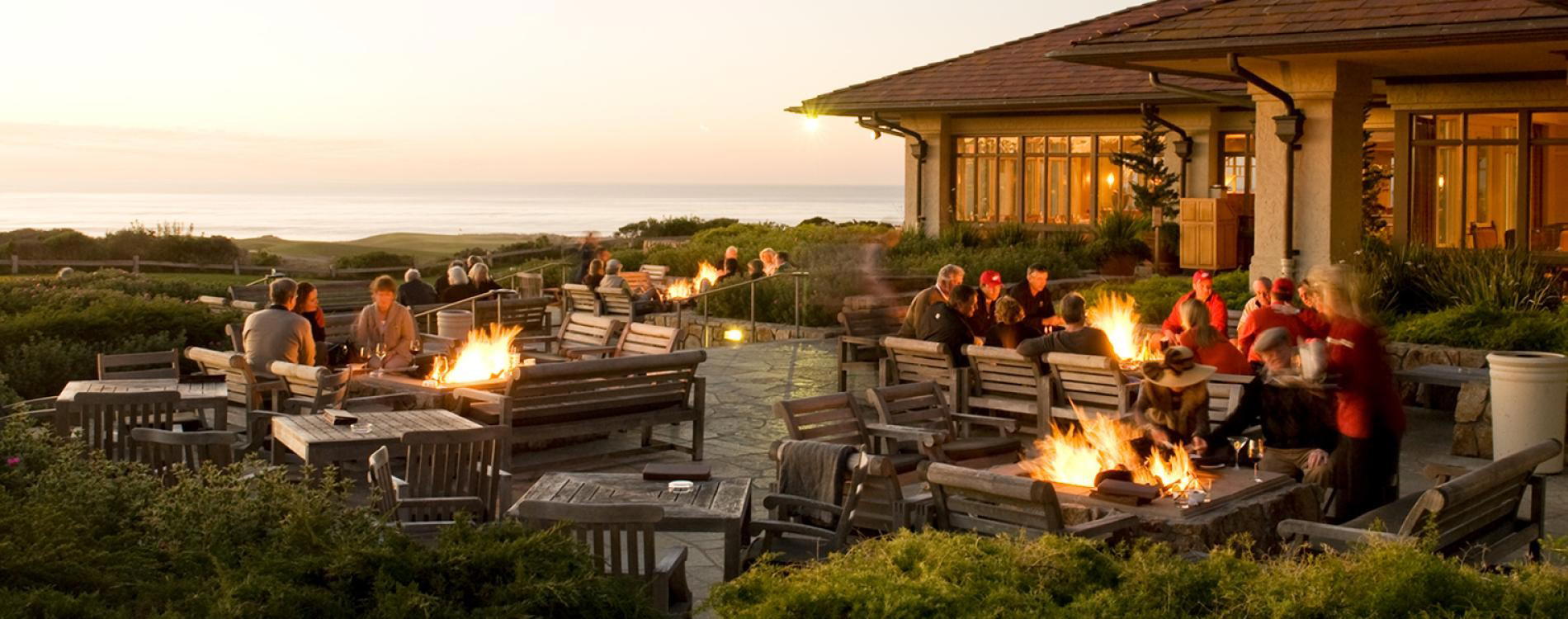
Bars in Del Monte Forest
Browse all →

Restaurants in Del Monte Forest
Browse all →
Wineries in Del Monte Forest
Browse all →
Details
- Classic
- Elegant
- Scenic
- Sophisticated
- Group Retreat
- Weekend Escape
- Golf Course
- Golf Course
Timeless Spanish Colonial Revival clubhouse blending white stucco exteriors, terracotta roofs, and modern luxury interiors amid Monterey pines and lush fairways.