Waimea Plantation Cottages
Set along the dry western shore of Kauai, Waimea Plantation Cottages occupies a former sugar plantation estate where early-twentieth-century worker cottages have been preserved and converted into guest accommodation. The property sits at the edge of one of Hawaii's least-developed coastlines, placing it in a different register from the resort corridors of the island's north and east shores. For travelers who read architecture as context, this is one of the more historically grounded stays in the Hawaiian Islands.
Pearl is the En Primeur Club membership app — saves, bookings, and concierge access live there. Same editors, same standards.
- Address
- X85C+43, 9400 Kaumualii Hwy, Waimea, HI 96796
- Phone
- +1 808 338 1625
- Website
- coasthotels.com
- Directions
- Get directions
 Saves & bookings on Pearl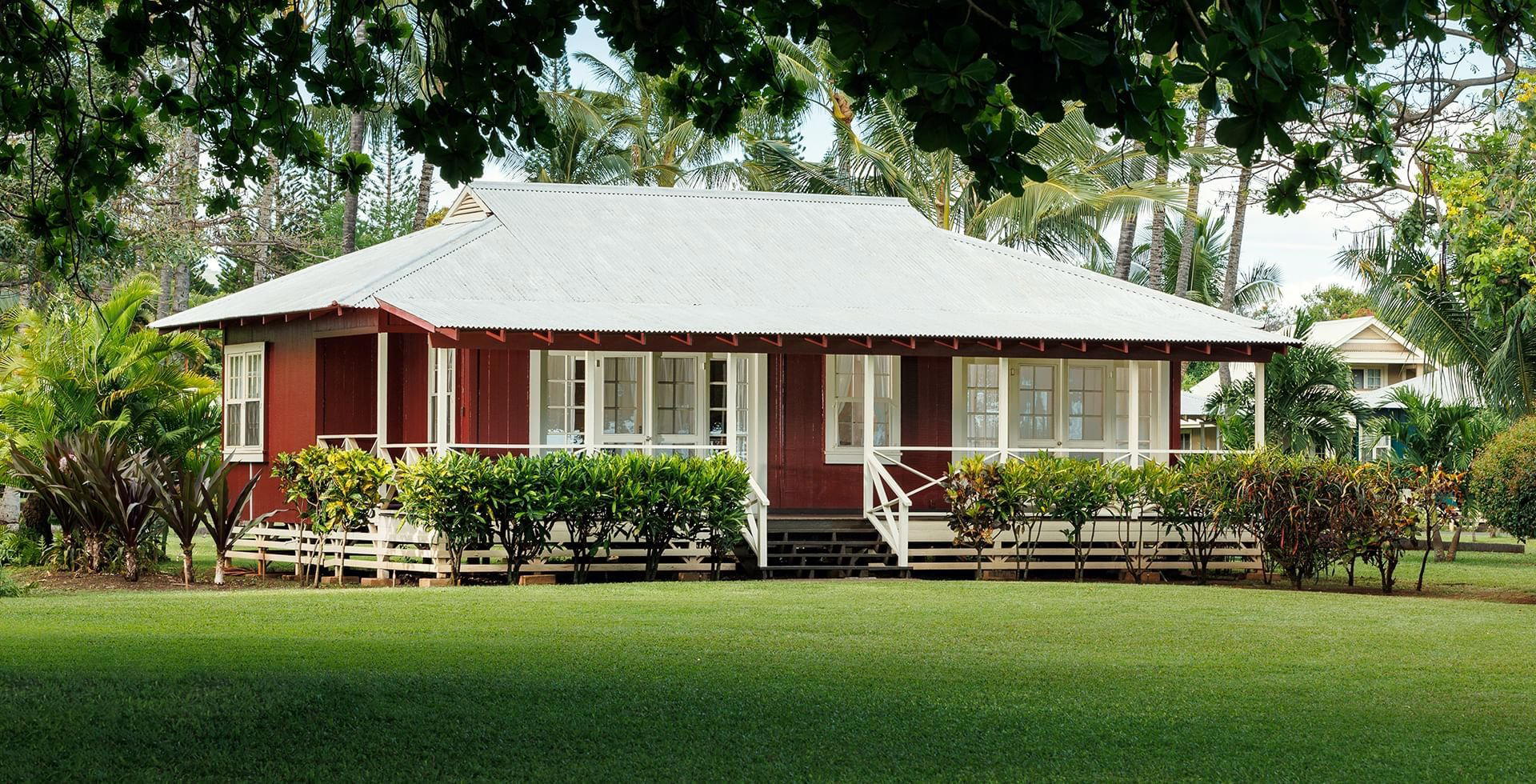
A Plantation Estate at the Edge of the Dry Shore
The western coast of Kauai operates on a different logic from the island's better-known north shore. Where Princeville and Hanalei attract visitors with dramatic sea cliffs and lush valley approaches, the Waimea side is drier, quieter, and shaped by a different chapter of Hawaiian history. Sugar cultivation dominated this stretch of the island for much of the nineteenth and early twentieth centuries, and the built environment that remains from that era is rare in Hawaii: functional, vernacular, and largely intact in certain pockets. Waimea Plantation Cottages draws directly from that inheritance, with a collection of plantation-era cottages that have been preserved and adapted for guest use on a coconut grove property fronting the Pacific. For travelers working through our full Waimea restaurants guide, the cottages provide a geographic and architectural anchor for the west side of the island.
The Architecture of a Working Estate
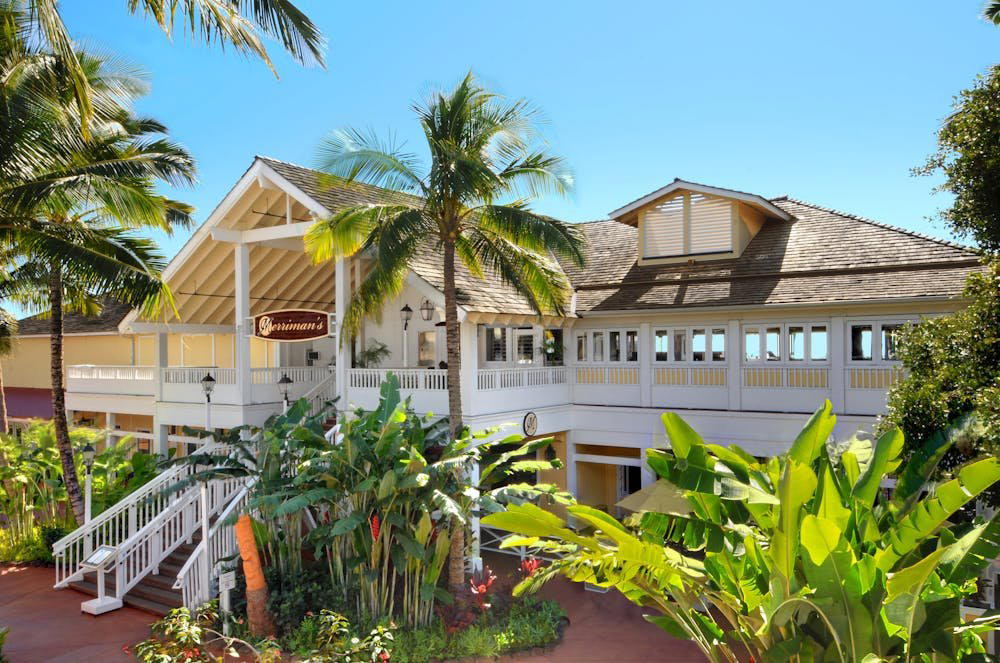
Plantation architecture in Hawaii evolved as a pragmatic form, designed to house a diverse labor workforce quickly and inexpensively. The cottages at this property reflect those origins: modest in scale, refined on piers to manage moisture and airflow, finished with simple board-and-batten cladding, and oriented to catch prevailing breezes. The result is a building type that reads as distinctly Hawaiian even though its origins are utilitarian rather than aesthetic. What has made the Waimea property significant within the Hawaiian historic preservation conversation is the retention of that vernacular character across multiple structures, set within a coconut grove that further frames the estate as a continuous spatial unit rather than a collection of isolated cabins.
This approach to preservation-through-use places Waimea Plantation Cottages in a specific tier within American heritage lodging. The closest equivalents are properties where the physical fabric of a working historic site has been retained and adapted, rather than demolished and reconstructed in period style. Properties like Blackberry Farm in Walland and Troutbeck in Amenia occupy a similar position in their respective regions: the land and structures carry genuine historical weight, and the accommodation format is built around that fact rather than around amenity stacking. At the other end of the spectrum sit properties like Amangiri in Canyon Point or Ambiente, A Landscape Hotel in Sedona, where the architecture is contemporary and the relationship to place is mediated through design rather than preservation.
Situating the Property on Kauai's West Side
The town of Waimea sits roughly at the entry point to Waimea Canyon, one of the most geologically significant landscapes in the Pacific and often referenced alongside the Colorado River canyons for its scale and color. That proximity shapes the travel logic of a stay here: the canyon and the Kokee State Park above it are the primary draws for the surrounding region, and a west-side base positions guests closer to those landscapes than any of the island's larger resort developments. Guests arriving from the east would typically drive through Lihue and along the southern coast, a route that takes around 45 to 60 minutes depending on traffic and starting point.
The coastline at this stretch of the island is formed by dark sand, a product of the volcanic geology, and the beach character is more raw and atmospheric than the sheltered white-sand shores of the south and east. That combination of landscape register, lower visitor density, and preserved built environment is what separates a stay at Waimea from the experience at Hawaii's larger resort corridors. Properties in those corridors, including Mauna Lani, Auberge Collection and Kona Village, A Rosewood Resort in Kailua Kona, are built around amenity programs, beachside infrastructure, and polished service delivery. The plantation cottage model at Waimea asks something different of its guests, closer in spirit to the self-contained property stays offered by Sage Lodge in Pray or Bernardus Lodge and Spa in Carmel Valley, where the surrounding landscape is the primary program.
Heritage Lodging in a Broader American Context
Category of historically grounded American lodging is smaller than the broader boutique hotel market and occupies a distinct position within it. Properties like Chicago Athletic Association in Chicago and Raffles Boston in Boston represent the urban end of that spectrum, where historic buildings have been converted to hotel use with significant interior investment. Rural heritage properties operate differently: the historical significance is embedded in the landscape and the building cluster as a unit, not in a single landmark structure. Waimea Plantation Cottages belongs to the rural cluster model, and within Hawaii, that places it in a genuinely small peer group.
For travelers comparing it against more conventional Hawaiian luxury options, the relevant contrast is not with properties like Four Seasons at The Surf Club in Surfside or Hotel Bel-Air in Los Angeles, which operate at the high end of the amenity-delivery model. It is closer to properties like Post Ranch Inn in Big Sur or SingleThread Farm Inn in Healdsburg, where a specific sense of place, shaped by landscape and structure, is the core proposition rather than a supporting feature.
Internationally, the closest analogs are properties where colonial or plantation-era buildings have been converted to accommodation in ways that preserve rather than sanitize their historical context. The approach is notably different from the more theatrical reinvention seen at properties like Aman Venice in Venice or Badrutt's Palace Hotel in St. Moritz, where historical grandeur is amplified through restoration rather than simply maintained.
Planning a Stay
Waimea sits on the western side of Kauai, approximately midway between Lihue Airport and the end of the road at Polihale State Park. The town itself is small, with basic services and a handful of local restaurants. Guests planning activity-heavy itineraries centered on Waimea Canyon and Kokee State Park should note that the canyon road climbs steeply from town, and the upper park areas can be cooler and wetter than conditions at the coast. West-side weather is generally drier and sunnier than the north shore, which makes this base particularly reliable for outdoor itineraries during the wetter winter months.
Comparable Spots, Quickly
| Venue | Cuisine |
|---|---|
| Waimea Plantation CottagesThis venue — the venue you are viewing | This venue |
| Aman New York | Michelin 3 Key, World's 50 Best |
| Amangiri | Michelin 3 Key, World's 50 Best |
| Hotel Bel-Air | Michelin 3 Key, World's 50 Best |
| The Beverly Hills Hotel | Michelin 3 Key, World's 50 Best |
| The Carlyle, A Rosewood Hotel | Michelin 2 Key, World's 50 Best |
At a Glance
- Rustic
- Scenic
- Cozy
- Quiet
- Historic
- Family Vacation
- Romantic Getaway
- Weekend Escape
- Group Retreat
- Destination Wedding
- Beachfront
- Historic Building
- Pool
- Outdoor Pool
- Wi Fi
- Beach Access
- Laundry Service
- Restaurant
- Garden
- Pool
- Outdoor Pool
- Wi Fi
- Beach Access
- Laundry Service
- Restaurant
Serenity pervades with rhythmic ocean waves, lush tropical landscaping, expansive lawns, and a bucolic, peaceful atmosphere evoking old Hawaii plantation life.
Know Before You Go
- Getting there
- X85C+43, 9400 Kaumualii Hwy, Waimea, HI 96796