Maritim Resort Calabria belongs to the resort-hotel end of Catanzaro’s hospitality spectrum, a useful reference point in a region where travel often moves between Ionian coast, hill towns, and family-run dining rooms.With no published public sources for price, awards, room categories, or dining format, the sharper way to read it is through setting, scale, and how a resort stay changes the rhythm of a Calabria itinerary.
 Discover on Pearl
Pearl is the En Primeur Club membership app — saves, bookings, and concierge access live there. Same editors, same standards.
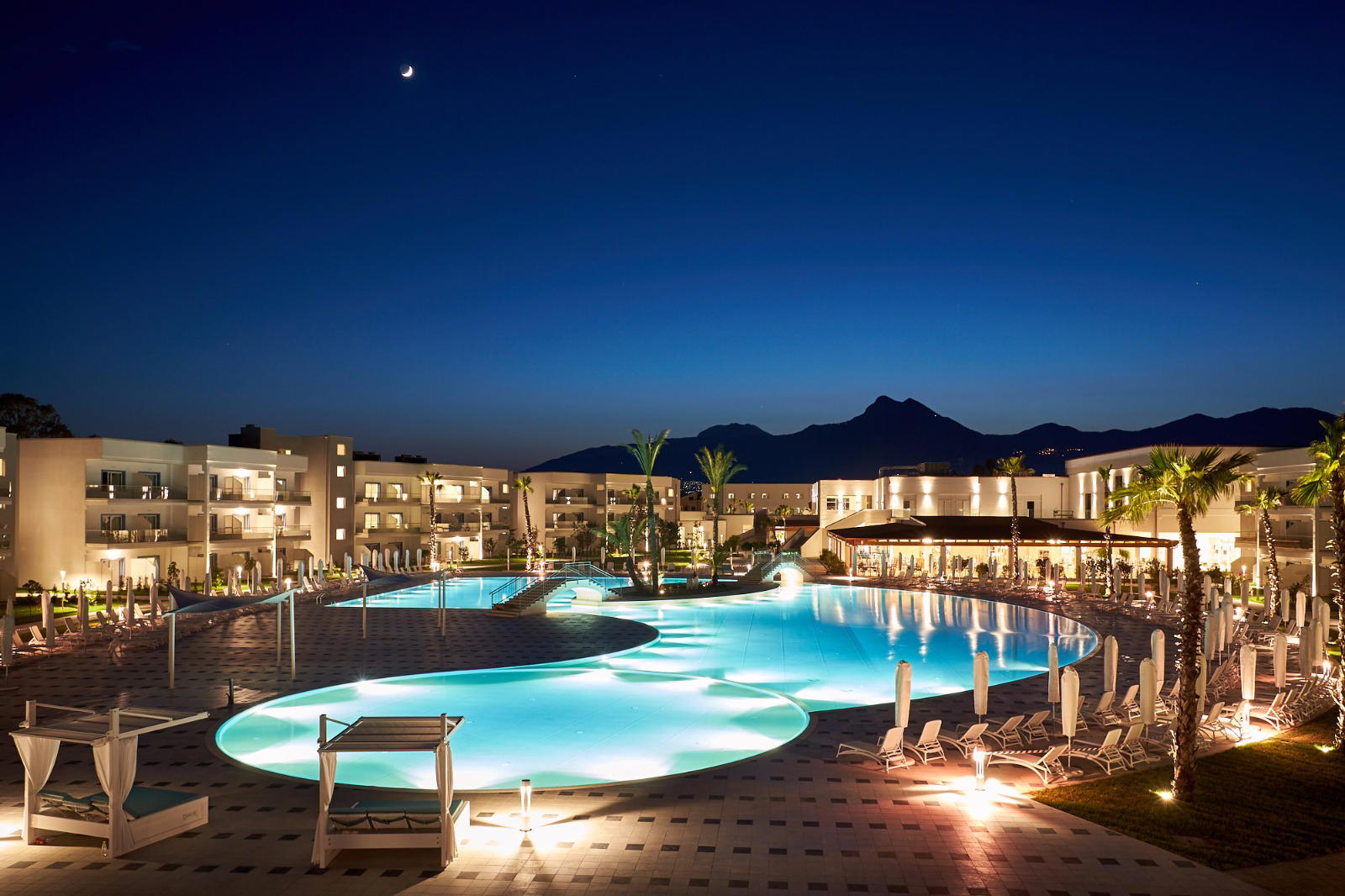
First impression: Calabria read through resort architecture
Calabria does not announce luxury in the same register as Lake Como, Capri, or the Amalfi Coast. The region works in a lower key: long coastal approaches, inland hills, sun-struck towns, and a hospitality culture that often feels closer to domestic Italian travel than international trophy collecting. That context matters when reading Maritim Resort Calabria. With the record carrying a 5-star rating and a nightly rate of US$184, the responsible assessment starts with what can be said without embroidery: this is a resort proposition in Catanzaro, not a palace-hotel entry in Venice, a design monastery in Milan, or a Tuscan estate hotel built around cellar access.
The physical expectation, then, should be calibrated around the Calabria resort category rather than the Italian grand-hotel canon. In southern Italy, resort architecture usually has to solve practical questions before it performs for photographs: shade, circulation, family and leisure traffic, parking, access to beaches or pools where applicable, and enough internal infrastructure to make a stay work without constant transfers. Maritim Resort Calabria sits inside that conversation. The interest is less whether the property can compete with gilded lobbies in Rome and more whether its scale and planning serve the slower, less formal travel pattern that defines much of Calabria.
For comparison, Italy’s hotel design spectrum is wide. Aman Venice in Venice operates inside the codes of a canal palazzo. Portrait Milano in Milan belongs to the urban fashion-hospitality conversation. Castello di Reschio in Lisciano Niccone and Rosewood Castiglion Del Bosco in Montalcino use estate scale and countryside restoration as their grammar. A Catanzaro resort has a different job: give structure to a region where the reward often lies outside the property, in drives, market towns, coastal lunches, and quiet evenings rather than choreographed hotel theatre.
Where it fits in Catanzaro's travel pattern
Catanzaro is not usually approached like Florence or Rome, where hotel choice is tied to museum density, walkable monuments, and a highly legible restaurant map. The city and its wider province sit between urban administration, coastal access, and inland Calabria. That makes accommodation less about being in a single postcard location and more about selecting a base that matches the pace of the trip. A resort format can be useful for travellers who want space, predictable services, and a contained home base after days spent moving through the region.
This distinction is important because Calabria remains under-covered in the premium travel conversation compared with Puglia, Campania, Sicily, and Tuscany.The absence of awards data for Maritim Resort Calabria in public sources is not automatically a warning; it simply means the property should not be sold on external trophies.In this region, a better test is functional: how the stay supports a Calabria itinerary, whether the setting makes logistical sense, and whether the built environment feels appropriate to heat, family travel, and longer stays.That is a different evaluation from the one applied to Four Seasons Hotel Firenze in Florence or Bulgari Hotel Roma in Rome, where heritage address, service theatre, and international brand positioning carry heavier weight.
Readers planning around Catanzaro should also think across categories, not only hotels. The city’s appeal depends on how the day is assembled: where to eat, where to drink, whether the itinerary pushes toward wine country, and which experiences justify extra driving. EP Club’s local indexes are useful for that wider map: Our full Catanzaro restaurants guide, Our full Catanzaro hotels guide, Our full Catanzaro bars guide, Our full Catanzaro wineries guide, and Our full Catanzaro experiences guide provide the better frame for judging whether a resort base suits the trip.
Design expectations: resort discipline over decorative drama
The assigned lens here is architecture and design, but the available record does not name an architect, designer, style, renovation date, room inventory, spa plan, or landscape scheme. That limitation is useful because it prevents the usual hotel-writing mistake: inventing a design story where the evidence is thin. What can be said is that a resort in Calabria has to be judged by spatial discipline. Does it make arrival easy? Does it separate leisure zones from sleeping areas? Does it protect guests from the practical friction of summer travel? Does the property feel planned for daylight, heat, and downtime rather than only for a lobby photograph?
Italian hotels with stronger documented design identities give helpful counterpoints. Borgo Santandrea in Amalfi Coast and Il San Pietro di Positano in Positano are tied to cliffside drama and coastal verticality. JK Place Capri in Capri works through island-house polish and compact social spaces. Il Pellicano in Porto Ercole belongs to the coastal hideaway tradition associated with the Tuscan shore. A Calabria resort should not be measured by those codes unless the property itself supplies that evidence. The cleaner comparison is with practical southern resort hospitality, where movement, shade, and facilities matter as much as decorative identity.
There is also a difference between design-led small hotels and resort hotels with broader guest use. Casa Maria Luigia in Modena is shaped by a narrow cultural and culinary frame. Corte della Maestà in Civita di Bagnoregio is tied to village atmosphere and historic texture. Maritim Resort Calabria, by name and category, reads closer to a stay designed for resort functionality. That can be the right choice in Catanzaro if the trip values ease over connoisseurship and if the days are planned around regional movement rather than constant hotel immersion.
Food, drink, and the Calabrian table
The record does not list a cuisine type, chef, signature dishes, bar program, restaurant hours, or booking method. Any claim about a particular menu would be invention. The editorial point instead sits in the surrounding food culture. Calabria’s table is direct, agricultural, and often sharper than visitors expect: preserved vegetables, chilli heat, cured pork, sheep and goat cheeses, seafood along the coasts, and pasta traditions that vary by town. Catanzaro dining can reward travellers who look beyond hotel convenience, especially when a resort base is paired with independent restaurants and day trips.
That is where the planning split becomes clear. A resort restaurant, when details are unverified, should be treated as a convenience until the current menu and hours are confirmed directly. The deeper Calabrian experience is built by cross-checking local dining options, market rhythms, and regional producers. For a traveller who usually anchors trips around Michelin rooms or tasting-menu counters, Calabria asks for a looser method: fewer assumptions, more attention to locality, and a willingness to let the strongest meal come from a simple room with serious ingredients rather than a formal dining room.
The comparison with other Italian hotel-food destinations is instructive. Modena has a documented culinary infrastructure that supports destination dining. Capri and Positano rely on island and coastal glamour as part of the meal. Tuscany often joins wine, estate hospitality, and restaurant culture into one package. Catanzaro is less codified for international visitors, which can be an advantage if expectations are set correctly. Maritim Resort Calabria should be considered a base from which to read the region’s food culture, not a substitute for that food culture unless current verified details support a restaurant-led stay.
How to plan a stay without over-reading the data
Practical planning should be more careful than usual. Confirm the current operating status, location, seasonal opening pattern, room types, dining hours, parking arrangements, and cancellation terms through a reliable booking source or direct contact before committing. In Calabria, this matters because travel days can involve longer drives than a map first suggests, and because seasonal hospitality may change pace between summer, shoulder months, and winter.
Price judgement also requires restraint. With a nightly rate of US$184 and no award record, the question is not whether Maritim Resort Calabria deserves a luxury premium against Italy’s trophy hotels. The better question is whether the total stay cost matches the utility it provides: resort services, space, convenience for Catanzaro-area plans, and reduced logistical friction. A traveller seeking highly designed interiors is better served by documented design hotels elsewhere in Italy, such as Il Sereno in Torno, Passalacqua in Moltrasio, or Castel Fragsburg in Merano. A traveller using Catanzaro as a regional base may value a resort format for different reasons: ease, facilities, and a calmer reset after days outside the property.
International comparisons sharpen the point. The Fifth Avenue Hotel in New York City is an urban design statement. Hôtel de Paris Monte-Carlo in Monte Carlo is tied to grand European hotel theatre. Badrutt's Palace Hotel in St. Moritz carries alpine social history. Those hotels are chosen partly for the mythology of the building. Maritim Resort Calabria should be judged with a narrower, more practical lens: how well the property supports a Calabria itinerary, and whether its resort structure matches the traveller’s tolerance for driving, heat, and seasonal variation.
Who should choose this kind of Catanzaro base
The strongest fit is a traveller who wants a structured stay in Catanzaro rather than a highly scripted hotel pilgrimage. Families, longer-stay guests, and those planning day trips may get more from a resort format than from a small urban address with limited facilities. The same applies to travellers who prefer to keep evenings simple after covering ground during the day. Calabria can be generous, but it is not always frictionless; a base with resort infrastructure can make the region easier to handle.
The weaker fit is a traveller whose primary goal is hotel design, chef-led dining, or award-backed service choreography. There is no record here for chef credentials, room design, restaurant recognition, or price tier. That absence should guide expectations. For heavily documented Italian hotel craft, the comparison set sits elsewhere: Savoia Excelsior Palace Trieste – Starhotels Collezione in Trieste for grand-city formality, Borgo Egnazia in Savelletri di Fasano for Puglian resort world-building, and the Lake Como and Tuscan properties for high-definition design narratives. Catanzaro asks for a different reading, and that is the point.
Peer Set Snapshot
Comparable venues nearby, for context on price, style, and recognition.
| Venue | Cuisine | Price | Awards | Notes |
|---|---|---|---|---|
| Maritim Resort CalabriaThis venue — the venue you are viewing | Large contemporary all‑inclusive beach resort operated by an international chain, designed for leisure stays with extensive activities and facilities. | $$$$ | 5-Star | |
| Hotel Rua Frati 48 in San Francesco | Luxury boutique in Renaissance palace | $$$$ | 5-Star | San Francesco |
| Palazzo del Corso | Elegant boutique in historic 19th-century palazzo | $$$$ | 5-Star | Corso Roma |
| C-Hotel & Spa | Contemporary minimalist boutique hotel emphasizing locally sourced materials and timeless design principles. | $$$$ | 5-Star | Cassago Brianza |
| i-SUITE | Futuristic all-suite luxury design hotel on Rimini seafront | $$$$ | 5-Star | Marina Centro |
| Botania Relais & Spa | Ten white-washed villas nestled in lush tropical gardens blending Mediterranean architecture with nature. | $$$$ | 5-Star | Forio |
Continue exploring
More in Catanzaro
Restaurants in Catanzaro
Browse all →
At a Glance
- Modern
- Lively
- Scenic
- Family Vacation
- Weekend Escape
- Group Retreat
- Honeymoon
- Romantic Getaway
- Celebration
- Beachfront
- Waterfront
- Terrace
- Panoramic View
- Wifi
- Pool
- Spa
- Fitness Center
- Kids Club
- Beach Access
- Concierge
- Business Center
- Waterfront
- Garden
A modern, all‑inclusive seaside resort atmosphere with light, contemporary rooms in grey and white tones spread across low-rise buildings, lively family-oriented public areas, pools and sports facilities, and a relaxed holiday vibe by the beach.