
Michelin Selected
A Michelin Selected palazzo on Gallipoli's main corso, occupying a restored historic building in Italy's Puglia region. The address places guests within the walled old town and its Ionian coastline, while the designation signals a level of quality control that sets it apart from the broader Salentine accommodation market. For design-conscious travellers considering the heel of Italy, this is a serious option.

Pearl is the En Primeur Club membership app, where members save venues, book tables and use the concierge.
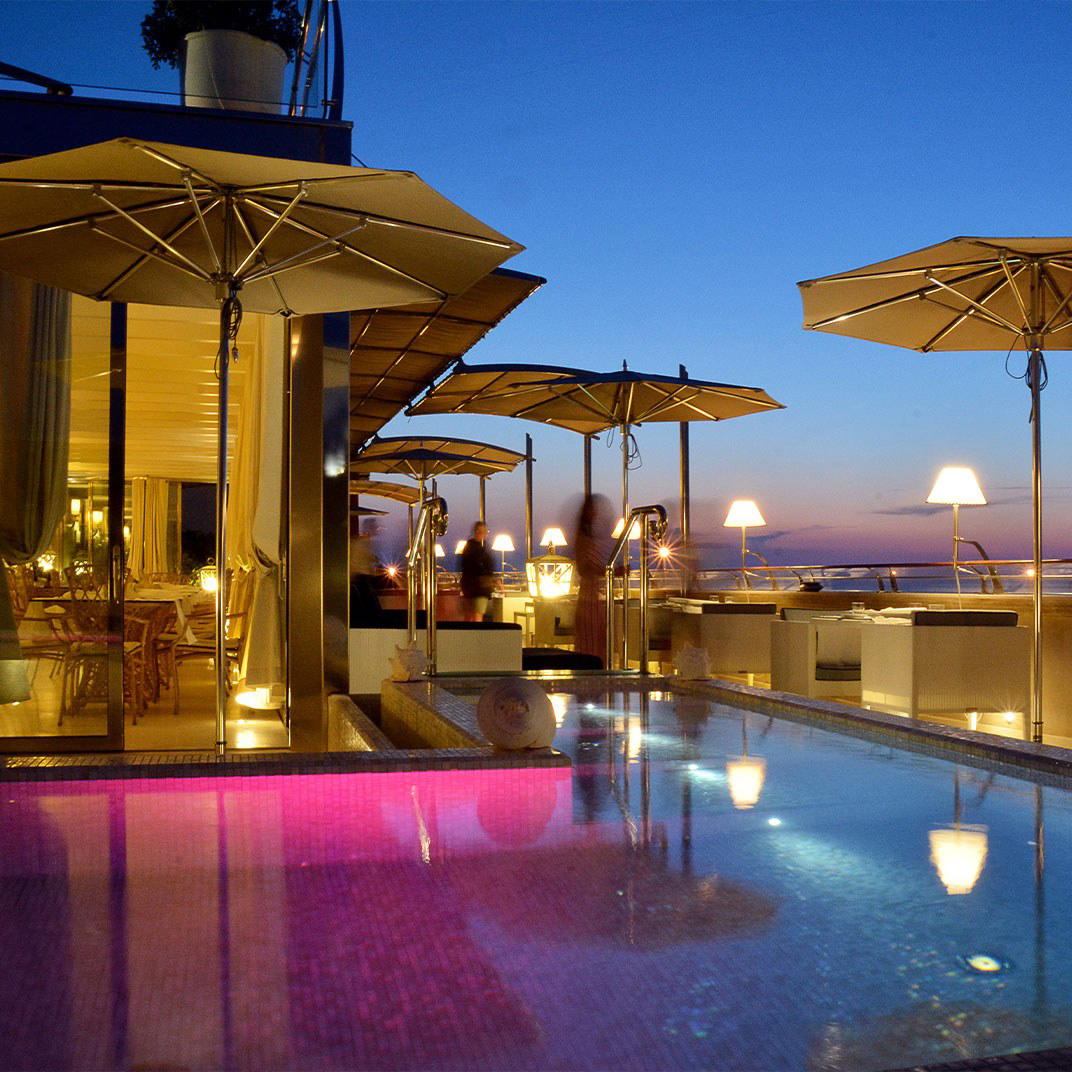
Stone, Cortile, and the Architecture of the Salentine Palazzo
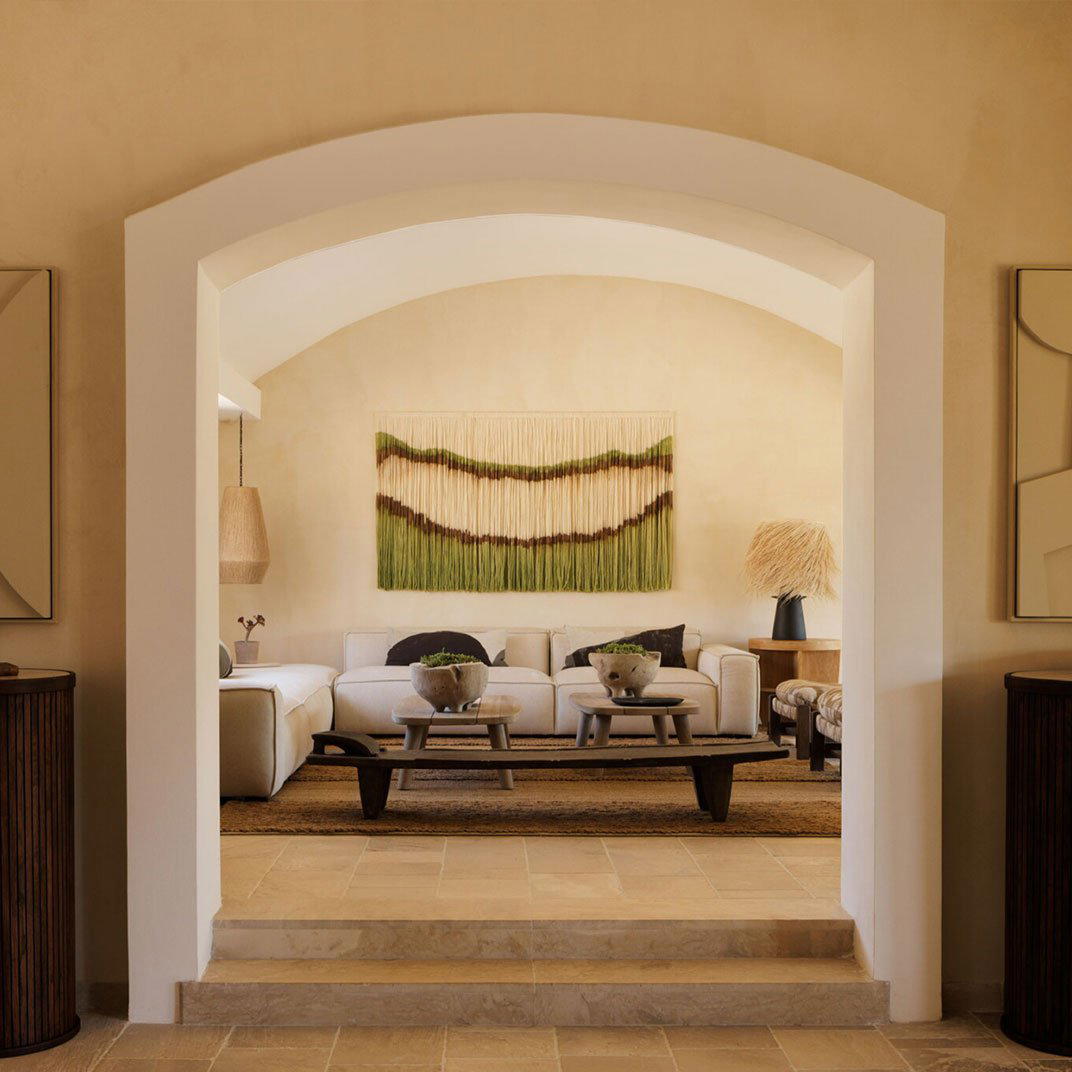
Gallipoli's old town sits on a small island connected to the mainland by a single bridge, and the buildings along Corso Roma carry the compressed, layered quality that characterises historic urban fabric in the Salento. Street-facing palazzo facades here are typically narrow and vertical, their stonework a warm local limestone that takes the afternoon light differently depending on the season. Entering a converted palazzo on this street means moving from the corso's public density into an interior world organised around a cortile or internal loggia, a spatial shift that defines the lodging typology. The transition from street noise to interior calm is architectural, not merely decorative.
Palazzo del Corso, at Corso Roma 145, occupies precisely this kind of historic envelope. The Michelin Selected designation, awarded for 2025, places it within a calibrated tier of Italian accommodation that Michelin's hotel guide uses to recognise properties where quality, character, and upkeep meet a documented standard, without requiring the scale or amenity set of a Michelin Key holder. In the context of Gallipoli, where accommodation ranges from basic summer rentals to a small number of genuinely considered conversions, that distinction carries weight. It indicates the property has been assessed and found consistent, which in a market with significant seasonal variability matters as a planning signal.
The Palazzo Typology in Southern Italy
Converting historic palazzi into lodging has become a dominant format across southern Italy's premium accommodation market. From Borgo Egnazia in Savelletri di Fasano to the trulli-anchored properties of the Valle d'Itria, Puglia has developed a clear language of adaptive heritage reuse, one that prizes original architectural fabric over new construction. The challenge in every case is the same: how to introduce the functional requirements of contemporary lodging without erasing the spatial logic that makes the building interesting in the first place. Thick stone walls, irregular room volumes, vaulted ceilings, and interior courtyards are both the asset and the constraint.
This typology has equivalents across Italy at considerably higher price points. Aman Venice in Venice or Four Seasons Hotel Firenze in Florence represent the best of that register, where palazzo conversion meets international luxury infrastructure at significant cost. The Salento operates at a different scale and price register, but the underlying architectural ambition, preserving the spatial character of a historic building while making it habitable for contemporary guests, is the same project. Properties like Palazzo del Corso and the nearby Palazzo Presta represent Gallipoli's answer to that question, working within tighter budgets and a more local architectural vocabulary.
Closer comparisons in terms of scale and regional context include Corte della Maestà in Civita di Bagnoregio or Castel Fragsburg in Merano, both Michelin Selected properties working within historic envelopes in destinations that are not primary Italian tourism centres. The pattern across all of them is the same: a recognisable building with local architectural identity, a limited room count that preserves intimacy, and a quality threshold that separates them from the generic hotel stock around them.
Gallipoli as Context
Gallipoli occupies a specific position in Italian coastal tourism. It is a working Apulian town with a genuine historic centre, not a purpose-built resort destination. The old town's baroque churches, the castle at the island's tip, and the fish market operating at dawn on the port side give it a texture that purely touristic Adriatic or Tyrrhenian resorts lack. The Ionian coast here is calmer and warmer than the Adriatic side of the peninsula, which draws a different visitor profile: families and couples prioritising water quality over infrastructure, and travellers willing to accept a degree of logistical friction in exchange for a less processed experience.
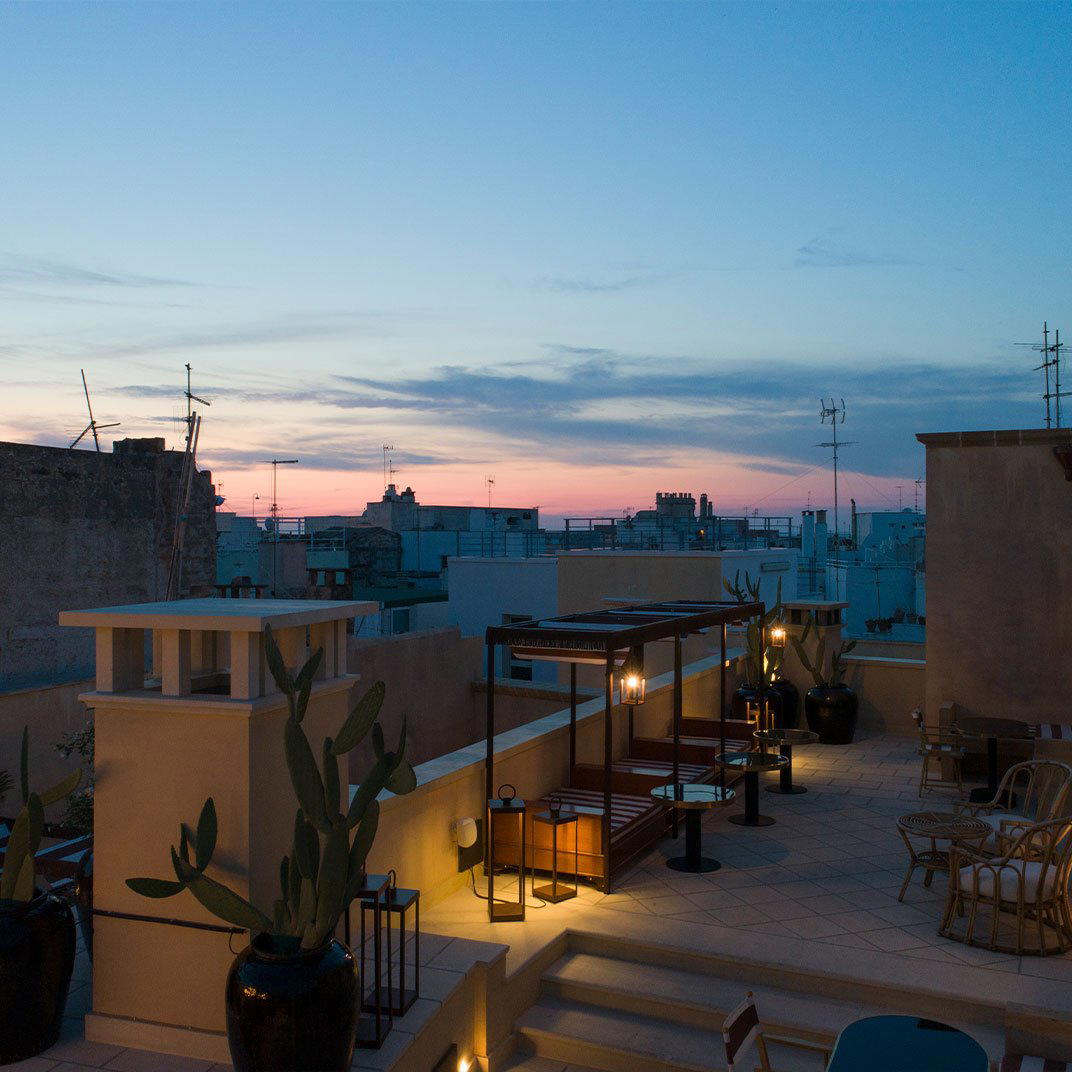
Staying within the walled old town rather than in the new town across the bridge places a guest in direct contact with that character. The corso itself functions as Gallipoli's social spine, and a hotel address at number 145 means the morning market, the evening passeggiata, and the waterfront are all within walking distance. For travellers comparing the Puglia coast against the more packaged offer of the Amalfi Coast, represented at the premium level by Borgo Santandrea or Il San Pietro di Positano, Gallipoli offers a different proposition: more ordinary Italian life, less theatrical scenery, and generally lower prices across food, accommodation, and services.
The Salento peninsula's position at Italy's southernmost accessible point also means that summer peak season runs July and August, with significantly lower occupancy in June and September, when the sea is still warm and the town less crowded. The architectural experience of the old town, including the palazzo interiors, reads better outside peak season when the streets are less congested and the building fabric more apparent.
Practical Planning
Palazzo del Corso is located at Corso Roma 145 in Gallipoli's old town, accessible from Brindisi airport (approximately 90 kilometres) or Lecce, which has rail connections and sits around 40 kilometres to the north. The Michelin Selected status for 2025 confirms current operational quality at the time of assessment, and booking through the Michelin guide's partner infrastructure is one verified route. For the wider context of what to eat and drink while in Gallipoli, our full Gallipoli restaurants guide covers the old town's dining options in detail.
Travellers building a longer southern Italian itinerary from this base might consider Therasia Resort in Lipari for a subsequent island chapter, or Rosewood Castiglion Del Bosco in Montalcino for a contrasting Tuscan chapter. Within the Puglia region, Borgo Egnazia represents the more full-service resort alternative, with a significantly larger footprint and price point to match.
What the Michelin Selection Signals
Michelin's hotel selection process differs from its restaurant stars in that it does not carry the same cultural weight, but it does serve a specific function: it identifies properties that a team of trained assessors considers worth recommending within a given market. For a destination like Gallipoli, which does not generate the volume of international editorial coverage that Venice, Florence, or even the Amalfi Coast attract, appearing in the Michelin Selected list for 2025 is meaningful evidence. It means the property was found and assessed, not just self-nominated, and that it met a documented threshold for condition, service quality, and character. In a segment where the gap between a property's marketing and its actual condition is often significant, that external verification has practical value for a traveller making a booking without prior firsthand knowledge of the destination.
At-a-Glance Comparison
Comparable venues nearby, for context on price, style, and recognition.
| Venue | Cuisine | Price | Awards | Notes |
|---|---|---|---|---|
| Palazzo del CorsoThis venue (the venue you are viewing) | Elegant boutique in historic 19th-century palazzo | Not listed | Michelin Selected | Not listed |
| Palazzo Presta | Contemporary boutique palazzo with destination-inspired design blending modern comfort and historic charm across three connected elegant buildings. | $1–100 | Michelin Selected · Mr & Mrs Smith Seal of Approval | centro storico (old town) |
| Weinegg Wellviva Resort | Luxury wellness resort set in vineyards with Mediterranean charm. | $300–500 | Michelin Selected | Cornaiano/Girlan |
| rhinoceros | Historic palazzo with contemporary design apartments | $300–500 | Michelin Selected · Mr & Mrs Smith Seal of Approval | Velabro |
| Dimora Palanca Boutique & SPA | Timeless five-star elegance harmonizing classic architecture with bold modern art. | Not listed | Michelin Selected | Historic Centre |
| SINA Bernini Bristol, Autograph Collection | Well-known 150-year-old luxury hotel reinterpreting Baroque luxury with contemporary twist. | $300–500 | Michelin Selected | Piazza Barberini |
Recognition history
Dated appearances from independent guides and award organizations, with the underlying list record or original source where available.
Michelin Selected
Michelin
Continue exploring
More in Gallipoli
Hotels in Gallipoli
All hotels in Gallipoli →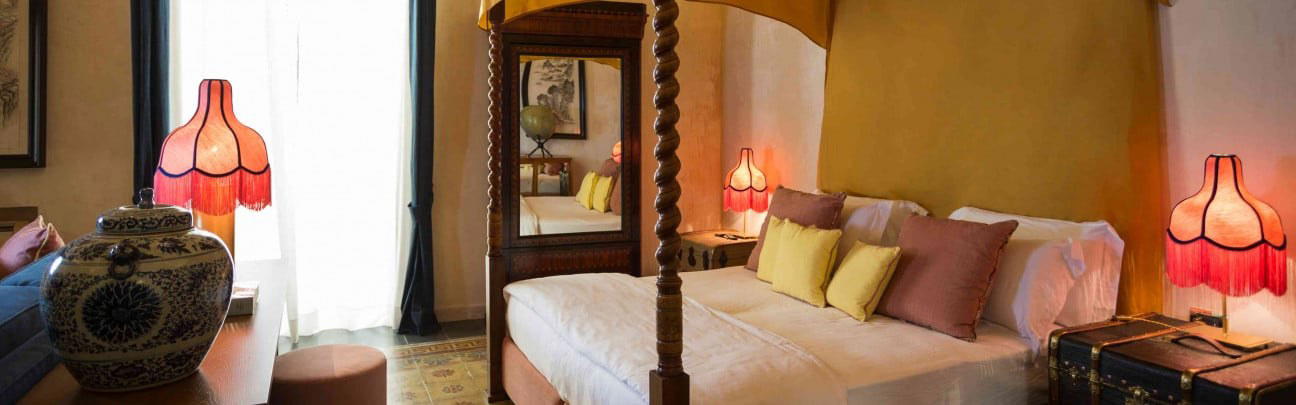
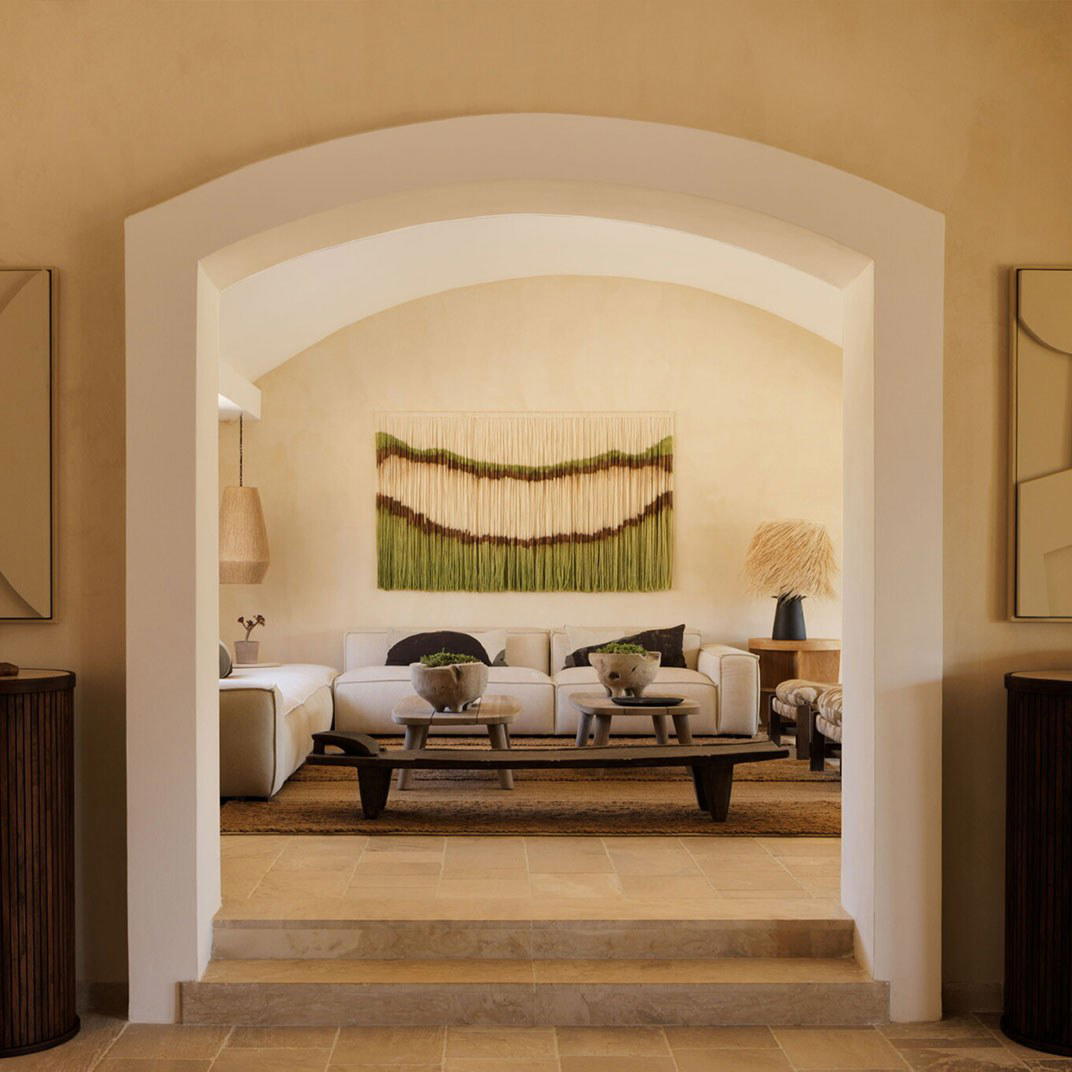
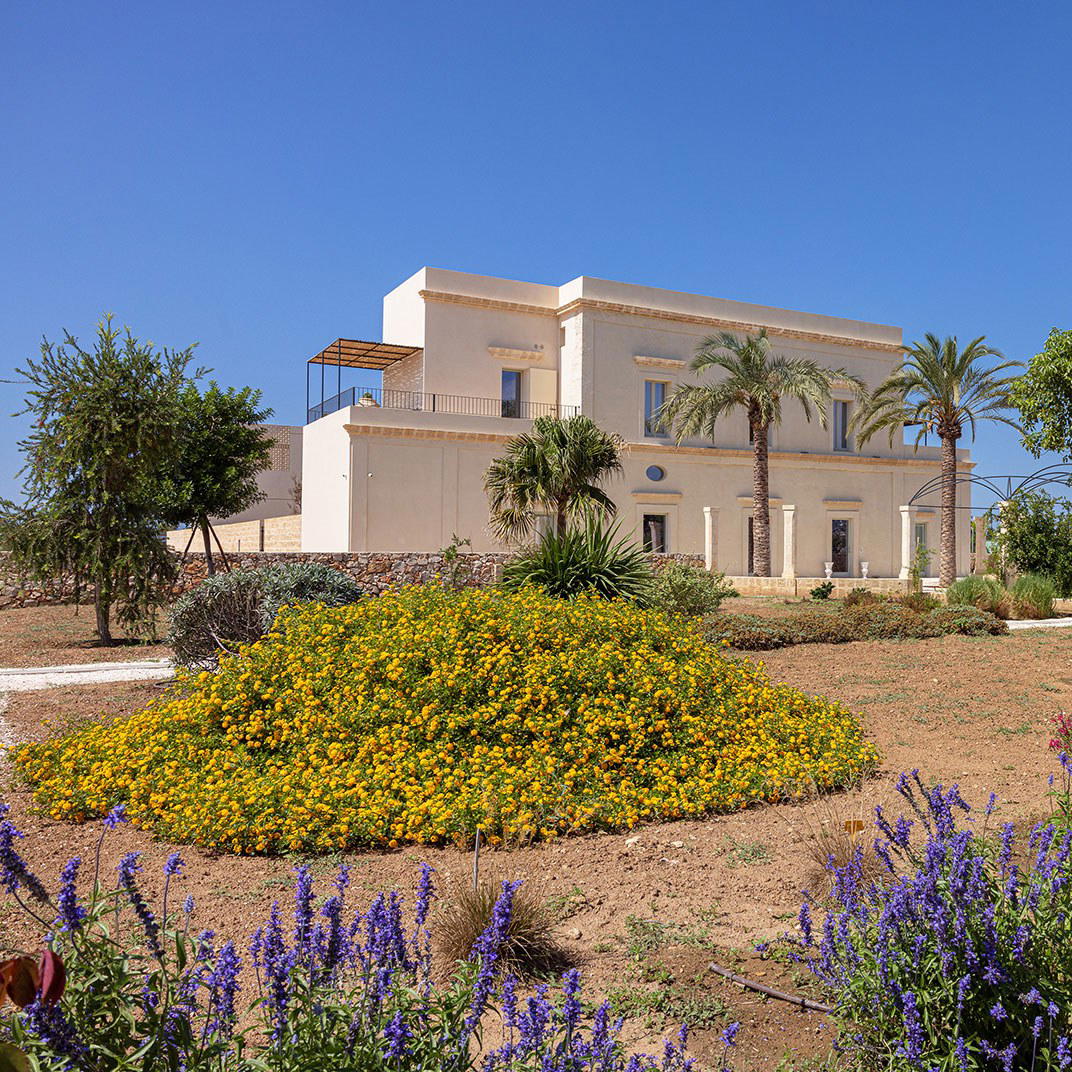
Bars in Gallipoli
Browse all →
Restaurants in Gallipoli
Browse all →

Details
- Elegant
- Sophisticated
- Romantic
- Classic
- Romantic Getaway
- Honeymoon
- Anniversary
- Historic Building
- Panoramic View
- Terrace
- Wi Fi
- Pool
- Spa
- Fitness Center
- Room Service
- Concierge
- Waterfront
- Elevator
Elegant and refined atmosphere combining 19th-century vaulted ceilings and frescoes with modern stylish elements, enhanced by rooftop dining and hydrotherapy pool.