Manami Resort


On the western edge of Negros Occidental, Manami Resort occupies a sheltered cove at Sipalay where a cluster of villas descend from jungle-covered hills toward calm, clear water. The property sits well outside the standard Philippine resort circuit, trading accessibility for genuine isolation. For travellers who treat remoteness as a feature rather than an inconvenience, it belongs on the shortlist.
Pearl is the En Primeur Club membership app — saves, bookings, and concierge access live there. Same editors, same standards.
- Address
- MCC3+FC3 Brgy. Cayhagan, Sipalay City, 6113 Negros Occidental
- Phone
- +63 917 179 2611
- Website
- manamiresort.com
- Directions
- Get directions
 Saves & bookings on Pearl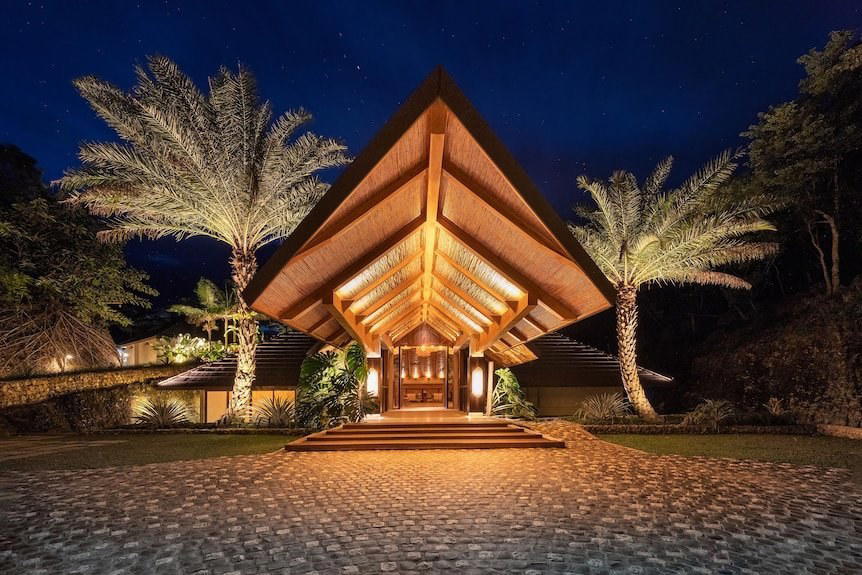
Where the Hills Meet the Cove
The western coastline of Negros Occidental is not where most Philippine resort itineraries end up. Sipalay sits at the far edge of the province, several hours by road from Bacolod, and the journey itself acts as a filter: travellers who arrive at Manami Resort have committed to the detour. What greets them is a setting that rewards that commitment: a sheltered cove framed by jungle-covered hills, with a handful of villas positioned to face the water across a slope of dense tropical vegetation.
This is the defining design logic of the property. Rather than clearing the hillside to manufacture views, the architecture works with the terrain. The villas appear to have been placed in conversation with the forest rather than imposed upon it, which puts Manami in a recognisable cohort of small Philippine retreats that trade resort-park scale for something closer to found landscape. Banwa Private Island in Palawan and Nay Palad Hideaway in Siargao operate within the same logic: low villa counts, site-specific placement, and a deliberate refusal of the grand-lobby arrival sequence that defines larger resort formats.
Design Philosophy on a Remote Shore
Small-footprint resorts in the Philippines have developed two distinct design responses to their settings. The first reaches for international luxury codes: polished stone, air-conditioned public areas, pools that mirror the sea beyond. The second leans into the local physical context, using the site's existing character as the primary design material. Manami sits in the latter camp. The villas emerge from the hillside rather than dominating it, and the sheltered cove below functions as the resort's central amenity in a way that no engineered pool could replicate.
This approach is more demanding of guests than it first appears. Access between villas and the water involves the kind of terrain that rules out flat-shoe ease. The payoff is a spatial experience that feels genuinely embedded in its location rather than dropped onto it. For context, Amorita Resort in Panglao takes a comparable approach on its clifftop site, where the architecture negotiates a steep drop to the water below. Both properties ask something of their guests physically in exchange for settings that conventional resort planning would have flattened.
The villa count is deliberately small, which keeps the property in a different competitive register from larger Visayas resorts like BE Grand Resort in Bohol or Bluewater Sumilon Island Resort. Where those properties build amenity breadth around volume, Manami's value proposition rests on scarcity and seclusion. The fewer keys a resort operates on a site like this, the more the natural setting can carry the experience.
Sipalay and the Case for Western Negros
Sipalay City is not a household name in Philippine tourism, and that status is partly structural. Negros Occidental's tourism infrastructure has historically concentrated around Bacolod, with coastal destinations receiving less development investment than comparable areas in Cebu, Bohol, or Palawan. The consequence is a western coastline that retains a character that more established resort zones have largely lost: irregular, uncrowded, and only partially mapped by the international travel industry.
For the specific traveller looking for privacy and clear water without the resort-town infrastructure that now surrounds destinations like Boracay, that gap is the proposition. Properties like Crimson Resort and Spa in Boracay and Dusit Thani Mactan Cebu Resort offer comparable water quality with a far denser surrounding infrastructure. Sipalay offers neither the amenity depth nor the crowd density of those destinations, which is precisely the trade that Manami's positioning makes explicit.
The comparison that holds most instructively is with properties that occupy comparably remote shorelines elsewhere in the archipelago. Cauayan Island Resort in El Nido and Princesa Garden Island Resort in Puerto Princesa both operate at the outer edges of Philippine resort geography, where access difficulty translates directly into environmental quality. Manami belongs to that pattern, applied to a coastline that has seen fewer development cycles than Palawan.
Getting There and Planning Ahead
The practical reality of reaching Manami is a significant planning variable. Sipalay is accessible from Bacolod via a road journey that runs through the sugar cane flatlands of Negros Occidental before climbing into hillier southern terrain. Bacolod's airport connects to Manila and a small number of other Philippine hubs. Travellers arriving from Cebu can also approach via the Dumaguete route, with Hotel Dumaguete serving as a logical staging point for that approach. Neither route is quick, and the journey should be factored as part of the overall trip rather than treated as a transit inconvenience.
Because the property operates with a small number of villas, advance booking is the expected standard rather than an exception. Walk-in availability at a property of this type and location is not a reliable assumption; advance reservation is recommended. For travellers used to booking on short notice through standard platforms, the approach here requires earlier planning than mid-scale resort bookings typically demand. Properties in comparable isolation tiers across the region, including Ogtong Cave Resort in Bantayan and Phuket Village in Polillo, operate under similar booking dynamics.
Manami is a 5-star resort in the premium price tier. The physical profile of the property, its villa-based format, and its positioning within the isolation-focused segment of Philippine resort hospitality place it in a different bracket from mid-market beach accommodation, but specific rate comparisons require direct inquiry. For a sense of what ultra-premium Philippine island retreats charge at comparable scales, Amanpulo in Pamalican Island sets the upper boundary of the category, while Anya Resort Tagaytay offers a useful reference point for smaller, design-focused properties at a different price tier.
Fast Comparison
Comparable venues nearby, for context on price, style, and recognition.
| Venue | Cuisine | Price | Awards | Notes |
|---|---|---|---|---|
| Manami ResortThis venue — the venue you are viewing | Luxury nature resort blending modern amenities with natural surroundings | $$$$ | 5-Star | Not listed |
| The Lind Boracay | Lifestyle beachfront resort with modern, warm, and chic sensibility | $$$$ | 5-Star | Station 1 |
| NUSTAR Hotel Cebu | Ultra-luxury integrated resort with classic grandeur and modern sophistication. | $$$$ | 5-Star | South Road Properties |
| Crimson Resort & Spa Mactan | Contemporary Asian design with Balinese-inspired tropical aesthetics and Cebuano cultural touches, master-planned by internationally recognized resort architects. | $$$$ | 5-Star | Punta Engaño, Mactan Island |
| The Westin Manila | Wellness-inspired urban high-rise with resort-like amenities | $$$$ | 5-Star | Ortigas Center |
| Amorita Resort | Clifftop boutique luxury resort blending modern organic aesthetics with tropical island elements. | $$$$ | 4-Star | Alona Beach |
Recognition history
Dated appearances from independent guides and award organizations, with the underlying list record or original source where available.
Michelin Selected
Michelin
Small Luxury Hotels of the World Member
Small Luxury Hotels of the World
At a Glance
- Scenic
- Quiet
- Romantic
- Elegant
- Cozy
- Romantic Getaway
- Honeymoon
- Family Vacation
- Wellness Retreat
- Weekend Escape
- Beachfront
- Infinity Pool
- Private Villa
- Destination Spa
- Panoramic View
- Pool
- Spa
- Wi Fi
- Concierge
- Room Service
- Restaurant
- Bar
- Beach Access
- Waterfront
- Pool
- Spa
- Wi Fi
- Concierge
- Room Service
- Restaurant
- Bar
- Beach Access
Serene and peaceful with natural light, cool breezes from large windows, spa-like rooms, and mesmerizing sunset views over the ocean.