Leeu Estates


Leeu Estates occupies a hillside just outside Franschhoek village, where a restored century-old Cape Dutch manor anchors 17 rooms and freestanding cottages across terraced gardens and vineyards. A 15-metre infinity pool, three-treatment-room spa, and a restaurant under Oliver Cattermole give the property a resort range within an intimate frame. The Mullineux & Leeu tasting room adds serious wine credentials to a stay that sits at the quieter, more residential end of Winelands accommodation.
 Discover on Pearl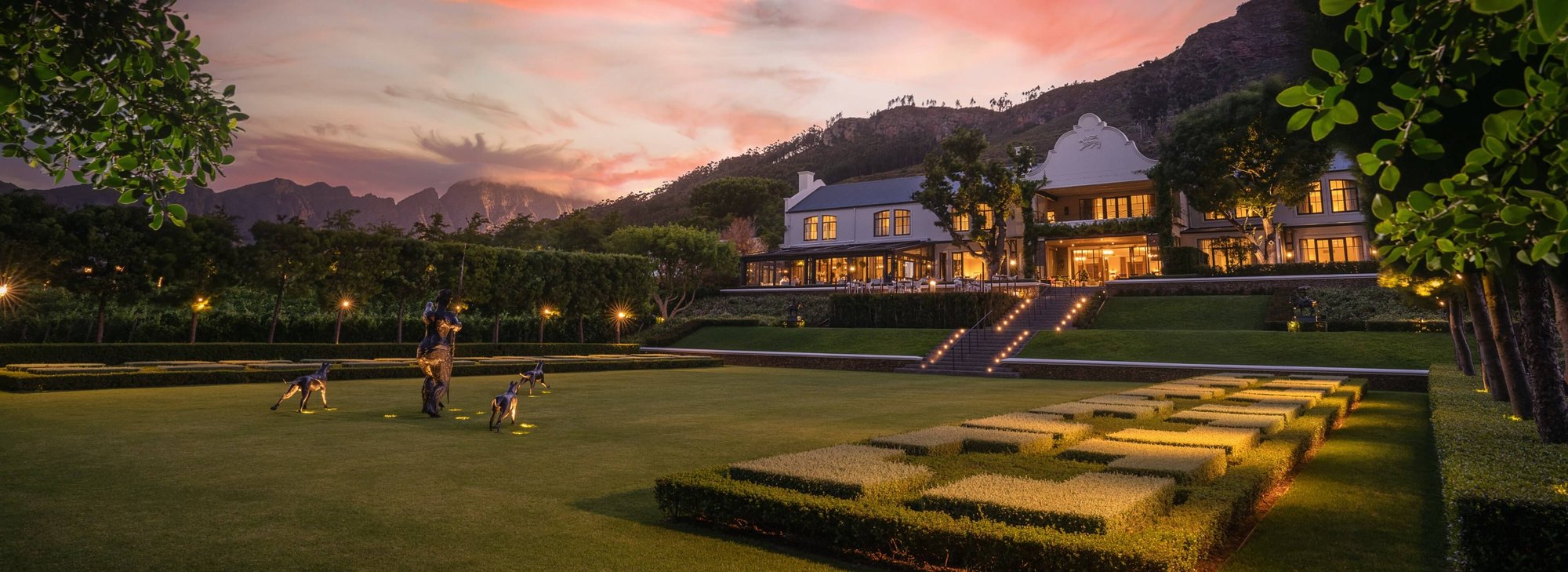
A Hillside Removed from the Village Hum
Approaching Leeu Estates along Dassenberg Road, the Franschhoek mountains assert themselves before the property does. The Cape Dutch gables appear only once you clear the vineyard rows, their white lime-washed face set against the kind of mountain backdrop that makes the valley one of South Africa's most closely watched wine regions. The estate occupies a position that the village properties, however charming, cannot replicate: refined, garden-surrounded, and sufficiently removed from the main street that the dominant sounds are birdsong and the distant clatter of tasting-room visitors rather than passing traffic.
Franschhoek carries considerable weight in the national food and wine conversation. The town draws serious producers, a density of destination restaurants, and an accommodation tier that spans guesthouse intimacy to sprawling estate grandeur. Leeu Estates positions itself between those poles: 17 keys across the main Cape Dutch house and a cluster of freestanding cottages, a size that allows genuine attentiveness without the programmatic quality of a larger resort. For context on the broader competitive set, our full Franschhoek hotels guide maps out how the valley's properties compare.
The shortlist, unlocked.
Hard-to-book tables, cellar releases, and concierge-planned trips.
Get Exclusive Access →The Physical Frame: Gardens, Vineyards, and Working Architecture
The Cape Dutch house at the core of the property dates back roughly a century, and its restoration reads as conservation rather than reconstruction. Neutral-toned interiors in linen, sisal, stone, and wood keep the focus on proportion and texture rather than decorative intervention. Classic and deluxe rooms are described as spacious and sober, with rain showers and underfloor heating as standard. Studios and suites add fireplaces and additional internal volume; the cottage rooms can be reconfigured into self-contained residences that accommodate families or larger travel parties, which positions the property as a viable option for multi-generational travel rather than solely couples retreats.
Outside the rooms, the estate holds its own: gardens with an art collection woven through them, the vineyard rows running toward the mountain treeline, and a 15-metre infinity pool whose edge aligns with the view rather than interrupting it. The spa adds three treatment rooms in a separate building, which preserves a degree of separation between wellness and the main residential flow of the property.
Wine at the Centre: The Mullineux & Leeu Tasting Room
Among Franschhoek estates with serious wine credentials, Leeu Estates carries an advantage that goes beyond having a cellar on-site. The tasting room is operated by the Mullineux & Leeu team, a pairing that links the property directly to one of the Western Cape's most respected wine operations. Chris and Andrea Mullineux have built a production identity around terroir-driven Swartland wines, and their involvement here signals something beyond a promotional annexe: guests access a program grounded in genuine winemaking philosophy rather than estate retail.
South African wine has moved substantially in the past decade, with a growing number of producers — particularly in the Swartland and the cooler Franschhoek sites — working with greater restraint and site specificity. The Mullineux & Leeu collaboration at this tasting room places Leeu Estates within that current rather than outside it. For a broader sweep of where to taste across the valley, our full Franschhoek wineries guide offers a detailed overview.
Responsible Luxury and the Estate's Ecological Position
Winelands estates that operate at the premium tier increasingly carry a dual brief: deliver comfort and also demonstrate that the land they sit on is being managed with some degree of accountability. Leeu Estates benefits from a setting where the natural environment is both the primary amenity and a resource requiring stewardship. The gardens, the mountain-facing terraces, and the vineyard rows are not backdrop decoration; they are the reason guests choose an estate over a village property like Leeu House, the urban counterpart in central Franschhoek.
Across the South African hospitality sector, the most substantive environmental commitments tend to come from properties where ownership has a direct stake in the land's long-term condition. Estates managing working vineyards have an inherent incentive to maintain soil health, water management, and biodiversity corridors that purely residential hotels do not share. That structural alignment between commercial interest and environmental care is more durable than certification-led sustainability marketing, and it gives land-working properties like this one a different baseline conversation around responsible operation. Comparable thinking at larger scale can be seen at Babylonstoren in Paarl, where the farm's working identity shapes every guest-facing decision.
For guests who weight environmental accountability in their travel decisions, the estate model in general , and the Franschhoek valley in particular, given its agricultural density , offers a more grounded answer than urban luxury hotels can provide. Leeu Estates' combination of working vineyard, garden management, and art-integrated outdoor space reflects the kind of layered land stewardship that converts a property from a place that happens to be set in nature into one that takes its position within a living ecosystem seriously.
The Restaurant and the Shared Kitchen Identity
Oliver Cattermole runs the kitchen at both Leeu Estates and Leeu House, which creates a coherent culinary line between the two properties rather than treating each as a standalone outlet. South African wines flow through both dining rooms with the kind of liberal quantity that signals genuine commitment rather than obligatory list-building. The Franschhoek dining scene , covered in full through our Franschhoek restaurants guide , runs from destination fine dining to casual terrace eating, and a hotel restaurant in this context has to hold its own against strong independent competition. Having a single kitchen identity across both Leeu properties provides a clearer market position than the fragmented approach common among multi-outlet hotel groups.
Placing Leeu Estates in the Franschhoek Peer Set
Franschhoek's premium accommodation divides between village-centre properties and estate holdings on the valley slopes. Le Quartier Francais and Akademie Street Boutique Hotel represent the village-centre model, walkable to restaurants and the main street's wine bars , covered in our Franschhoek bars guide. La Residence and Mont Rochelle occupy the grander estate tier, with room counts and facilities that push toward full resort operation. Leeu Estates sits between those poles at 17 keys: large enough for a spa and dedicated tasting room, compact enough to retain the residential character that smaller Franschhoek properties like The Last Word Franschhoek and Sterrekopje Healing Farm trade on.
Within the broader South African luxury tier, the Leeu properties occupy a specific niche: restored heritage architecture, serious wine and food programming, and a scale that prioritises quality of attention over room-night volume. Properties like Mount Nelson in Cape Town operate at a different institutional register entirely; the comparison to draw is less between grand city hotels and more between the small number of Winelands estates that take art, wine provenance, and landscape management as seriously as the room count allows.
Planning a Stay
Leeu Estates is located on Dassenberg Road, a short drive from Franschhoek village, which means a car or estate transfer is the practical norm for accessing the town's restaurants and wine route stops. The spa's three treatment rooms suggest advance booking is advisable in peak season, which in Franschhoek runs roughly November through February alongside the Easter and school holiday windows. The 17-room count means availability tightens quickly during wine festival weekends and the December holiday period. Guests combining a Winelands stay with Cape Town should note that the city-to-Franschhoek transfer takes approximately an hour from the central Atlantic Seaboard. For travellers building a longer South Africa itinerary that includes wildlife, the Leeu Estates stay pairs naturally with properties like Singita in Kruger National Park, andBeyond Phinda Forest Lodge, or andBeyond Ngala Safari Lodge , the wine-country to game-reserve arc that has become the standard premium South Africa routing. For those extending further, andBeyond Phinda Private Game Reserve Lodges, andBeyond Kirkman's Kamp, Abelana River Lodge, and AtholPlace Hotel & Villa in Johannesburg round out a full country circuit.
The shortlist, unlocked.
Hard-to-book tables, cellar releases, and concierge-planned trips.
Get Exclusive Access →Frequently Asked Questions
Cost and Credentials
A fast peer set for context, pulled from similar venues in our database.
| Venue | Price | Awards | Notes |
|---|---|---|---|
| Leeu Estates | South Africa’s Winelands town of Franschhoek merits every bit of the attention i… | This venue | |
| Akademie Street Boutique Hotel and Guest House | |||
| La Residence | |||
| Le Quartier Francais | |||
| Leeu House | |||
| Mont Rochelle |
Preferential Rates?
Our members enjoy concierge-led booking support and priority upgrades at the world's finest hotels.
Get Exclusive AccessThe shortlist, unlocked.
Hard-to-book tables, cellar releases, and concierge-planned trips.
Get Exclusive Access →