La Fonda Heritage Hotel


1 Michelin Key · Relais Chateaux Award
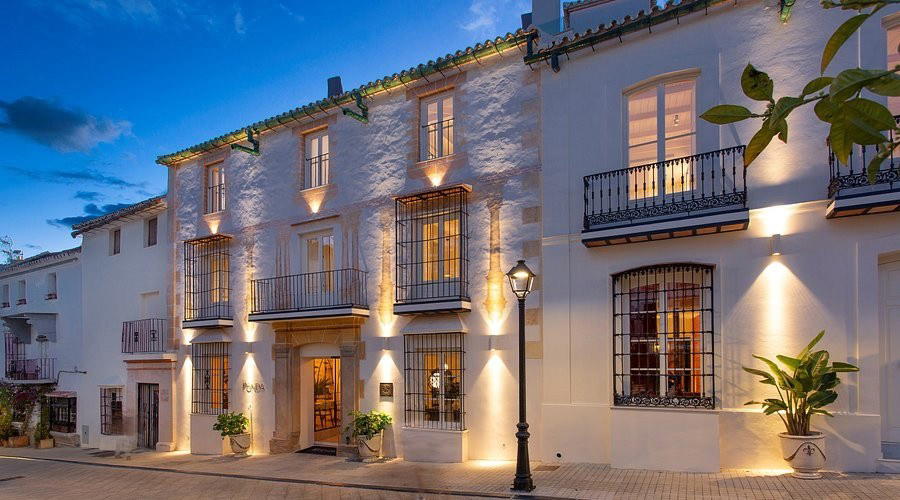
A trio of 16th-century buildings on one of Marbella's most handsome plazas, La Fonda Heritage Hotel compresses five centuries of Andalusian architecture into 19 rooms organized around open-sky patios. The interiors run contemporary against stone archways and ceiling frescoes, with marble bathrooms and Marshall speakers as standard.

Pearl is the En Primeur Club membership app — saves, bookings, and concierge access live there. Same editors, same standards.
- Address
- Pl. Santo Cristo, 9 & 10, 29601 Marbella, Málaga
- Phone
- +34 952 12 38 40
- Website
- lafondaheritage.com
- Directions
- Get directions
What a 16th-Century Plaza Address Actually Delivers
Marbella's Casco Antiguo is one of the most photogenic old quarters on the Costa del Sol, and the standard of accommodation within it has historically lagged behind its aesthetic promise. The area draws visitors precisely because it resists the resort-scale logic that dominates the coastline, but small boutique hotels inside genuinely historic buildings have been slow to arrive. La Fonda Heritage Hotel occupies that gap: three 16th-century structures on the Plaza Santo Cristo, a square that reads as a set piece of Andalusian civic architecture, with a 19-room property that takes the buildings' original identity seriously rather than papering over it.
The buildings themselves have cycled through lives as a church, a school, and a private mansion, which is a longer institutional history than most hotels in this price category anywhere in southern Spain. That layering is visible in the fabric: stately columns, stone archways, ceiling frescoes, and tiled courtyards remain present rather than having been neutralised into a generic boutique aesthetic. What has changed is the layer applied over the best of this, which runs in a crisp modern-classic direction that keeps the palette near-monochrome and the furniture choices spare. The tension between those two registers is what gives the hotel its character.
The Room Experience: What the Overnight Stay Delivers
In Marbella's small-hotel sector, room consistency across 19 keys is often a liability, since historic buildings rarely produce uniform floor plans. At La Fonda, the layout variation is acknowledged rather than fought: no two rooms are alike, but the design language across all of them holds to a coherent standard. Wood-beamed ceilings, minimalist decor, and a near-monochrome colour scheme create a recognisable idiom whether the room faces the plaza, the rooftop line, or one of the internal patios.
Bathrooms sit at the stronger end of what the boutique-historic category typically delivers in southern Spain. Subway tiling, marble walk-in showers, and sophisticated lighting are standard across the property, with Dyson hairdryers included as a baseline amenity rather than a feature reserved for upper-tier rooms. Marshall speakers appear throughout. The differential between room types plays out through format rather than finish: some configurations add free-standing soaking tubs, others offer large private terraces with sunbeds, and a further group provide smaller balconies with views across the old town's roofline and palms. At an average rate of $486 per night, with entry rates from $421, the property prices at the lower edge of the Marbella boutique premium, which is a more competitive position than its architecture alone would justify.
For a property of this size and age, that score reflects consistent execution rather than occasional peaks.
Patios, Restaurant, and the Rooftop Logic
The spatial organisation of the hotel follows the Andalusian patio typology: rooms arranged around a series of courtyards, some open to the sky and furnished with plush sofas and large potted plants, others covered. One of the covered patios uses vaulted, greenhouse-like glass ceilings to create an atmospheric setting for the hotel's Mediterranean restaurant. This is a format that works particularly well in Andalusia, where the patio tradition is both climatic logic and architectural identity, and La Fonda uses it without overstating the point.
A breakfast buffet operates on an adjacent patio surrounded by greenery, which is the kind of morning format that small historic properties can offer in ways that larger resort hotels cannot replicate at any price. The rooftop bar operates on a different calendar, open only during summer evenings, serving Spanish wines by the glass with panoramic views over the old town and the sea. That seasonal restriction is a deliberate one: the rooftop works because it is not always available, and the wine-and-view format positions it as an evening destination rather than an all-day facility.
For broader context on the Marbella and Málaga accommodation scene, see our full Málaga restaurants guide.
Where La Fonda Sits in the Marbella Hotel Market
Marbella's hotel market has historically been dominated by large resort properties along the coast. The Marbella Club Hotel represents the longstanding version of that category, while newer entrants like ME Marbella and Gran Marbella Resort and Beach Club occupy the contemporary resort tier. Boho Club Marbella offers a design-led alternative further along the coast. La Fonda's positioning is different from all of these: it is a Casco Antiguo property with a historic-building identity, 19 rooms, and a price point that begins below many of its coastal competitors.
Within the broader Málaga provincial market, Gran Hotel Miramar, Cristine Bedfor Málaga, and Hotel Ocean House Costa del Sol each address a different segment. Within Spain, properties that occupy comparable positions in terms of historic building stock and boutique scale include Hotel Can Cera in Palma and Atrio Restaurante Hotel in Cáceres, both of which operate inside genuinely significant historic structures with a similarly restrained design approach. For wine-estate properties in Spain where architecture and setting play an equivalent role, Abadía Retuerta LeDomaine and Terra Dominicata represent a comparable philosophy applied to different building typologies.
Getting There and Planning the Stay
La Fonda Heritage Hotel is at Plaza Santo Cristo 9 and 10 in Marbella's Casco Antiguo (GPS: 36.5122, -4.8852). The closest major airport is Málaga-Costa del Sol (AGP), and the recommended approach by road is via the AP-7 motorway. María Zambrano Railway Station in Málaga city serves high-speed AVE connections from Madrid and other major Spanish cities, from which Marbella is accessible by road transfer. The old town location means walking access to the square and the surrounding historic quarter, though parking in the Casco Antiguo requires planning ahead. The rooftop bar's summer-only schedule makes late spring through early autumn the most complete version of the hotel's offering.
Further Comparisons Across Spain and Beyond
For travellers building a broader Spain itinerary around properties that share La Fonda's approach to historic architecture and considered interiors, Mandarin Oriental Ritz in Madrid operates at a significantly higher price and scale but shares the premise of taking a building's original character seriously. At the smaller end, Mas de Torrent Hotel and Spa in Catalonia and Akelarre in San Sebastián demonstrate how the boutique-historic format performs in different Spanish regions. Cap Rocat in Mallorca and La Residencia, A Belmond Hotel offer island-based equivalents in the Balearics. For those comparing across wider European contexts, Aman Venice and Mandarin Oriental Barcelona represent how the historic-building hotel category performs at the upper end of the market in comparable southern European cities.
Comparison Snapshot
Comparable venues nearby, for context on price, style, and recognition.
| Venue | Cuisine | Price | Awards | Notes |
|---|---|---|---|---|
| La Fonda Heritage HotelThis venue — the venue you are viewing | Heritage boutique hotel blending 16th-century architecture with contemporary luxury and minimalist design. | $300–500 | 1 Michelin Key · Relais Chateaux Award | Not listed |
| Gran Marbella Resort & Beach Club | Andalusian-inspired luxury beach resort with Moorish arches and courtyards | Not listed | 1 Michelin Key · Michelin Guide New Hotels New Hotel | Playa del Real de Zaragoza |
| Boho Club Marbella | Boho-chic boutique resort with bungalows set in tropical gardens | Not listed | Michelin Selected · Mr & Mrs Smith Seal of Approval | Golden Mile |
| ME Marbella | Contemporary luxury resort in the heart of Puerto Banús | $300–500 | Michelin Selected · Star Wine List | Puerto Banús |
| La Zambra Resort | Andalusian-inspired luxury resort with contemporary design | $200–300 | 1 Michelin Key · La Liste Top Hotels | Mijas |
| Seda Club Hotel | Urban luxury boutique with silk-inspired elegance | Not listed | 1 Michelin Key · Mr & Mrs Smith Seal of Approval | Granada City Centre |
Recognition history
Dated appearances from independent guides and award organizations, with the underlying list record or original source where available.
Michelin 1 Key
Michelin
Relais Chateaux Award
Relais Chateaux
Full recognition history (3 entries)
Michelin 1 Key
Michelin
Continue exploring
More in Elviria Hills Marbella
Hotels in Elviria Hills Marbella
Browse all →
Bars in Elviria Hills Marbella
Browse all →



Restaurants in Elviria Hills Marbella
Browse all →
Wineries in Elviria Hills Marbella
Browse all →
Details
- Elegant
- Romantic
- Quiet
- Sophisticated
- Classic
- Romantic Getaway
- Anniversary
- Weekend Escape
- Celebration
- Historic Building
- Terrace
- Panoramic View
- Garden
- Wi Fi
- Restaurant
- Bar
- Room Service
- Concierge
- Valet Parking
- Airport Transfer
- Bicycle Rental
- Street Scene
- Mountain
- Skyline
- Wheelchair Accessible
- Elevator
- Accessible Restroom
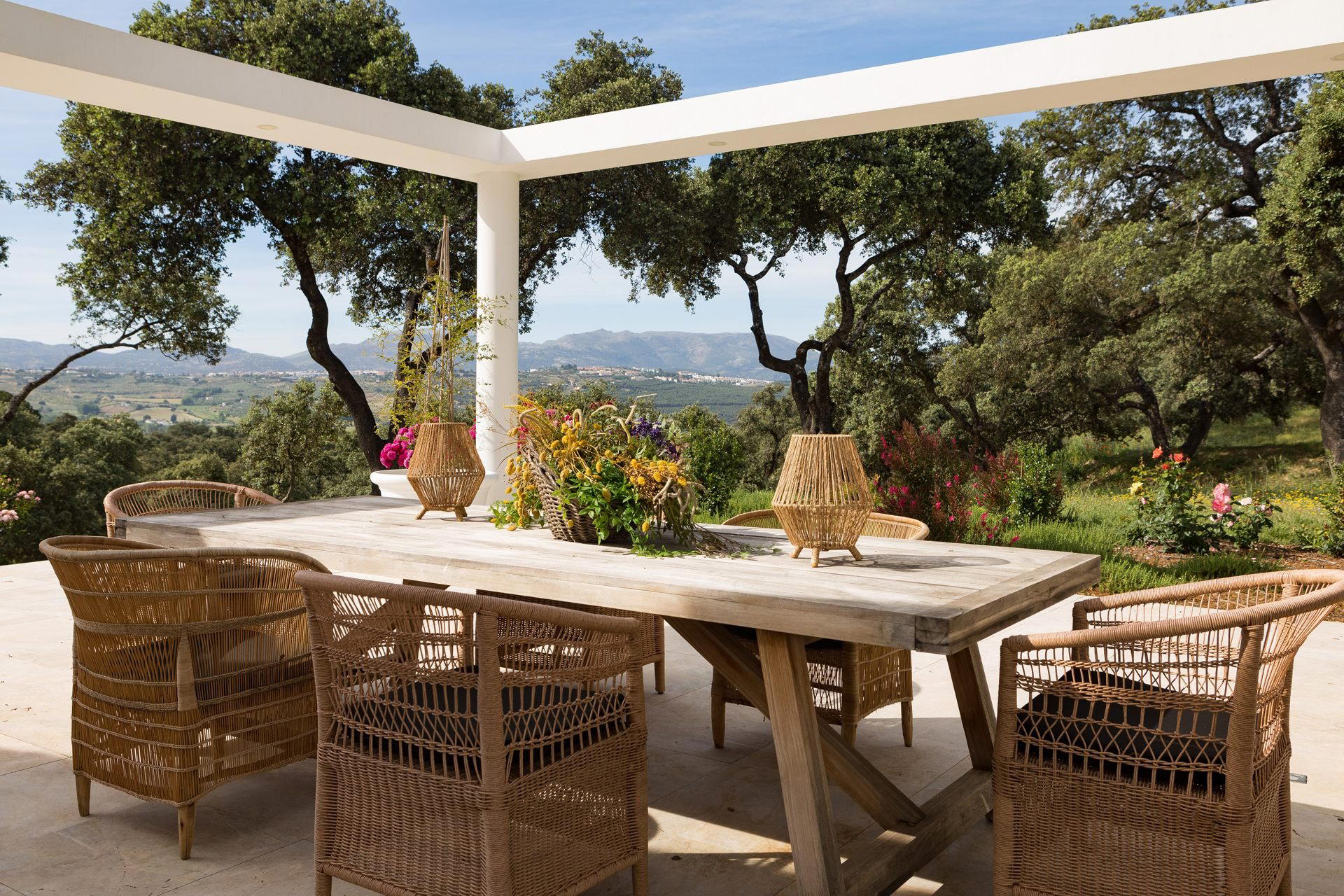
Stylish and refined with warm lighting, blending centuries-old heritage architecture with modern elegance; intimate courtyards and terraces create tranquil spaces for relaxation.