Klaserie Drift Safari Camps
Sitting inside the Klaserie Private Nature Reserve on the border of the greater Kruger ecosystem, Klaserie Drift Safari Camps earned a La Liste Top Hotels score of 96.5 points in 2026, placing it among South Africa's most recognised bush addresses. The camps occupy a position in the low-density, private-reserve tier where the measure of quality is proximity to wilderness and depth of the safari program rather than resort scale.
 Discover on Pearl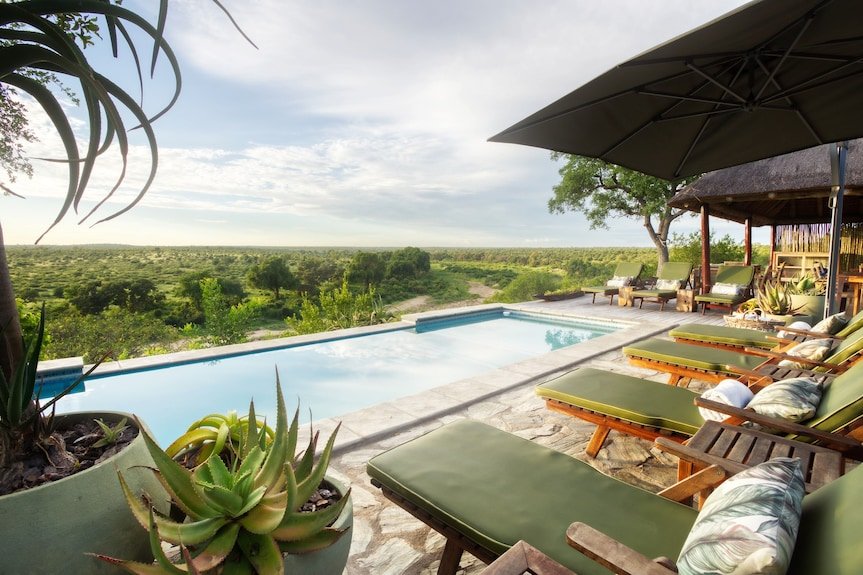
Where the Reserve Does the Work
The Klaserie Private Nature Reserve occupies a stretch of Limpopo bushveld that shares unfenced borders with the Kruger National Park, placing any camp within it inside one of the largest contiguous wildlife areas on the continent. That geographical fact shapes everything about how a stay here works. Safari operations run without the grid roads and visitor volumes that define the national park proper, and sightings happen against a backdrop of acacia thornveld and riparian forest rather than tarmac and tourist coaches. Klaserie Drift Safari Camps sit within that reserve, and the address is the primary argument for being here.
The La Liste Leading Hotels recognition, where the camps scored 96.5 points in 2026, places them inside a peer set defined by performance rather than marketing budget. La Liste draws on aggregated critical sources across its ranking methodology, so a score at that level in a category as competitive as southern African safari lodges carries weight as an independent signal. For context on how the Hoedspruit region performs at the upper tier, see our full Hoedspruit hotels guide.
The shortlist, unlocked.
Hard-to-book tables, cellar releases, and concierge-planned trips.
Get Exclusive Access →The Private Reserve Model and What It Provides
Southern Africa's premium safari market has split into two broad operating formats over the past two decades. The first is the national park or conservancy model, where operators work within a shared public framework, with all the wildlife access and all the logistical constraints that brings. The second is the private reserve model, where a smaller, controlled land area supports a handful of camps operating under their own game-viewing protocols. The Klaserie Private Nature Reserve belongs to the latter category.
In practice, that distinction means off-road tracking is possible where park rules would prohibit it, guide-to-guest ratios remain tight, and the absence of day visitors from neighbouring properties keeps the density of human activity low. Camps operating in this format compete less on room count or F&B; programming and more on the quality of the guiding team, the condition of the terrain they access, and the degree to which each experience feels calibrated to a small group rather than a roster. Comparable private-reserve operations in the greater Kruger ecosystem include Jabulani Safari, andBeyond Ngala Safari Lodge, and andBeyond Ngala Tented Camp, each occupying a different position within that same competitive set.
The Atmosphere the Location Produces
Camps in the Klaserie work with the sounds and light rhythms of the African bushveld as their primary atmospheric material. Dawn game drives depart in the blue-grey hour before sunrise, when nocturnal animals are still moving and the temperature sits at its lowest. The midday pause is a structural feature of the format, not an inconvenience. By late afternoon, the light drops to the amber register that makes the thornveld look like something assembled specifically for the hour, and the evening drive runs into darkness, tracking with spotlights. That rhythm, repeated across several days, is the product the camps are actually selling.
Within the broader Hoedspruit region, the Klaserie's western boundary position gives it access to terrain that ranges from open plains to denser riverine corridors, the variety that produces the most complete wildlife-viewing across species and seasons. The dry months between May and October concentrate game around water sources and reduce vegetation density, making sightings more consistent. The wet season from November through April brings migratory birds and newborn animals but also thicker cover. Both windows have their logic, and serious safari travellers often plan a visit in each.
Placing Klaserie Drift in the Hoedspruit Tier
Hoedspruit and its surrounding reserves anchor the northern end of South Africa's interior safari corridor. At the leading of the local accommodation spectrum sit a handful of camps and lodges with international award recognition, where the benchmark is set by properties like Malewane Lodge at Royal Malewane and Makanyi Private Game Lodge. Klaserie Drift's La Liste score positions it within that upper bracket.
Across South Africa more broadly, the country's luxury accommodation credentials extend well beyond the bush. Properties like Mount Nelson in Cape Town and wine country retreats such as Babylonstoren in Paarl operate in a parallel tier defined by different assets entirely. The safari camp format, by contrast, is inseparable from its location: remove the reserve and you remove the reason the property exists. That dependency on place is both its constraint and its clearest value proposition. For the full picture of what the Hoedspruit area offers across categories, the Hoedspruit experiences guide and restaurants guide add useful context.
Elsewhere in the greater Kruger system, Singita in the Kruger National Park and andBeyond Kirkman's Kamp in Skukuza anchor the comparison at the upper end. Outside the Kruger corridor, andBeyond Phinda Forest Lodge and the wider andBeyond Phinda Private Game Reserve represent the KwaZulu-Natal alternative, a different biome and a different wildlife profile. Abelana River Lodge in Phalaborwa sits closer geographically, offering another point of comparison within the Limpopo corridor.
Planning a Stay
Access to the Klaserie Private Nature Reserve runs through Hoedspruit, which is served by scheduled domestic flights from Johannesburg and Cape Town. The Eastgate Airport outside town is the standard arrival point for bush-bound travellers heading into the Klaserie and Timbavati reserves. Road transfers from the airstrip into the reserve take under an hour depending on camp location, and most operations arrange those transfers as part of the arrival sequence.
Booking at this tier of the private-reserve market typically runs three to six months ahead for peak dry-season dates, with the July to September window filling earliest. The camp's La Liste recognition will have increased demand from international travellers, particularly from European and North American source markets where that ranking carries editorial weight. Travelling as a pair or a small group of four maximises the logic of the format, as guiding vehicles at this level are calibrated for two to six guests rather than larger parties.
For those building a wider South Africa itinerary around the bush stay, the Hoedspruit hotels guide maps the full accommodation range in the region. The bars guide and wineries guide cover the satellite options for days when the reserve rhythm calls for something different.
The shortlist, unlocked.
Hard-to-book tables, cellar releases, and concierge-planned trips.
Get Exclusive Access →Frequently Asked Questions
A Minimal Peer Set
A short peer set to help you calibrate price, style, and recognition.
Preferential Rates?
Our members enjoy concierge-led booking support and priority upgrades at the world's finest hotels.
Get Exclusive AccessThe shortlist, unlocked.
Hard-to-book tables, cellar releases, and concierge-planned trips.
Get Exclusive Access →