InterContinental Al Jubail Resort

Michelin Selected
The InterContinental Al Jubail Resort holds a 2025 MICHELIN Selected distinction, placing it among a small group of vetted properties in Saudi Arabia's Eastern Province. Positioned in Al Jubail's Al Sanaiyah district, the resort addresses a segment of the market where international brand infrastructure meets a city rarely covered by premium travel editorial. For Eastern Province itineraries beyond Al Khobar, it functions as the area's most credentialled base.

Pearl is the En Primeur Club membership app — saves, bookings, and concierge access live there. Same editors, same standards.
- Address
- 101 Al Sanaiyah, Al Huwaylat, Al Jubail 35718, Saudi Arabia
- Phone
- +966 13 356 4000
- Website
- ihg.com
- Directions
- Get directions
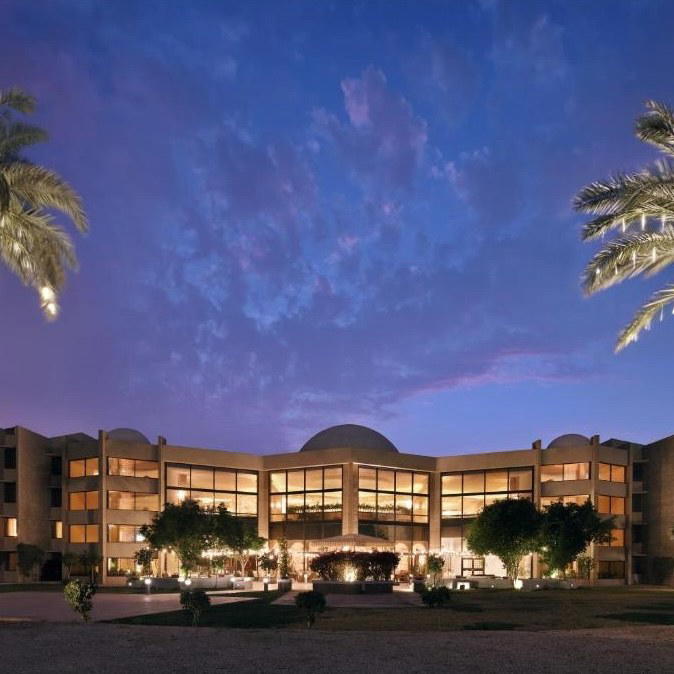
Al Jubail and the Eastern Province Hotel Tier
Saudi Arabia's Eastern Province receives a fraction of the editorial attention directed at Riyadh or Jeddah, yet the region's hospitality infrastructure has expanded steadily alongside its industrial and commercial growth. Al Jubail, one of the world's largest planned industrial cities, sits roughly 100 kilometres north of Al Khobar along the Arabian Gulf coast. The city's hotel market has developed to serve a specific demand profile: long-stay business travel, government and contractor delegations, and the occasional regional leisure visitor. Within that market, full-service international-brand properties occupy a distinct tier, offering the operational consistency that extended-stay guests typically require. The InterContinental Al Jubail Resort, holding a 2025 MICHELIN Selected distinction, sits at the top of that tier in the city.
MICHELIN's hotel selection programme, which expanded its Saudi Arabia coverage in recent years as part of the guide's broader Gulf region push, applies consistent criteria across property type, design quality, service standards, and overall guest experience. A MICHELIN Selected designation does not carry the star hierarchy of the dining guide, but it does signal that a property has cleared a defined quality threshold recognised by an independent international body. For comparable IHG-branded properties elsewhere in the Kingdom, see Dar Al Tawhid InterContinental Makkah by IHG in and InterContinental Dar Al Iman Madinah by IHG in Medina, both of which operate in high-volume pilgrim-city contexts with very different demand profiles.
Physical Setting and Design Character
Resort designations in Saudi Arabia's Gulf-facing cities generally signal access to waterfront or landscaped recreational space, distinguishing a property from the conventional business hotel block. In Al Jubail, where the Arabian Gulf coastline is defined more by industrial infrastructure than leisure development, a resort-classified property positions itself partly through what it offers on-site rather than what surrounds it. The InterContinental Al Jubail Resort's address on Al Sanaiyah places it within a district that reflects the city's planned, functional character: wide roads, deliberate zoning, and an absence of the organic urban texture found in older Saudi cities.
The architecture of large-scale Gulf resort hotels built or extensively renovated in the past two decades tends toward a common vocabulary: low-rise or mid-rise forms, generous setbacks, landscaped grounds that create a separation from the street, and public areas designed to handle both the formality of corporate functions and the informality of family leisure. This is a practical response to a guest mix that typically includes both regional business travellers and Saudi families on domestic short breaks. The resort format, as opposed to the urban tower format, allows for that dual audience in a way that a high-density city-centre property does not. In the broader Saudi hotel market, the tension between resort and urban formats is visible across the country; properties like Edge Riyadh Al Rabie by Rotana in Riyadh and voco Jeddah Gate by IHG in Jeddah illustrate the urban end of that spectrum.
International chain properties in Gulf resort contexts typically invest in pool complexes, food and beverage variety, and meeting facilities as their primary differentiators, given that the surrounding city often provides limited competing leisure infrastructure. For a guest arriving for a multi-day business engagement in Al Jubail, the on-site offering functions as the primary social and dining environment for the duration of the stay. That dynamic shapes design priorities in ways that differ substantially from, say, a design-led boutique in a city where the street-level offering is itself a draw. The contrast is instructive: compare what draws a guest to The Chedi Hegra in AlUla, where the surrounding heritage landscape is inseparable from the property's identity, with the self-contained logic of a Gulf city resort hotel.
Where It Sits in Saudi Arabia's Wider Hotel Market
Saudi Arabia's premium hotel market has diversified considerably over the past five years, with development concentrated in Riyadh, Jeddah, and the Red Sea and NEOM projects. The Eastern Province has followed a quieter trajectory, with Al Khobar serving as the region's de facto leisure and dining hub. Properties such as voco Al Khobar in Al Khobar and Ayara-managed hotels in Dammam reflect that regional concentration. Al Jubail sits outside that cluster, which is part of what makes a MICHELIN-recognised property there notable: the selection reflects the property's own standards rather than the ambient credibility of a well-developed hospitality district.
Across the Kingdom more broadly, the appetite for internationally recognised accommodation has expanded in step with Vision 2030's tourism ambitions. New entrants at the upper end of the market include InterContinental The Red Sea Resort in Umluj, Nammos Resort AMAALA in Al Wajh, and AMAALA (Four Seasons property), all of which target leisure tourism at a price point and exclusivity level well above the Eastern Province business hotel market. The InterContinental Al Jubail Resort competes in a different register: it is not positioning for the destination-tourism audience those properties pursue, but for the guest who needs reliable full-service infrastructure in a city that does not appear in most premium travel itineraries. For a sense of how mountain resort formats approach a similar self-sufficiency logic in a different Saudi context, ENVI Al Shafa in Taif offers a useful comparison. Our full Al Jubail restaurants guide covers the city's wider dining options.
Planning Your Stay
Al Jubail is accessible by road from Dammam and Al Khobar, with the King Fahd Causeway linking the Eastern Province to Bahrain approximately 80 kilometres south of the city. The nearest major airport is Dammam's King Fahd International Airport, which handles both domestic connections and international routes. For guests arriving on regional business, direct road transfer from Dammam is the standard approach. The hotel's Al Sanaiyah address is within the city's core commercial zone, which reduces in-city transit time for guests with meetings distributed across Al Jubail's business districts. Booking via IHG's reservation channels is the standard route; the property's IHG One Rewards participation means frequent travellers can apply points and status benefits in the usual way.
Side-by-Side Snapshot
Comparable venues nearby, for context on price, style, and recognition.
| Venue | Cuisine | Price | Awards | Notes |
|---|---|---|---|---|
| InterContinental Al Jubail ResortThis venue — the venue you are viewing | Luxury beach resort blending city hotel scale with resort ease | Not listed | Michelin Selected | Not listed |
| Kempinski Al Othman Al Khobar Hotel | Luxury urban hotel blending European elegance with Arabian hospitality | Not listed | Michelin Selected · World Luxury Hotel Awards WLHA Continent Winner | Qashlah district |
| Rixos Obhur Jeddah Resort & Villas | Luxury lifestyle family-friendly all-inclusive beach resort combining contemporary refinement with traditional Arabian hospitality. | Not listed | Michelin Selected | Obhur Al-Shamaliyah District |
| Dar Al Tawhid Intercontinental Makkah by IHG | Luxury Islamic-inspired palace hotel designed for pilgrims and luxury travelers, combining modern amenities with spiritual reverence. | $300–500 | Michelin Selected | Central Mecca |
| The Valley Resort | luxury villa resort | $500–750 | Michelin Selected | Wady Laban |
| voco Riyadh | Contemporary fusion of Saudi heritage and modern hospitality | $100–200 | Michelin Selected | King Fahad Road |
Recognition history
Dated appearances from independent guides and award organizations, with the underlying list record or original source where available.
Michelin Selected
Michelin
Details
- Elegant
- Scenic
- Modern
- Family Vacation
- Business Trip
- Weekend Escape
- Beachfront
- Panoramic View
- Pool
- Fitness Center
- Beach Access
- Tennis Court
- Room Service
- Wi Fi
- Concierge
- Waterfront
- Garden
- Wheelchair Accessible
- Elevator
Restful gardens, beachfront relaxation, and elegant modern atmosphere with family-friendly leisure facilities.