Hotel Valencia Santana Row
Hotel Valencia Santana Row belongs to San Jose’s most urban hotel conversation: a stay shaped less by resort seclusion than by street-level energy, walkable dining, and Mediterranean-influenced architecture within Santana Row. With limited public database detail on price, ratings, awards, and room categories, the useful reading is contextual: choose it for design-led city convenience rather than for a remote retreat model.
Pearl is the En Primeur Club membership app — saves, bookings, and concierge access live there. Same editors, same standards.
- Address
- 355 Santana Row, San Jose, CA 95128, USA
- Website
- hotelvalencia-santanarow.com
 Saves & bookings on Pearl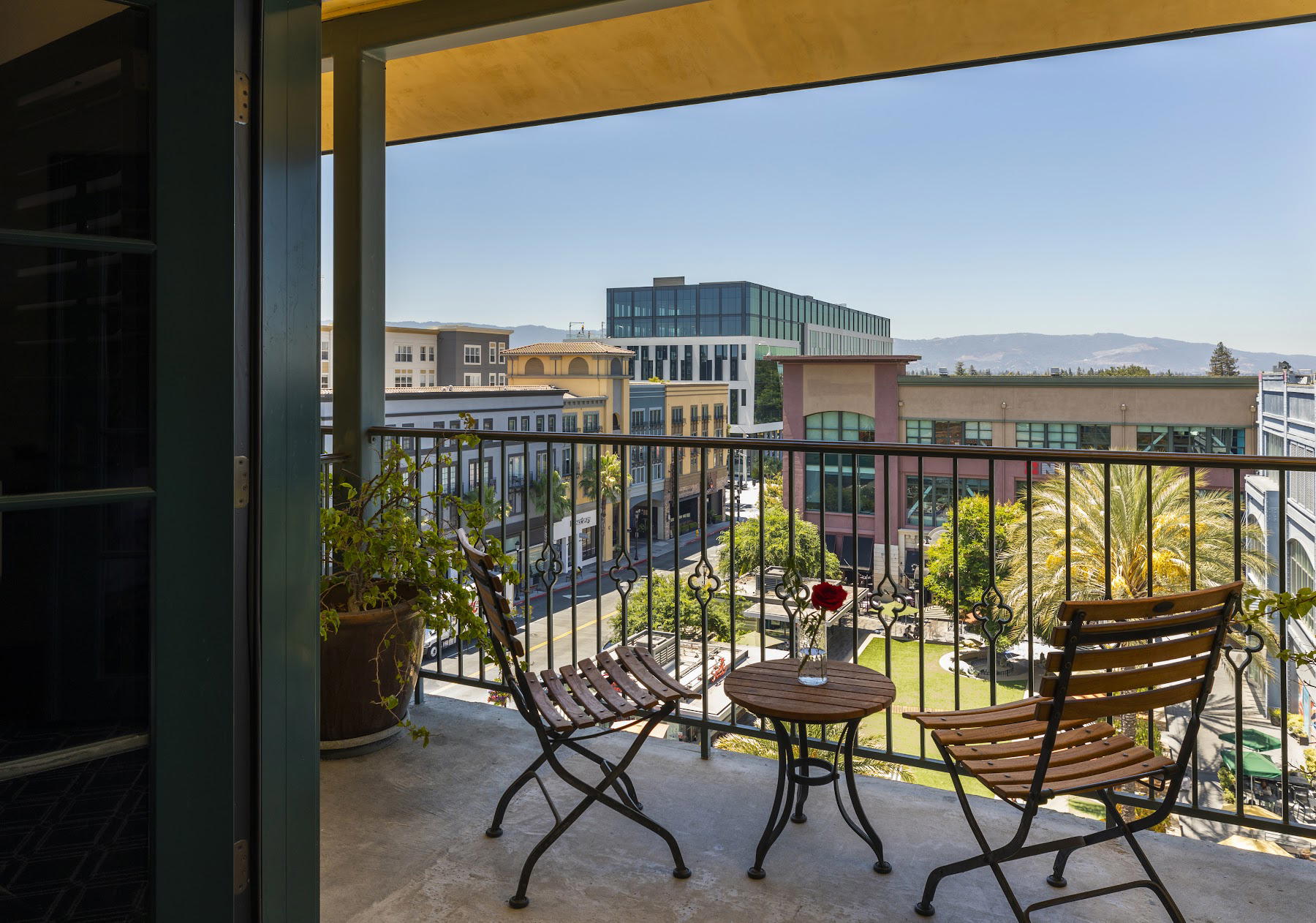
The Santana Row hotel proposition
Approaching Santana Row feels different from arriving at the typical Silicon Valley hotel. The district is built as a pedestrian retail street rather than a corporate campus: storefronts, restaurant terraces, valet lanes, apartment balconies, and hotel frontage all occupy the same stage. That setting matters because San Jose hospitality often splits into two clear modes. One serves airport, convention, and office demand with efficiency as the organizing principle. The other tries to give the city a stay with a sense of place, where the guest can step outside without immediately getting into a car. Hotel Valencia Santana Row sits in the second camp, using architecture and location as the reason to stay.
The design cue is Mediterranean urbanism adapted to a California mixed-use district: arcaded edges, warm-toned exterior language, inward social spaces, and a street-facing relationship with shops and restaurants. This is not the retreat logic of a resort, where distance and silence create the value. It is a city-hotel format in a district engineered for strolling, dining, and evening foot traffic. In San Jose, that distinction is meaningful. The city has serious business travel demand, proximity to venture capital and technology corridors, and a large suburban footprint; a hotel that places the guest in a walkable, designed quarter occupies a narrower lane than the standard freeway-adjacent property.
The trust signal here is contextual rather than award-based: Santana Row is one of San Jose’s better-known mixed-use districts, and the hotel’s identity is tied to that address. Readers comparing San Jose stays should treat the property as a design-and-location choice, not as an awards-led destination hotel.
Design first, not resort fantasy
The architecture-and-design reading is the strongest way to understand the stay. Many Silicon Valley hotels function as neutral containers for meetings, breakfast, sleep, and departure. Santana Row asks for a different rhythm. Its streetscape compresses shopping, dining, and lodging into a theatrical urban frame, and the hotel participates in that composition rather than withdrawing from it. The effect is closer to a compact European-style commercial quarter than to the low-slung business parks that define much of the region.
That does not make it interchangeable with historic grand hotels. A place such as The Fifth Avenue Hotel in New York City draws from dense Manhattan history and decorative maximalism, while Chicago Athletic Association in Chicago works with clubland heritage and a landmark building. Santana Row is newer, planned, and commercial by design. Its value lies in the way the hotel plugs into a curated district rather than in patina or institutional memory.
That comparison helps calibrate expectations. The guest who wants architectural drama as the trip’s main event might look toward desert, coastline, or historic palace hotels: Amangiri in Canyon Point for monumental landscape architecture, Post Ranch Inn in Big Sur for cliffside immersion, Aman Venice in Venice for palazzo context, or Hôtel de Paris Monte-Carlo in Monte Carlo for Belle Époque grandeur. San Jose’s proposition is more practical and more urban: a composed place to sleep, meet, dine nearby, and avoid the isolation that can come with business travel in the South Bay.
Where it fits in San Jose
San Jose is not a single hotel market. Downtown serves convention and arts traffic. Airport corridors serve arrivals, departures, and corporate schedules. West San Jose and the Santana Row area serve a hybrid audience: visiting families, technology-sector travelers, shoppers, diners, and guests who want access to both San Jose and the broader South Bay. Hotel Valencia Santana Row belongs to that hybrid category. Its competitive set is not simply every hotel in the city; it is the smaller group of properties where setting carries as much weight as room function.
For travelers weighing the South Bay against the Peninsula, the comparison with Rosewood Sand Hill is useful. Rosewood Sand Hill, associated with the Menlo Park and venture-capital orbit, reads as a more campus-like luxury stay. Santana Row reads as more urban and commercially integrated. In Central America, Alta Las Palomas offers another San Jose name in a different country and setting altogether, a reminder that city-name searches can blur different hotel contexts.
The practical advantage of this San Jose address is density. That matters for editorial honesty. Guests should not infer a chef-led hotel restaurant, named awards, or a documented tasting-menu program. Instead, the strength is proximity to a broader district and the ability to make an evening out of the surrounding blocks.
The atmosphere: street energy with controlled edges
The atmosphere is shaped by Santana Row’s planned density. Expect the feel of a designed commercial district rather than a quiet residential neighborhood or a remote estate. That means movement at the curb, restaurant traffic, shoppers, and evening social energy. For some guests, that is the point: the stay begins as soon as the door opens onto the street. For others, especially those seeking silence after a long flight or meetings, the same energy may feel less restful than a property set behind gates or across a larger site.
This is where room choice becomes more than a bedding preference. Ask directly about orientation when comparing options. A guest sensitive to street noise should prioritize a quieter-facing room if available. A guest choosing the hotel for Santana Row’s social life may prefer a room that keeps the district visually present. The better decision depends on the trip’s purpose: retail-and-dining weekend, business stay, visiting family, or a South Bay base with occasional trips north.
The property’s design role is closer to lifestyle urban hotel than to wellness sanctuary. That separates it from places like Canyon Ranch Tucson in Tucson, where programming and health infrastructure define the stay, or Sage Lodge in Pray, where landscape access is central. It also differs from island and beach models such as Little Palm Island Resort & Spa in Little Torch Key, Kona Village, A Rosewood Resort in Kailua Kona, and Four Seasons at The Surf Club in Surfside. Those properties sell separation. Santana Row sells access.
Dining, drinking, and the neighborhood rhythm
San Jose’s dining culture is broader than its hotel dining reputation. The city and its surrounding suburbs carry strong Vietnamese, Mexican, Indian, Korean, and Californian restaurant traditions, while newer mixed-use districts concentrate higher-spend casual dining and nightlife in walkable clusters. Santana Row belongs to that second pattern. It offers convenience, density, and a polished evening circuit, which is useful for visitors who want dinner without studying freeway logistics.
That context is also why this hotel should not be judged by the same criteria as a destination inn built around a chef. SingleThread Farm Inn in Healdsburg is inseparable from its culinary program and Sonoma agricultural setting. Wine-country hotels such as Auberge du Soleil in Napa and Meadowood Napa Valley in St. Helena sit inside a hospitality ecosystem where vineyards, cellar visits, and tasting-room calendars shape the trip. Hotel Valencia Santana Row works differently. The surrounding district supplies the evening structure, and the hotel’s role is to keep the guest in the middle of it.
For a food-focused San Jose stay, that is both useful and limiting. Useful, because walkable dinner options reduce planning friction. Limiting, because the city’s deeper culinary identity often lives beyond polished retail districts, in neighborhoods and strip malls where immigrant cooking, family-run kitchens, and regional specialization carry the force. A serious dining itinerary should use Santana Row as a convenient base, then look outward across the city.
Who should choose this address
The strongest case is for travelers who want South Bay convenience without the anonymity of a business hotel corridor. Visiting parents with a student or technology employee nearby, couples planning a retail-and-dinner weekend, conference travelers extending a work trip, and guests who prefer to walk to dinner all make sense here. The hotel’s setting reduces the need for a car in the evening, even if most wider San Jose and Silicon Valley movement will still require rideshare, driving, or transit planning.
It is less persuasive for travelers seeking seclusion, a resort-led itinerary, or a hotel whose primary claim rests on formal awards. Any value judgment should come from live rate comparison, room type, cancellation terms, and the importance of Santana Row access on the specific travel dates. In California, design-led hotel choices cover a wide spectrum, from the Hollywood social mythology of The Beverly Hills Hotel in Los Angeles to the coastal retreat model of Big Sur and the wine-country resort model of Napa. San Jose’s Santana Row lane is more functional: controlled urbanity in a region that often makes guests drive for every dinner.
International palace and alpine references sharpen that point. Badrutt's Palace Hotel in St. Moritz and Monte Carlo’s grand hotel tradition depend on long histories of seasonal society. Raffles Boston in Boston represents a newer urban luxury tower model with a major-city service frame. Santana Row is neither palace nor tower fantasy. It is a designed South Bay base, strongest when the traveler values location, walkability, and a more memorable street setting than the regional norm.
Planning the stay
Plan with the realities of San Jose demand in mind. Weekdays can be shaped by technology, meetings, and corporate travel; weekends can draw local leisure and shopping traffic to Santana Row. If quiet matters, ask about room orientation before committing. If dining matters, plan the wider restaurant itinerary separately rather than treating the district as the whole story.
Travelers should confirm operational details through current official channels before making time-sensitive plans. What can be said with confidence is narrower and more useful: this is a San Jose stay defined by Santana Row’s built environment. The decision should turn on whether that environment suits the trip.
For guests building a broader hotel comparison list, urban design and setting should be weighted against service style, room size, and itinerary. Troutbeck in Amenia offers a country-estate reading; Amangiri in Canyon Point offers isolation and architecture at dramatic scale; The Fifth Avenue Hotel in New York City offers dense urban theatre. San Jose asks a different question: does the traveler want the South Bay with a walkable evening built in?
Comparable venues nearby, for context on price, style, and recognition.
| Venue | Cuisine | Price | Awards | Notes |
|---|---|---|---|---|
| Hotel Valencia Santana RowThis venue — the venue you are viewing | Urban Mediterranean boutique hotel blending Old World Spanish romance with contemporary Silicon Valley sophistication. | $$$$ | 4-Star | Not listed |
| Rosewood Sand Hill | Contemporary luxury resort with residential villa options, blending Silicon Valley sophistication with resort-like amenities and lush courtyard gardens. | $$$$ | 5-Star | Menlo Park |
| Omni San Francisco Hotel | Historic luxury urban hotel blending Renaissance Revival architecture with modern amenities. | $$$$ | 4-Star | Financial District/South Beach |
| Hotel Republic San Diego, Autograph Collection | Modern lifestyle boutique hotel capturing downtown San Diego's energy with California cool. | $$$$ | 4-Star | Downtown |
| The Jay, Autograph Collection | Contemporary luxury boutique in a renovated brutalist landmark | $$$$ | 4-Star | Financial District |
| Le Petit Pali at Ocean Ave | evokes the delight of a traditional inn with bespoke design details | $$$$ | 4-Star | Downtown Carmel |
Continue exploring
More in San Jose
Hotels in San Jose
Browse all →
Bars in San Jose
Browse all →
Restaurants in San Jose
Browse all →
Wineries in San Jose
Browse all →
At a Glance
- Sophisticated
- Elegant
- Romantic
- Trendy
- Modern
- Intimate
- Romantic Getaway
- Business Trip
- Weekend Escape
- Anniversary
- Destination Wedding
- Group Retreat
- Rooftop Pool
- Terrace
- Design Destination
- Panoramic View
- Historic Building
- Wi Fi
- Pool
- Spa
- Fitness Center
- Room Service
- Concierge
- Business Center
- Valet Parking
- Street Scene
- Mountain
- Wi Fi
- Pool
- Spa
- Fitness Center
- Room Service
- Concierge
- Business Center
- Valet Parking
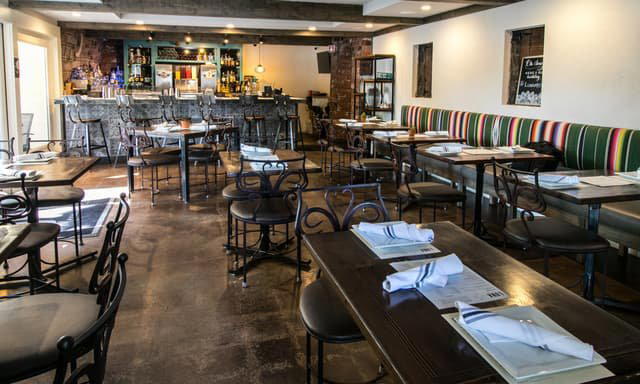
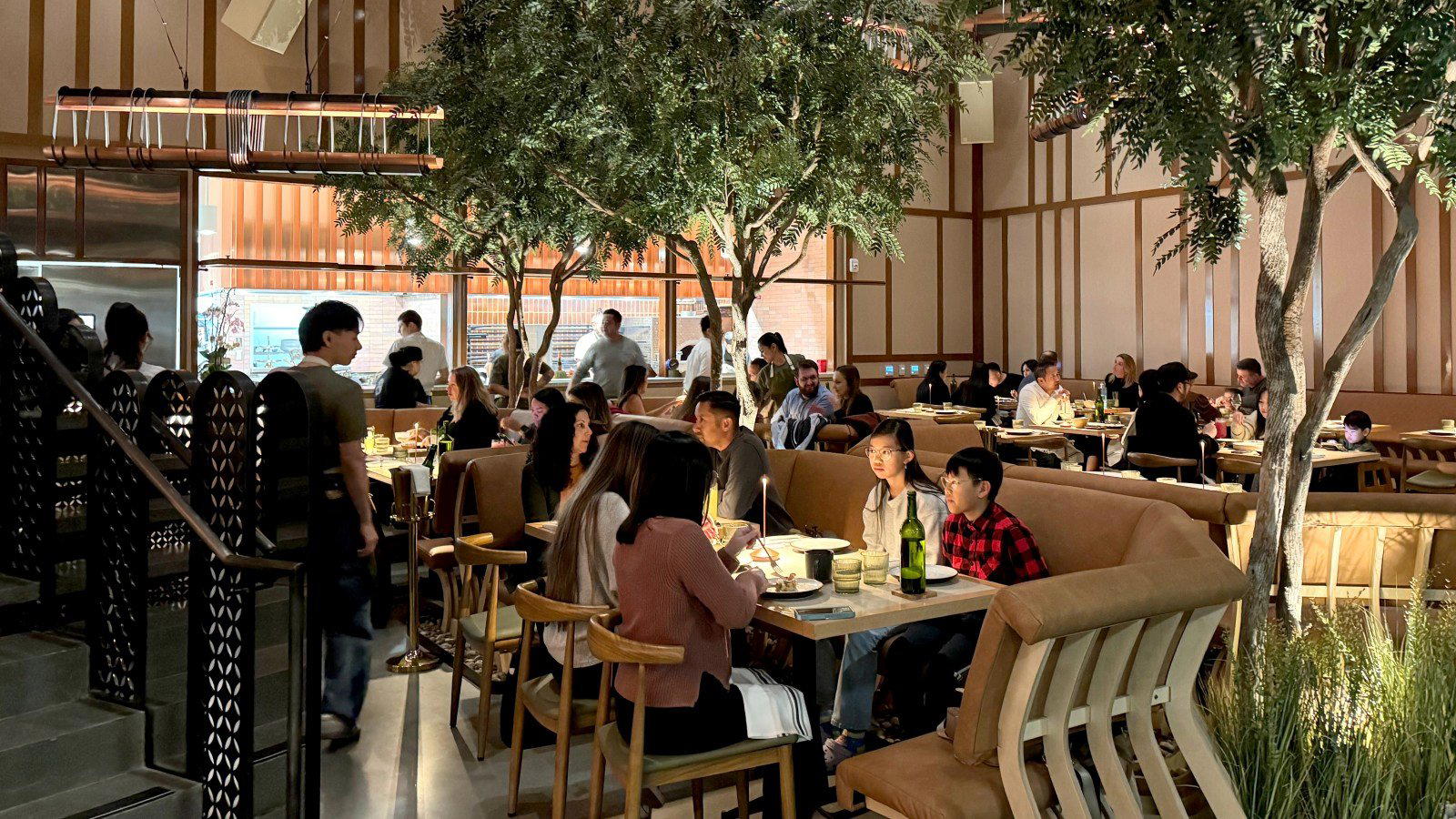
Warm, dimly lit interiors with textured walls, designer wood furniture, and Spanish-Mediterranean details create a romantic, upscale yet relaxed atmosphere that feels like an Old World Spanish boutique hotel in the heart of Silicon Valley.