Hotel Tresanton

A restored 1940s clifftop property in St Mawes, Hotel Tresanton trades large-hotel convention for something quieter and more considered: 30 rooms, all with panoramic views of Cornwall's south coast, and interiors shaped by Olga Polizzi's preference for authentic antiques, period detail, and handmade craft over corporate gloss. Rates from around $350 per night place it at the premium end of Cornwall's independent hotel tier.
Pearl is the En Primeur Club membership app — saves, bookings, and concierge access live there. Same editors, same standards.
- Address
- 27 Lower Castle Rd, St Mawes, Truro TR2 5DR
- Phone
- +44 1326 270055
- Website
- thepolizzicollection.com
- Directions
- Get directions
 Saves & bookings on Pearl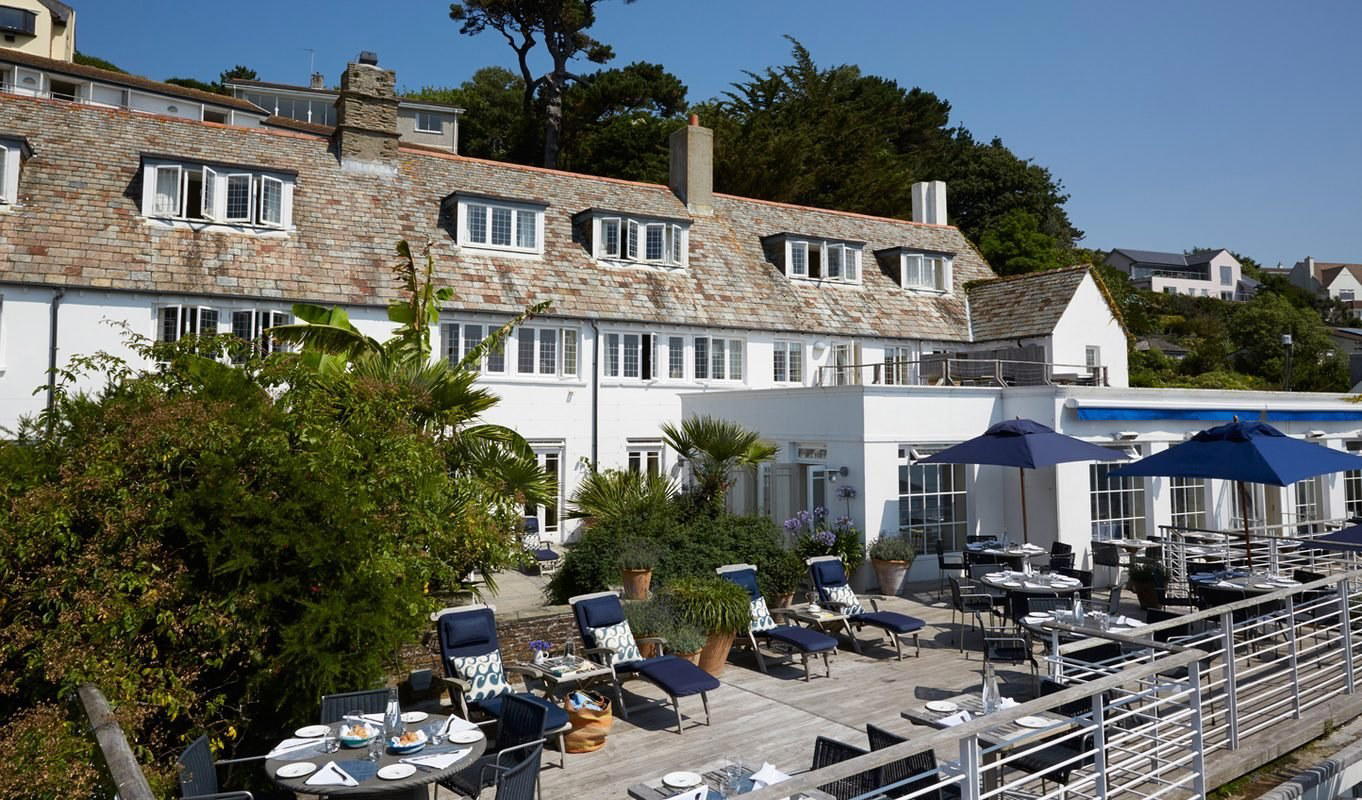
Where the 1940s Coastline Meets Considered Design
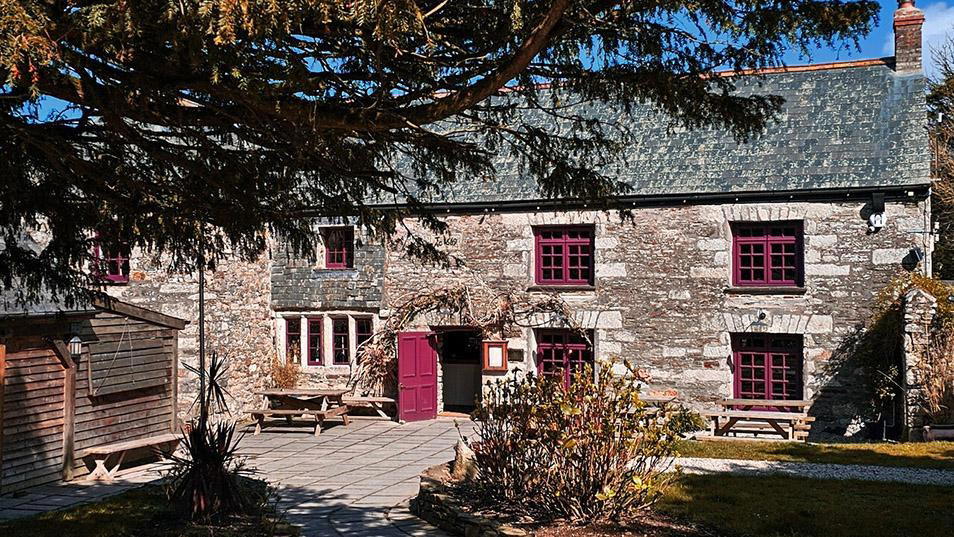
Hotel Tresanton is a 4-star hotel in St Mawes with 30 rooms and 1 Michelin Key, set at 27 Lower Castle Rd, St Mawes, Truro TR2 5DR. Approaching St Mawes from the water, the cluster of white buildings stepping up the hillside from the harbour reads as quietly domestic. From the outside, Hotel Tresanton gives little away. The original 1940s construction, a loose assembly of small seaside houses spread across the slope, carries none of the architectural flourish you might associate with a property at this price point. That restraint, it turns out, is part of the point.
Cornwall's premium hotel tier has developed along two broad lines: the large country-house estate model, with substantial grounds and a full wellness apparatus, and the smaller coastal property with fewer rooms, tighter design language, and a stronger relationship to its immediate geography. Hotel Tresanton belongs decisively to the second category. Its 30 rooms, its hillside arrangement, and its focus on the view rather than on amenity volume place it in a comparable set closer to Hell Bay Hotel in Bryher than to the grander estate hotels of inland England.
The Interior Logic of Olga Polizzi's Approach
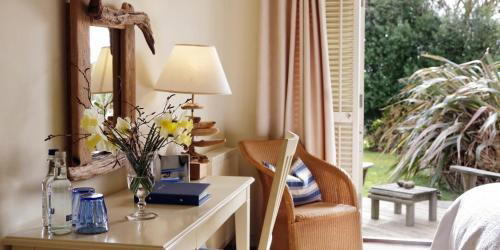
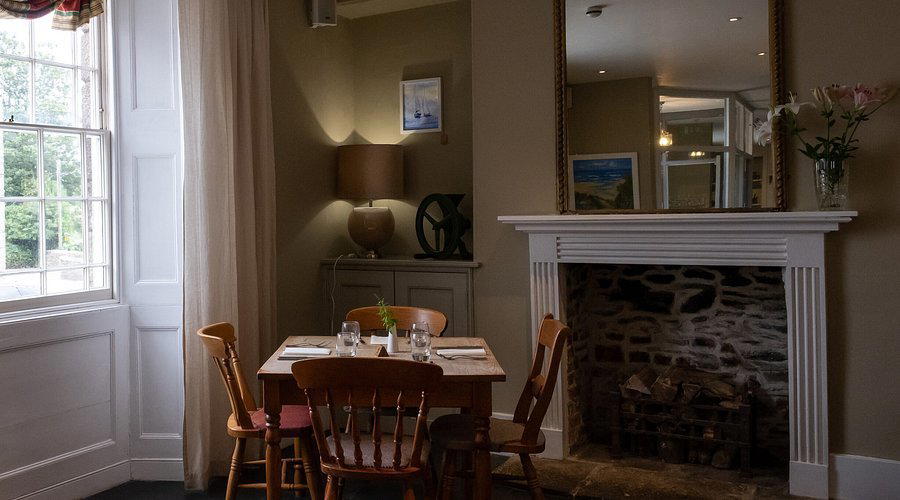
The design sensibility inside Tresanton becomes clearer once you know that Olga Polizzi, who rescued the property from a long decline that set in during the 1970s, built her reputation as the lead decorator behind the Rocco Forte Hotels group, where the visual register tends toward polished metropolitan luxury. What she did in St Mawes is something different in register, though not in rigour. The interiors read as deliberately homegrown: authentic period antiques rather than reproduction furniture, tongue-and-groove wall panelling that references vernacular Cornish craftsmanship, and bathroom-floor mosaics that carry the texture of something made by hand rather than specified from a catalogue.
This approach reflects a broader pattern in British coastal hospitality. The properties that have aged well along the south Cornish coast are rarely those that applied a generic template to a scenic backdrop. They are the ones that treated the building's existing character as an asset, not an obstacle. The Forties bones of Tresanton, left largely intact, give the interior its proportions and its particular quality of light, which no renovation budget can manufacture from scratch. Compared to the kind of full-envelope transformation you see at country houses like Estelle Manor in North Leigh or The Newt in Somerset, Tresanton's method is edit-rather-than-rebuild, which suits both the scale of the building and the character of the village around it.
The View as Structural Feature
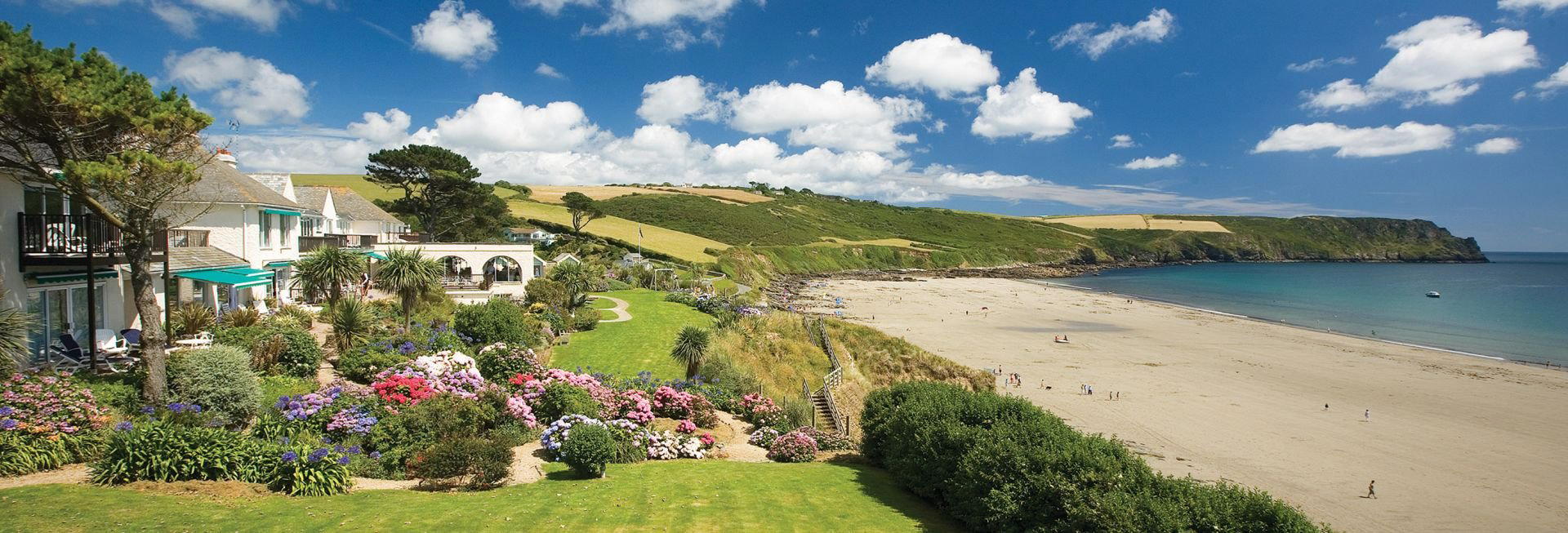
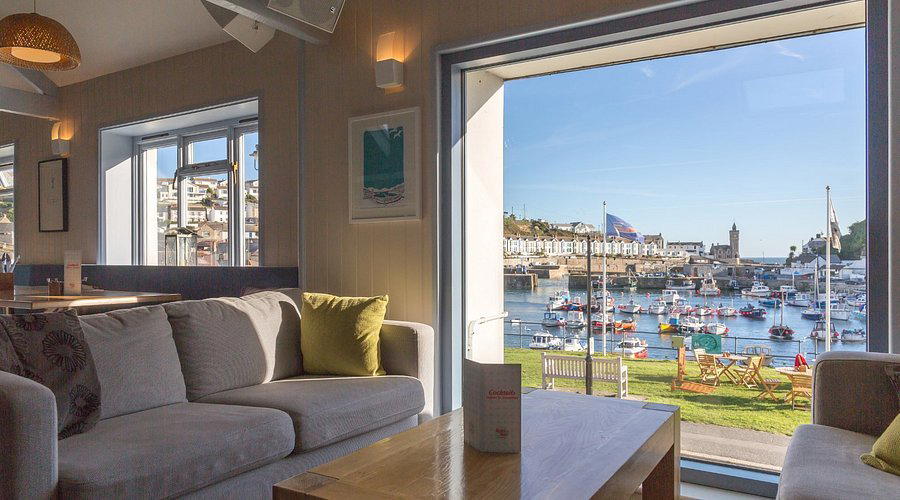
Every one of the 30 rooms at Tresanton faces the water. This is not an incidental detail. In a 30-room property arranged across a hillside, ensuring that every guest room captures panoramic views of Cornwall's south coast and St. Anthony's lighthouse requires deliberate planning at the architectural level. The view functions here as a design element in its own right, shifting with weather and season.
That relationship between room and horizon is one of the things that separates smaller coastal properties from their larger urban counterparts. A city hotel like Claridge's in London or King Street Townhouse Hotel in Manchester competes on art collections, restaurant programming, and the density of services. Tresanton competes on the quality of what is visible from the window, and on the degree to which the interiors are calibrated to frame that view rather than distract from it.
The Restaurant and the Terrace
Cornwall's food culture has shifted considerably over the past two decades. Local seafood that once moved largely through pub menus and fish-and-chip shops now anchors the dining rooms of properties operating at a national level. At Tresanton, the restaurant menu changes daily, built around local seafood and produce in a format that responds to what is available rather than maintaining a fixed repertoire. That daily-change model requires both supply-chain relationships and kitchen discipline, and signals a commitment to seasonal specificity rather than consistency for its own sake.
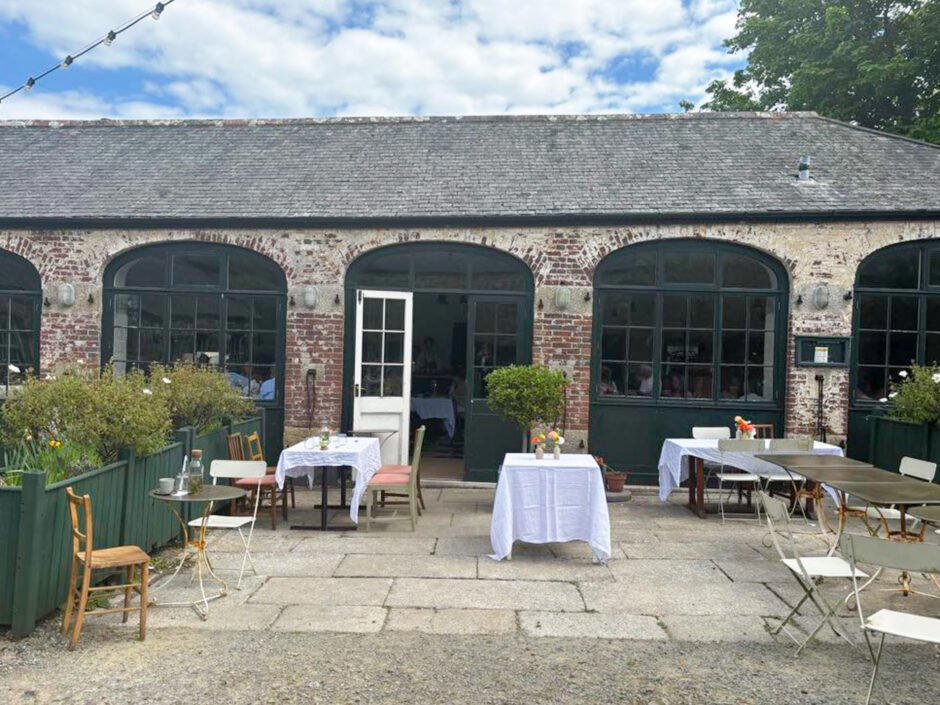
When conditions allow, dinner moves to the terrace, where the harbour sits directly below. The Cornish climate makes this unpredictable rather than a reliable feature of any given stay. On the days it does work, the combination of the water view and the locally sourced menu represents the clearest expression of what the property is trying to do.
St Mawes and the Cornish Coastal Context
St Mawes sits on the Roseland Peninsula, on the eastern side of the Carrick Roads estuary, separated from Falmouth by water rather than road. That geography keeps the village quieter than most of the better-known Cornish coastal towns, with restricted road access contributing to a pace that suits the Tresanton model. The property's postwar origins as one of Britain's favoured seaside hotels, its decline through the 1970s and beyond, and its subsequent recovery map closely onto the wider arc of Cornish tourism: the postwar enthusiasm, the lean decades when the region felt peripheral, and the reinvention from roughly the mid-1990s onward as Cornwall repositioned itself as a serious destination for food, design, and landscape.
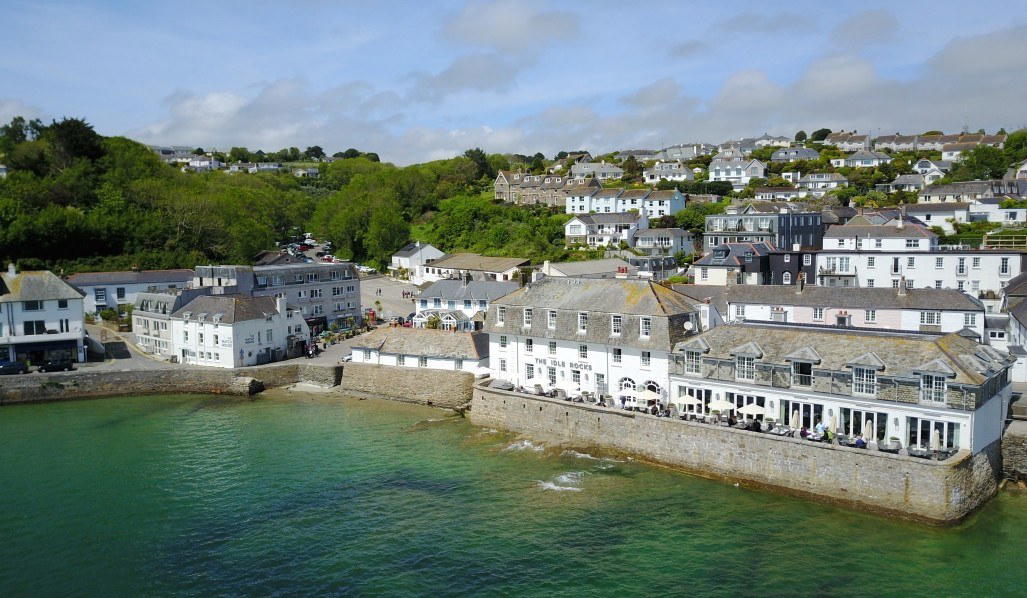
For visitors arriving from further along the Cornish coast, Lifeboat Inn in St Ives represents a different register entirely, while The Idle Rocks, also in St Mawes, offers an alternative for those comparing properties in the same village before booking.
Getting There and Planning a Stay
Rates run from $324 per night for the 30-room property, positioning it at the premium end of Cornwall's independent coastal tier. Those seeking comparable design-led coastal properties outside Cornwall might look at Lime Wood in Lyndhurst for a different landscape context, or further afield at Gleneagles in Auchterarder for the Scottish equivalent of the premium rural stay. For those extending a European trip, Aman Venice offers an instructive comparison in how heritage buildings are reinterpreted for contemporary hospitality at the international level.
In Context: Similar Options
Comparable venues nearby, for context on price, style, and recognition.
| Venue | Cuisine | Price | Awards | Notes |
|---|---|---|---|---|
| Hotel TresantonThis venue — the venue you are viewing | Cluster of traditional Cornish houses transformed into an ultra-luxe boutique retreat | $$$$ | Michelin 1 Key | Not listed |
| The Idle Rocks | Relais & Châteaux luxury boutique hotel blending classic seaside charm with modern comfort. | $$$$ | Michelin 1 Key | St Mawes |
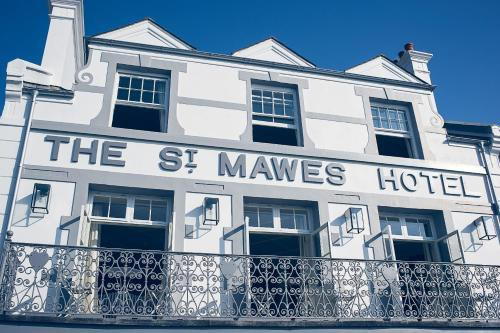
| The St Mawes Hotel | Contemporary coastal boutique with traditional maritime influences and modern luxury sensibilities. | $$$ | 4-Star | St Mawes, Roseland Peninsula |
| The Queensberry Hotel | Luxury independent boutique hotel blending historic Georgian architecture with contemporary design and service standards. | $$$ | Michelin 1 Key | City Centre Bath |
| Cowley Manor Experimental | Contemporary country-house hotel housed in a historic Italianate mansion, blending English heritage with Parisian cool and playful design elements. | $$$$ | Michelin 1 Key | Cowley, near Cheltenham |
| Amberley Castle | Historic castle hotel blending authentic medieval architecture with contemporary luxury and refined country house elegance. | $$$$ | Michelin 1 Key | Amberley |
Recognition history
Dated appearances from independent guides and award organizations, with the underlying list record or original source where available.
Michelin 1 Key
Michelin
At a Glance
- Romantic
- Elegant
- Scenic
- Intimate
- Sophisticated
- Romantic Getaway
- Honeymoon
- Weekend Escape
- Beachfront
- Terrace
- Panoramic View
- Wi Fi
- Spa
- Room Service
- Concierge
- Beach Access
- Restaurant
- Bar
- Waterfront
- Garden
- Wi Fi
- Spa
- Room Service
- Concierge
- Beach Access
- Restaurant
- Bar
Refined and relaxing with elegant dining overlooking the harbor, cozy fireside lounges, and serene subtropical gardens.