Hotel Kuelap sits in Bagua Grande, the main urban centre of the Utcubamba Valley in northern Peru's Amazonas region, positioning it as a practical base for travellers approaching the pre-Inca fortress of Kuelap and the Gocta waterfall. The property occupies a mid-range tier in a destination where accommodation options remain limited and most international visitors pass through on multi-day itineraries connecting the north Andean cloud forest circuit.
Pearl is the En Primeur Club membership app — saves, bookings, and concierge access live there. Same editors, same standards.
- Address
- Av. Chachapoyas 1875, Bagua Grande 01621, Peru
- Phone
- +51 941 937 990
- Website
- sites.google.com
- Directions
- Get directions
 Saves & bookings on Pearl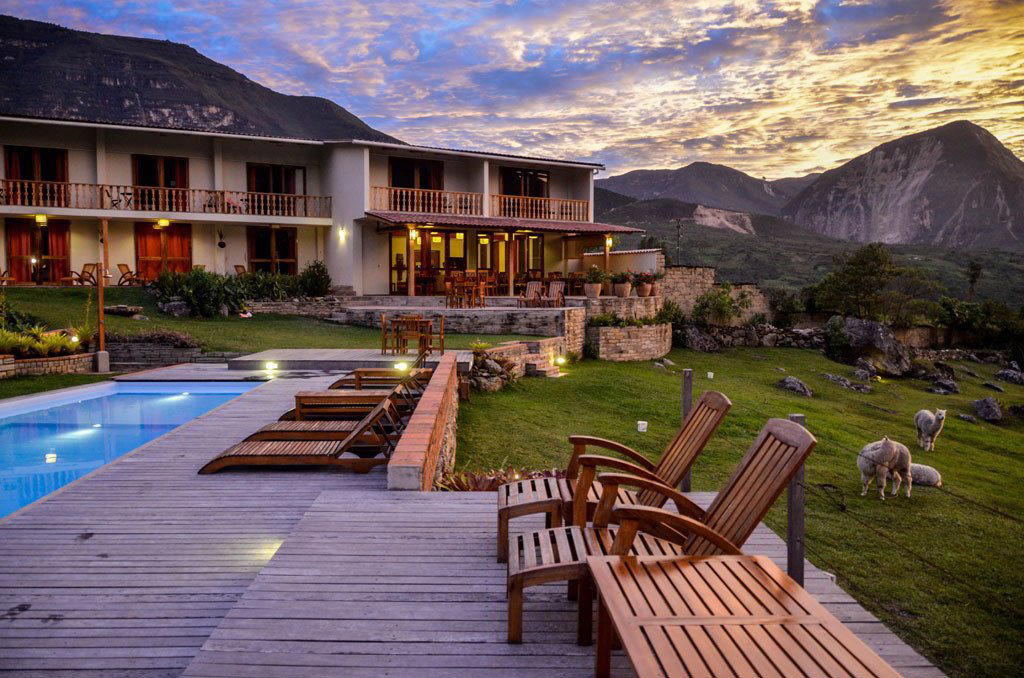
Gateway Architecture in a Valley That Infrastructure Forgot
Northern Peru's Amazonas region presents a particular challenge for the accommodation sector: the destination draws a specific, research-led traveller, yet the infrastructure supporting that traveller has historically lagged behind the appeal of the archaeology it serves. The Utcubamba Valley, which runs through this cloud forest zone east of the main Andean cordillera, is the corridor through which most visitors access the Chachapoyas culture sites, including the mountaintop citadel of Kuelap, a pre-Inca walled complex that predates Machu Picchu's construction by several centuries and rivals it in architectural ambition if not in global profile. Hotel Kuelap, at Av. Chachapoyas 1875 in Bagua Grande, is an 8-room hotel with.
Bagua Grande functions as the logistics hub for the southern Utcubamba Valley. It is not a tourist town in the conventional sense; the centre is commercial and practical, serving the agricultural and transport economy of the region. For the design-conscious traveller accustomed to the boutique archaeological lodges found elsewhere on Peru's circuit, such as Inkaterra Machu Picchu Pueblo Hotel or Sumaq Machu Picchu Hotel, this context matters. The physical environment here is determined by function rather than aesthetic curation, and any property operating in this market is working within those constraints from the ground up.
The Architecture of Necessity: What the Building Communicates
In destinations where heritage tourism is the primary draw but tourist infrastructure remains thin, the architectural character of local hotels tends to reflect the economics of incremental development rather than master-planned hospitality design. Properties built to serve an emerging rather than established tourism market typically prioritise structural durability and practical utility over spatial gesture or material refinement. This is the design tradition Hotel Kuelap belongs to, and understanding that context is more useful to the prospective guest than any individual detail about the property itself.
The Amazonas region has seen infrastructure investment accelerate since the 2017 inauguration of the Kuelap cable car (teleferico), which dramatically reduced travel time to the fortress site from a multi-hour road journey to a short aerial crossing. That single piece of engineering changed the visitor profile for the valley, shortening the time commitment required and opening the site to day-trippers from Chachapoyas, the departmental capital roughly 40 kilometres north. For accommodation providers in Bagua Grande, the cable car's arrival altered demand patterns: the city became less a necessary overnight stop and more an optional one, depending on the traveller's origin point and itinerary structure.
Properties that sit at the southern end of the valley, near Bagua Grande, occupy a different position in the visitor flow than those closer to Chachapoyas or directly adjacent to the Kuelap site. The architectural implication is that a hotel here serves transit accommodation and extended-stay functions simultaneously, without the concentrated demand that proximity to a single attraction creates. That dual function shapes how such buildings are programmed: rooms that work for early arrivals and late departures, common spaces that accommodate logistics rather than lingering.
Situating Hotel Kuelap Within Peru's Northern Circuit
Peru's premium hotel development has concentrated heavily in the southern highlands and the Amazon basin. The southern circuit, anchored by Cusco, the Sacred Valley, and Lake Titicaca, hosts most of the internationally recognised properties: Palacio Nazarenas in Cusco, Willka T'ika in Urubamba, and Titilaka in Puno each occupy clearly defined positions within a mature, competitive hospitality market. The Amazon basin has its own tier, represented by properties like Delfin Amazon Cruises in Iquitos and Refugio Amazonas Lodge in Puerto Maldonado. The northern highlands, by contrast, remain an underdeveloped hospitality market relative to the archaeological and natural significance of their assets.
That gap is not necessarily a disadvantage for the engaged traveller. Regions where accommodation infrastructure lags behind destination quality tend to reward those willing to plan carefully and adjust expectations around comfort versus access. The Chachapoyas region specifically, which encompasses Kuelap, the Gocta waterfall (one of the tallest in South America), the Leymebamba mummies, and the cloud forest ecosystems of the eastern Andean slope, represents exactly this condition: high archaeological and ecological value, limited polished hospitality options. For travellers who have covered the southern circuit through properties like Crowne Plaza Lima or Casa Andina Premium Arequipa, the northern highlands require a recalibration of what hospitality looks like in frontier conditions.
Planning a Stay: Practical Considerations
Travellers approaching the Utcubamba Valley from Lima typically route through Chiclayo or Tarapoto, with connecting transport to Bagua Grande or Chachapoyas by road. The southern approach via Bagua Grande is the more common entry for those arriving from the coast. Operators based in Chachapoyas have current ground-level intelligence on availability and access conditions that no online booking system is likely to reflect accurately.
The dry season in the Amazonas region runs approximately from May through September, with June and July offering consistent weather for visiting Kuelap and the surrounding sites. Cloud forest ecosystems are, by definition, rarely clear, but the dry months reduce trail mud and road disruption significantly. Travellers with flexibility should weight their itineraries toward this window.
For those building a broader Peru itinerary that includes the north, the Amazonas leg pairs well with a Peruvian Amazon extension through Iquitos or a coastal anchor at Hotel Paracas. The northern highlands are geographically isolated enough that they function leading as a dedicated chapter in an itinerary rather than an add-on.
Comparable Spots, Quickly
Comparable venues nearby, for context on price, style, and recognition.
| Venue | Cuisine | Price | Awards | Notes |
|---|---|---|---|---|
| Hotel KuelapThis venue — the venue you are viewing | rustic mountain lodge | $ | Not listed | Not listed |
| Inkaterra Reserva Amazonica | Eco-luxury rainforest lodge with Ese'Eja-inspired wooden cabanas raised on stilts. | $$$$ | Not listed | Tambopata |
| Meliá Collection Lima | Luxury boutique property housed in a landmark historic residence in Lima’s old town, curated under The Meliá Collection brand with a strong narrative connection to the city’s cultural and intellectual life. | $$$$ | Not listed | Historic Center |
| fausto | Restored 1920s neoclassical townhouse with modern creative touches | $$$ | 3-Star | Miraflores |
| explora Valle Sagrado | Hacienda-style lodge with contemporary Andean design integrated into Inca terraces | $$$$ | 5-Star | Huayllabamba |
| Puqio | luxury tented camp with adobe cottages | $$$$ | 5-Star | Yanque |
At a Glance
- Rustic
- Scenic
- Quiet
- Weekend Escape
- Historic Building
- Panoramic View
- Wi Fi
- Pool
- Parking
- Mountain
- Wi Fi
- Pool
- Parking
Peaceful and natural with mountain vistas and clean, simple rooms.