
Michelin Selected
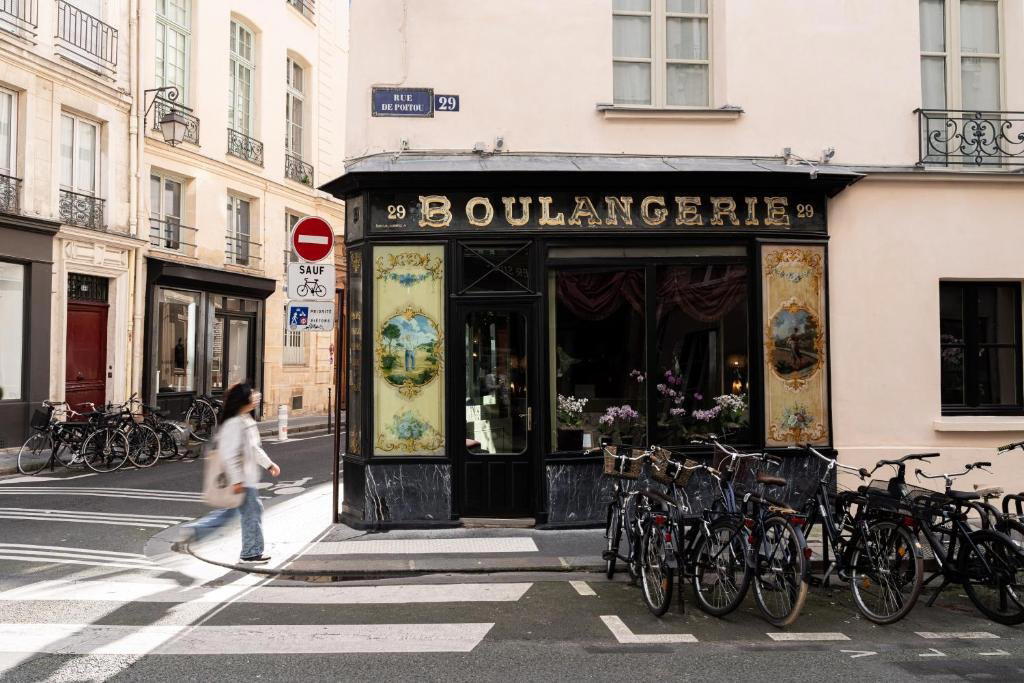
On a quiet Haut-Marais street, Hôtel du Petit Moulin occupies a former boulangerie at 29 Rue de Poitou whose shopfront is said to be Paris's oldest surviving bakery facade. The property sits in the small-footprint, design-led tier of Parisian boutique hotels, positioned well away from the palace circuit of the Right Bank. Rooms vary widely by character, making the choice of room as deliberate as the neighbourhood itself.

Pearl is the En Primeur Club membership app, where members save venues, book tables and use the concierge.
A Marais Address on Its Own Terms
The Haut-Marais has spent the better part of two decades sorting itself into distinct zones: the northern streets around Rue de Bretagne for market-driven daily life, the galleries concentrated near Rue de Turenne and Rue Charlot, and the quieter residential lanes where the neighbourhood's older residential fabric still holds. Rue de Poitou sits inside that last zone, which is part of what gives Hôtel du Petit Moulin its particular character. The building's bakery shopfront, often cited as one of the oldest surviving such facades in Paris, signals a different logic than the palace-hotel axis running from the 8th arrondissement toward the Seine. This is a property that earns its position from neighbourhood texture, not from grand-boulevard address.
Paris's boutique hotel market has clarified considerably since the early 2000s. On one side sit the large-footprint palace operators: properties like Cheval Blanc Paris, Hotel Plaza Athénée, Le Bristol Paris, Hôtel de Crillon, Four Seasons George V, and Le Meurice define that tier, each with significant square footage, multiple food and beverage outlets, and a service infrastructure calibrated for international clientele at the highest spend levels. On the other side sits a smaller, design-concentrated cohort where the value proposition is atmosphere, neighbourhood embeddedness, and room character rather than scale. Hôtel du Petit Moulin belongs to that second group. Its seventeen rooms make it among the more intimate options in the city's design-hotel tier, and the tradeoff is deliberate: you gain particularity, you give up the comprehensive amenity stack.
Inside: Room Character as the Central Offer
In Paris's smaller boutique properties, the room itself carries most of the editorial weight. There is no spa wing, no lobby bar with a celebrated cocktail program, no starred restaurant to anchor the stay. The overnight experience is concentrated in what happens between check-in and the morning croissant, which means the quality of the room design, the bedding, the bathroom finishes, and the acoustic environment matter considerably more than they would at a larger property where programming absorbs attention.
Hôtel du Petit Moulin's rooms were designed with evident differentiation in mind: no two are treated identically, which is a relatively unusual commitment at this key count. The logic is that a guest returning for a second stay encounters a different spatial experience, and that the initial room selection becomes something worth spending time on rather than a formality. Rooms vary in palette, in the way natural light enters, and in their relationship to the building's historic fabric. Some retain ceiling details or floor treatments from the building's earlier life; others take a more fully contemporary approach within the same shell.
Bathroom specification in this tier of Parisian boutique property tends to be the area where the gap between ambition and execution is most visible. The building's age and the constraints of a small footprint mean that bathrooms in historic conversions rarely achieve the proportions of a purpose-built luxury hotel. What typically compensates, when the design is handled well, is material quality and fixture selection: stone surfaces, rain showers rather than tub-only configurations, and lighting that functions for both grooming and atmosphere. Whether Petit Moulin achieves that balance is a room-by-room question; the variability that makes the property characterful also means that some room categories will satisfy this criterion more fully than others.
The Building and the Street
The bakery-facade claim is not incidental to the property's identity. In a city where historic shopfront preservation is inconsistent, a ground-floor facade that retains its original painted woodwork and vitrine configuration functions as a kind of architectural trust signal: the building has been treated with some care across its various lives. The 3rd arrondissement location puts guests at a practical distance from the main tourist concentrations of the Marais, which cluster further south around Rue des Francs-Bourgeois and the Place des Vosges, while remaining within a short walk of the covered Marché des Enfants Rouges, the galleries on Rue de Turenne, and the network of concept stores and independent restaurants that define the Haut-Marais's current character.
For guests oriented toward eating and drinking as the primary activity of a Paris stay, the surrounding blocks offer considerable density. The broader Paris dining context is covered in our full Paris restaurants guide. The neighbourhood itself trends toward natural wine bars, market-sourced bistros, and a handful of more ambitious addresses that have chosen the 3rd over more obvious locations precisely because the clientele tends to be locally fluent rather than tourist-dependent.
How Petit Moulin Sits in the Wider France Picture
For travelers building a broader French itinerary, Petit Moulin occupies a specific niche in the country's accommodation spectrum. At one end of that spectrum sit the large resort and palace properties: Hotel Du Cap-Eden-Roc in Cap d'Antibes, La Réserve Ramatuelle, Airelles Château de Versailles, and Cheval Blanc Courchevel represent the high-amenity, high-service end. Properties like Domaine Les Crayères in Reims, Baumanière in Les Baux, La Bastide de Gordes, Les Sources de Caudalie, Villa La Coste, Hôtel & Spa du Castellet, Royal Champagne Hotel & Spa, Airelles Saint-Tropez, The Maybourne Riviera, and Four Seasons Megève cover the estate and destination-resort tier. Petit Moulin's seventeen-room urban format is a different proposition entirely: it functions as a base, not a destination in itself, and travelers who want the hotel to be the experience tend to find it insufficient. Those who want a coherent room in a walkable neighbourhood, with the city as the primary programming, find the logic holds.
For international points of comparison, the small-key design-boutique model that Petit Moulin represents finds parallels at properties like Aman Venice in terms of historic-building sensitivity, or at the independent end of the New York market represented by The Fifth Avenue Hotel and Aman New York, though all three operate at substantially different price points and service levels. The comparison is structural rather than direct: small key counts, design specificity, and neighbourhood embeddedness as the core value proposition. La Réserve Paris represents what the design-led Parisian hotel can become at higher investment and service levels, if comparison within the city is more useful.
Planning a Stay
The property is at 29 Rue de Poitou in the 3rd arrondissement, within walking distance of the Arts et Métiers and Filles du Calvaire Métro stations on lines 3 and 8 respectively, which puts most of central Paris within direct reach. Given the absence of an on-site restaurant, guests should plan their first evening's dining in advance: the surrounding streets offer options at several price points, but the better-regarded addresses in the Haut-Marais book up quickly, particularly on weekends. Room selection should be treated as a deliberate choice given the variability across the seventeen keys; if the booking channel allows preferences or images by room category, it is worth using that tool rather than accepting a default assignment.
Side-by-Side Snapshot
| Venue | Cuisine | Price | Awards |
|---|---|---|---|
| Hôtel du Petit Moulin Paris | Le MaraisThis venue (the venue you are viewing) | This venue | $300–500 | Michelin Selected |
| Cheval Blanc Paris | Michelin 3 Key, World's 50 Best | $2,500+ | 3 Michelin Keys · World's 50 Best #20 |
| Le Meurice | Michelin 3 Key | $1,000–1,500 | 3 Michelin Keys · La Liste Top Hotels |
| Shangri-La Paris | Michelin 2 Key | $1,000–1,500 | 1 Michelin Key · La Liste Top Hotels |
| The Peninsula Paris | Michelin 2 Key | $1,000–1,500 | 2 Michelin Keys · La Liste Top Hotels |
| Soho House Paris | Michelin 1 Key | $300–500 | 1 Michelin Key · Vogue 2026 Vogue Best Hotels in Paris |
Recognition history
Dated appearances from independent guides and award organizations, with the underlying list record or original source where available.
Michelin Selected
Michelin
Continue exploring
More in Paris
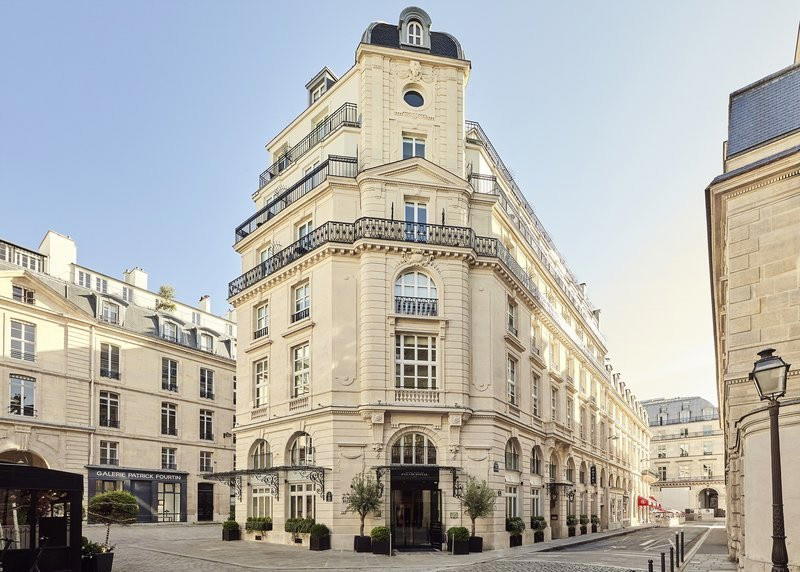
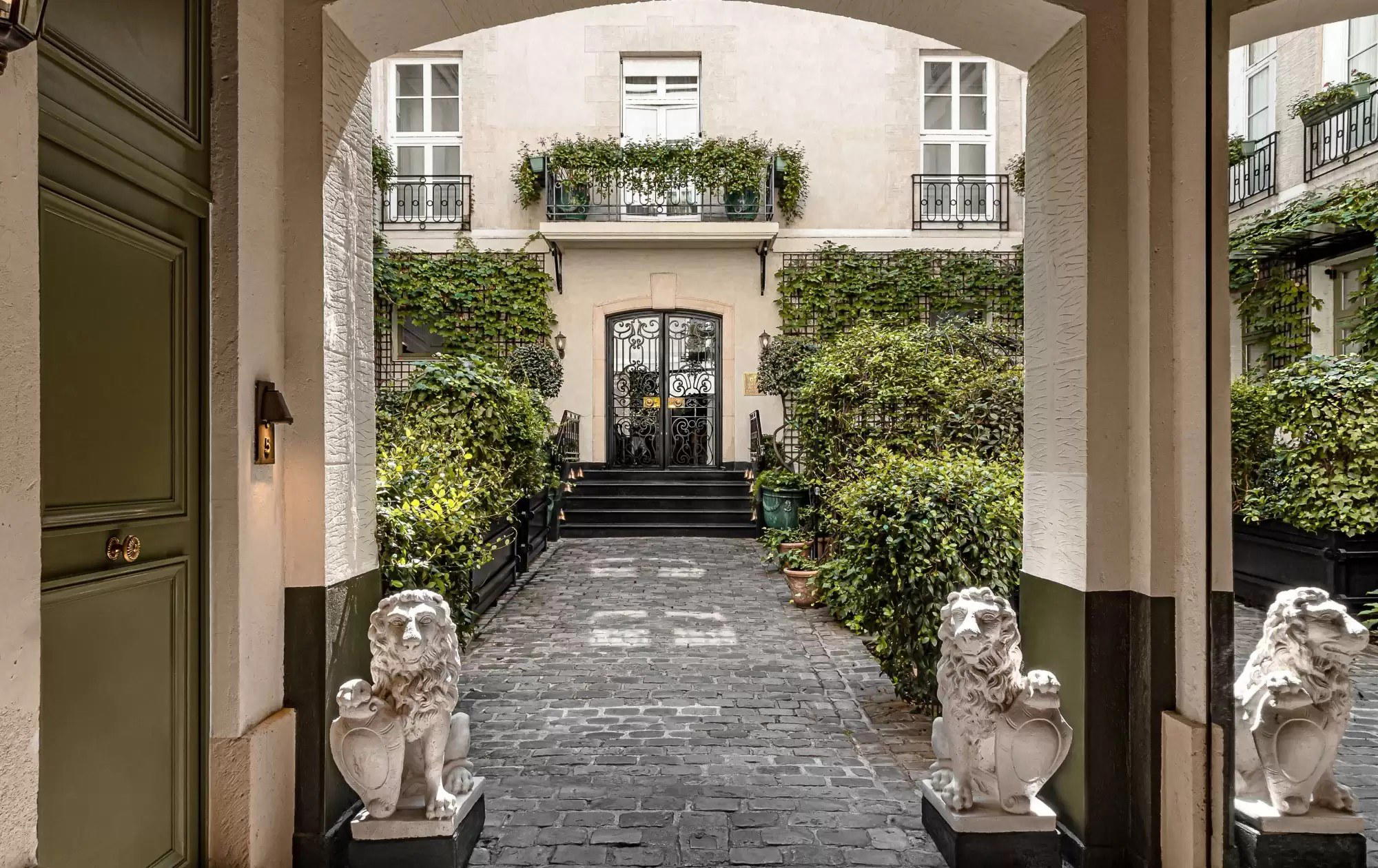
Hotels in Paris
All hotels in Paris →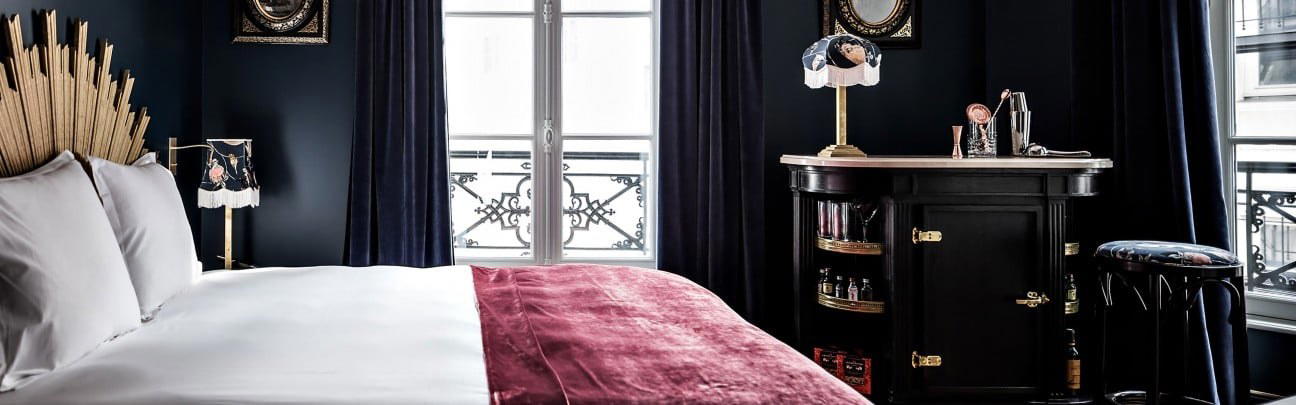
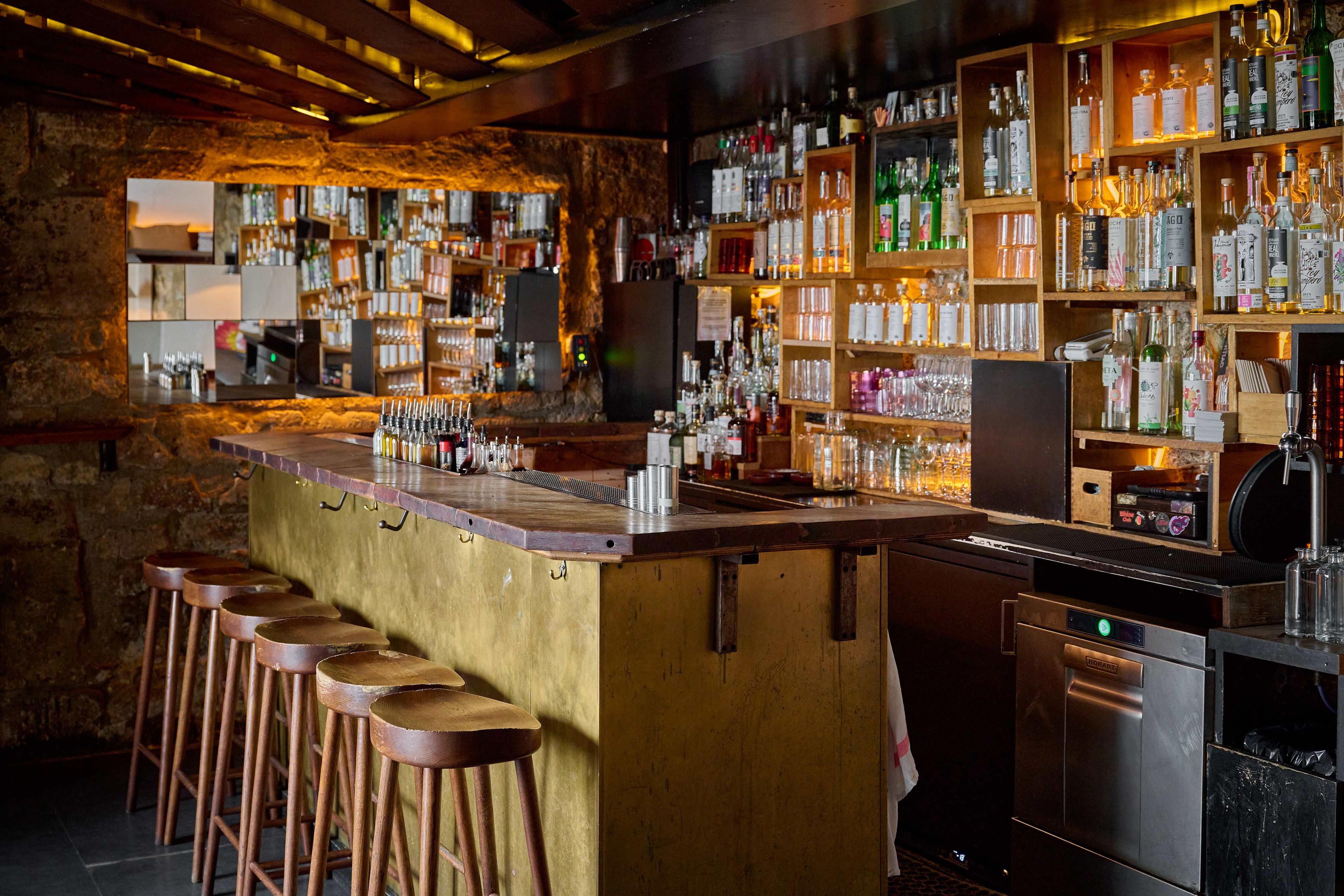
Bars in Paris
All bars in Paris →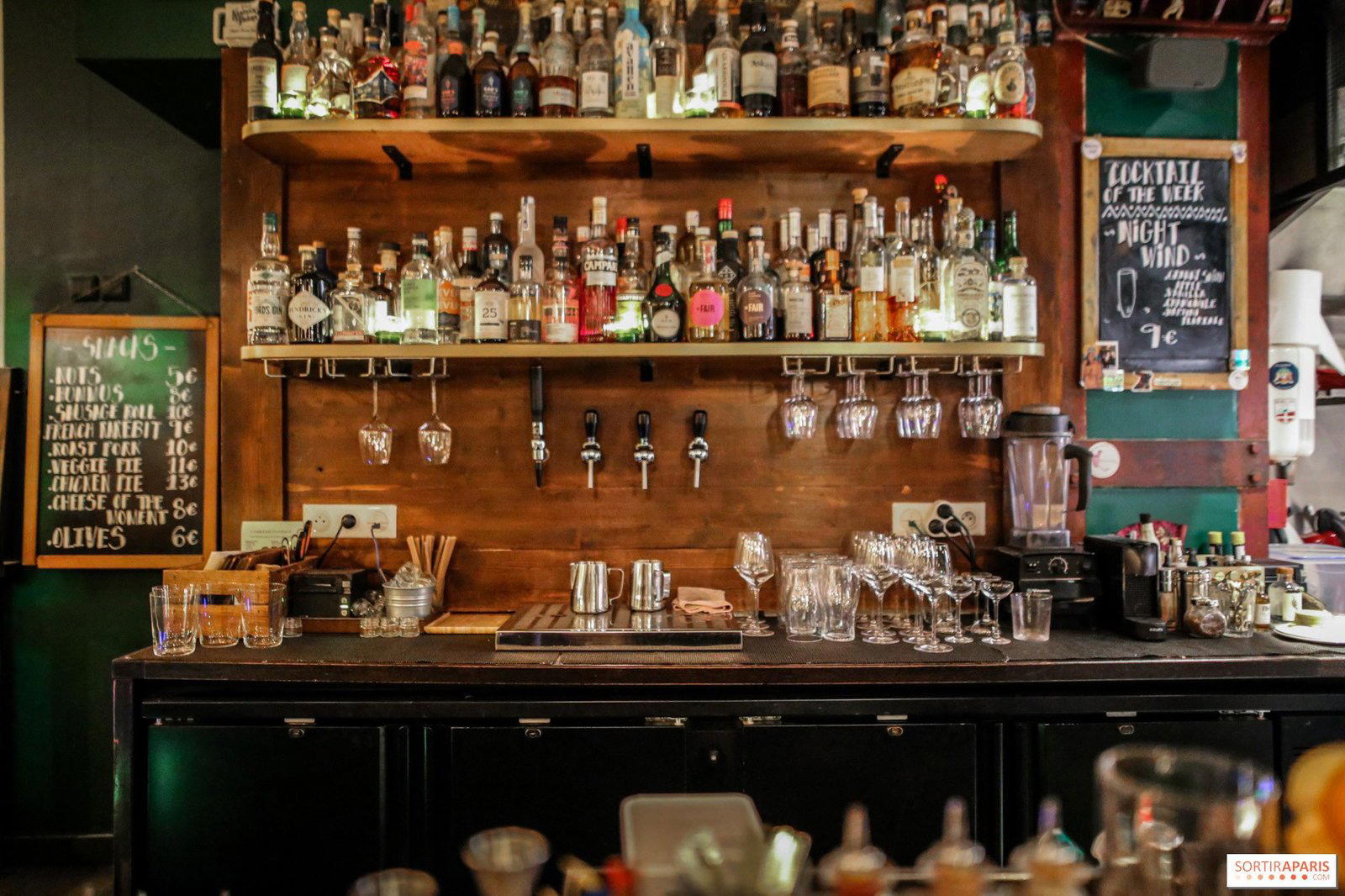
Restaurants in Paris
All restaurants in Paris →
Details
- Romantic
- Elegant
- Trendy
- Intimate
- Sophisticated
- Whimsical
- Romantic Getaway
- Anniversary
- Weekend Escape
- Historic Building
- Design Destination
- Wi Fi
- Room Service
- Concierge
- Wheelchair Accessible
Lively and eclectic with bold wallpapers, colorful patterns, and luxurious fabrics creating a playful yet elegant dollhouse-like atmosphere.