Hôtel Borsari

Hôtel Borsari arrives in Martigny as a property that fuses industrial edge with midcentury warmth, set against a backdrop of Roman ruins, thermal baths, and Alpine trails. The design vocabulary draws on classic Swiss and German influences while keeping the aesthetic contemporary. For a Swiss town better known for its outdoor credentials than its hotel scene, Borsari signals a genuine shift in the town's hospitality register.
 Discover on Pearl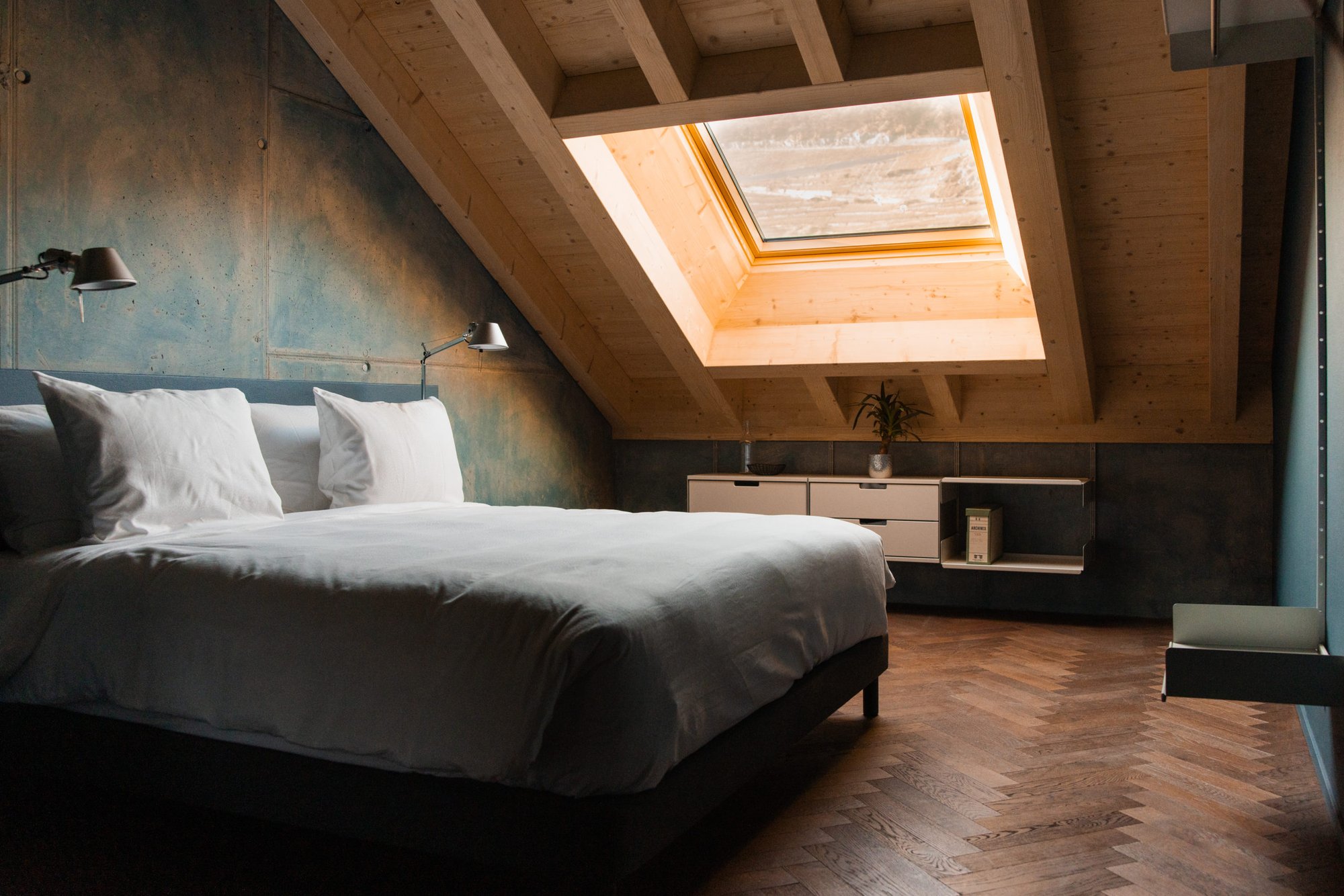
A Different Kind of Swiss Property
Switzerland's premium hotel conversation tends to cluster around the same addresses: grand-dame lakeside palaces, altitude ski resorts, and spa destinations that have been refining their formulas for a century or more. Properties like Baur au Lac in Zurich, Beau-Rivage Geneva, and Badrutt's Palace Hotel in St. Moritz occupy the establishment tier of Swiss hospitality — formal, historically anchored, and priced accordingly. Hôtel Borsari, on Avenue du Grand St. Bernard in Martigny, enters from a different angle entirely. Where those properties lean into Belle Époque grandeur or Alpine tradition, Borsari works with industrial materials and midcentury forms, producing a hotel that reads as current without being self-consciously so.
Martigny itself is underread by international visitors who tend to pass through on the way to Verbier or the Grand-Saint-Bernard Pass into Italy. That transit status has historically kept the town's hospitality offer modest. Borsari's arrival shifts that calculus, giving the town a property with enough character to justify stopping rather than passing through.
The shortlist, unlocked.
Hard-to-book tables, cellar releases, and concierge-planned trips.
Get Exclusive Access →The Design Argument
The design identity at Borsari sits at a genuinely productive intersection: industrial material language (raw finishes, exposed structure, architectural honesty about how a building is built) layered over the proportions and warmth of midcentury modernism. Classic Swiss and German design influences thread through without dominating, which prevents the property from reading as a heritage-museum exercise.
This approach places Borsari in a cohort of Swiss properties that have moved away from the wood-and-stone Alpine vernacular that still defines much of the mountain hotel market. Comparable moves can be seen at 7132 Hotel in Vals, where Peter Zumthor's thermal baths set a precedent for architectural seriousness in unlikely Swiss locations, and at Valsana Hotel in Arosa, which takes a similar stance on contemporary design in a mountain context. What distinguishes Borsari is the industrial element — a less common register in Swiss hospitality, where the default tends toward either rustic warmth or palatial restraint.
Industrial-midcentury crossovers have proven durable in urban hotel design internationally, but they carry specific challenges in a Swiss town context: the aesthetic needs to connect to place rather than feel imported. At Borsari, the surrounding landscape , Roman ruins, thermal geology, mountain trails , provides enough material history that the industrial tone reads as regionally grounded rather than generic.
Martigny as Context
The town's credentials as an outdoor base are serious. The Valais region that Martigny anchors offers mountain biking and hiking routes that rank among the more demanding in the western Alps, with the Grand-Saint-Bernard pass road and the surrounding trails providing technical terrain at multiple ability levels. The Roman amphitheatre and forum ruins at the town's center give Martigny an archaeological dimension that most Swiss mountain towns lack, and the thermal bath tradition connects the area to a longer European spa culture that predates the modern wellness-resort format by roughly two millennia.
For a hotel positioned at Avenue du Grand St. Bernard , the road that leads directly toward the pass and the monastery that has operated there since the eleventh century , the cultural weight of the location is not incidental. Properties in this part of Valais sit inside a geography that has mattered to travellers for centuries, and Borsari's design choices can be read as a contemporary response to that accumulated history rather than an attempt to erase it.
Martigny also sits within reach of several of Switzerland's better-known hotel destinations. Beau-Rivage Palace in Lausanne lies roughly an hour to the north along the lake. The Verbier ski area is accessible to the east. For guests combining a Valais stay with broader Swiss travel, Borsari connects usefully to a wider circuit that might also include CERVO Mountain Resort in Zermatt or The Alpina Gstaad , properties that share Borsari's preference for design specificity over generic Alpine comfort.
Where Borsari Sits in the Swiss Design-Hotel Tier
Swiss hospitality broadly divides between the grand-palace tradition (where Grand Hotel Kronenhof in Pontresina, Hotel Bellevue Palace in Bern, and Mandarin Oriental Palace in Lucerne belong), the contemporary resort tier (represented by Bürgenstock Resort and Grand Resort Bad Ragaz), and a smaller cohort of design-led independents where character and specificity outweigh category breadth. Borsari belongs to that third group.
Independent design hotels in secondary Swiss towns operate differently from the palace-tier properties. Without the institutional backing of a global brand or a century of earned prestige, they depend on design conviction and local relevance to justify their position. The industrial-midcentury language at Borsari does that work, giving the property a legible identity that connects to the town's material history without defaulting to Alpine pastiche. For comparison, Boutique Hotel Restaurant Krone in Regensberg operates on a similar logic in its own town context: small, characterful, rooted in place rather than brand.
Planning a Stay
Hôtel Borsari sits at Avenue du Grand St. Bernard 1, Martigny, placing it within walking distance of the town center, the Roman ruins, and the main rail connection that links Martigny into Switzerland's national network. Martigny station receives direct trains from Geneva (roughly one hour) and connects to the Mont Blanc Express toward Chamonix, which means the property is accessible without a car , an advantage in a region where mountain driving requires planning. The surrounding trails and bike routes mean that seasonal timing matters: summer through early autumn gives the broadest access to outdoor routes, while winter visitors face closures on some mountain roads, including intermittently the Grand-Saint-Bernard pass itself.
Guests who want to compare Borsari's design-independent approach against the grander end of Swiss hospitality can reference properties like Hotel Les Trois Rois in Basel, Hotel Villa Honegg, Castello del Sole in Ascona, Guarda Golf Hôtel in Crans-Montana, Villa Principe Leopoldo in Lugano, Park Hotel Vitznau, and The Capra in Saas-Fee , each of which makes a different set of trade-offs between tradition, design, and location. For context beyond Switzerland, the same design-led independent logic applies at Aman Venice, The Fifth Avenue Hotel in New York City, and Aman New York. For more on the wider Martigny dining and hospitality scene, see our full Martigny guide.
Frequently Asked Questions
- Is Hôtel Borsari more formal or casual?
- The design register at Borsari , industrial materials, midcentury proportions, Swiss and German influences read through a contemporary lens , points toward a relaxed rather than formal atmosphere. Martigny is an outdoor-activity town with Roman ruins and thermal baths rather than a grand-palace destination like Baur au Lac or Beau-Rivage Geneva, and Borsari's design tone reflects that. Expect considered comfort over ceremonial service codes.
- Which room category should I book at Hôtel Borsari?
- Without specific room-tier data available, the most useful framework is to prioritise rooms that connect to the surrounding landscape , Martigny's position at the foot of the Grand-Saint-Bernard approach means views and proximity to outdoor access points matter as much as interior square footage. Contact the property directly for current room configuration details before booking.
- What is the standout thing about Hôtel Borsari?
- In a Swiss town better known as a transit point than a destination in its own right, Borsari arrives as a property with a specific design identity , industrial-midcentury, with Swiss and German classical influence , that gives Martigny a reason to be the stop rather than the detour. Set against Roman ruins, thermal bath culture, and serious Alpine trail access, the hotel's design conviction is what separates it from the functional accommodation that has historically served this corridor.
How It Stacks Up
These are the closest comparables we have in our database for quick context.
| Venue | Cuisine | Price | Awards | Notes |
|---|---|---|---|---|
| Hôtel Borsari | This venue | |||
| Badrutt's Palace Hotel | Michelin 3 Key | |||
| Four Seasons Hotel des Bergues | Michelin 2 Key | |||
| Mandarin Oriental Palace, Luzern | Michelin 2 Key | |||
| The Ritz-Carlton Hotel de la Paix, Geneva | Michelin 2 Key | |||
| Hotel President Wilson, A Luxury Collection Hotel |
Preferential Rates?
Our members enjoy concierge-led booking support and priority upgrades at the world's finest hotels.
Get Exclusive AccessThe shortlist, unlocked.
Hard-to-book tables, cellar releases, and concierge-planned trips.
Get Exclusive Access →