Hilo Seaside Hotel
Hilo Seaside Hotel occupies a position in Hilo's lodging market that rewards travellers who prioritise proximity to the city's working waterfront over resort-style amenity stacks. Set on Hawaii Island's rain-rich east side, the property offers a grounded alternative to the polished corridor of Kohala Coast resorts, placing guests within reach of Hilo's farmers markets, lava fields, and bay-front parks.

Pearl is the En Primeur Club membership app — saves, bookings, and concierge access live there. Same editors, same standards.
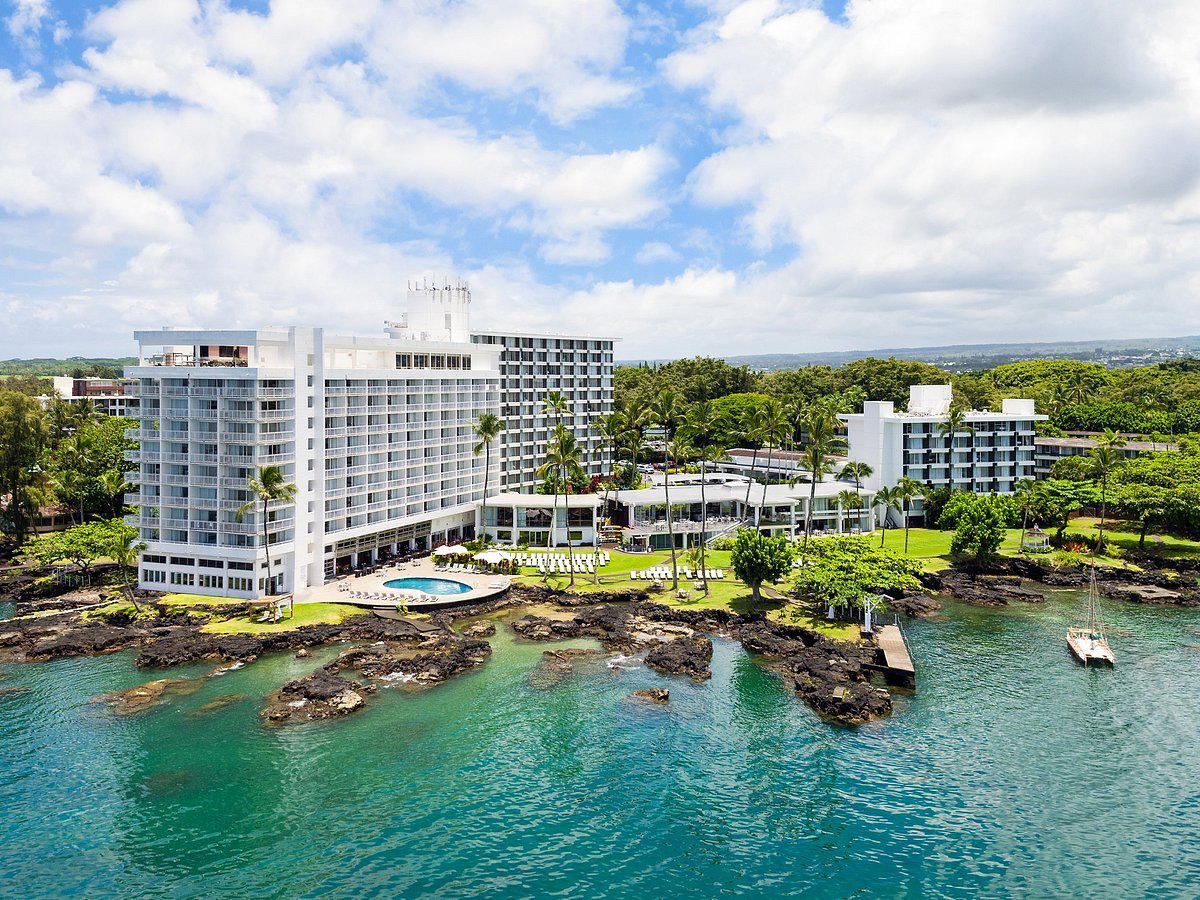
Hilo's East-Side Character and Where the Seaside Hotel Sits Within It
Hawaii Island's lodging market divides cleanly along geography. The Kohala and Kona coasts, running down the island's drier western flank, concentrate the large resort footprints: the lava-field properties with sprawling pool complexes, destination spas, and golf infrastructure. Properties like Kona Village, A Rosewood Resort in Kailua Kona occupy that tier, where the design ambition and price point both sit at the upper end. Hilo, on the island's eastern shore, operates on a different logic entirely. Annual rainfall here exceeds 130 inches, the vegetation runs thick and dark green, and the town functions as a working civic centre rather than a resort hub. The Hilo Seaside Hotel belongs to this eastern tradition, positioned as a property that reflects the city it serves rather than engineering a bubble around guests.
That positioning matters when thinking about who books east-side Hilo accommodation. Travellers arriving on this side of the island are generally there for the Hawaii Volcanoes National Park, the Hilo Farmers Market, the black-sand beaches of Punalu'u, or the waterfalls of the Hamakua Coast. The logistics of those pursuits sit closer to Hilo than to any Kohala resort. Booking the east side is, in this sense, a practical editorial choice as much as an aesthetic one.
The Physical Setting: Waterfront Orientation in a Town Built Around Its Bay
Hilo's urban form is shaped by Hilo Bay, and the town's best-positioned properties are those that face it. The Seaside Hotel's name signals its orientation: the bay-front location places guests where Hilo's civic and commercial life concentrates, within walking distance of the Bayfront Highway strip, the Liliuokalani Gardens, and the farmers market grounds. In a city where the distances between points of interest are short enough to cover on foot, that positioning removes the need for a rental car for casual exploration, though the national park and waterfall routes still require one.
Hilo's architectural fabric is low-rise and layered with early-twentieth-century commercial buildings, many of them surviving from the era before the 1946 and 1960 tsunamis reshaped parts of the waterfront. The town's built environment rewards attention: corrugated-metal awnings, painted wooden storefronts, and Japanese-influenced commercial architecture from the plantation era sit alongside newer civic buildings. A property oriented toward this environment asks guests to engage with the city rather than retreat from it, which distinguishes the east-side proposition from the controlled design environments found at properties like Amangiri in Canyon Point or Post Ranch Inn in Big Sur, where the landscape itself is the designed experience.
How Hilo Compares to the Broader Hawaii Lodging Conversation
The premium Hawaii lodging conversation has, for decades, focused almost exclusively on Maui and Oahu. Hawaii Island enters that conversation primarily through its Kohala properties. Hilo receives far less editorial attention, which understates the east side's appeal for a specific traveller profile: those interested in the island's ecological and cultural depth rather than its beach-and-resort circuit. The Hawaii Volcanoes National Park, a UNESCO World Heritage Site, sits roughly 30 miles southwest of Hilo — a distance that makes the city the logical base for multi-day volcano visits, particularly for travellers who want to catch both the dawn and evening conditions in the park.
For context on where character-led, non-resort lodging fits in the broader American market, properties like Troutbeck in Amenia or The Stavrand in Guerneville occupy a similar role in their respective regions: smaller, town- or landscape-anchored properties that serve as bases for the surrounding area rather than destinations that compete on amenity depth. The Hilo Seaside Hotel fits within that pattern, occupying the accessible, location-led end of the market rather than the destination-resort tier represented by Four Seasons at The Surf Club in Surfside or Meadowood Napa Valley in Napa.
Arrival, Orientation, and Planning the East-Side Stay
Hilo International Airport sits close to the city centre, making arrival considerably less logistically complex than the west-side Kona airport, which requires a longer drive to reach the main Kohala resort corridor. Guests flying direct into Hilo — served by interisland carriers and some mainland connections, can reach bay-front properties in under fifteen minutes from the terminal. A rental car remains the most practical tool for exploring beyond the city: the national park, the Akaka Falls loop, and the Hamakua Coast all require it, and Hilo's car rental options are concentrated near the airport.
Timing the east-side visit matters. Hilo's rainfall is year-round, but the drier window broadly aligns with Hawaii's summer months, from May through September. Morning light in Hilo tends to clear faster than afternoon, making early starts to the national park the more reliable approach. The Hilo Farmers Market runs at full capacity on Wednesdays and Saturdays, when local producers from across the Puna and Hamakua districts bring produce, flowers, and prepared foods to the Mamo Street grounds, one of the more grounded representations of Hawaii Island's agricultural depth available to visitors.
Travellers considering how Hilo fits into a broader Hawaii Island itinerary will find it functions leading as a dedicated east-side base rather than a midpoint stop. The distances on Hawaii Island are longer than they appear on maps: Hilo to the Kohala Coast runs roughly 90 miles via the Saddle Road. That drive is remarkable in itself, crossing the high plateau between Mauna Kea and Mauna Loa, but it makes day-tripping between the two coasts a full commitment. For a fuller picture of what the island's lodging range looks like, our full Hilo restaurants and travel guide covers both the east-side character and the practical infrastructure travellers need to plan around it.
For travellers building a multi-destination American trip that includes a Hawaii stop, the east-side Hilo option pairs well with itineraries that prioritise natural environments and civic character over resort infrastructure. Properties like Sage Lodge in Pray, Dunton Hot Springs in Dunton, or Canyon Ranch Tucson in Tucson occupy a broadly comparable orientation in their own geographies: landscape-anchored lodging where the surrounding environment does the heavy editorial lifting. Hilo's version of that proposition adds the specific weight of an active volcanic island and one of the most ecologically complex corners of the American Pacific.
| Venue | Cuisine |
|---|---|
| Hilo Seaside HotelThis venue — the venue you are viewing | This venue |
| Aman New York | Michelin 3 Key, World's 50 Best |
| The Beverly Hills Hotel | Michelin 3 Key, World's 50 Best |
| Amangiri | Michelin 3 Key, World's 50 Best |
| Hotel Bel-Air | Michelin 3 Key, World's 50 Best |
| The Carlyle, A Rosewood Hotel | Michelin 2 Key, World's 50 Best |
Continue exploring
More in Hilo
Bars in Hilo
Browse all →

At a Glance
- Minimalist
- Scenic
- Cozy
- Family Vacation
- Weekend Escape
- Garden
- Wi Fi
- Pool
- Fitness Center
- Restaurant
- Garden
- Waterfront
- Garden
- Wi Fi
- Pool
- Fitness Center
- Restaurant
- Garden
Welcoming and relaxing atmosphere with thoughtful touches of Hawaiian nature, though some note occasional noise.