
Michelin Selected
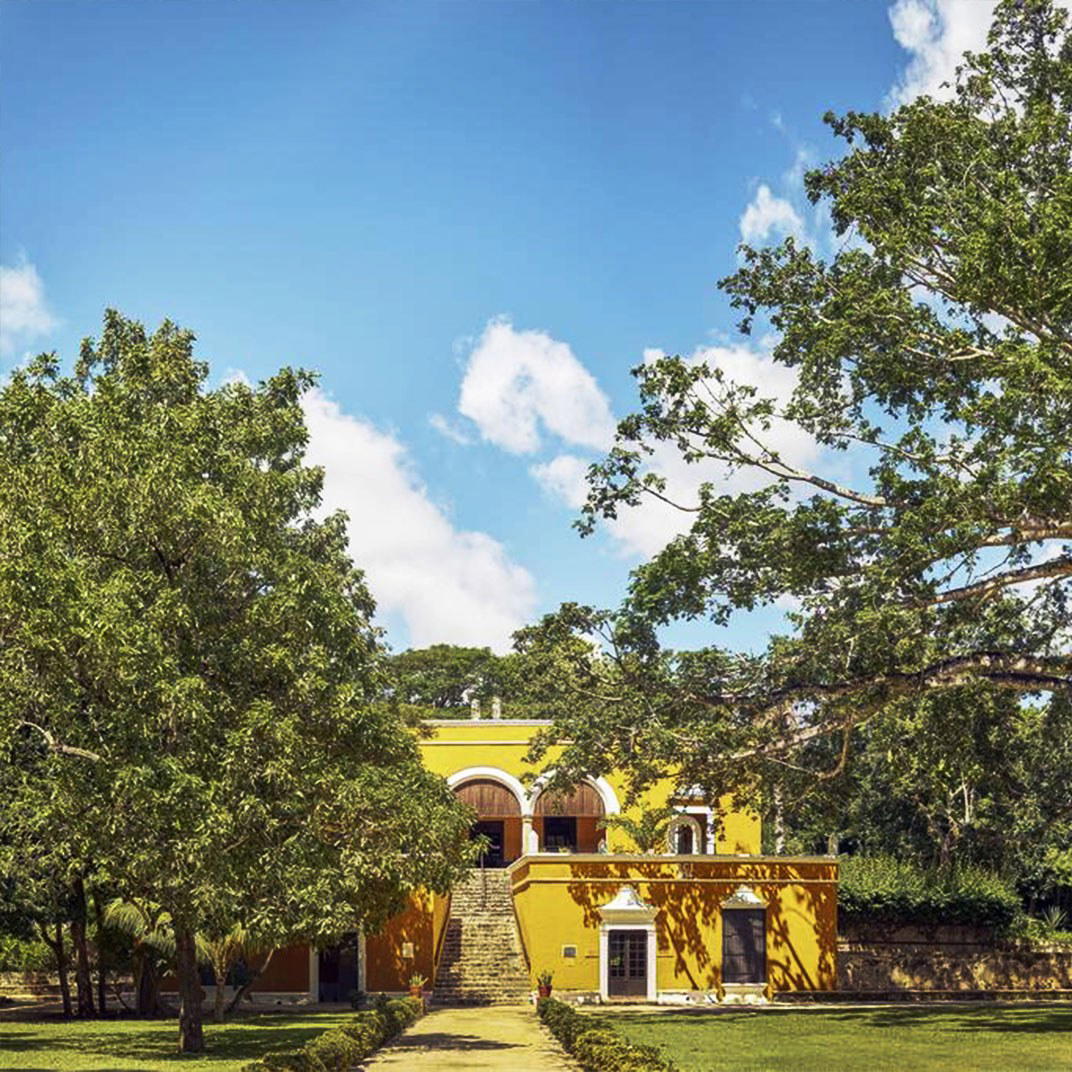
A 17th-century hacienda set 20 kilometres outside Campeche city, Hacienda Uayamon carries Michelin Selected recognition for 2025 and belongs to a small tier of heritage conversion properties that treat architectural preservation as the primary guest experience. Roofless stone rooms open to the sky, colonial-era sugar mill ruins frame the grounds, and the surrounding jungle provides a near-total removal from the coastal resort circuit.

Pearl is the En Primeur Club membership app — saves, bookings, and concierge access live there. Same editors, same standards.
- Address
- KM 20 Carretera, Campeche, Mexico
- Phone
- +52.981.829.7527
- Directions
- Get directions
Where Ruins Are the Architecture
The dominant pattern in Mexico's premium hotel market runs along coastlines: infinity pools aimed at the Pacific, beachfront palapas on the Riviera Maya, resort corridors in Los Cabos. Properties like One&Only Mandarina in Riviera Nayarit, Montage Los Cabos, and Zadun, A Ritz-Carlton Reserve in Los Cabos compete on ocean access, scale, and amenity stacking. Hacienda Uayamon operates on an entirely different premise. Situated at kilometre 20 on the Campeche highway, roughly 20 kilometres from the state capital, the property is a converted 17th-century hacienda that takes its identity from what was never restored. The ruins stay ruins. The roofless rooms open to the Yucatán sky. The sugar mill walls, crumbling and moss-edged, are the landscape.
That approach places Uayamon in a niche cohort of Mexican heritage conversions that includes Chablé Yucatán near Mérida and shares a broader sensibility with Casa de Sierra Nevada, A Belmond Hotel in San Miguel de Allende, where colonial architecture is treated as the experience itself rather than a backdrop for other amenities. The Michelin guide's 2025 Selected designation confirms that the property's positioning resonates with a reference-level curatorial body, not just niche travel media.
The Logic of Incompletion
Heritage hotel design across Latin America has generally moved in two directions: full restoration that returns a property to a polished colonial ideal, or adaptive reuse that grafts contemporary interiors onto old shells. Hacienda Uayamon represents a third approach, where structural incompletion is treated as an aesthetic end in itself. The roofless casitas, with walls intact but open above, function as a kind of controlled exposure to the surrounding environment. Light, wind, and sound enter on their own schedule. The experience is less about preserved history than about coexistence with its material decay.
This is a harder design position to maintain than it looks. Leaving ruins as ruins requires constant decisions about what to intervene on and what to leave alone. The stone pathways, the original hacienda house, and what remains of the henequen and sugar processing structures each present different states of preservation. The property's coherence depends on a consistent editorial eye about where modern hospitality infrastructure stops and historical fabric begins. Among the design-led heritage properties in the Yucatán Peninsula, that calibration is Uayamon's distinguishing characteristic.
Campeche as Context
Campeche city is one of the better-preserved colonial capitals in Mexico, a UNESCO World Heritage Site since 1999, known for its hexagonal city walls, coloured facades, and relative absence from mainstream tourism circuits compared to Mérida or the Caribbean coast. The state of Campeche sits on the southwestern corner of the Yucatán Peninsula, with the Gulf of Mexico to the west and dense jungle interior stretching south toward the Guatemalan border. See our full Campeche restaurants guide for coverage of where to eat in and around the capital.
Staying outside the city at Uayamon rather than in it reflects a particular kind of travel preference: guests who want the historical environment but not the urban proximity. The 20-kilometre position puts the property in open terrain, insulating it from city noise while keeping Campeche's centro histórico accessible as a day destination. That contrast, colonial city on one side, jungle hacienda on the other, is part of what the stay is structured around. For travellers comparing Yucatán Peninsula options, the decision between Uayamon and, say, Chablé Yucatán near Mérida is partly about which city's cultural orbit you want to be in and how much isolation you want from it.
Where It Sits Among Mexico's Design-Led Properties
Mexico's independent design-led hotel sector has expanded considerably over the past decade. Properties like Hotel Esencia in Tulum, Casa Polanco in Mexico City, Hotel Casa Santo Origen in Oaxaca, and Casa Antonieta in Oaxaca City represent a tier that competes on architectural identity and spatial intelligence rather than room count or branded amenities. Casa Silencio in San Pablo Villa de Mitla and Hotel Humano in Puerto Escondido operate with similar logic in different regional contexts.
Within that set, Uayamon occupies a sub-tier defined by genuine historical age. Many design-led Mexican properties work with 20th-century buildings or purpose-built contemporary structures with vernacular references. A 17th-century hacienda with surviving pre-industrial production infrastructure is a different category of material. The design challenge and the resulting atmosphere are not comparable to newer construction, however carefully considered that construction might be.
For those weighing Uayamon against coastal resort options elsewhere in Mexico, the reference points are different enough that direct comparison is less useful than understanding which mode of travel applies. Maroma in Riviera Maya, Las Ventanas al Paraíso in San José del Cabo, and Etéreo, Auberge Resorts Collection in Punta Maroma are oriented around physical pleasure and natural environment in ways that Uayamon is not. Uayamon is oriented around historical atmosphere, spatial disorientation from familiar hotel conventions, and a landscape that rewards attention rather than relaxation in any conventional sense.
Planning a Stay
Hacienda Uayamon sits at KM 20 Carretera Campeche, accessible by road from Campeche city. The nearest commercial airport is Campeche International (CPE), which handles domestic connections from Mexico City; travellers coming from international departure points typically route through Mexico City or Mérida's Manuel Crescencio Rejón International Airport. Mérida is roughly two hours by road and carries considerably more flight options, making it the more practical gateway for most international arrivals. For a broader look at comparable heritage-led properties in the region, Casa Japa in Campeche offers a different scale of engagement with the city's colonial fabric. Those building a longer Mexican itinerary around design and heritage properties might also consider Hotelito at MUSA in Loma Bonita, Xinalani in Quimixto, Playa Viva in Juluchuca, Las Alamandas in Costalegre, Susurros del Corazón, Auberge Resorts Collection in Punta de Mita, or Palmaïa-The House of AïA in Playa del Carmen as contrasting points in the design-led tier.
How It Stacks Up
Comparable venues nearby, for context on price, style, and recognition.
| Venue | Cuisine | Price | Awards | Notes |
|---|---|---|---|---|
| Hacienda UayamonThis venue — the venue you are viewing | Restored 18th-century henequen hacienda with colonial stone architecture and jungle surroundings | Not listed | Michelin Selected | Not listed |
| Casa Japa | 18th-century colonial mansion restored with contemporary design | $300–500 | Michelin Selected | Zona Centro |
| W Mexico City | Boutique luxury with custom details and signature W touches | Not listed | Michelin Selected | Polanco Chapultepec |
| Awa Holbox Hotel Boutique | Beachfront boutique blending modern luxury with island nature | $200–300 | Michelin Selected | Holbox |
| Thompson Zihuatanejo | Contemporary beachfront resort | Not listed | Michelin Selected · Virtuoso Luxury Hotel Partner | Playa La Ropa |
| Las Alamandas | Secluded private estate-like beach retreat with contemporary Mexican architecture. | Not listed | 5-Star | Costalegre |
Recognition history
Dated appearances from independent guides and award organizations, with the underlying list record or original source where available.
Michelin Selected
Michelin
Continue exploring
More in Campeche
Hotels in Campeche
Browse all →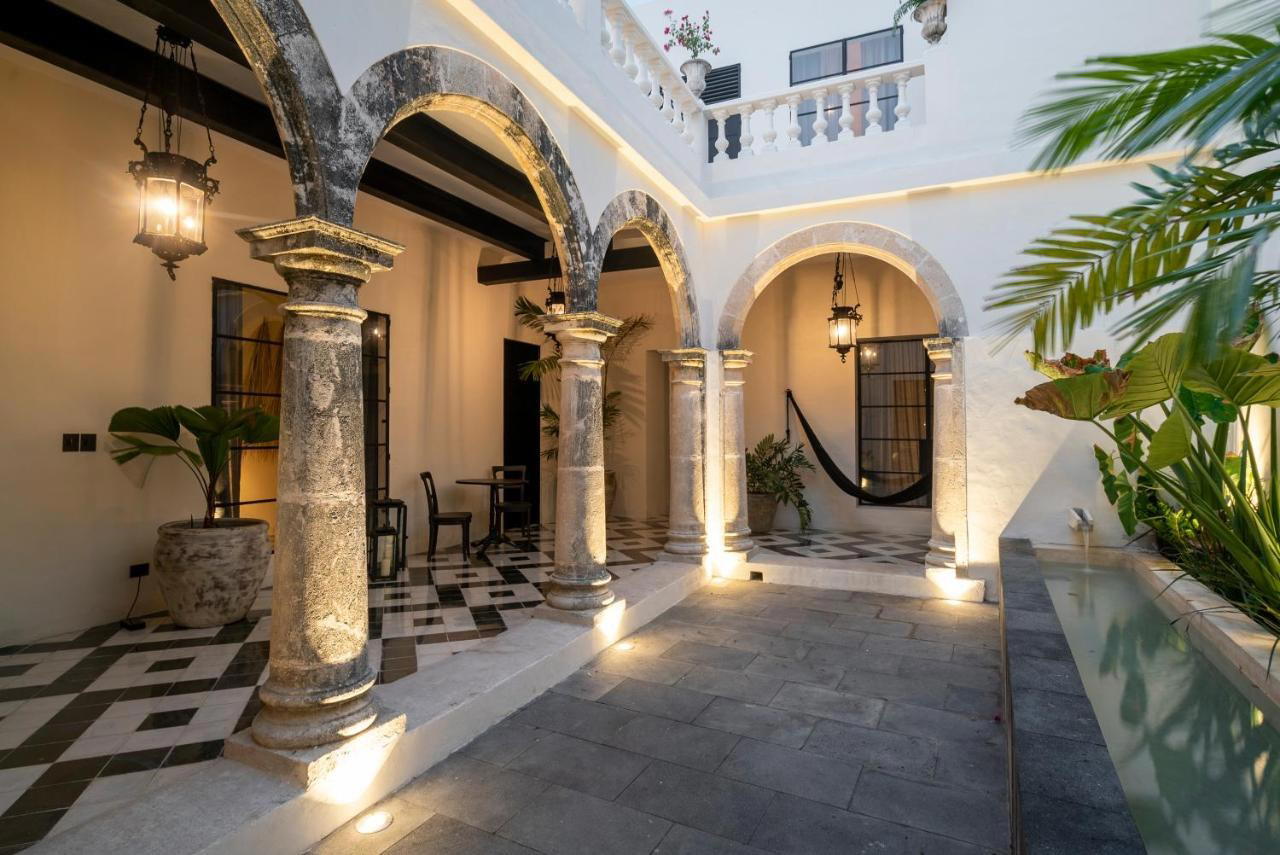
Restaurants in Campeche
Browse all →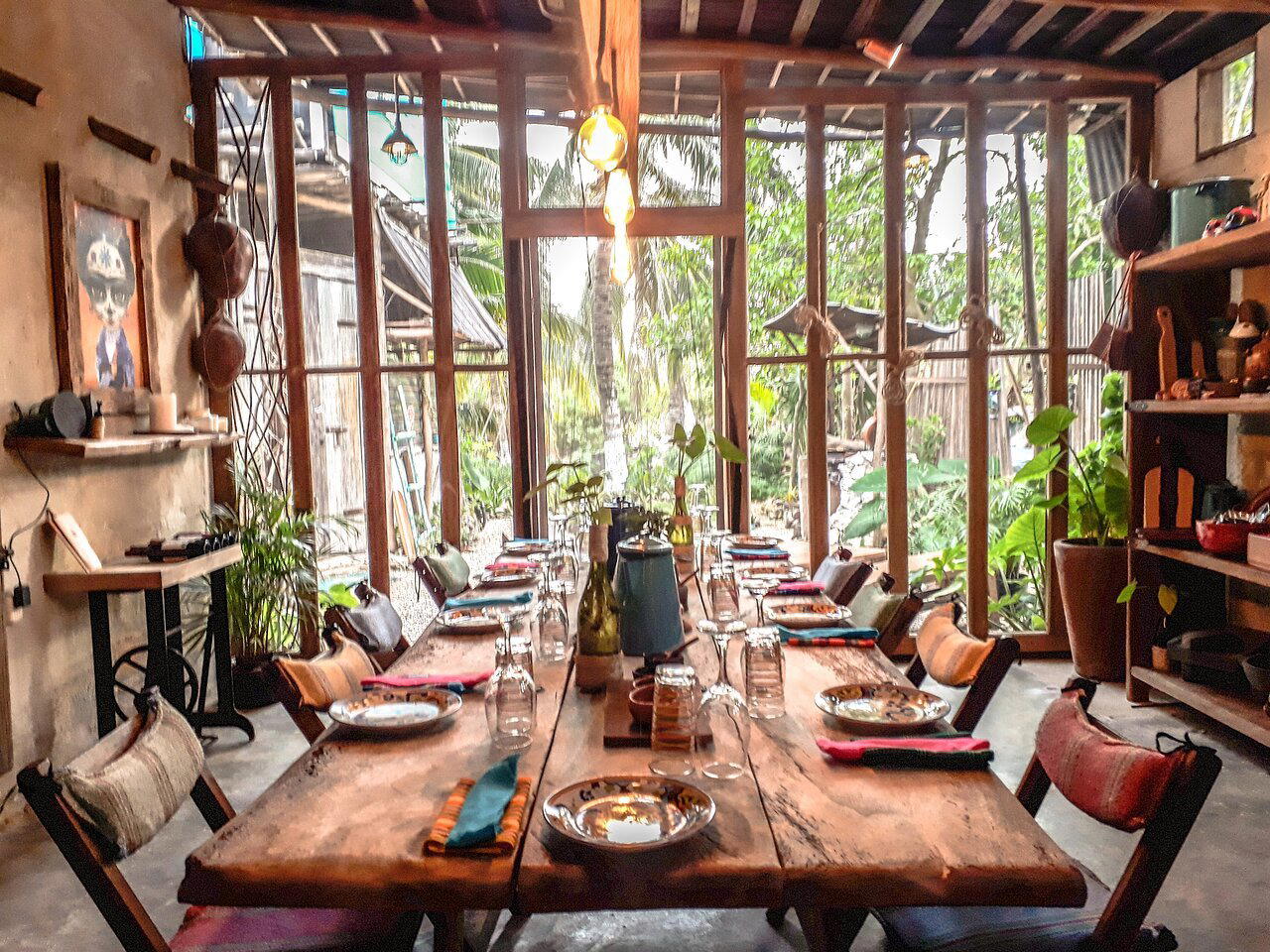
Wineries in Campeche
Browse all →
Details
- Romantic
- Elegant
- Rustic
- Scenic
- Intimate
- Sophisticated
- Ornate
- Honeymoon
- Romantic Getaway
- Anniversary
- Destination Wedding
- Historic Building
- Garden
- Wi Fi
- Pool
- Spa
- Concierge
- Room Service
- Garden
Sophisticated colonial atmosphere with candlelit private gardens, high ceilings, stone walls, and a serene jungle setting evoking timeless mysticism.