Grand Hotel National Luzern

Few addresses in Switzerland place a guest so precisely at the intersection of lake, mountain, and Belle Époque architecture as Grand Hotel National Luzern on Haldenstrasse 4. The property earned Star Wine List recognition in 2026, signalling a wine program that positions it within a serious hospitality comparable set. For travellers prioritising location over novelty, the National's lakeside position and layered sense of history make it a credible anchor for any Lucerne stay.
Pearl is the En Primeur Club membership app — saves, bookings, and concierge access live there. Same editors, same standards.
- Address
- Haldenstrasse 4
- Phone
- 41-41-419-09-09
- Website
- grandhotel-national.com
- Directions
- Get directions
 Saves & bookings on Pearl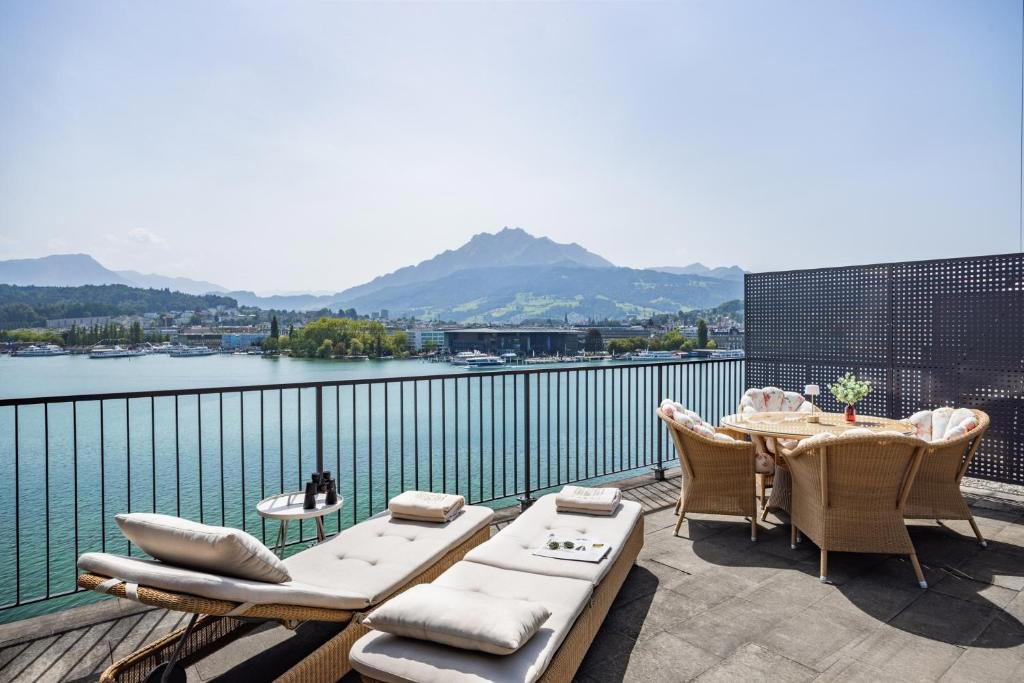
A Lakeside Address That Does Most of the Work
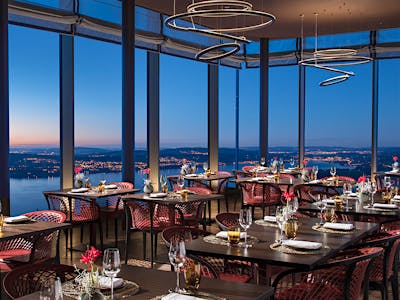
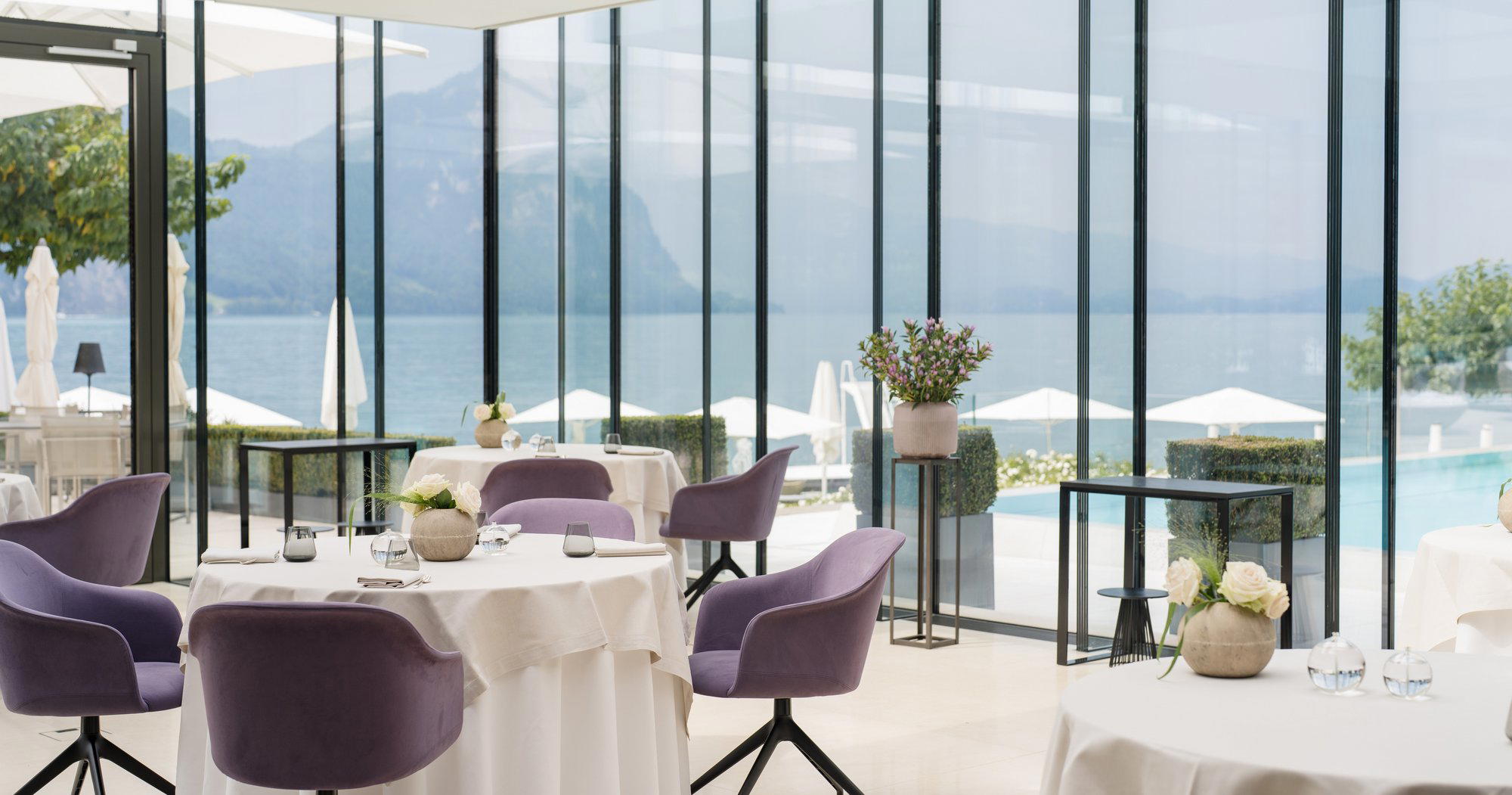
Lucerne's hotel geography divides along a simple axis: properties that face Lake Lucerne and those that don't. The distinction matters more than star ratings in many cases, because the combination of glimmering water and an Alpine horizon is the experience most visitors have come to find. Grand Hotel National Luzern, at Haldenstrasse 4, sits on the lake's northern shore, where the Reuss meets open water and the panorama of the Pilatus and Rigi ranges fills the windows without architectural interruption. That address is not incidental, it is the primary argument for the property.
The building itself belongs to the first generation of Swiss grand hotels, a category that emerged in the mid-nineteenth century to accommodate the wealthy European travellers arriving by rail. That era produced a particular architectural grammar, high ceilings, ornate facades, terraced lakeside frontage, and the National preserves those proportions in a way that more recently constructed competitors cannot replicate. Where properties like the Mandarin Oriental Palace, Luzern bring international brand infrastructure to a historic shell, and Hotel Château Gütsch trades on a castle-hill position above the city, the National operates from a different register: formal, lakefront, and grounded in an older hospitality tradition that predates the contemporary luxury category entirely.
The Wine Program as a Positioning Signal
The property received Star Wine List recognition in 2026, adding a notable wine credential to its profile. In a Swiss context, that recognition places the National within a small cohort of properties where the beverage program is treated as a distinct competence rather than a hotel amenity. Swiss wine culture is often underestimated by international visitors, who tend to associate the country with its cuisine and mountain resorts rather than its viticulture. A focused wine list in this setting functions as a statement of curatorial intent, and the 2026 Star Wine List nod suggests the cellar has been developed with that seriousness in mind.
For comparison, the broader Swiss grand hotel circuit, from Baur au Lac in Zurich to Beau-Rivage Geneva to Beau-Rivage Palace in Lausanne, tends to run deep cellars as a matter of institutional expectation. The National's 2026 award situates it in that tradition rather than outside it.
The Physical Environment: What the Address Provides
Haldenstrasse runs along the lake's northern edge, connecting the main station area to the quieter residential stretch toward Tribschen. The National sits close enough to the old town that the Chapel Bridge and the medieval water tower are reachable on foot in under ten minutes, but far enough from especially tourist-dense section among the quayside to maintain a degree of calm that properties immediately adjacent to the Seebrücke cannot offer. That calibration, accessible but not crowded, is one of the more underappreciated aspects of the address.
The lake views from this position face south and southwest, which means the Alpine backdrop includes the Pilatus massif, whose 2,132-metre summit is among the more photographed profiles in Central Switzerland. Morning light on that range, reflected across the water, is the kind of scene that generates the photographs Lucerne is known for. A lakefront room at the National delivers that prospect without requiring any particular effort from the guest: the geography does it automatically.
For those comparing accommodation options across Lucerne, the city's premium hotel tier also includes Hotel de la Paix and Hotel Hofgarten at different price points and formats, while Kanonenstrasse represents a more compact option in the city. Further afield, Waldhotel by Bürgenstock and the broader Bürgenstock Resort sit above the lake on the southern plateau, offering a resort alternative to the urban lakeside format. The National's argument against those options is the immediacy of its city access combined with the directness of its water frontage, a combination the hilltop and resort properties trade away for seclusion and scale.
Where the National Sits in Swiss Grand Hotel History
Switzerland's grand hotel tradition is among the more coherent in Europe. The same mid-nineteenth century wave that produced the National also generated Badrutt's Palace Hotel in St. Moritz, Hotel Les Trois Rois in Basel, and Grand Hotel Kronenhof in Pontresina, properties whose architecture and institutional character remain the reference points for what a Swiss palace hotel should feel like. That lineage is not sentimentality; it is a verifiable historical category with specific design language, operational standards, and guest expectations attached to it.
More recent Swiss luxury additions, The Alpina Gstaad, 7132 Hotel in Vals, CERVO Mountain Resort in Zermatt, and Guarda Golf Hôtel & Résidences in Crans-Montana, operate in a contemporary register that deliberately distances itself from the palace tradition. The National belongs to neither the contemporary resort category nor the international branded luxury segment represented by properties like Grand Resort Bad Ragaz. It is something more specific: a nineteenth-century Swiss palace hotel with a lakefront address that has not been repositioned into another category.
For travellers drawn to that kind of continuity, architectural, historical, and geographic, properties like the National carry a weight of place that newer builds and repositioned brands cannot manufacture. The equivalent calculation applies in other Swiss cities: Hotel Bellevue Palace Bern occupies a comparable position in Bern, where address and institutional age do much of the hospitality work that design-led properties achieve through different means.
Planning a Stay
The property is located at Haldenstrasse 4, within walking distance of Lucerne's central train station and the old town core. Lucerne sits approximately one hour from Zurich by direct train, making it a plausible base for guests arriving via Zurich Airport without needing an internal flight or extended transfer. The lake and mountain region is most photogenic from late spring through early autumn, when the Alpine snowline is visible above the summer treeline and the water reflects clear sky rather than low cloud. The case for the National rests on the specificity of its Lucerne lakefront position and the 2026 Star Wine List recognition.
The Short List
Comparable venues nearby, for context on price, style, and recognition.
| Venue | Price | Notes |
|---|---|---|
| Grand Hotel National LuzernThis venue — the venue you are viewing | $$$$ | Not listed |
| Waldhotel by Bürgenstock | $$$$ | Bürgenstock, Sustainable alpine wellness resort |
| Hotel de la Paix | $$$$ | Old Town Lucerne, Modern opulence in historic district |
| Kanonenstrasse | $$$$ | Guetsch, Historic castle hotel with Belle Époque romance in the castle wing and contemporary comfort in the Orangerie. |
| Hotel Château Gütsch | $$$$ | Gütsch, Historic castle hotel blending historical charm with modern luxury |
| Hotel Hofgarten | $$$ | Old Town Lucerne, Historic heritage property with traditional Swiss architecture across three interconnected buildings, emphasizing timeless charm and local character. |
Recognition history
Dated appearances from independent guides and award organizations, with the underlying list record or original source where available.
Star Wine List
Star Wine List
Continue exploring
More in Lucerne
Hotels in Lucerne
Browse all →
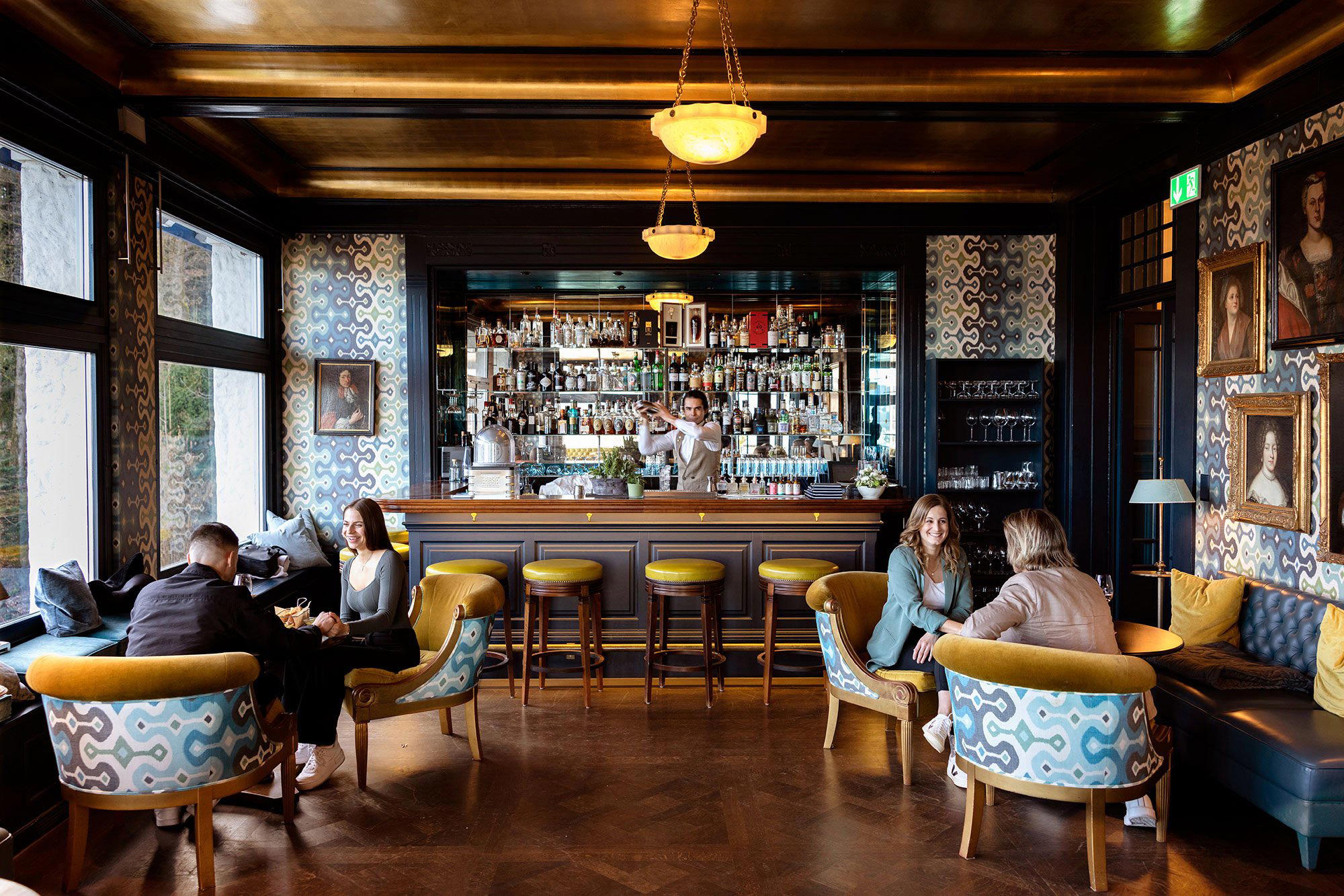
Bars in Lucerne
Browse all →
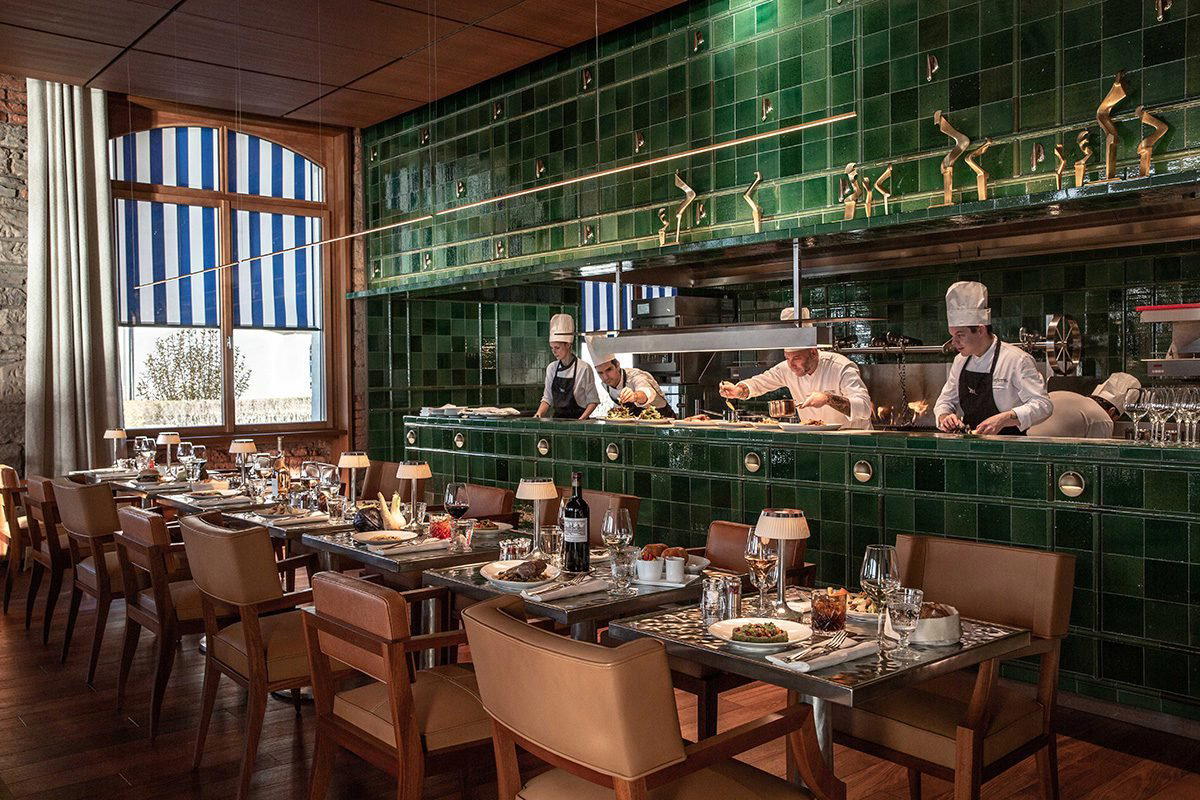
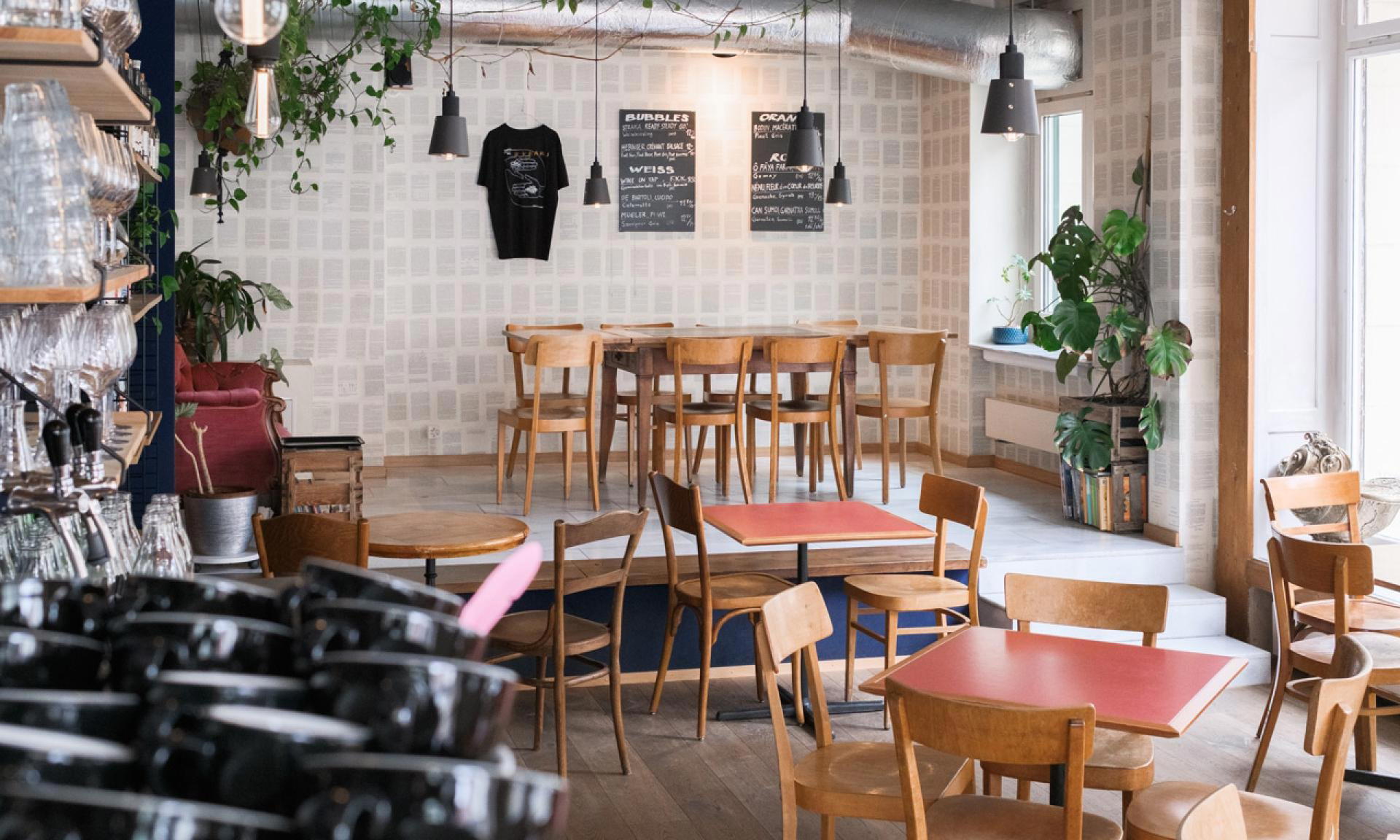
Restaurants in Lucerne
Browse all →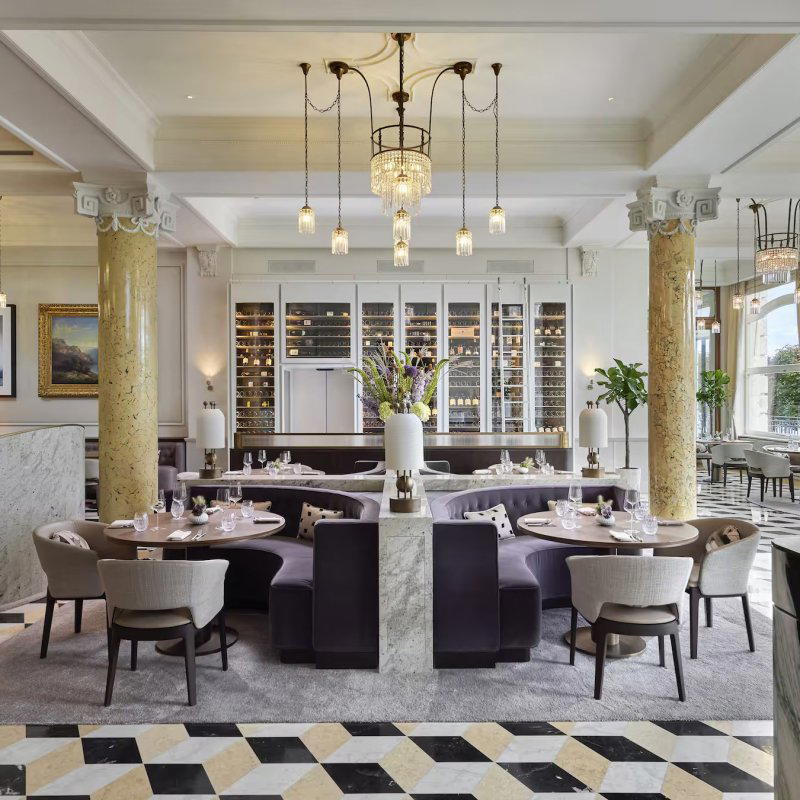

At a Glance
- Elegant
- Romantic
- Sophisticated
- Classic
- Well Known
- Romantic Getaway
- Anniversary
- Honeymoon
- Business Trip
- Celebration
- Waterfront
- Historic Building
- Panoramic View
- Destination Spa
- Terrace
- Private Dining
- Wi Fi
- Pool
- Spa
- Fitness Center
- Room Service
- Concierge
- Business Center
- Valet Parking
- Sauna
- Restaurant
- Bar
- Waterfront
- Mountain
- Wi Fi
- Pool
- Spa
- Fitness Center
- Room Service
- Concierge
- Business Center
- Valet Parking
- Sauna
- Restaurant
- Bar
Serene and sophisticated with soaring ceilings, crystal chandeliers, polished marble floors, and mahogany-paneled bar with live piano music; a seamless blend of 19th-century grandeur and contemporary comfort.