Grand Coteau
Grand Coteau is a small Acadiana town in St. Landry Parish, Louisiana, where Creole architecture, Jesuit history, and a deeply rooted Catholic heritage shape daily life more than any restaurant or hotel strip. The town's built environment — a National Historic Landmark district anchored by the Academy of the Sacred Heart — rewards visitors who arrive with time to read the landscape slowly. See our full Grand Coteau restaurants guide for dining context nearby.

Pearl is the En Primeur Club membership app — saves, bookings, and concierge access live there. Same editors, same standards.
A Town Legible Only on Foot
Grand Coteau arrives with almost no warning. Driving north from Lafayette on the old two-lane roads that pre-date the interstate, the terrain shifts almost imperceptibly: the land rises a few feet above the surrounding prairie, live oaks close over the road, and suddenly the rooflines of nineteenth-century buildings appear through the canopy. That subtle elevation — the coteau, or ridge, that gives the town its name — explains why the community formed here in the first place. On a Gulf Coast plain prone to seasonal flooding, those extra feet of ground mattered. The physical geography is not incidental to the architecture; it is the reason the architecture survived at all.
Grand Coteau is listed on the National Register of Historic Places and sits inside one of the more intact antebellum streetscapes in Louisiana. The town's built environment reads less like a preserved museum district than like a place where the twentieth century simply arrived late and with less force than elsewhere. Wooden shotgun cottages, raised Creole houses with wide galleries, and cast-iron fence lines coexist along unpaved side streets. The scale throughout is emphatically domestic: nothing here competes for height or commercial attention. That restraint, unplanned, the product of poverty and geography as much as taste, produces a cohesion that deliberate historic districts often fail to replicate.
The Sacred Heart Complex and Its Architectural Weight
The Academy of the Sacred Heart, founded in 1821, dominates the town both physically and symbolically. Its main building is one of the oldest continuously operating schools for girls in the United States west of the Mississippi, and the compound that surrounds it, chapel, convent, grounds, cemetery, constitutes a campus of considerable architectural ambition for its era and location. The chapel interior is the building most visitors come specifically to see: its proportions, decorative program, and the light that enters through its windows reward the kind of attention that most Louisiana towns of this size cannot demand. The Academy is also the site of a documented 1866 miracle recognized by the Catholic Church, a fact that brings pilgrims as well as architectural tourists and gives the compound a gravity that formal designation alone does not confer.
The Jesuit church of St. Charles Borromeo, dating to the 1880s, anchors the opposite end of the town's spiritual and architectural axis. Between these two institutions, Grand Coteau's built identity becomes clear: this is a place organized around religious life in a way that shaped not just individual buildings but the entire street pattern, property boundaries, and community calendar. The architecture is not decorative regionalism. It is the physical record of how a particular form of Catholic institutional life took root in Acadiana and held.
Reading the Vernacular Stock
Away from the monumental buildings, Grand Coteau's residential fabric is the more instructive lesson. Louisiana's Creole vernacular tradition produced house types adapted specifically to the climate: raised floors to catch air and avoid flood, wide overhanging galleries to shade walls from the sun, rooms arranged to maximize cross-ventilation. Grand Coteau preserves a higher concentration of relatively unaltered examples of this tradition than most towns of comparable size, not because of aggressive preservation programs but because redevelopment pressure has been low enough that wholesale replacement never made economic sense.
Travelers who arrive expecting a polished heritage experience will need to recalibrate. Grand Coteau has no boutique hotel strip, no curated dining row. What it has is a spatial sequence, arriving under the oaks, moving through the residential streets, entering the Academy grounds, crossing to the church, that rewards attention. For visitors staying in Lafayette or the broader Acadiana region, the town functions as a half-day destination that places everything else in sharper historical context. Properties like Blackberry Farm in Walland or Troutbeck in Amenia offer comparable immersion in vernacular American landscape traditions, though through very different regional idioms. Closer in spirit to Grand Coteau's austere heritage focus might be Sage Lodge in Pray or the working-landscape ethos of SingleThread Farm Inn in Healdsburg.
The Acadiana Context
Grand Coteau sits in St. Landry Parish, in the northern reach of the Acadiana cultural region. The broader region's food and music culture, zydeco rooted in Opelousas, boudin trails running through every small-town gas station, Creole cooking traditions distinct from those of New Orleans, gives travelers a reason to extend time in the area well beyond a single destination. Grand Coteau itself does not anchor a dining itinerary, but the surrounding parishes do. Our full Grand Coteau restaurants guide maps the closest dining options and regional context for planning a longer Acadiana circuit.
For those organizing a broader Louisiana or Gulf South itinerary that includes heritage architecture as a consistent thread, properties anchoring other design-serious American destinations offer useful comparison points: The Fifth Avenue Hotel in New York City, Chicago Athletic Association in Chicago, Raffles Boston, and Bowie House in Fort Worth each demonstrate how historic fabric gets reactivated for contemporary use, a contrast that sharpens what makes Grand Coteau's approach, which is no reactivation at all, its own category. The town also pairs naturally with a Gulf Coast or desert-landscape itinerary alongside places like Little Palm Island Resort in Little Torch Key or Canyon Ranch Tucson.
Planning a Visit
Grand Coteau is leading reached by car from Lafayette, approximately twenty miles to the south, or from Opelousas, a few miles north. There is no commercial lodging in the town itself; Lafayette serves as the logical base, with a range of options from chain hotels to the occasional bed-and-breakfast in the surrounding area. The Academy of the Sacred Heart chapel is generally open to visitors, though hours vary and groups may need to arrange access in advance through the school. Spring and fall offer the most comfortable conditions for walking the town's streets; Louisiana summers arrive early and stay aggressively. The pilgrimage and heritage visitor calendar tends to cluster around Catholic feast days, which affects how busy the Academy grounds become on specific dates. Those organizing a wider American design and landscape itinerary alongside Grand Coteau might also consider Ambiente in Sedona, Amangiri in Canyon Point, Post Ranch Inn in Big Sur, Amangani in Jackson Hole, or Alpine Falls Ranch in Superior for a full cross-section of how American landscapes have been inhabited, built, and remembered.
| Venue | Cuisine | Price | Awards |
|---|---|---|---|
| Grand CoteauThis venue (the venue you are viewing) | This venue | Not listed | Not listed |
| Aman New York | Michelin 3 Key, World's 50 Best | Not listed | 3 Michelin Keys · World's 50 Best #87 |
| Amangiri | Michelin 3 Key, World's 50 Best | $1,000–1,500 | 3 Michelin Keys · World's 50 Best #45 |
| Hotel Bel-Air | Michelin 3 Key, World's 50 Best | $750–1,000 | 3 Michelin Keys · World's 50 Best #57 |
| The Beverly Hills Hotel | Michelin 3 Key, World's 50 Best | Not listed | 3 Michelin Keys · World's 50 Best #65 |
| The Carlyle, A Rosewood Hotel | Michelin 2 Key, World's 50 Best | $1,500–2,500 | 2 Michelin Keys · World's 50 Best #64 |
Continue exploring
More in Grand Coteau
Hotels in Grand Coteau
All hotels in Grand Coteau →

Details
- Whimsical
- Cozy
- Rustic
- Weekend Escape
- Family Vacation
- Group Retreat
- Historic Building
- Design Destination
- Garden
- Wi Fi
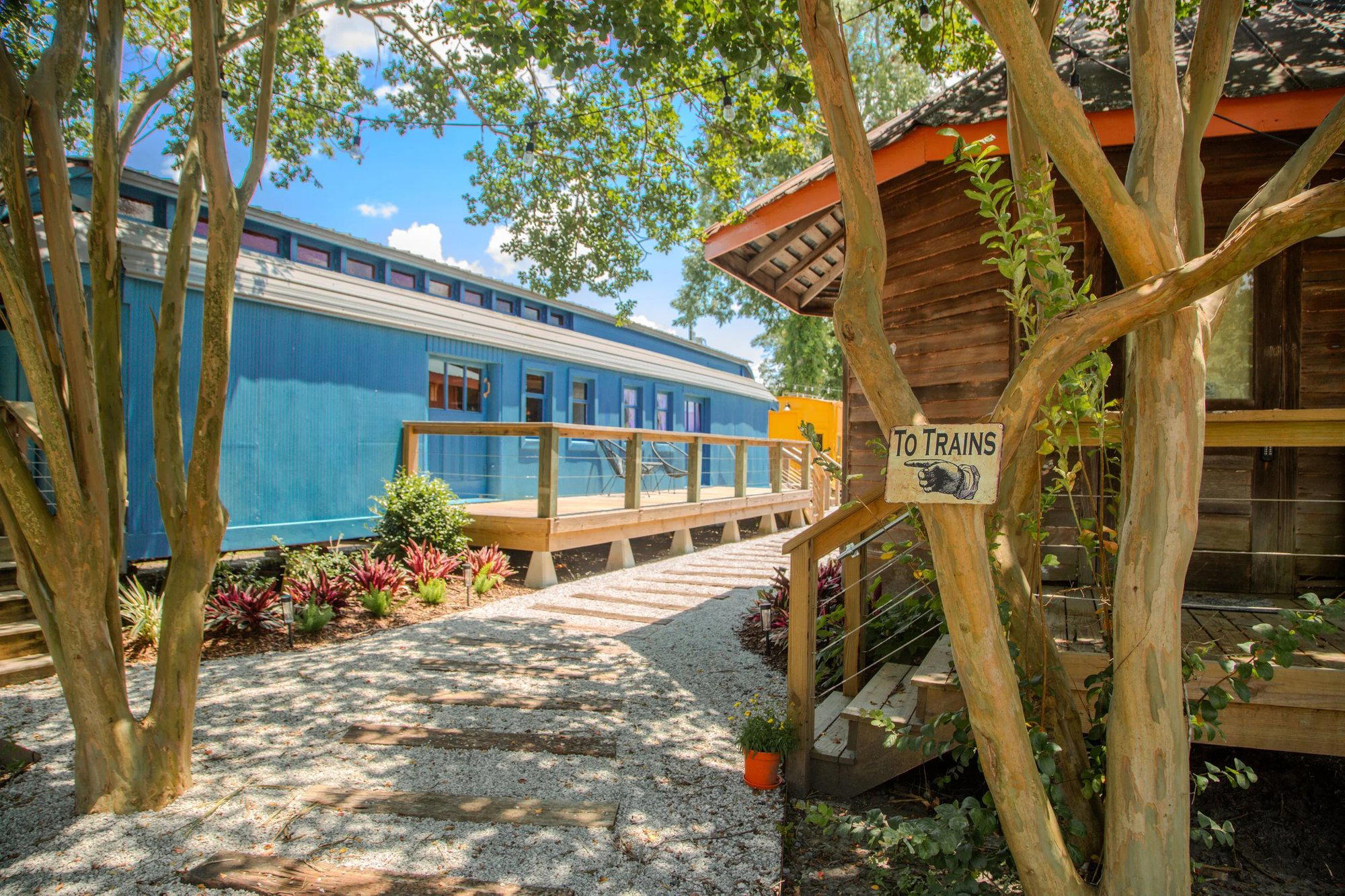
Colorful, lively, and nostalgic with vintage railroad aesthetics, antique furnishings, record players, and custom kitchens creating a whimsical, memorable atmosphere.