Blue Moon Saloon & Guest House
On East Convent Street in downtown Lafayette, Blue Moon Saloon & Guest House sits at the intersection of South Louisiana's live music culture and its tradition of unpretentious, community-rooted hospitality. The building's worn wood and open-air backyard stage define the character of the place as much as any amenity list could. For visitors wanting to sleep inside the city's Cajun and zydeco heartbeat rather than adjacent to it, this address delivers that without ceremony.

Pearl is the En Primeur Club membership app — saves, bookings, and concierge access live there. Same editors, same standards.
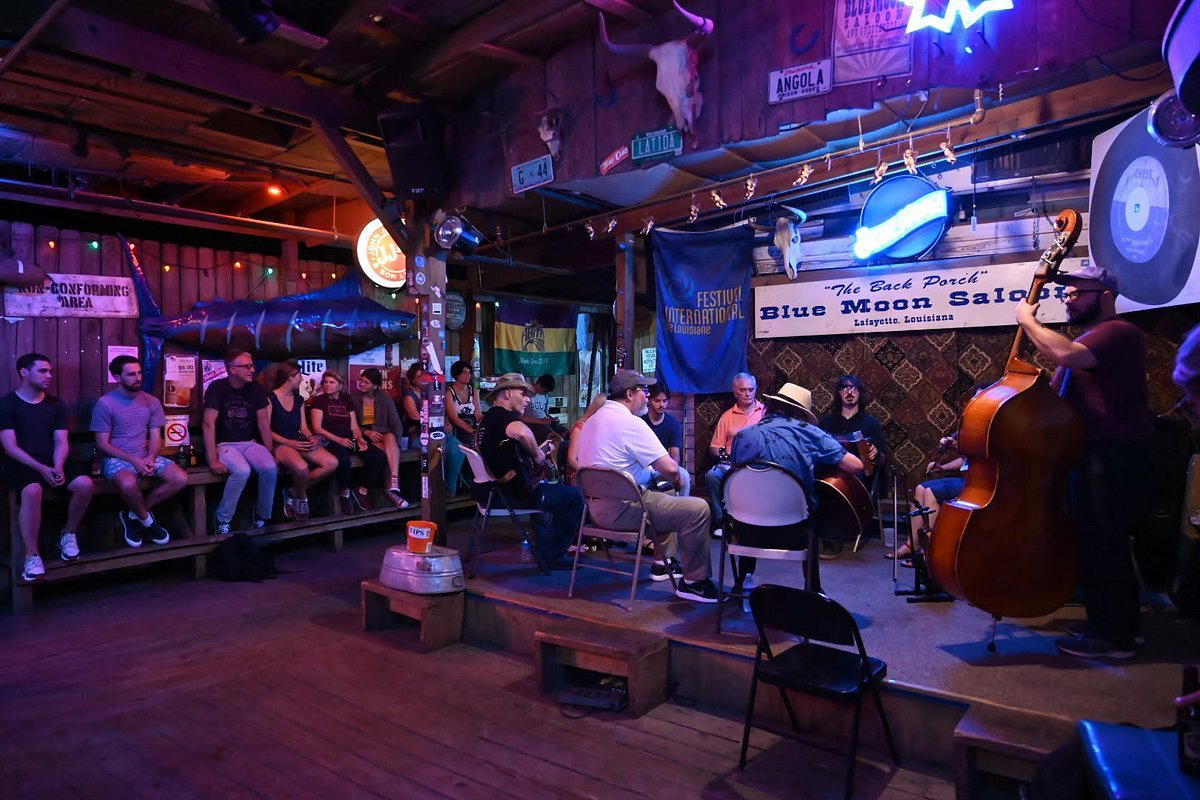
A Building That Does Not Try to Explain Itself
There is a particular type of American vernacular architecture that communicates everything through accumulated detail rather than deliberate design: the deep porch that catches the afternoon humidity, the paint worn back to raw wood along the door frames, the backyard that functions as both parking lot and concert ground depending on the night. Blue Moon Saloon & Guest House on East Convent Street in Lafayette operates inside that tradition. The structure does not announce itself the way a purpose-built music venue does. It reads, from the street, more like a neighbourhood house that gradually absorbed a stage, a bar, and a handful of guest rooms over decades of incremental use. That quality is not incidental — it is, in the context of South Louisiana's approach to public gathering, the point.
Lafayette sits about an hour west of Baton Rouge, and its downtown hospitality scene has historically resisted the curated authenticity that tourism money tends to produce in cities of comparable size. East Convent Street carries that character: low-slung buildings, a walkable density, and a sense that the district's energy is sustained by residents as much as by visitors. Blue Moon occupies that block not as an attraction dropped into a neighbourhood but as a structure that has grown with it. For a broader read on where this address fits within the city's wider hospitality mix, our full Lafayette restaurants guide maps the relevant context.
The Physical Logic of the Space
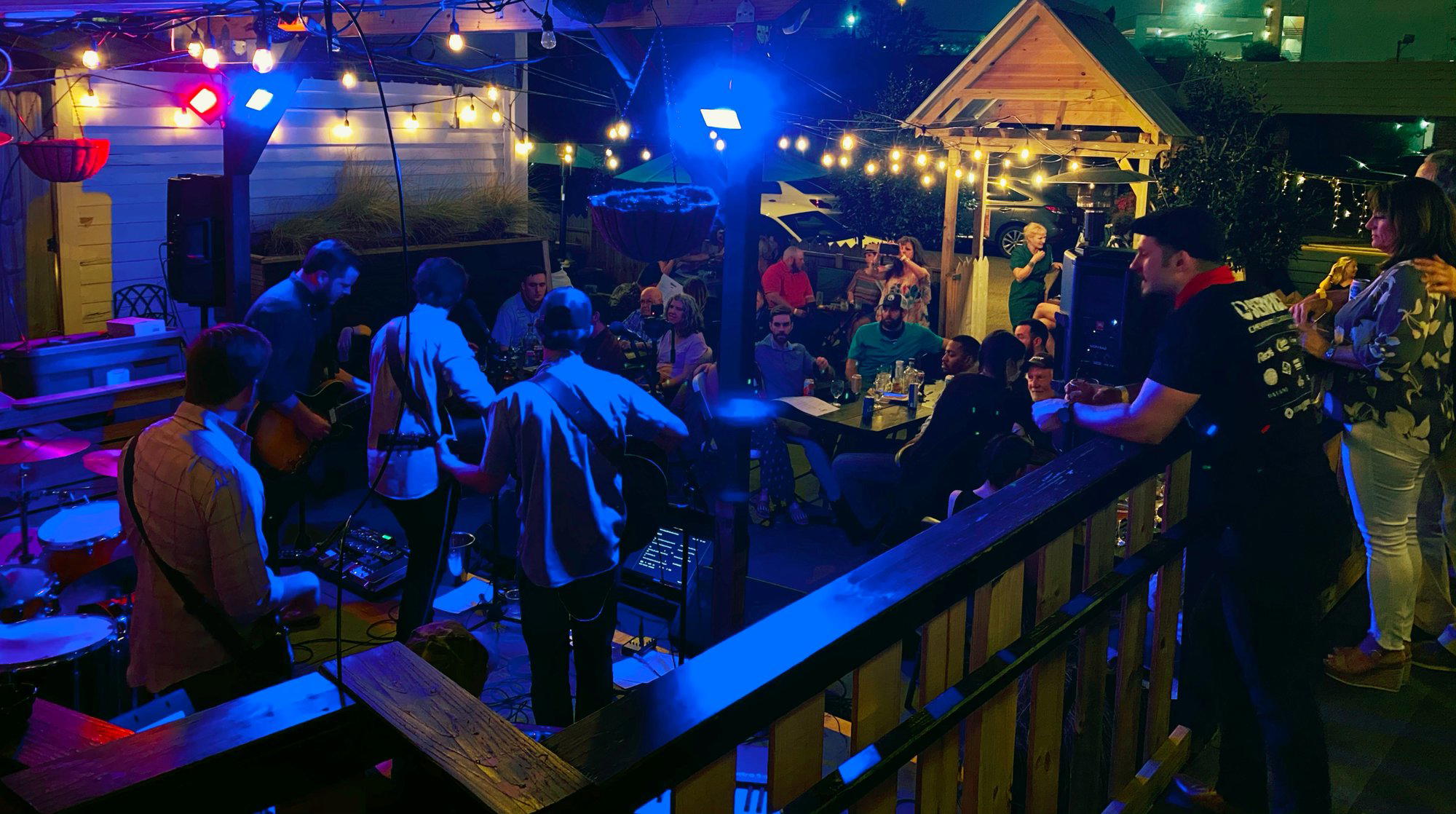
The architectural grammar here is one that appears throughout the Gulf South: an older residential or commercial building repurposed incrementally rather than renovated wholesale. The result is a layered interior where the original structure remains legible beneath its current use. Load-bearing walls that once divided domestic rooms now frame bar areas or corridors to guest accommodation. The backyard, which hosts the outdoor stage, is the kind of space that functions through absence of intervention — gravel underfoot, open sky above, the stage itself a raised platform that does not compete with the surrounding elements for attention.
This approach to venue space has specific consequences for how a night unfolds. The acoustic environment of an open-air backyard stage is fundamentally different from an enclosed room: bass frequencies disperse, the crowd has latitude to move between bar and performance area without the geometry of the room forcing a decision. Zydeco and Cajun music, both of which have strong representation in Blue Moon's programming, evolved in outdoor and semi-outdoor contexts, dance halls, church grounds, back-porch sessions, and the venue's physical setup aligns with that history rather than working against it.
The guest rooms sit within the main structure, which places overnight visitors in proximity to the bar and stage activity rather than insulated from it. That spatial relationship is a deliberate feature of the typology: the guest house model in this context assumes that the reason someone is sleeping here is the same reason the music is happening downstairs. Properties that separate accommodation from entertainment, as almost every large-format hotel does, from The Fifth Avenue Hotel in New York City to Hotel Bel-Air in Los Angeles, are solving a different problem. Blue Moon is not solving that problem. It is operating under the assumption that acoustic proximity is a feature, not a defect.
Where This Fits in the Broader Typology
American independent lodging has, over the past two decades, split into recognizable camps. On one side, design-led boutique hotels with carefully edited aesthetics and deliberate distances from operational noise, Troutbeck in Amenia, Blackberry Farm in Walland, or Amangiri in Canyon Point each represent, in different registers, the idea that the property is a controlled environment. On the other side, a smaller category of venue-adjacent lodging where the accommodation is deliberately embedded in a specific cultural scene. Blue Moon belongs to the second camp, and within that camp occupies a position defined by its rootedness in a particular musical geography.
The comparison to destination resort properties is instructive precisely because the contrast is so sharp. A stay at Post Ranch Inn in Big Sur or Bernardus Lodge & Spa in Carmel Valley is organized around removal from urban density. Blue Moon is organized around immersion in it. Neither approach is a compromise of the other, they are simply different propositions, and the traveller who books East Convent Street is, or should be, making a deliberate choice about which kind of experience they are after.
The guest house format in particular has a long history in the American South as a form of lodging that predates the standardized hotel model. Rooms within an active social building, shared bathrooms in some configurations, close quarters with other guests: these are features of a vernacular hospitality tradition that operates outside the metrics by which chain hotels are evaluated. Properties like Raffles Boston or Chicago Athletic Association in Chicago draw on institutional heritage to justify their position in the market. Blue Moon draws on neighbourhood belonging and a specific musical tradition.
Planning a Stay: What to Know Before You Book
East Convent Street is walkable to downtown Lafayette's other bars and restaurants, which matters because the programming at Blue Moon is live-music-centric and the evenings are organized around that fact. Visitors who expect hotel-standard quiet in the accommodation are booking the wrong property, the physical proximity of the stage to the guest rooms is not an oversight in the floor plan. Travellers who have calibrated their expectations correctly tend to find the format exactly what it promises: a place to sleep that is also, without transition, the place where the night's music is happening.
For context on how different American independent properties handle the relationship between public programming and guest accommodation, the contrast with SingleThread Farm Inn in Healdsburg or Auberge du Soleil in Napa is clarifying, both of those properties treat the lodging as the primary experience, with dining and programming subordinate to it. At Blue Moon the relationship is inverted: the saloon is the primary engine, and the guest house is the extension of it. Booking through the venue's direct channels rather than third-party platforms is the standard approach for independent properties of this type, and it is worth contacting them directly to confirm room availability around specific music programming nights, since the two are linked in ways that room-only booking platforms do not capture.
Side-by-Side Snapshot
| Venue | Price | Awards |
|---|---|---|
| Blue Moon Saloon & Guest HouseThis venue (the venue you are viewing) | $100–200 | Not listed |
| Aman New York | Not listed | 3 Michelin Keys · World's 50 Best #87 |
| Amangiri | $1,000–1,500 | 3 Michelin Keys · World's 50 Best #45 |
| Hotel Bel-Air | $750–1,000 | 3 Michelin Keys · World's 50 Best #57 |
| The Beverly Hills Hotel | Not listed | 3 Michelin Keys · World's 50 Best #65 |
| The Carlyle, A Rosewood Hotel | $1,500–2,500 | 2 Michelin Keys · World's 50 Best #64 |
Continue exploring
More in Lafayette
Hotels in Lafayette
All hotels in Lafayette →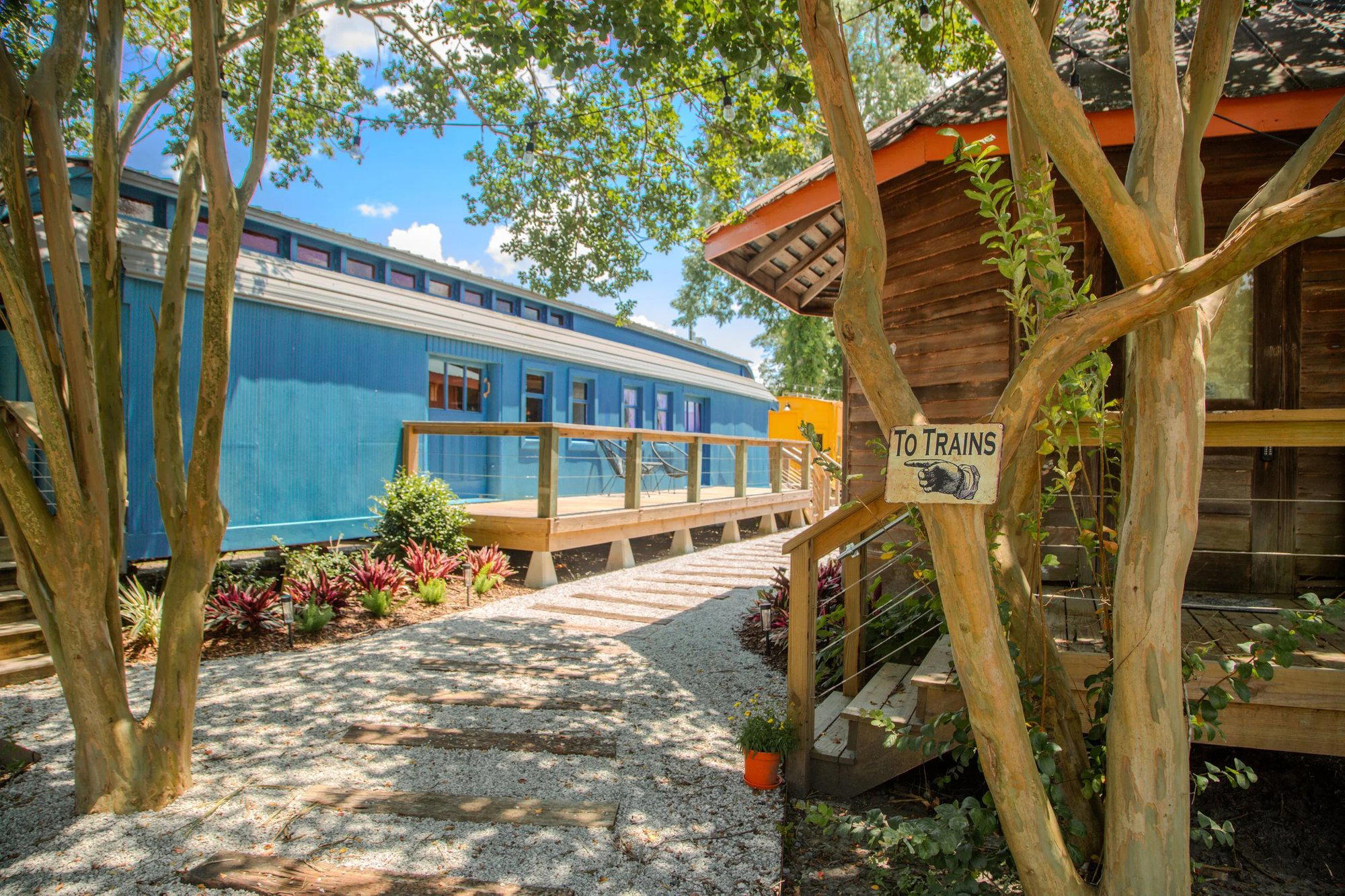



Details
- Rustic
- Lively
- Cozy
- Well Known
- Weekend Escape
- Historic Building
- Terrace
- Wi Fi
Cozy historic home with rowdy, energetic live music atmosphere from the back-porch saloon.