Gotthardbahntunnel
The Gotthard Base Tunnel, passing beneath the Swiss Alps near Hospental, represents one of the defining feats of 21st-century infrastructure engineering. At 57 kilometres, it held the record as the world's longest railway tunnel at its 2016 opening. For travellers passing through the Urner Alps, this corridor beneath the St. Gotthard massif reframes what a mountain crossing can mean.
 Discover on Pearl
A Mountain Crossed from the Inside
For most of recorded European history, the St. Gotthard Pass above Hospental was a fact of geography that shaped everything: trade routes, military campaigns, the pace of commerce between northern and southern Europe. The pass demanded seasonal concessions, imposed weather delays, and sorted travellers by their willingness to endure altitude. The Gotthard Base Tunnel, bored through the same massif at a depth of up to 2,300 metres, inverts that logic entirely. Passengers cross the Alps at valley floor level, at speed, without the visible drama of altitude — and that absence of drama is precisely the architectural statement.
The tunnel opened in June 2016 after seventeen years of construction, making it, at 57.1 kilometres, the longest railway tunnel in the world at that point. It runs between Erstfeld in the canton of Uri and Bodio in the canton of Ticino, with the community of Hospental sitting just above the northern access zone. Where the old Gotthard mountain route once required hours of careful navigation through Hospental and up toward the pass, the base tunnel now routes rail traffic through the rock itself, reducing the Zurich-to-Lugano journey to under two hours on high-frequency services.
Engineering as Architecture
The Swiss infrastructure tradition has long treated major civil works as opportunities for design rigour rather than purely functional deliverables. The 7132 Hotel in Vals — designed by Peter Zumthor and positioned in the same canton of Graubünden that borders the Gotthard region , illustrates how deeply Swiss culture integrates structural thinking with aesthetic intention. The Gotthard Base Tunnel operates in a related tradition, even if its audience is transit rather than hospitality.
Two parallel single-track tubes, connected by cross-passages every 325 metres, were designed to function as a complete transport ecosystem rather than simply a hole through the mountain. Ventilation, fire safety, emergency egress, and maintenance access were built into the architecture from the outset, not retrofitted. The result is a structure that reads as coherent when examined closely , a tunnel system engineered to handle train speeds of up to 250 kilometres per hour while maintaining the safety margins required for passenger service at that depth and volume.
Travellers who experience the tunnel primarily as a period of darkness punctuated by pressure changes are, in a sense, sitting inside one of the more consequential pieces of applied architecture completed in Europe this century. The Ceneri Base Tunnel, opened in 2020 as an extension of the same AlpTransit programme, extended the flat-route logic further south through Ticino, completing a low-gradient corridor that effectively restructured how rail freight and passengers move between Central Europe and Italy.
The Hospental Position
Hospental itself is a small village at the confluence of the Reuss and Unteralp rivers, sitting at approximately 1,484 metres above sea level. It occupies a junction point in the historic Gotthard road network, where the routes from the Furka Pass and the Oberalp Pass converge before climbing toward the St. Gotthard Pass summit. That geographic logic , a meeting of routes , has defined the settlement for centuries. The medieval tower that still marks the village centre was a control point for this traffic long before modern infrastructure arrived.
The tunnel does not pass through Hospental at ground level; its northern portal is at Erstfeld, lower in the Reuss Valley. But the tunnel's existence has changed the character of the Hospental area, shifting the volume of transit traffic away from the surface road and concentrating through-movement underground and further down the valley. For visitors, this means the high-altitude landscape around Hospental retains a quality of relative quiet that the Gotthard corridor's historical importance might not suggest.
Switzerland's alpine accommodation options cluster around this region's access points. Properties like the CERVO Mountain Resort in Zermatt and The Capra in Saas-Fee represent the design-led mountain hospitality tier that has developed partly in response to improved rail connectivity across the Swiss alpine network. Further afield, the Grand Hotel Kronenhof in Pontresina and Badrutt's Palace Hotel in St. Moritz anchor the Engadin valley's upper tier, both accessible within the broader network that the AlpTransit programme has made more fluid.
Scale in Context
Swiss infrastructure projects of this scale are rarely undertaken without decades of planning and political consensus-building. The AlpTransit project, of which the Gotthard Base Tunnel is the centrepiece, was approved by Swiss voters in a 1992 referendum, a detail that gives the tunnel a democratic legitimacy unusual for megaprojects of comparable ambition. Construction employed approximately 2,600 workers at peak and required the excavation of 28.2 million tonnes of rock. The resulting spoil was partially repurposed: some of it was used to create a peninsula in Lake Uri, which now hosts a small park near Flüelen.
For travellers oriented around Switzerland's hotel circuit, the tunnel's practical effect is measurable. The improved Gotthard axis reduces journey time between properties on opposite sides of the Alps: the Mandarin Oriental Palace, Luzern and the Villa Principe Leopoldo in Lugano now sit within a more manageable rail journey of each other than the old mountain route permitted. The same logic applies to the connection between Zurich properties such as Baur au Lac and Ticino destinations. For those planning multi-city itineraries, the our full Hospental restaurants guide offers local context on what the Urner Alps region offers beyond the transit corridor itself.
Properties further west along Switzerland's hotel map , including Beau-Rivage Geneva, Beau-Rivage Palace in Lausanne, and Hotel Les Trois Rois in Basel , connect to the Gotthard corridor through the broader SBB network, giving the tunnel a reach that extends well beyond its immediate geography. For planning stays across the arc of Swiss destinations from Hotel Bellevue Palace Bern to the Bürgenstock Resort, the Gotthard axis is a practical reference point for routing decisions.
Planning Around the Gotthard Corridor
Rail services through the Gotthard Base Tunnel run on SBB (Swiss Federal Railways) and are fully integrated into the Swiss timetable. Intercity Express services between Zurich and Lugano via the base tunnel operate multiple times per hour during peak periods. The journey through the tunnel itself takes approximately 20 minutes at operational speed. Travellers entering or exiting the Gotthard region by road should note that the surface Gotthard Road Tunnel , a separate, older vehicle tunnel at higher elevation , has different seasonal considerations and periodic closures for maintenance.
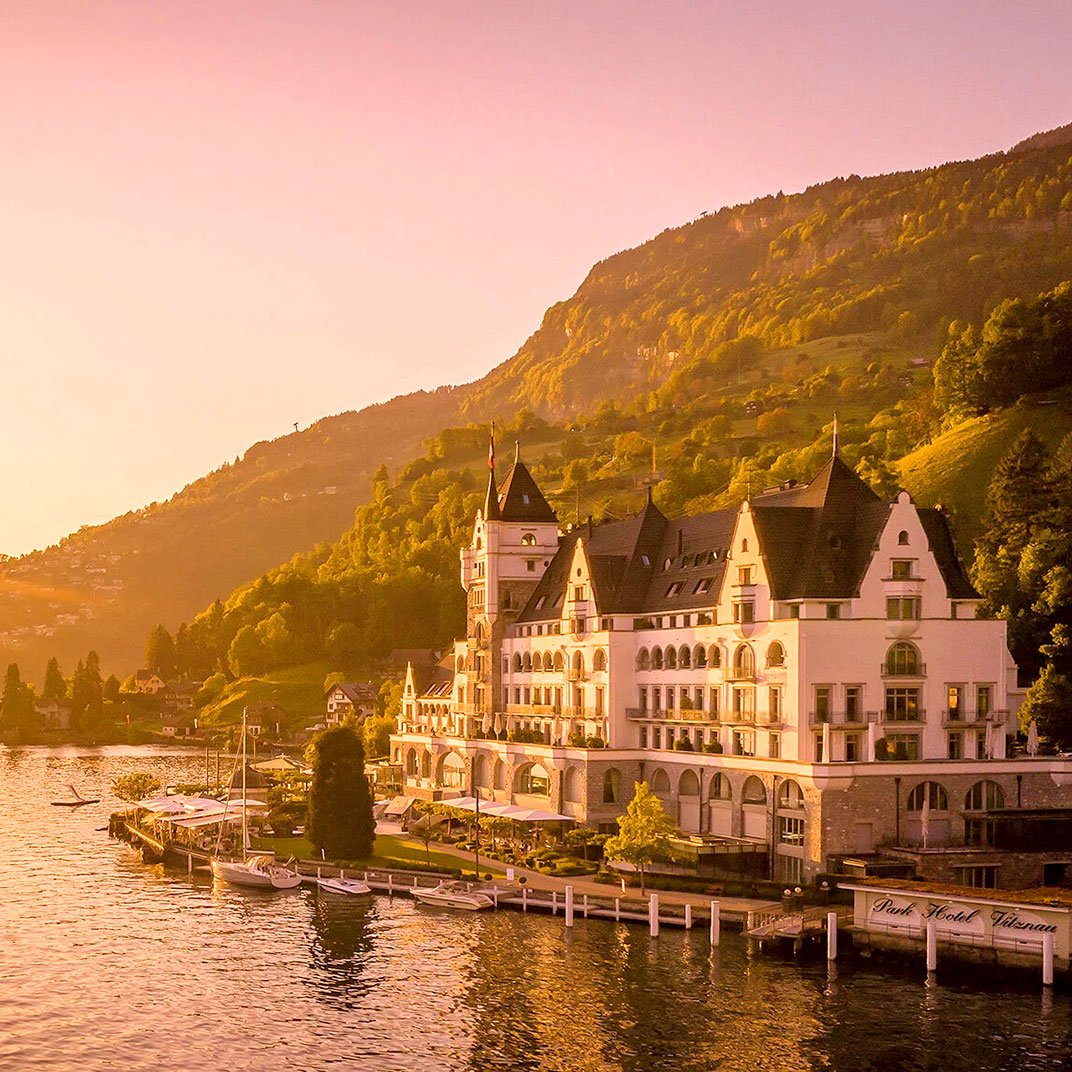
For broader context on what Switzerland's premium property network looks like when mapped against this infrastructure, properties across the arc from Park Hotel Vitznau to Castello del Sole Beach Resort in Ascona, and from The Alpina Gstaad to Grand Resort Bad Ragaz, each sit within measurable rail distance of the Gotthard axis, making routing decisions more flexible than they were before 2016.
Side-by-Side Snapshot
These are the closest comparables we have in our database for quick context.
| Venue | Cuisine | Price | Awards | Notes |
|---|---|---|---|---|
| Gotthardbahntunnel | This venue | |||
| Badrutt's Palace Hotel | Michelin 3 Key | |||
| Four Seasons Hotel des Bergues | Michelin 2 Key | |||
| Mandarin Oriental Palace, Luzern | Michelin 2 Key | |||
| The Ritz-Carlton Hotel de la Paix, Geneva | Michelin 2 Key | |||
| Hotel President Wilson, A Luxury Collection Hotel |