Glenapp Castle

Glenapp Castle is a Victorian baronial castle on the Ayrshire coast, holding a 2025 Michelin Key for accommodation quality. Set within private grounds above the village of Ballantrae, it operates in the small tier of Scottish castle hotels where architecture, seclusion, and estate dining define the experience rather than brand affiliation or urban convenience.
Pearl is the En Primeur Club membership app — saves, bookings, and concierge access live there. Same editors, same standards.
- Address
- Glenapp Castle, Ballantrae, Girvan KA26 0NZ, United Kingdom
- Phone
- +44 1465 831212
- Website
- glenappcastle.com
 Saves & bookings on Pearl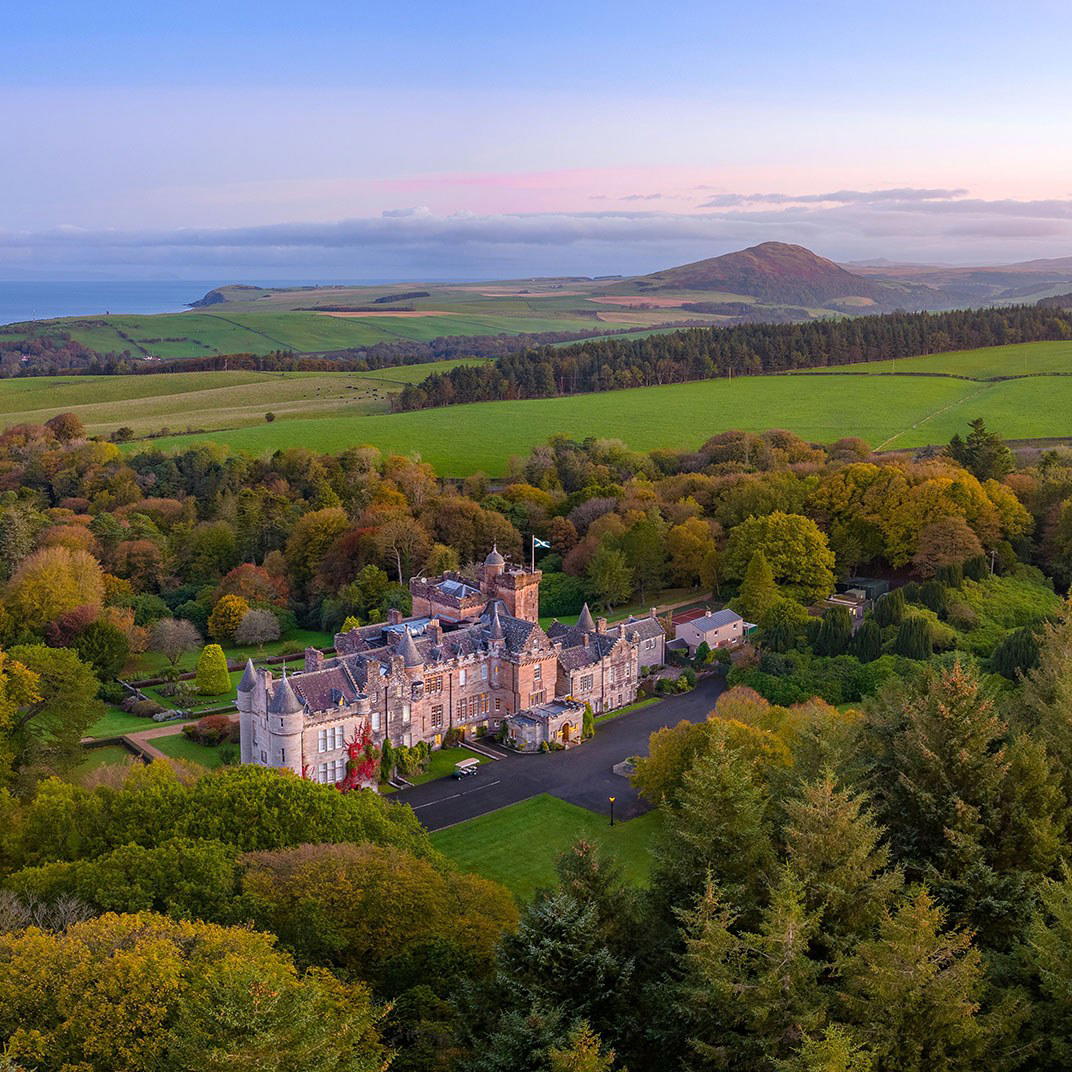
A Castle at the Edge of Ayrshire
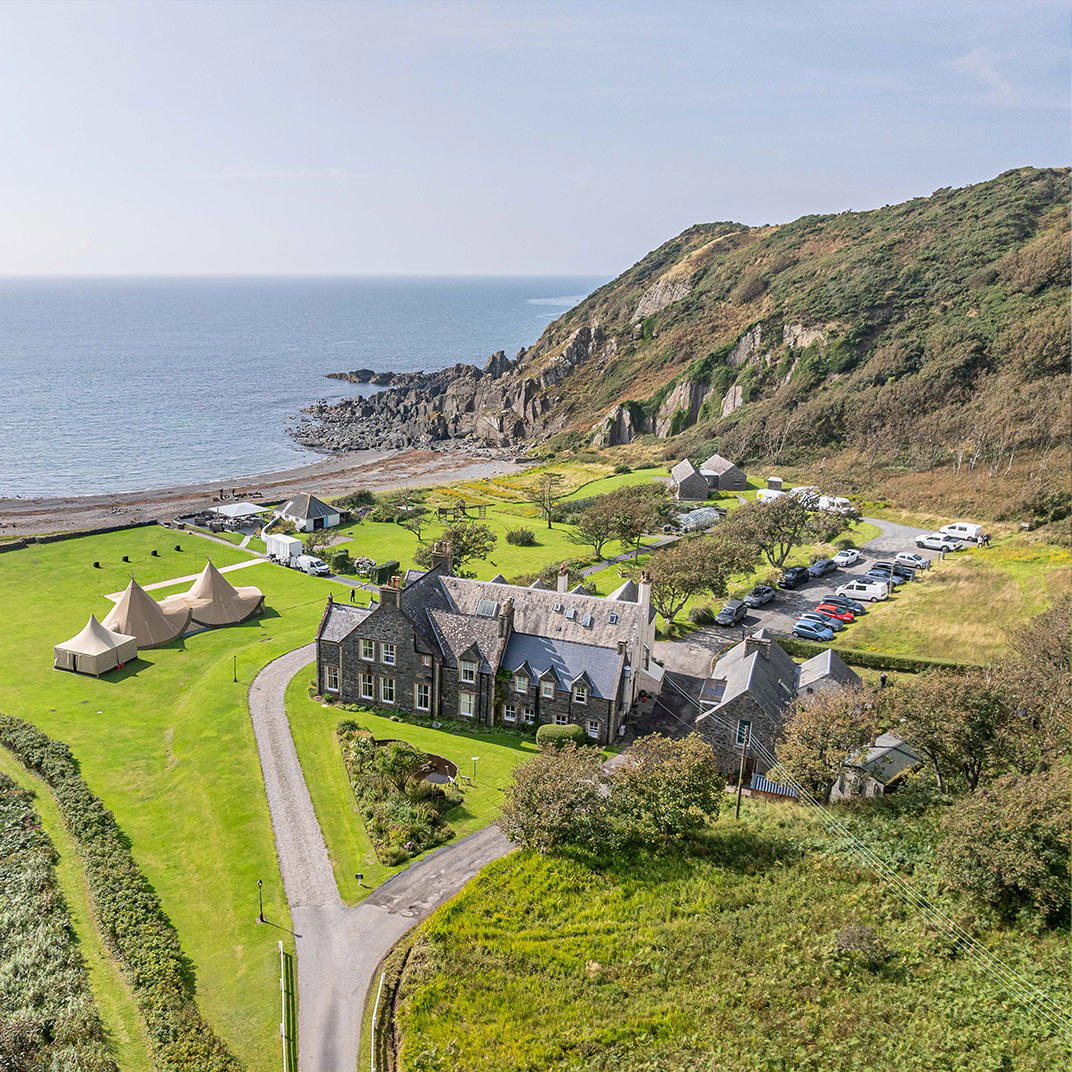
The approach to Glenapp Castle establishes the terms of engagement before you reach the front door. A private driveway cuts through wooded grounds above the village of Ballantrae, with the Firth of Clyde visible through the tree line and Ailsa Craig sitting on the horizon like a fixed point in the grey-green water. By the time the baronial facade comes into view, dressed stone, turrets, Victorian symmetry, the separation from the outside world is already complete. This is a property that uses physical distance as a design choice, not a geographical accident.
That remoteness places Glenapp in a specific category of British castle hotel: the kind where arrival is part of the architecture, and where the building itself carries the primary editorial weight. Michelin recognised the property with a Key distinction in its 2025 hotels guide. In Scotland, properties operating at this level tend to be either large Highland estates with broad sporting programs or smaller, more intimate castle conversions, Glenapp sits closer to the latter in scale and character.
The Architecture as Host
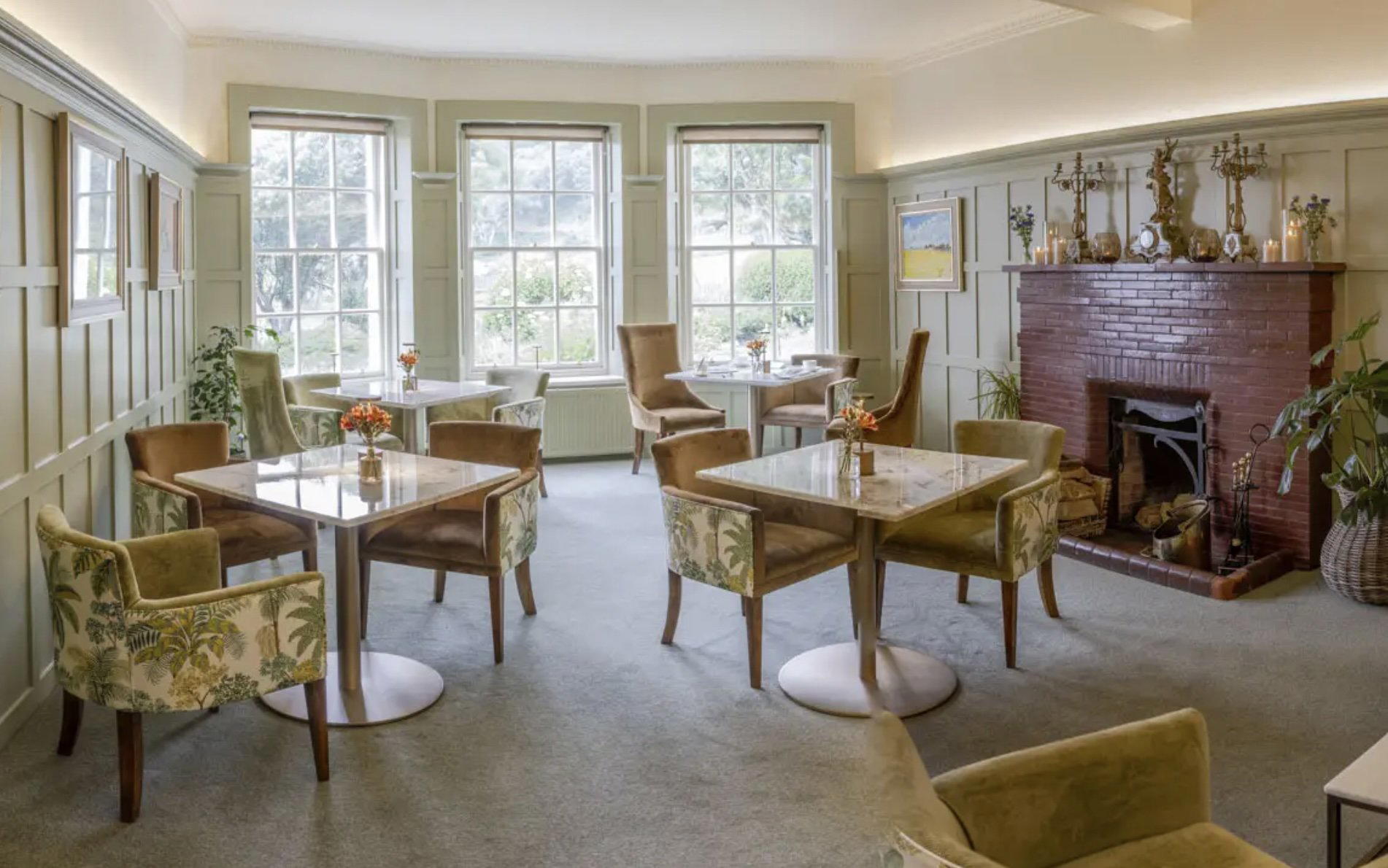
Glenapp Castle was built in 1870 in the Scottish baronial style, a Victorian idiom that drew from medieval castle forms and combined them with the domestic expectations of landed 19th-century wealth. The result is a building that reads as serious from the outside and layered on the inside: panelled rooms, carved stonework, principal staircases designed to impress rather than simply connect floors. The interiors follow the logic of the house rather than imposing a design concept onto it, which distinguishes Glenapp from the wave of Scottish castle conversions that arrived in the 2000s with heavy-handed contemporary interventions.
That architectural coherence matters for how the property sits relative to its peers. Compare it with Crossbasket Castle in High Blantyre, which operates with a sharper dining focus, or Gleneagles in Auchterarder, which has evolved into a resort-scale operation with a corresponding range of amenities. Glenapp makes a different argument: that a smaller, architecturally intact castle managed as a private house hotel offers something those larger operations cannot replicate at scale.
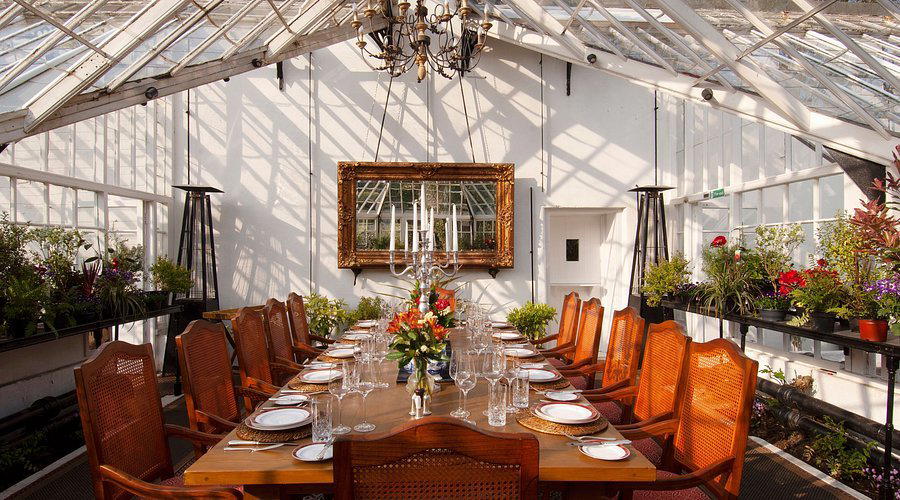
The walled garden, established over more than a century and still supplying the kitchen, is one of the structural elements that connects the building to its setting in a way that feels earned rather than curated. Kitchen gardens attached to country house hotels are common enough, but gardens of this age and scope carry a different weight. They are part of the property's physical continuity with the landscape around it.
Where It Sits in the Scottish Castle Hotel Set
Scottish castle hotels occupy a range of price points and operational models. At one end, properties like Kilchoan Estate in Inverie offer extreme seclusion with minimal keys and a correspondingly private experience. At the other, large estate hotels pull in corporate and leisure travelers with diversified programming. Glenapp operates in the mid-tier of this spectrum by scale but at the upper end by positioning, leaning into exclusivity, architectural character, and the particular draw of the Ayrshire coast.
The Ayrshire coast itself is underrated as a destination within the UK luxury travel circuit. Most premium Scottish itineraries trace a line through Edinburgh and the Highlands, with the southwest coast rarely featuring. Glenapp benefits from that relative quietness, and the proximity to Turnberry, a stretch of the coast associated with championship golf, means the area does attract a discerning international visitor base even if it lacks the density of coverage that regions like the Cairngorms or Loch Lomond receive. For travellers planning a broader Scottish west coast stay, The Rutland in Edinburgh and Hotel du Vin at One Devonshire Gardens in Glasgow represent useful city anchors before or after a stay at Glenapp.
The Dining Context
Country house hotels in Britain built their dining reputations on a formal dinner model: fixed time, set menu, guests eating together in a room whose proportions were designed for exactly that. That model has been revised at many properties, but the physical architecture of castle dining rooms still shapes the experience in ways that a modern restaurant build cannot replicate. High ceilings, period furniture, views across private grounds, these are spatial conditions that affect how a meal feels regardless of what is on the plate.
The walled garden supply chain gives the kitchen a local grounding that aligns with what the wider British country house dining scene has moved toward since the early 2010s. Whether that translates into a tasting menu format, a more flexible à la carte, or a hybrid depends on the current program, which prospective guests should confirm directly when booking.
Planning a Stay
Glenapp Castle is accessed via Ballantrae, a village on the A77 approximately 80 miles south of Glasgow and around 34 miles south of Ayr. The drive from Glasgow takes roughly 90 minutes under normal conditions. The nearest rail connection is Girvan, about 8 miles to the north, with services from Glasgow Central. For those arriving from further afield, Glasgow Prestwick Airport sits approximately 30 miles north of Ballantrae.
Given the Michelin Key recognition and the property's limited key count, advance booking is advisable, particularly for spring and summer when the Scottish coast draws the most visitors. The property operates on a model where guests are essentially taking over a portion of a private house, so the experience is calibrated toward smaller parties. Comparable castle-format hotels worth cross-referencing when planning a UK itinerary include Estelle Manor in North Leigh, The Newt in Somerset in Castle Cary, and Longueville Manor in Jersey for those comparing across different UK regions.
For travellers building a broader luxury itinerary beyond the UK, properties like Badrutt's Palace Hotel in St. Moritz and Hôtel de Paris Monte-Carlo in Monte Carlo represent the continental parallel to this category of historically significant, architecturally driven hotel, while The Savoy in London and Lime Wood in Lyndhurst offer British points of comparison across different property types and scales.
Quick Comparison
Comparable venues nearby, for context on price, style, and recognition.
| Venue | Cuisine | Price | Awards | Notes |
|---|---|---|---|---|
| Glenapp CastleThis venue — the venue you are viewing | Scottish Baronial castle with period furnishings and historic charm | $$$$ | 5-Star | |
| Cambridge House | Heritage luxury with residential feel, prioritizing privacy, comfort and calm while preserving architectural heritage and historical significance. | $$$$ | 5-Star | Mayfair |
| Kaya Great Northern Hotel | Historic boutique hotel with railway heritage | $$$$ | 5-Star | King's Cross |
| The Beaumont Hotel | Art Deco modernist boutique hotel with old-world aesthetic and modern technology. | $$$$ | 5-Star | Mayfair |
| The Nici | Laid-back luxury resort inspired by global hotspots like Miami. | $$$$ | 5-Star | West Cliff |
| Sun Street Hotel Shoreditch | Georgian townhouses with modern extension | $$$$ | 5-Star | Shoreditch |
Continue exploring
More in Ballantrae
Hotels in Ballantrae
Browse all →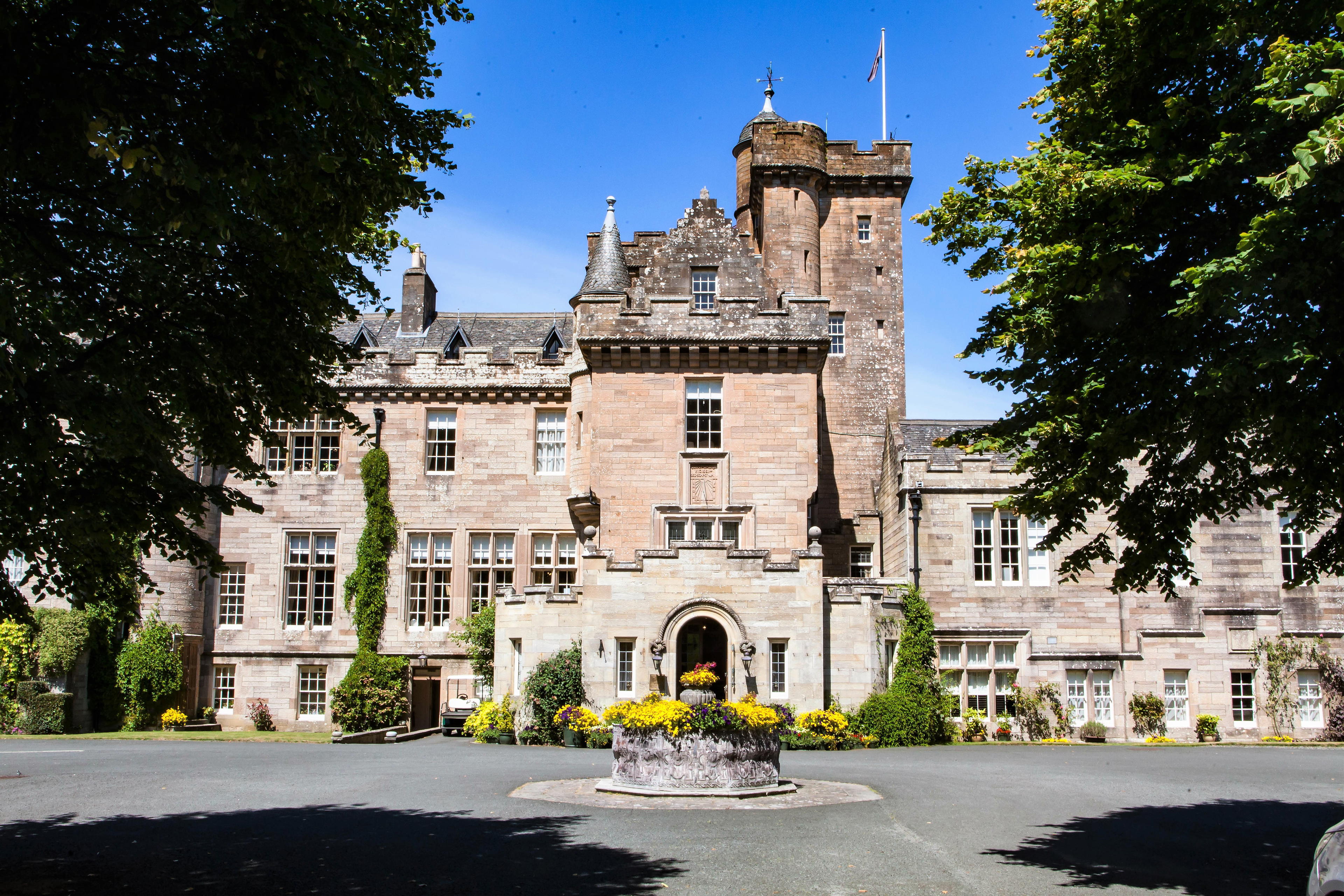
At a Glance
- Romantic
- Elegant
- Classic
- Opulent
- Intimate
- Sophisticated
- Honeymoon
- Romantic Getaway
- Anniversary
- Celebration
- Weekend Escape
- Historic Building
- Panoramic View
- Private Dining
- Butler Service
- Wifi
- Spa
- Room Service
- Concierge
- Restaurant
- Waterfront
- Garden
Opulent period interiors with rich fabrics, antiques, fireplaces, and an elegant, tranquil atmosphere praised for its timeless luxury and seclusion amid lush gardens and woodlands.