El Morro Eco Adventure Hotel
El Morro Eco Adventure Hotel occupies one of the Dominican Republic's most geologically striking settings, at the base of the El Morro mesa in Monte Cristi, a town that sees a fraction of the tourist traffic of the country's resort corridors. The property positions itself within the eco-adventure tier of Dominican lodging, where proximity to protected natural areas and low-impact design take precedence over resort-scale amenities.
Pearl is the En Primeur Club membership app — saves, bookings, and concierge access live there. Same editors, same standards.
- Address
- Calle El Morro, 62002, Dominican Republic
- Phone
- +1 849 886 1605
- Directions
- Get directions
 Saves & bookings on Pearl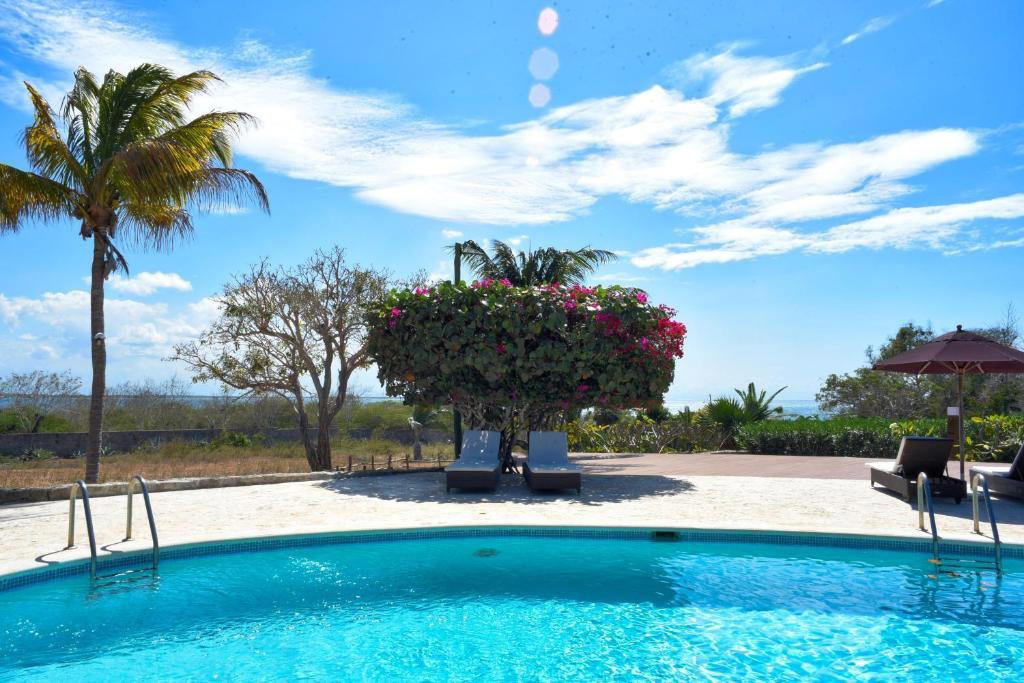
Where the Mesa Meets the Sea: Monte Cristi's Singular Lodging Position
Monte Cristi sits at the far northwestern corner of the Dominican Republic, separated from the resort clusters of Puerto Plata and Punta Cana by stretches of semi-arid terrain that most visitors never see. The town's defining feature is El Morro, a flat-topped limestone mesa that rises abruptly from the coastal plain and drops into the sea, its silhouette visible for miles across the Mona Passage. El Morro Eco Adventure Hotel takes its name and its orientation from that formation. The property sits along Calle El Morro, positioned so that the mesa forms the dominant visual reference from the site, a relationship between built structure and geological landmark that shapes the entire experience of being there.
In the broader taxonomy of Dominican accommodation, the eco-adventure category occupies a distinct tier from the all-inclusive resorts that define the country's international profile. Properties in this bracket, including a scattered group along the north coast, trade pool-and-buffet infrastructure for direct access to protected zones, marine parks, and landscapes that larger developments cannot occupy. El Morro Eco Adventure Hotel fits that model, with its location adjacent to the Monte Cristi National Park, one of the Dominican Republic's most significant protected areas, covering mangrove systems, coral reefs, and the series of flat-topped islands known as the Seven Brothers (Los Siete Hermanos) just offshore.
The Architecture of Restraint
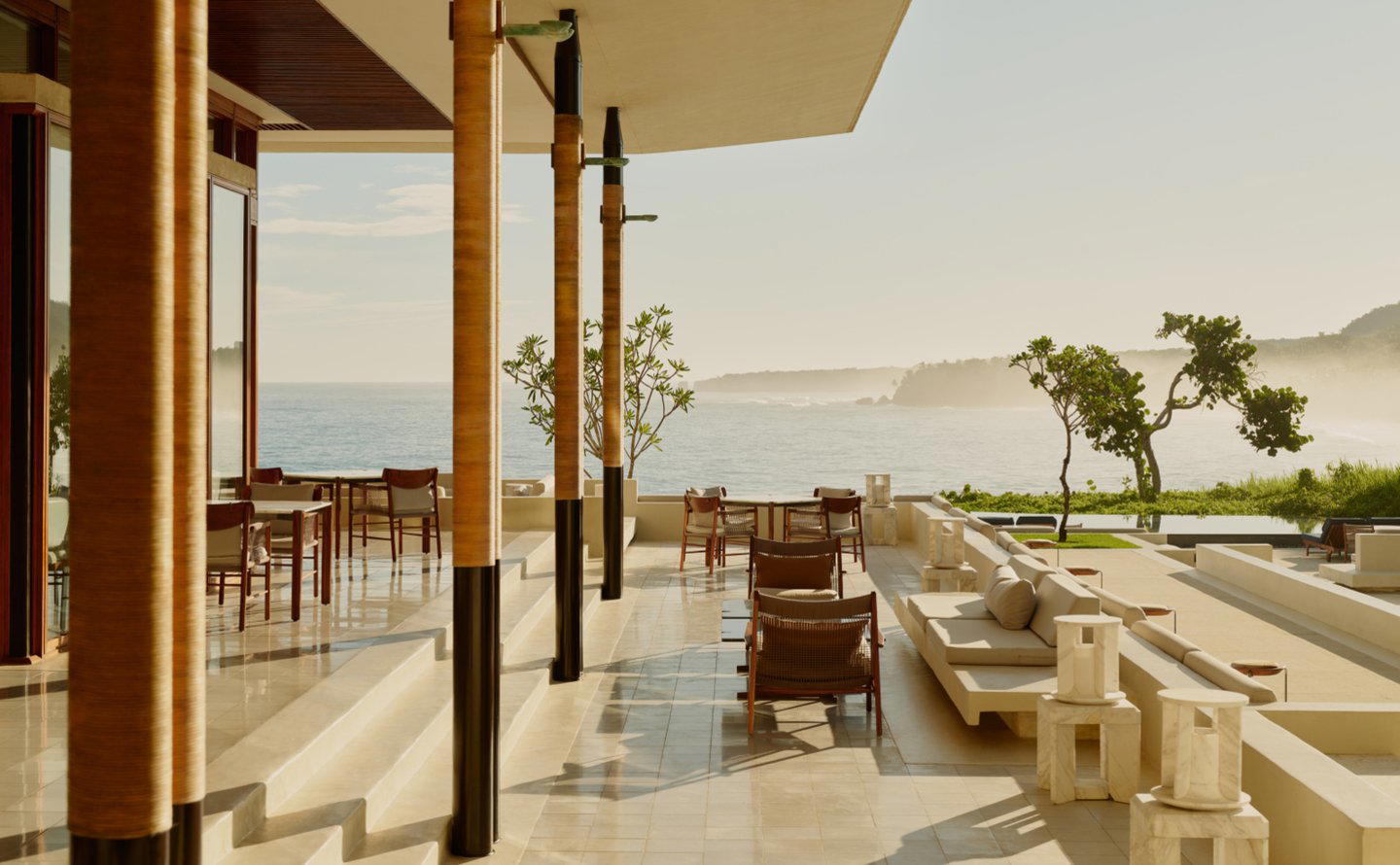
The eco-adventure lodging format, as practiced across the Caribbean and Central America, has developed a recognizable design vocabulary: low-rise structures, natural materials sourced locally where possible, minimal site disturbance, and a deliberate openness to the surrounding environment rather than enclosure from it. What distinguishes the more considered examples of this type is how the physical structure frames views and orients guests toward the landscape rather than toward the property's own amenities. The relationship between building and setting becomes the primary design statement.
At El Morro, that relationship is anchored by the mesa itself. Accommodations in this format typically prioritize sightlines and cross-ventilation over air-conditioned insulation from the outdoors, which in Monte Cristi's semi-arid climate, drier and windier than the lush north coast to the east, makes practical as well as aesthetic sense. The Yaque del Norte river delta, the salt flats, and the arid coastal scrub create a palette that differs sharply from the tropical-green imagery associated with most Dominican properties. Guests who arrive expecting the familiar north coast aesthetic will find something considerably more austere and, for those attuned to it, more compelling.
For comparison, the design language at properties like Amanera in Playa Grande operates at a different price point and scale but shares the same underlying principle: the landscape is the design, and the structure exists to place you inside it. The eco-adventure tier applies that logic with fewer resources and, when executed well, no less effect.
Monte Cristi as a Destination: What the Town Offers
Understanding El Morro Eco Adventure Hotel requires understanding Monte Cristi itself, because the town is the experience as much as any single property. This is not a destination with developed tourist infrastructure. There are no duty-free shopping strips, no casino hotels, no catamaran party excursions. What exists instead is the national park, some of the least-dived coral reef systems in the Caribbean due to the low visitor volume, and a Victorian-era town center that preserves nineteenth-century architecture from Monte Cristi's period as an active trading port, a history connected to Cuban independence and figures including José Martí, who passed through the town in 1895.
For visitors traveling from the Dominican Republic's main resort regions, Monte Cristi is a significant detour, accessible by road from Santiago or Puerto Plata. That distance is precisely what has kept the area undeveloped and what makes the dive sites and mangrove systems around the national park worth the effort for travelers who prioritize access over comfort infrastructure. Our full Monte Cristi restaurants guide covers the limited but authentic local dining options in town, which run to fresh seafood and Dominican staples rather than international menus.
Where El Morro Fits in the Dominican Eco-Lodge Category
The Dominican Republic's premium lodging market has bifurcated clearly over the past decade. One segment has moved toward increasingly large-scale all-inclusive developments anchored in Cap Cana, Punta Cana, and Samaná. Properties like Eden Roc Cap Cana in Cap Cana, Cayo Levantado Resort in Cayo Levantado, and Casa de Campo Resort & Villas in La Romana operate within that large-footprint model, offering resort ecosystems that function more or less independently of their surroundings.
The countermovement, smaller and quieter, runs through properties that position themselves as access points to specific natural or cultural assets: Dominican Tree House Village in Samana, Natura Cabana Boutique Hotel & Spa in Sosua, and Casa Bonita Tropical Lodge in La Cienaga each occupy a niche defined by landscape specificity rather than amenity breadth. El Morro Eco Adventure Hotel belongs to this latter group, with Monte Cristi National Park as its primary credential rather than a beach club or golf course.
Planning a Stay: What to Know Before You Go
Monte Cristi's climate runs drier and windier than the rest of the north coast, with trade winds off the Mona Passage moderating temperatures but also creating choppy sea conditions that affect boat access to the offshore cays. The leading conditions for diving and kayaking through the mangroves generally fall between November and April, when seas are calmer and visibility in the water tends to be higher. The summer months bring heat and more variable wind patterns.
Travelers should arrive with confirmed logistics in place. Monte Cristi does not have the booking infrastructure of the resort zones, and properties in this category often operate with limited reception hours and no online booking platforms with real-time availability. Direct contact with the property well in advance is advisable, particularly for stays timed around specific national park activities. Those driving from Santiago should plan for approximately two to two and a half hours by road, passing through the agricultural northwest before the terrain shifts to the drier coastal zone approaching Monte Cristi.
Travelers comparing options across the Dominican Republic's north coast range can also consider Casa Colonial Beach & Spa in Puerto Plata and Sublime Samana Hotel & Residences in Las Terrenas as benchmarks within the boutique tier, though both offer considerably more developed amenity programs than the eco-adventure format at El Morro.
In Context: Similar Options
| Venue | Cuisine |
|---|---|
| El Morro Eco Adventure HotelThis venue — the venue you are viewing | This venue |
Continue exploring
More in Monte Cristi
Restaurants in Monte Cristi
Browse all →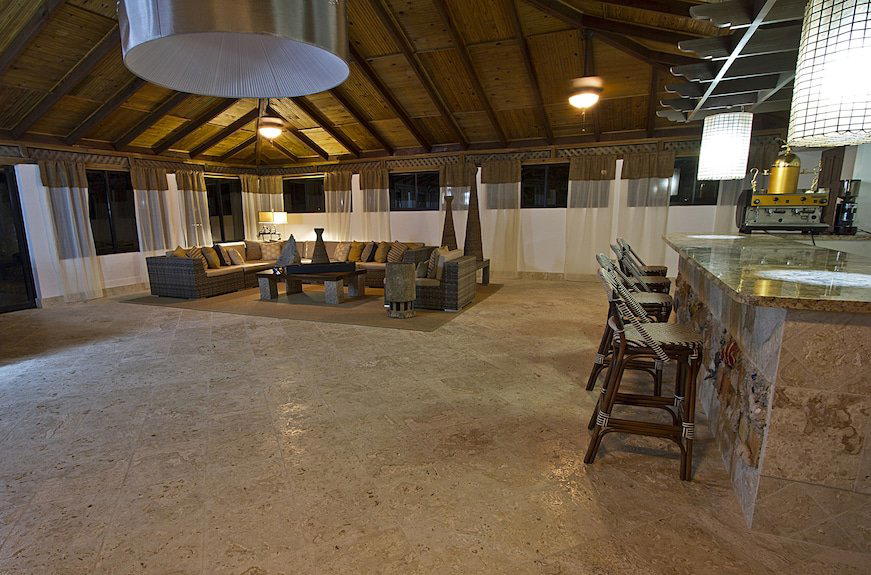
At a Glance
- Scenic
- Rustic
- Cozy
- Romantic Getaway
- Family Vacation
- Weekend Escape
- Beachfront
- Panoramic View
- Pool
- Wi Fi
- Restaurant
- Waterfront
- Pool
- Wi Fi
- Restaurant
Rustic-chic with thatch roofs, black and white nature photography, and serene pool views from private balconies in a quiet natural setting.
Know Before You Go
- Getting there
- Calle El Morro, 62002, Dominican Republic