
1 Michelin Key
A Michelin Selected property in Deqin, Yunnan's remotest corner of the Tibetan Plateau, Deqin Meri Poodom sits in Jushui Village with Meili Snow Mountain as its fixed horizon. The address alone filters for a specific kind of traveller: one who has already accepted that the journey takes most of a day and that the destination is the point. Recognized in the Michelin Hotels selection for 2025.

Pearl is the En Primeur Club membership app, where members save venues, book tables and use the concierge.
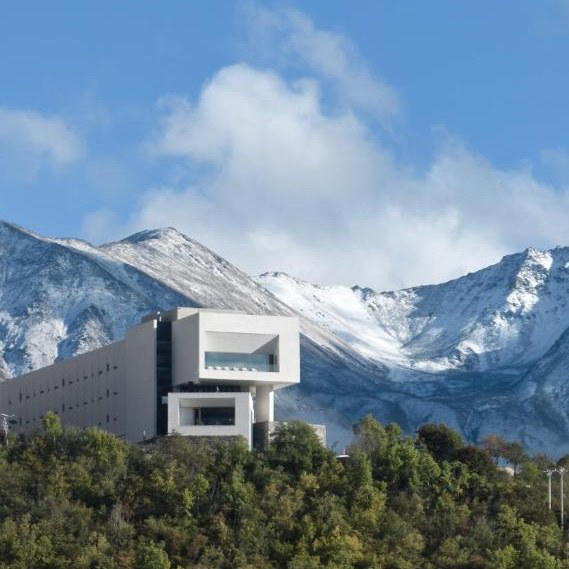
Where the Plateau Meets the Property
Deqin occupies a position that most of China's hotel industry has sensibly avoided. At roughly 3,400 metres above sea level in the Diqing Tibetan Autonomous Prefecture, the town sits at the northern tip of Yunnan, where the Three Parallel Rivers corridor compresses the Mekong, Salween, and Yangtze into proximity before they fan out across Southeast Asia. The road from to Deqin takes four to five hours under good conditions. The reward, visible on a clear morning from almost any refined point in town, is Meili Snow Mountain, a cluster of peaks whose highest, Kawagebo, has never been officially summited and retains a near-sacred status in Tibetan Buddhist tradition.
It is inside this specific geography that Deqin Meri Poodom makes its argument. The address, No. 1, Wu Nangding, Jushui Village, Shengping Town, places the property in a village setting rather than Deqin's modest town centre, a deliberate positioning that prioritises the mountain view over proximity to services. For travellers comparing properties at this altitude, the choice between village-edge seclusion and town-adjacent convenience is the first decision to make.
The Architecture of High-Altitude Hospitality
The built environment of the Deqin corridor has evolved considerably over the past decade as Tibetan-influenced design principles moved from regional vernacular into a more considered hospitality vocabulary. Properties in this zone tend to draw on the same visual grammar: rammed earth or stone facades, heavy timber framing, low-pitched rooflines with deep eaves, and interior palettes anchored in ochre, dark wood, and woven textiles. The better examples treat these not as decorative references but as structural logic, materials that perform well at altitude, manage thermal mass through cold nights, and age with the landscape rather than against it.
Deqin Meri Poodom's position within that design tradition reflects the broader split between properties that import a standardised luxury finish and those that work more explicitly with place-specific materials and form. The name itself, Meri Poodom, is Tibetan in register, and the village siting reinforces a commitment to a quieter, more embedded experience than the town-facing alternatives. Michelin's hotel inspectors, whose 2025 Selected list included the property, assess across comfort, hospitality, and integration with setting: selection at this tier in a remote location signals that the basic physical experience holds at a level the inspectors found worth noting.
For context on how Michelin Selected functions as a signal: it sits below the Michelin Key tier (which recognises the most compelling hotel experiences globally) but above the general directory, indicating a property that performs credibly across the core assessment criteria. In a city like Deqin, with limited accommodation of any formal grade, that recognition carries more weight than it would in a market dense with reviewed properties. Comparable Michelin-recognised properties elsewhere in Yunnan's more accessible towns, including those in Lijiang such as Hylla Vintage Hotel in Lijiang, operate in a considerably more competitive and tourist-saturated environment. Meri Poodom's selection reflects performance in a context where the baseline infrastructure challenge is itself part of the evaluation.
The View as the Primary Architecture
In high-altitude Tibetan-region properties, the relationship between building and horizon is the most consequential design decision. A room oriented toward Kawagebo on a clear morning delivers an experience that no interior finish can replicate or compensate for when absent. Properties that understand this prioritise sightlines over floor area, and the best of them minimise interior clutter so that glazing and framing do the heavy work.
The Meili Snow Mountain range sits to the northwest of Deqin, which means room orientation and time of day both govern what you see and when. Sunrise viewing from this area, where the first light catches the glacier faces while the valleys below remain in shadow, is among the most discussed visual experiences in the region. This is not a decorative amenity. It is the reason the property exists at this location, and it is the lens through which the architecture should be read. Travellers comparing accommodation in this corridor should weigh room orientation with the same attention they would give to floor level in an urban property with a city view.
For those also considering the Tibetan plateau more broadly, Songtsam Linka Retreat Lhasa operates at the other end of the Tibetan travel circuit, and Songtsam Meili Lodge in Diqing sits in the same immediate geography as Meri Poodom, making it the closest peer-set comparison for travellers assessing design approach and positioning in this specific corridor.
Getting There and Planning Practicalities
Access to Deqin runs primarily via (Diqing Xianggelila Airport), which connects to Kunming, Chengdu, and a small number of other Chinese hubs. The overland section from to Deqin is a mountain highway that requires a full half-day under normal conditions and longer when weather affects the higher passes. Travellers arriving by air from cities further afield should build in a night before continuing north. The altitude at Deqin is significant: visitors coming from sea-level cities should account for acclimatisation time before committing to active itineraries.
The leading window for Meili Snow Mountain views is typically October through April, when precipitation is lower and the peaks are more frequently clear. The summer monsoon period (roughly May through September) brings heavier cloud cover and a substantially higher chance of obscured views, which materially changes the value proposition of the trip. Booking well in advance for the October-to-February window is standard practice for this region.
Travellers should check current availability through Michelin's hotel directory or the property's own channels. Our full Deqin restaurants guide covers the wider town if you are building a multi-day itinerary.
Peer Context Across China
For travellers constructing a broader China itinerary, the properties that sit at a comparable recognition tier but in dramatically different environments offer a useful map of how Michelin's hotel selection spans geographies. Urban properties like Mandarin Oriental Qianmen in Beijing, JW Marriott Hotel Shanghai at Tomorrow Square, and InterContinental Chengdu Global Center operate with entirely different success metrics, density of dining options, business infrastructure, proximity to transport. Meri Poodom's selection in the same program signals that Michelin's hotel team is assessing on criteria that travel across contexts, not applying a single urban template.
Within Yunnan and the southwest more specifically, properties like The ArcadiaPlace at Lugu Lake illustrate the same design-led, landscape-integrated approach that defines the better properties in this region. The common thread is an architecture that treats the surrounding landscape as the primary asset and the built structure as its frame. At Deqin Meri Poodom, that frame is oriented at one of the most demanding and rewarding natural subjects in western China.
| Venue | Cuisine | Price | Awards |
|---|---|---|---|
| Deqin Meri PoodomThis venue (the venue you are viewing) | This venue | $300–500 | 1 Michelin Key |
| Conrad Xiamen | Not listed | $100–200 | Forbes 4-Star |
| Rosewood Beijing | Not listed | $200–300 | 2 Michelin Keys · La Liste Top Hotels |
| Banyan Tree Macau | Not listed | $300–500 | 2 Michelin Keys · La Liste Top Hotels |
| The Ritz-Carlton, Xi'an | Not listed | Not listed | Michelin Guide New Hotels New Hotel · Michelin Selected |
| Waldorf Astoria Shanghai on the Bund | Not listed | Not listed | 1 Michelin Key · La Liste Top Hotels |
Recognition history
Dated appearances from independent guides and award organizations, with the underlying list record or original source where available.
Michelin 1 Key
Michelin
Full recognition history (2 entries)
Michelin Selected
Michelin
Details
- Scenic
- Quiet
- Modern
- Minimalist
- Romantic Getaway
- Wellness Retreat
- Weekend Escape
- Panoramic View
- Wi Fi
- Restaurant
- Bar
- Concierge
- Mountain
Meditative and serene with textured stone corridors, pale wood furniture, large windows framing mountain sunrises, and public spaces emphasizing natural light and scale.