DEEP CANYON GUEST RANCH

Top 50 Ranches
Deep Canyon Guest Ranch sits along Teton Canyon Road at the base of the Rocky Mountain Front outside Choteau, Montana, where the plains break sharply against limestone ridgelines. The ranch draws visitors for horseback riding and backcountry recreation in one of the least-trafficked stretches of the northern Rockies. It occupies a working-landscape tier distinct from resort-style dude ranches elsewhere in the Mountain West.

Pearl is the En Primeur Club membership app, where members save venues, book tables and use the concierge.
Where the Plains End and the Rockies Begin
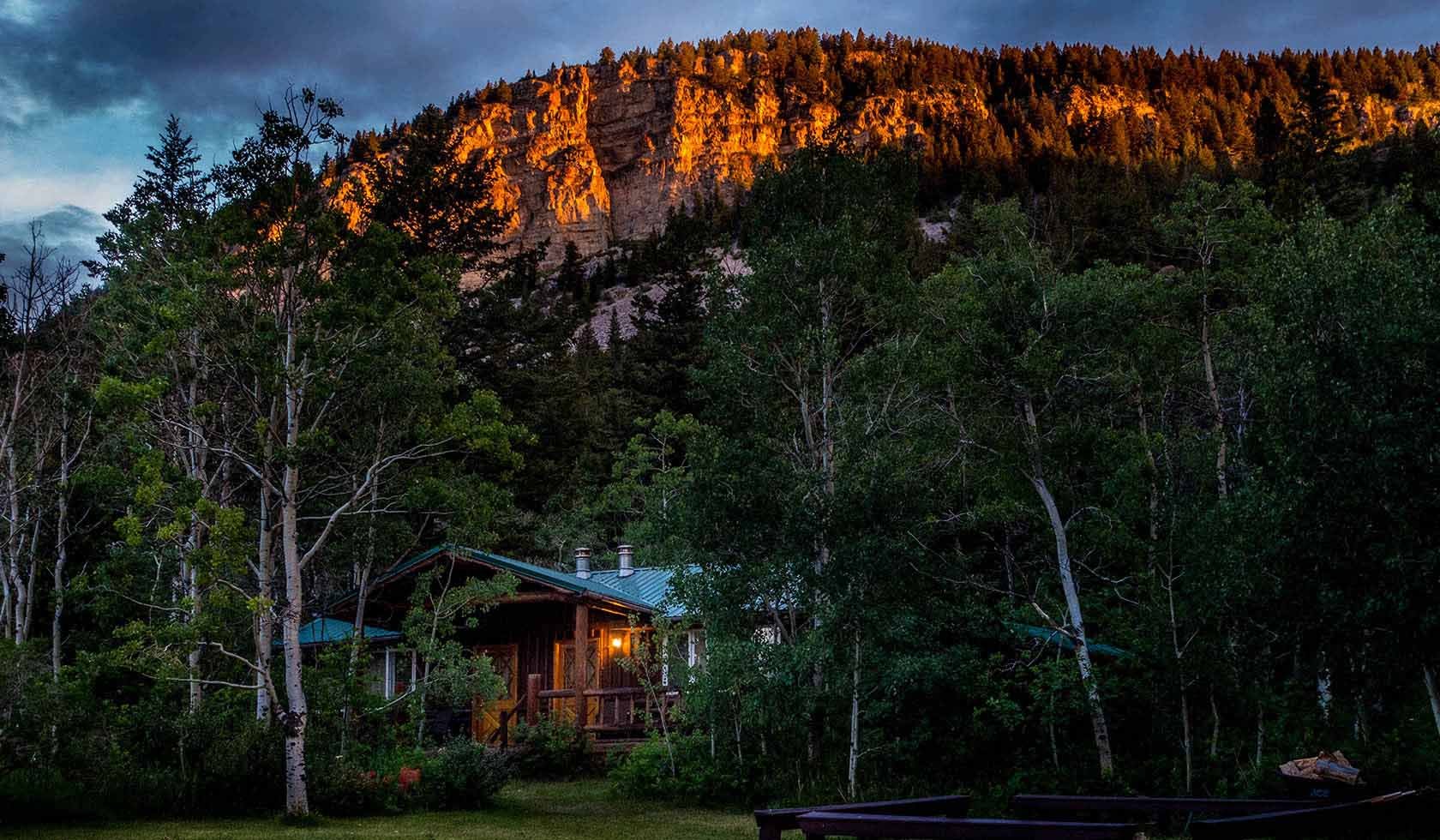
The Rocky Mountain Front is one of the most abrupt geological transitions in North America. Driving west out of Choteau on Teton Canyon Road, the land shifts within a few miles from open wheat-and-grass prairie to the folded limestone walls of the Front Range, a fault-block edge that runs from Glacier National Park south through the Bob Marshall Wilderness. Deep Canyon Guest Ranch sits at that boundary, at 2055 Teton Canyon Rd, and the address itself tells you something important: this is not a resort that happens to have mountains in the distance. The mountains are the immediate condition of the stay, rising from the property line rather than appearing on the horizon.
That physical placement defines the architecture of the experience here in ways that no design philosophy could manufacture. Guest ranches along the Rocky Mountain Front occupy a distinct tier within American ranch travel, one that prioritizes terrain access over amenity density. The comparison set is not Amangiri in Canyon Point or Amangani in Jackson Hole, properties where sculptural architecture mediates the relationship between guest and landscape. Here, the landscape is unmediated. The built structures exist to shelter and orient, not to perform. That is a deliberate condition of the Front, not a gap in ambition.
The Built Environment: Functional Vernacular on the Front
Guest ranch architecture in Montana evolved from the working ranch tradition rather than from hospitality design, and Deep Canyon reflects that lineage. Structures in this category are typically low-slung and materials-honest: timber framing, metal roofing, covered porches oriented toward the terrain. The logic is environmental rather than aesthetic, buildings that shed snow, take wind, and allow guests to move in and out for early-morning rides without the transitional friction of lobby-heavy resort design.
This places Deep Canyon in a very different conversation than, say, Ambiente, A Landscape Hotel in Sedona, where architecture is the explicit editorial subject, or Post Ranch Inn in Big Sur, where cantilevered structures perform a relationship with the cliff edge. Front Range guest ranches compress that relationship: the building recedes, the landscape advances. For travelers accustomed to properties where the room itself is a destination, this requires a recalibration of expectations that most guests find clarifying rather than disappointing.
The Teton Canyon corridor specifically rewards ranches with access corridors into the Bob Marshall Wilderness and the Teton River drainage. The terrain here is used by outfitters, wildlife biologists, and backcountry riders precisely because it sits outside the heavy-use corridors of Glacier and Yellowstone. That lower-traffic character is structural, not accidental, and it shapes the rhythm of a stay in ways that no amount of interior design could replicate.
Horseback Riding and the Logic of Recreation on the Front
The ranch's primary credential, as recorded, is horseback riding and Rocky Mountain Front recreation. Within Montana guest ranch travel, horseback programs split broadly between trail-ride operations oriented toward beginners and working or backcountry programs that cover serious terrain over multi-day rides. The Front's topography, which transitions from open rangeland into steep canyon country within a short distance, supports both formats, with the canyon and wilderness access being the differentiating asset for properties positioned along Teton Canyon Road.
Seasonally, the Rocky Mountain Front operates on a compressed window. The riding and recreation season runs roughly from late spring through early fall, with high summer, from July into August, offering the longest days and most reliable weather for extended backcountry use. Spring shoulder periods can bring significant snowpack at elevation and unpredictable creek crossings. Fall, from September through mid-October, is valued by many Front regulars for cooler temperatures, reduced insect activity, and the possibility of overlapping with elk rut, one of the more significant wildlife events in the northern Rockies. Guests choosing dates should account for these variables rather than defaulting to peak-summer assumptions.
For context on how the Front compares to other Montana ranch experiences, Sage Lodge in Pray and Alpine Falls Ranch in Superior represent the western Montana and Yellowstone-adjacent tier, where fishing infrastructure and proximity to national park anchors tend to drive programming. The Rocky Mountain Front is a different ecological and cultural zone: drier, more exposed, historically cattle country, with a wildlife profile that includes one of the continent's healthiest grizzly bear populations outside of Alaska. That context is not incidental to a stay here. It is the stay.
Choteau and the Surrounding Region
Choteau itself is a small agricultural town, the Teton County seat, with a population under two thousand. It serves as the practical gateway to both the Front Range recreation corridor and to Egg Mountain, a significant paleontological site where Jack Horner's team discovered the first North American dinosaur embryos in the 1970s. The town's infrastructure is modest, which reinforces the pattern common to serious ranch travel: the ranch is the destination, and the surrounding town functions as a supply point and occasional orientation anchor rather than a parallel attraction circuit.
Great Falls, the nearest regional center with full commercial air service, sits roughly an hour east. Guests arriving from major hubs typically route through Great Falls or, for those combining a Front stay with broader Montana travel, through Missoula or Kalispell. The drive west from Great Falls into Choteau and then along Teton Canyon Road is itself a decompression corridor, transitioning from interstate infrastructure to two-lane highway to gravel canyon road over the course of ninety minutes. That physical transition is something experienced travelers to the Front describe as part of the experience's value rather than an inconvenience to manage.
For those building a broader Mountain West itinerary, properties like Blackberry Farm in Walland or SingleThread Farm Inn in Healdsburg represent the farm-immersion end of destination ranch travel, while Canyon Ranch Tucson in Tucson anchors the wellness-resort end. Deep Canyon occupies the working-terrain middle of that spectrum, where the primary programming is land-based and the measure of a good day is hours in the saddle or on the trail, not spa treatments completed. See our full Choteau restaurants guide for dining options in the surrounding area.
Planning Your Stay
Because specific booking methods, pricing, and contact details are not publicly indexed for Deep Canyon Guest Ranch, prospective guests are advised to reach out through direct channels and plan ahead. Guest ranches in this category, particularly those with limited capacity and strong local reputation, typically book several months in advance for peak summer weeks. The absence of a prominent web booking infrastructure is itself a signal common to smaller working ranches, where capacity is limited and guests are often sourced through repeat bookings and word-of-mouth referral networks rather than OTA listings. Arriving with flexible dates and a willingness to correspond directly with the operation is the practical approach that aligns with how properties in this tier are run.
Comparison Snapshot
Comparable venues nearby, for context on price, style, and recognition.
| Venue | Cuisine | Awards | Notes |
|---|---|---|---|
| DEEP CANYON GUEST RANCHThis venue (the venue you are viewing) | rustic dude ranch with historic log cabins | Top 50 Ranches | Not listed |
| ECHO Suites Extended Stay Bozeman | New-construction extended-stay with apartment-style suites equipped for long-term comfort. | Not listed | Bozeman |
| AVERILL'S FLATHEAD LAKE LODGE | rustic dude ranch resort with historic log lodges and cozy cabins | Top 50 Ranches · USA Today Best Ranches Best Ranches #6 | Bigfork |
| Crazy Mountain Inn | Historic turn-of-the-century B&B with community hub vibe | Not listed | Martinsdale |
| Nine Quarter Circle Ranch | Traditional Montana dude ranch with historic log cabins. | USA Today Best Ranches Best Ranches #11 | Gallatin Gateway |
| Chico Hot Springs Resort & Day Spa | Historic ranch-style resort with cabins, chalets, and main lodge accommodations | Not listed | Paradise Valley |
Recognition history
Dated appearances from independent guides and award organizations, with the underlying list record or original source where available.
Top 50 Ranches
Top 50 Ranches
Details
- Rustic
- Scenic
- Cozy
- Quiet
- Family Vacation
- Group Retreat
- Weekend Escape
- Panoramic View
- Wi Fi
- Pool
- Mountain
- Wheelchair Accessible
Cozy and welcoming lodge with warm lighting from fireplaces, historic decor, and a peaceful atmosphere fostering family connections amid dramatic mountain views.