Covent Garden Hotel, Firmdale Hotels




1 Michelin Key · Mr & Mrs Smith Seal of Approval · Design Hotels Member
A converted 1880s hospital on a narrow Covent Garden side street, this 58-room Firmdale property places Kit Kemp's theatrical interior design against one of London's most concentrated arts and retail districts. Lavish draperies, wood-burning fireplaces, and a private cinema distinguish it from larger West End competitors. Rates start around $676 per night.

Pearl is the En Primeur Club membership app, where members save venues, book tables and use the concierge.
A Stage Set in Stone: The West End's Small-Hotel Tradition
London's West End has long sustained a particular category of hotel: properties small enough to feel residential, positioned close enough to the theatre district to serve as a genuine base rather than a remote transit point. Covent Garden Hotel, part of the Firmdale group, operates squarely within that tradition. At 58 rooms, it sits in the tier where character-led design and neighbourhood proximity do the work that scale cannot. The comparable cohort includes properties like NoMad London and 11 Cadogan Gardens, each offering a version of the intimate, design-focused London stay. What sets this address apart is the specific density of its surroundings: the Royal Opera House is a short walk away, the main West End theatre cluster is within ten minutes on foot, and the retail concentration along Long Acre and Neal Street is immediate.
The building itself is a converted 1880s hospital on Monmouth Street, a narrow lane that runs between Seven Dials and the northern edge of Covent Garden Piazza. The exterior reads as a substantial Victorian brick structure, different in character from the Georgian townhouse format that defines Firmdale's other London properties. From the street, the front windows open directly into the Brasserie Max, so the hotel announces itself through its dining room rather than a conventional lobby facade. That inversion is deliberate and quietly theatrical.
Kit Kemp's Design Language: Where Fabric Becomes Architecture
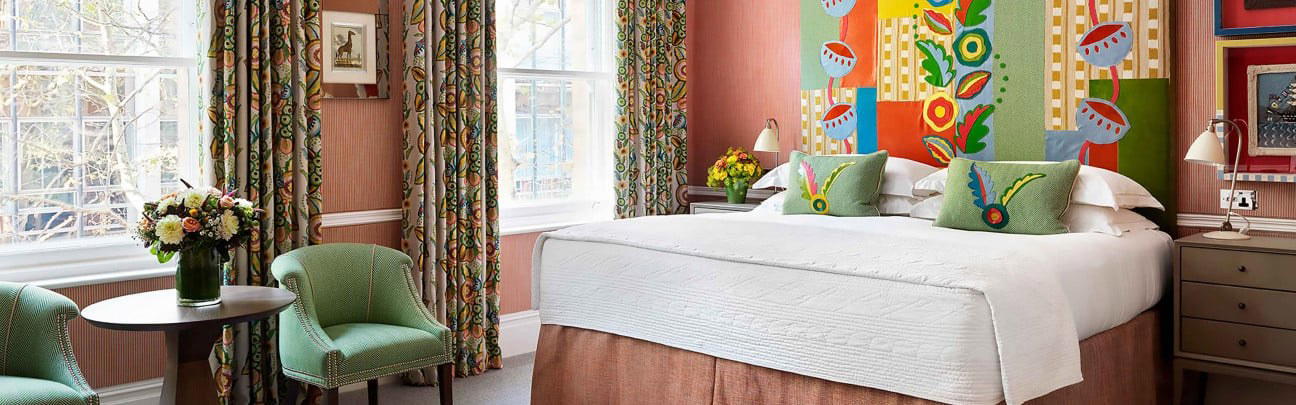
British interior design in small luxury hotels has increasingly split between the minimalist-Scandi school and the maximalist-eclectic approach associated with designers like Kit Kemp. Covent Garden Hotel belongs firmly to the latter camp. Kemp's signature moves are present throughout: the reception desk framed by heavy stage-curtain draperies, the dressmaker's dummy in each room outfitted in the same fabric as the room's own palette, and a general preference for pattern, colour, and texture layering that resists the neutral-toned restraint common elsewhere in the category.
The rooms are described as contemporary in execution but classical in inspiration, with expansive beds and marble-and-mahogany bathrooms. Molton Brown bath products and pairs of bathrobes are standard inclusions, which places the in-room specification in line with what guests at Claridge's or The Connaught would expect, though the overall register here is more playful than grand. The Firmdale aesthetic has always prioritised a certain Englishness of sensibility, a collector's eye applied to fabric and colour rather than the restrained formality of Mayfair's heritage properties.
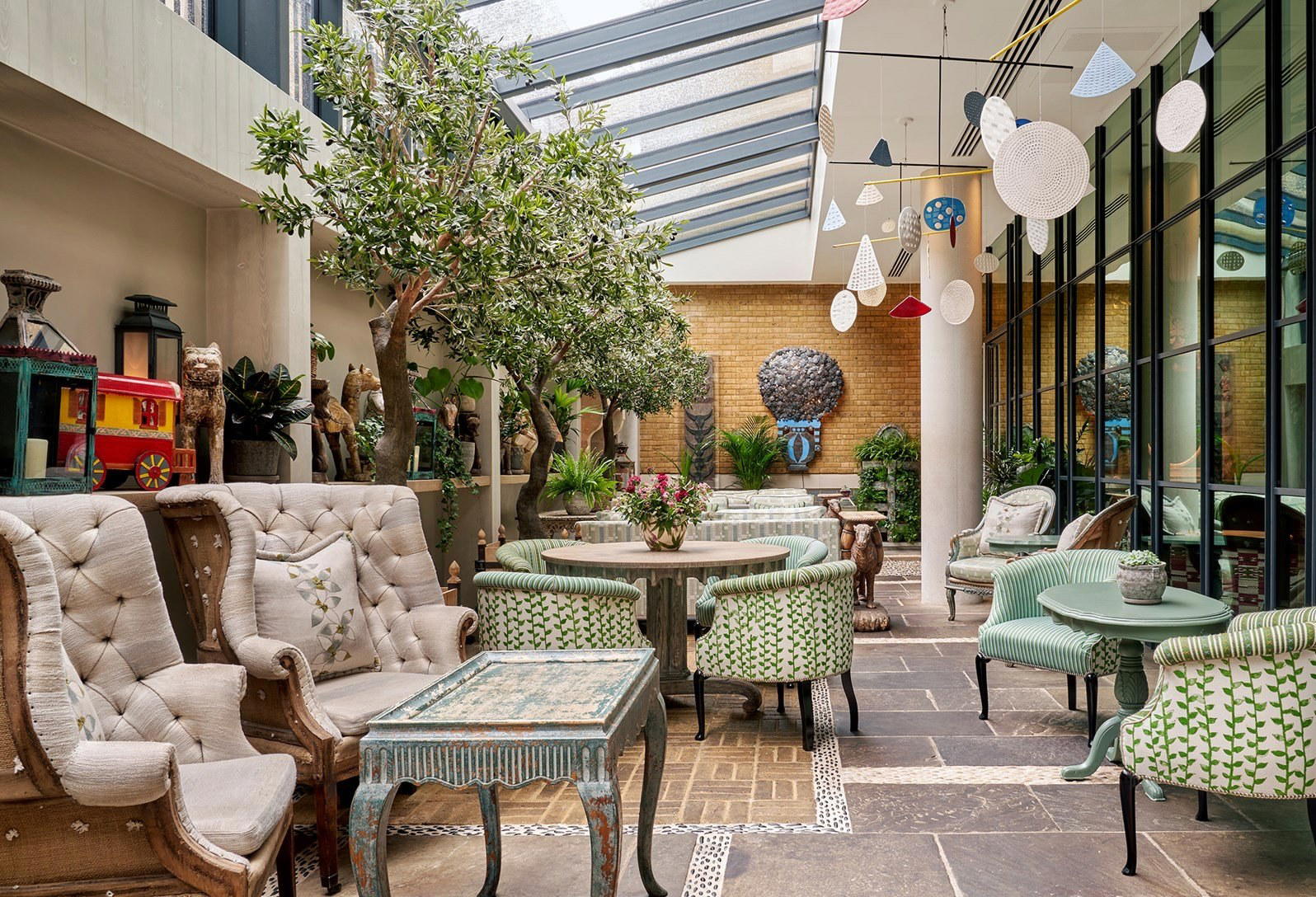
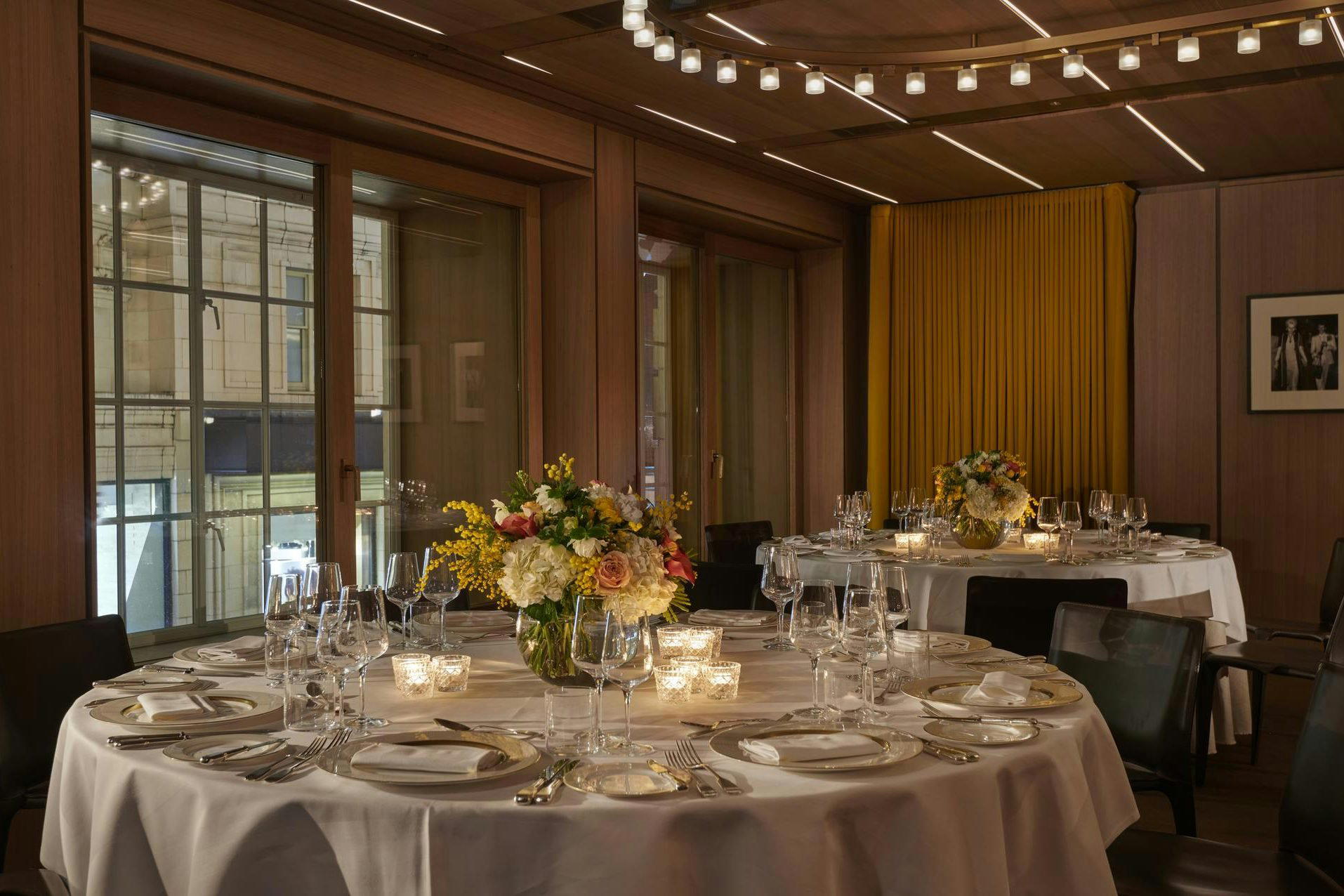
Downstairs, two communal spaces anchor the social life of the hotel. The wood-panelled drawing room and the adjacent library both have working wood-burning fireplaces, which, in a city hotel, is a structural commitment to atmosphere rather than a decorative gesture. These rooms occupy a position between the total privacy of a guest room and the open anonymity of a hotel bar: guests can be present without being fully social, which is a quietly useful distinction in a property that draws a theatre and arts crowd.
Brasserie Max and the Saturday Cinema: A Neighbourhood Venue That Happens to Have Rooms
The editorial angle around ingredient sourcing applies here in a particular way. Covent Garden Market, the historic food and flower market now reoriented toward retail, sits a few hundred metres away. More substantively, the hotel's position in Covent Garden means it draws from one of London's most concentrated restaurant and produce environments. Neal's Yard, the small courtyard that gave rise to the celebrated Neal's Yard Dairy, is within walking distance. The broader area has evolved from a wholesale produce hub into a neighbourhood with serious food credentials, and the Brasserie Max operates within that context.
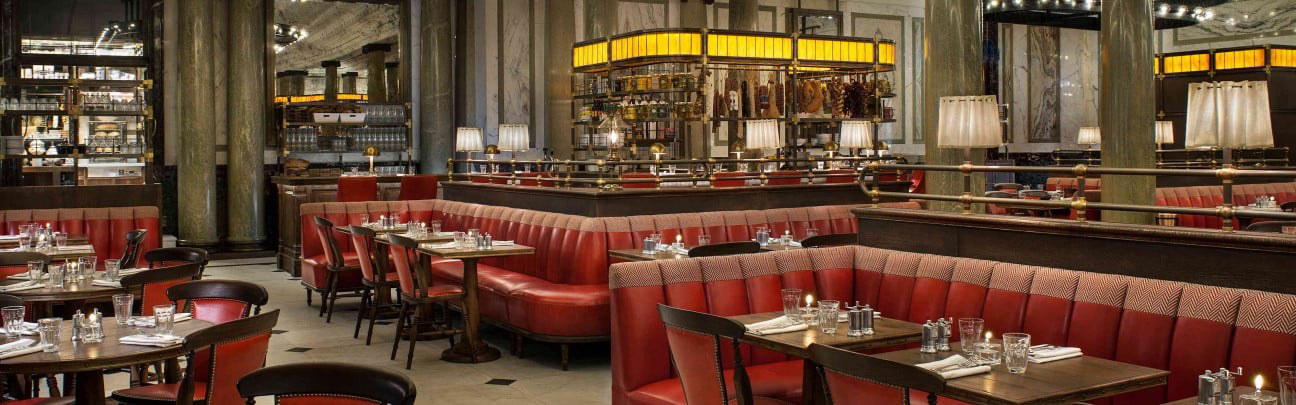
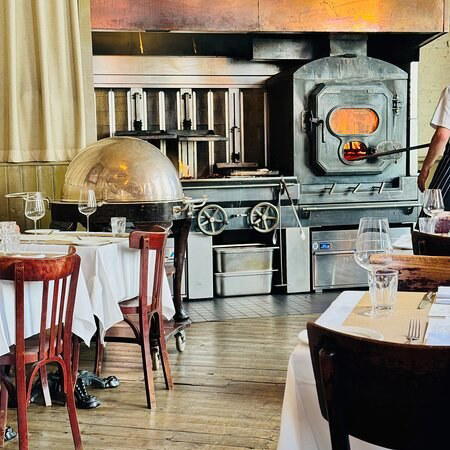
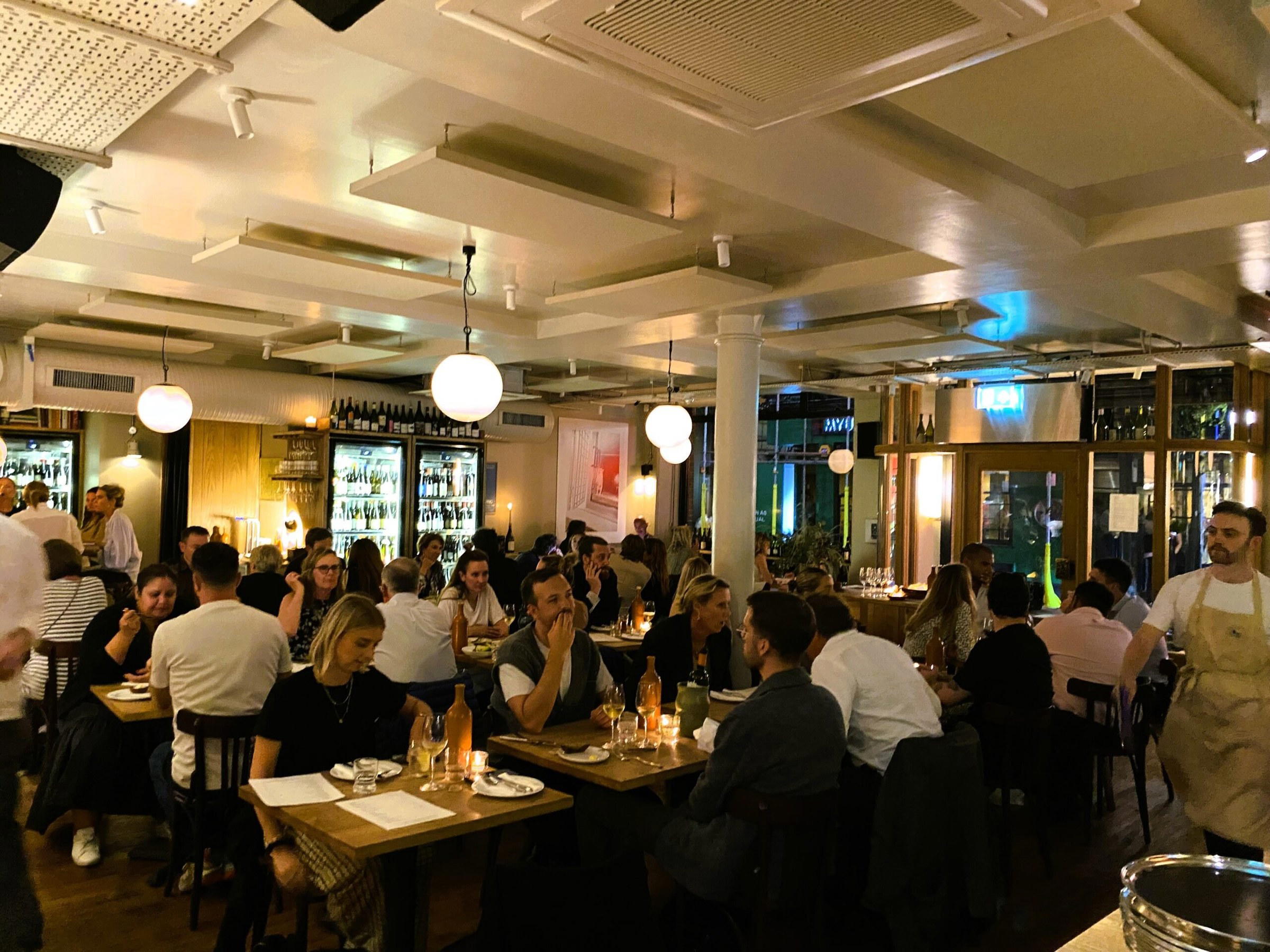
The brasserie functions as both the hotel's primary dining space and a neighbourhood-facing venue: the front windows visible from the street mean it reads as a Covent Garden restaurant that happens to be attached to a hotel. On Saturday evenings, dinner can be paired with a screening in the hotel's private cinema, a format that positions the property closer to a members' club model than a conventional hotel. Few 58-room London hotels have a functioning private cinema, and the Saturday cinema-dinner combination is the kind of detail that makes the property genuinely distinctive within its category, regardless of whether you are staying or dining.
Positioning Within the London Small-Luxury Tier
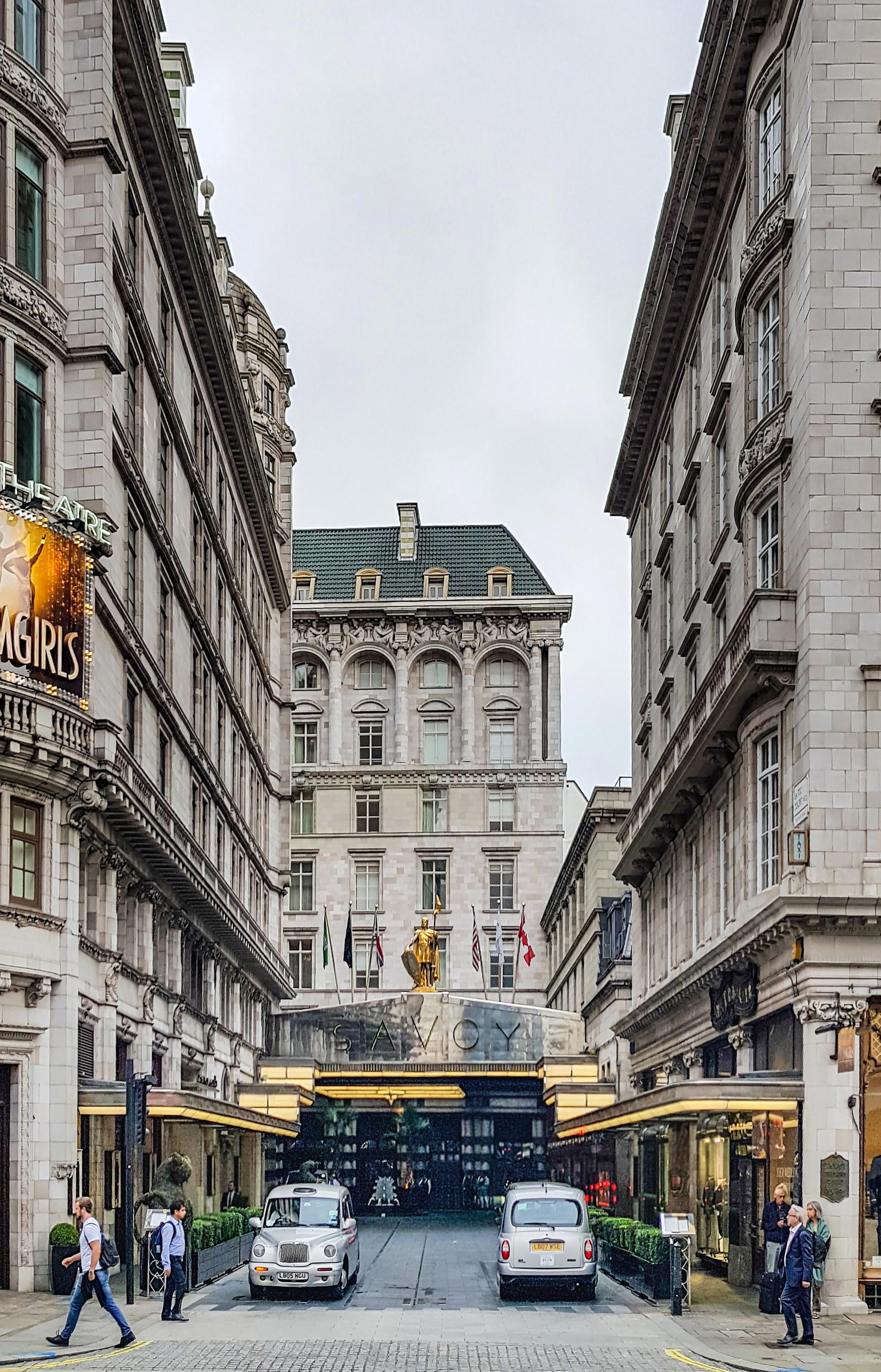
At approximately $676 per night, Covent Garden Hotel prices against the upper band of London's independent-leaning luxury segment. The Firmdale group has built its London reputation across multiple properties, which means the Covent Garden address benefits from operational consistency and brand recognition without carrying the institutional weight of a global chain. For comparison, The Savoy and 1 Hotel Mayfair represent different value propositions entirely: larger scale, higher price points, and different neighbourhood logics.
Travellers comparing UK boutique stays will find useful contrast in properties like Lime Wood in Lyndhurst, Estelle Manor in North Leigh, or The Newt in Somerset, each of which takes the design-led British hotel in a different direction. Further north, Gleneagles in Auchterarder and King Street Townhouse Hotel in Manchester offer regional alternatives for guests whose itinerary extends beyond London. For those building a longer UK circuit, properties like Hope Street Hotel in Liverpool, Burts Hotel in Melrose, or Glasgow Grosvenor Hotel represent the next logical stops. Internationally, guests arriving via New York might have stayed at The Fifth Avenue Hotel or Aman New York before crossing the Atlantic, and Aman Venice makes an obvious European continuation for those extending southward.
Planning Your Stay: Access, Timing, and Expectations
Covent Garden Hotel sits on Monmouth Street, a five-minute walk from both the Covent Garden and Leicester Square tube stations, which makes it accessible from most of central London without requiring a cab. Guests arriving from Heathrow can take the Heathrow Express to Paddington in around 15 minutes, with one-way fares from £25 and return fares from £37. From Paddington, a taxi or the Underground gets you to Covent Garden in under 30 minutes depending on traffic and time of day. Black cab from Heathrow direct is around 45 minutes and costs upwards of £50, a reasonable option with luggage but slower than the express train at peak times.
The 58-room count means availability compresses quickly during West End peak season, particularly around major productions and the summer months. Booking in advance is advisable for any Saturday stay, given the cinema-dinner format that attracts both hotel guests and outside diners. For the wider London dining and hotel scene, our full London restaurants guide provides category and neighbourhood context across the city. Remote UK escapes, from Langass Lodge in the Outer Hebrides to Dun Aluinn in Aberfeldy and Glen Mhor Hotel in the Highlands, offer a strong counterpoint for those looking to extend their trip beyond the capital. For a coastal note, Lifeboat Inn in St Ives rounds out the British small-hotel picture at a very different pace.
Where the Accolades Land
Comparable venues nearby, for context on price, style, and recognition.
| Venue | Cuisine | Price | Awards | Notes |
|---|---|---|---|---|
| Covent Garden Hotel, Firmdale HotelsThis venue (the venue you are viewing) | Elegant townhouse-style boutique with signature Firmdale layered aesthetic. | Not listed | 1 Michelin Key · Mr & Mrs Smith Seal of Approval | Not listed |
| The Twenty Two | luxury lifestyle hotel and private members' club in a historic Edwardian manor | Not listed | 2 Michelin Keys · La Liste Top Hotels | Mayfair |
| Rosewood London | Luxury heritage property in restored Edwardian mansion. | Not listed | 2 Michelin Keys · World's 50 Best #56 | Lincoln's Inn |
| The Lanesborough | Georgian luxury hotel blending old-school glamour with modern technology | $750–1,000 | 2 Michelin Keys · La Liste Top Hotels | Belgravia |
| Brown's Hotel, a Rocco Forte Hotel | Unmistakably British heritage luxury with contemporary comfort | Not listed | 2 Michelin Keys · La Liste Top Hotels | Mayfair |
| 45 Park Lane | Contemporary Art Deco luxury | Not listed | La Liste Top Hotels · Star Wine List | Mayfair |
Recognition history
Dated appearances from independent guides and award organizations, with the underlying list record or original source where available.
Michelin 1 Key
Michelin
Design Hotels Member
Design Hotels
House & Garden 2026 House & Garden Best Hotels in London
House & Garden
Mr & Mrs Smith Seal of Approval
Mr & Mrs Smith
Full recognition history (5 entries)
Michelin 2 Keys
Michelin
Continue exploring
More in London
Hotels in London
All hotels in London →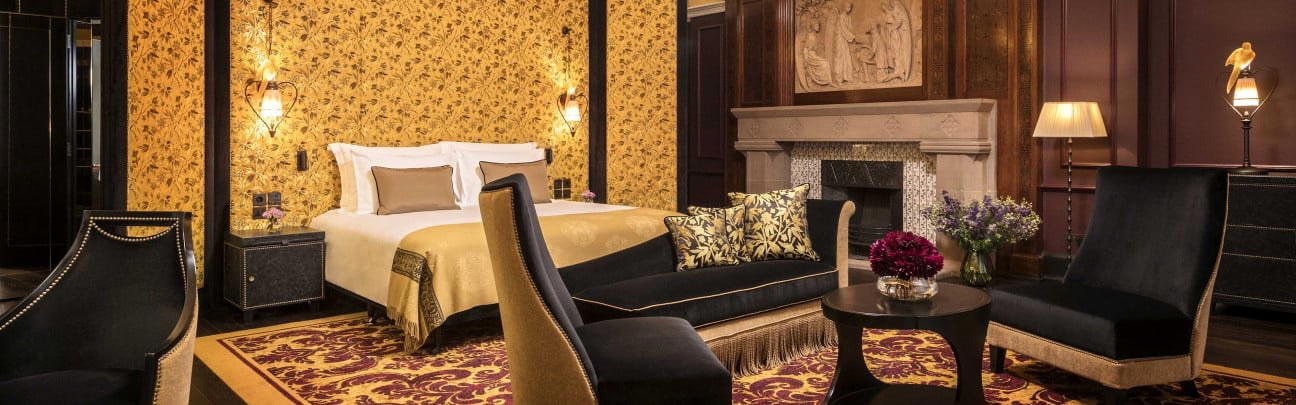
Bars in London
All bars in London →
Restaurants in London
All restaurants in London →


Details
- Elegant
- Sophisticated
- Cozy
- Whimsical
- Romantic Getaway
- Business Trip
- Weekend Escape
- Historic Building
- Design Destination
- Terrace
- Wi Fi
- Fitness Center
- Spa
- Room Service
- Concierge
- Restaurant
- Bar
- Elevator
- Street Scene
- Wheelchair Accessible
- Elevator
Warm and inviting with rich wood panelling, cosy fireplaces, comfortable sofas, and elegant lighting creating a home-like atmosphere.